Artwork
Eastern Enemy
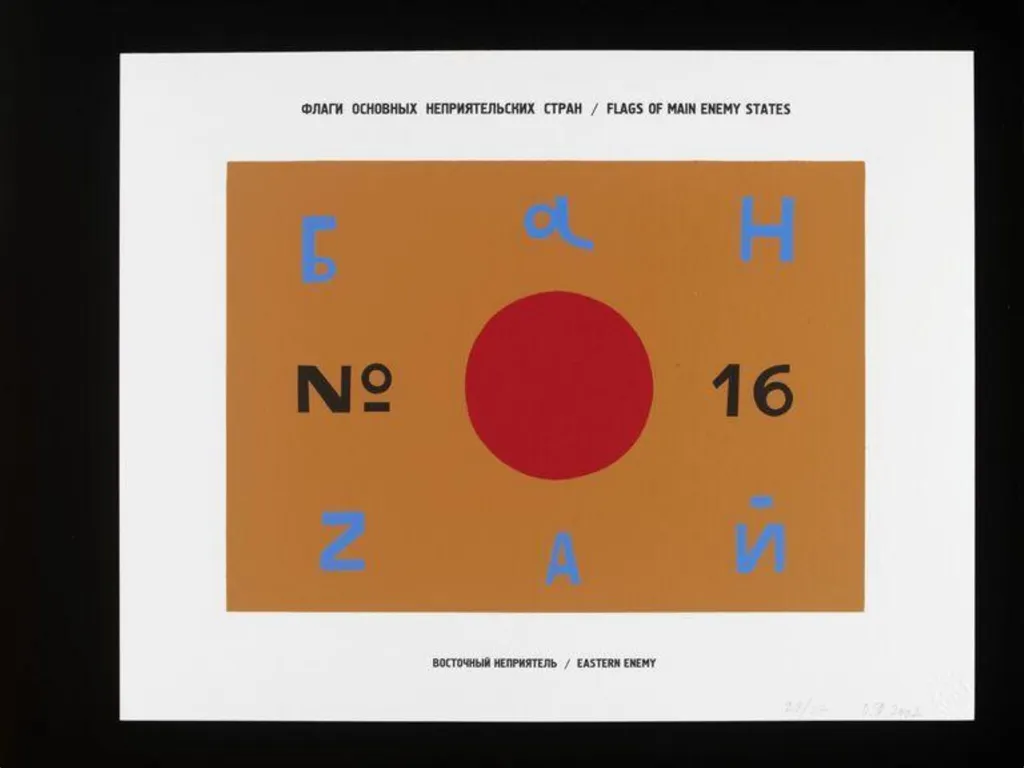
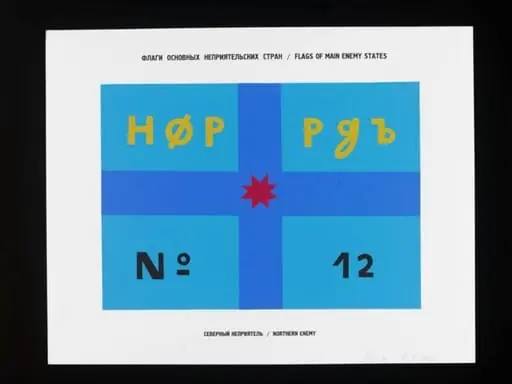
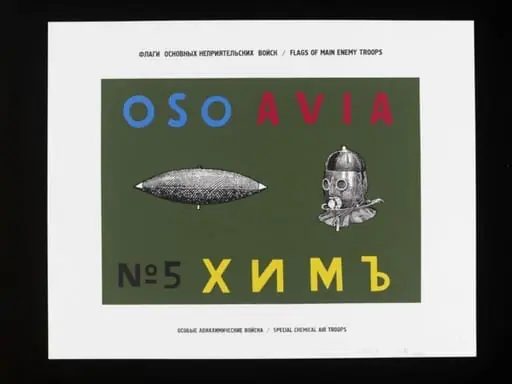
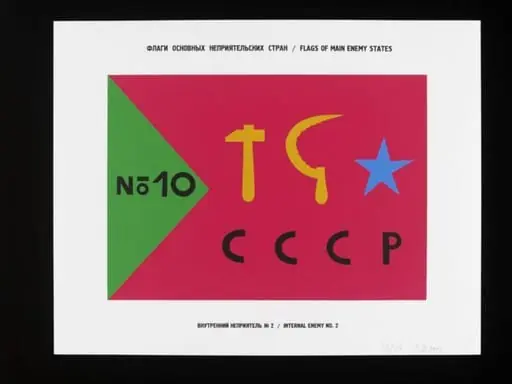
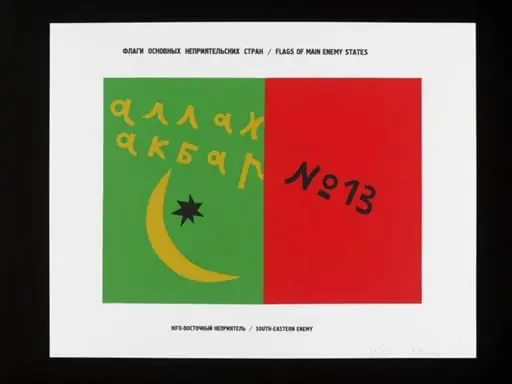
Eastern Enemy is a print by Olga Florenskaya. It dates from 2002 and is held in the collection of the Victoria and Albert Museum.
About this work
Overview
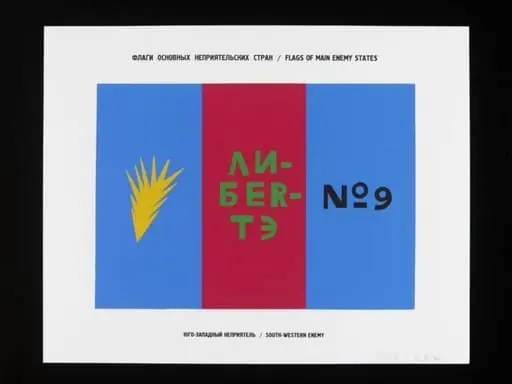
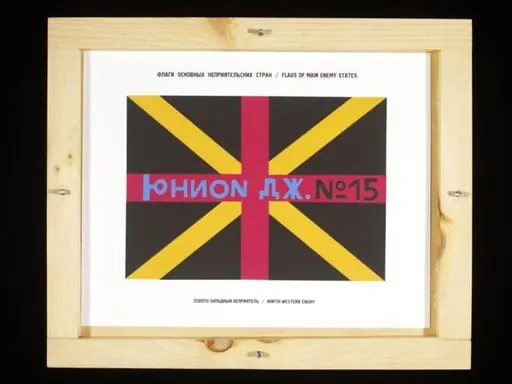
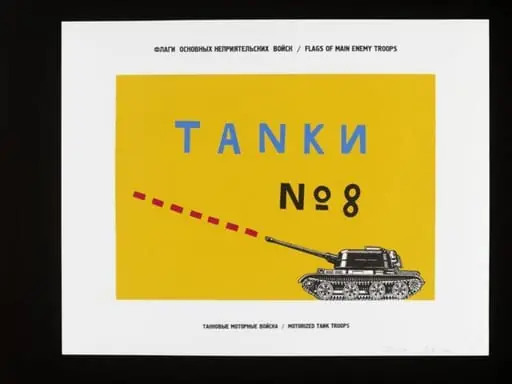
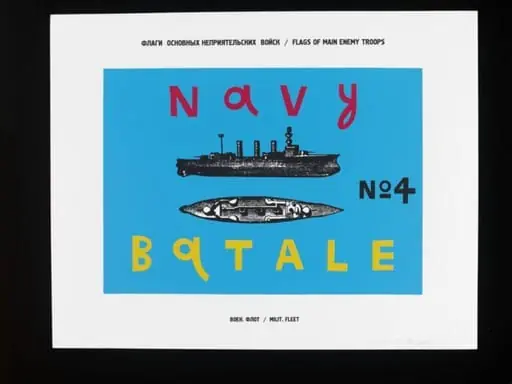
The works mimic official military documentation but subvert it through absurdity, presenting imagined enemies and fabricated trophies.
This set of prints originates from the 2002 project 'Russian Trophy' by Olga and Alexander Florensky, a fictional military museum composed of assemblages, banners, and visual artifacts. The works mimic official military documentation but subvert it through absurdity, presenting imagined enemies and fabricated trophies. The entire collection is housed in a sealed wooden crate, its presentation evoking wartime logistics rather than art display.
Subject & Meaning
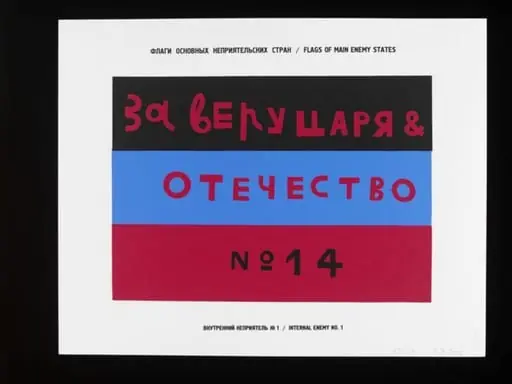
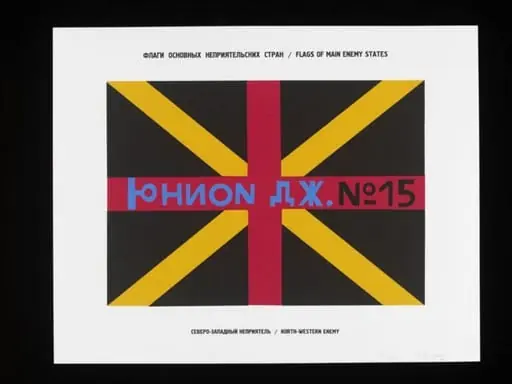
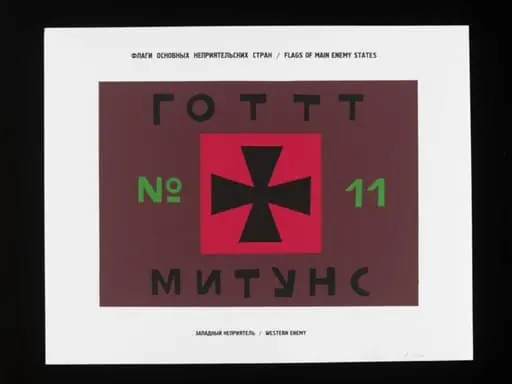
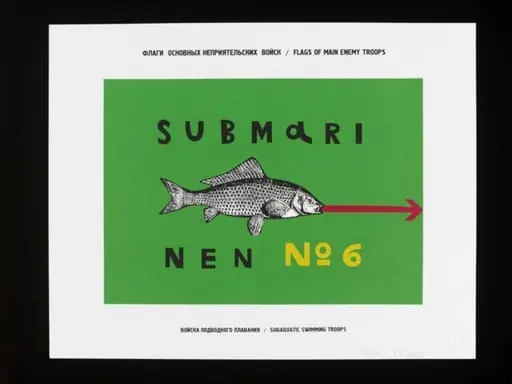
The prints depict stylized flags representing hypothetical adversaries of imperial and Soviet Russia, such as Britain, France, and Japan, renamed with bureaucratic euphemisms like 'Eastern Enemy.' Other entries—'Subaquatic Swimming Troops' or 'Military Therapy Troops'—mock the paranoia of state-sponsored hostility. By avoiding direct naming, the work critiques the tendency to construct external threats to justify internal control and isolation.
Technique & Style
The prints employ a crude, hand-rendered aesthetic reminiscent of wartime propaganda posters and field manuals. Colors are limited, lines are bold and uneven, and typography mimics stamped or stenciled military labeling. The visual language deliberately avoids polish, reinforcing the impression of makeshift, improvised documentation from a fictional conflict.
History & Provenance
Created in 2002, the project emerged from the Florenskys’ broader investigation into Soviet visual culture and its legacy of militarized identity. The prints were produced as part of a larger installation featuring sculptural objects and films, all assembled to simulate a museum archive. The crate’s construction, with wingnut-fastened lid, was designed to mimic authentic military storage, blurring the line between artifact and artifice.
Context
The work responds to post-Soviet Russia’s lingering nationalist narratives and the persistence of Cold War-era enmities. By inventing absurd enemies, the artists expose how states sustain identity through imagined threats. The project aligns with early 2000s Russian conceptual art that interrogated institutional authority, using satire to question historical memory and state symbolism.
Legacy
'Russian Trophy' influenced later artists exploring the aesthetics of state fiction and bureaucratic absurdity. Its use of found materials and faux-military presentation became a reference point for critiques of nationalism in Eastern Europe. The work remains a quiet but persistent commentary on how institutions manufacture enemies to consolidate power, its relevance enduring beyond its immediate historical moment.
Artist & collection
Artist
Olga Florenskaya’s prints from 2002 turn Cold War fears into bold, graphic shapes.