Artwork
Internal Enemy No. 2
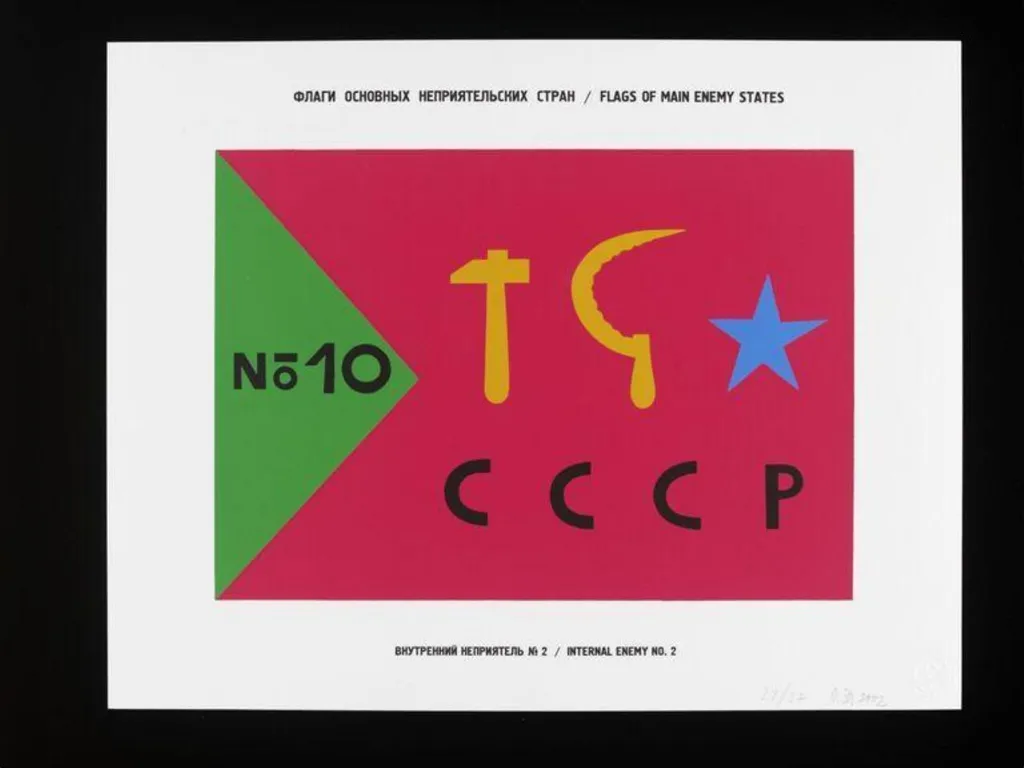
Internal Enemy No. 2 is a print by Olga Florenskaya. It dates from 2002 and is held in the collection of the Victoria and Albert Museum.
About this work
Overview
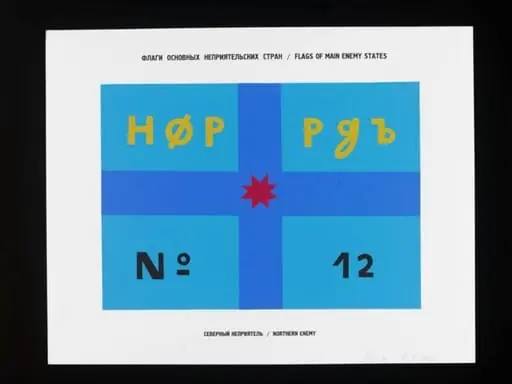
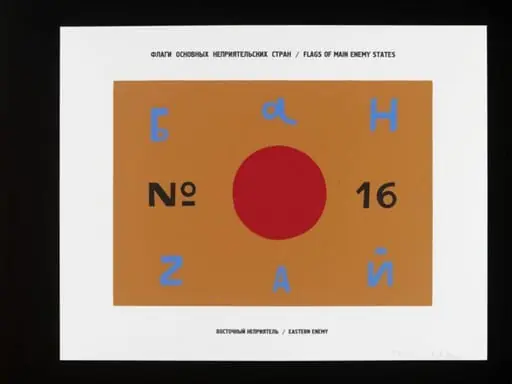
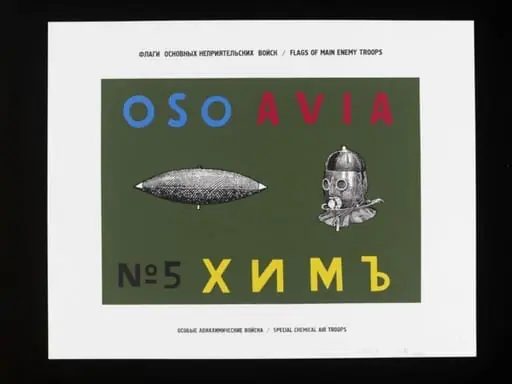
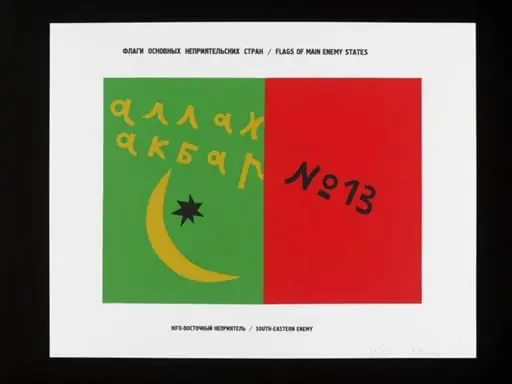
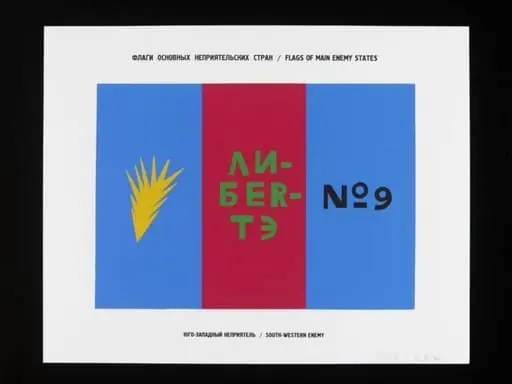
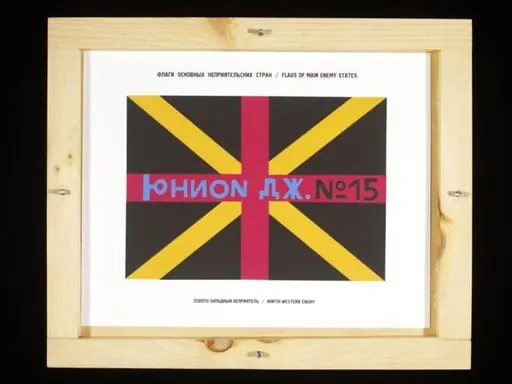
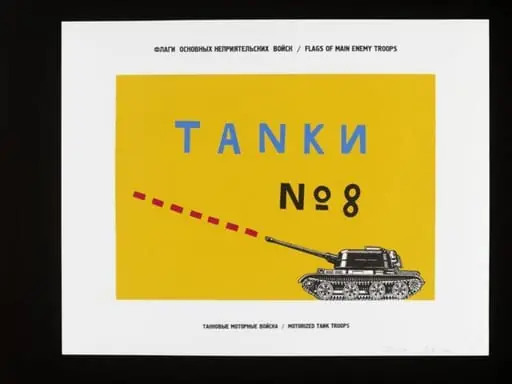
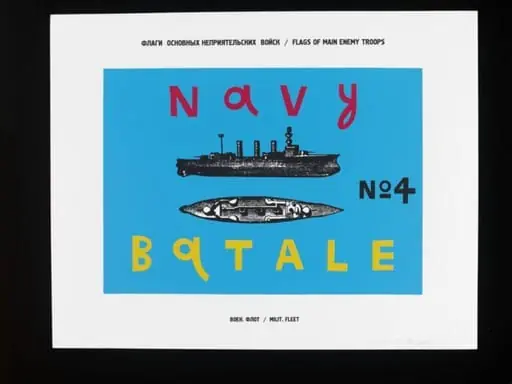
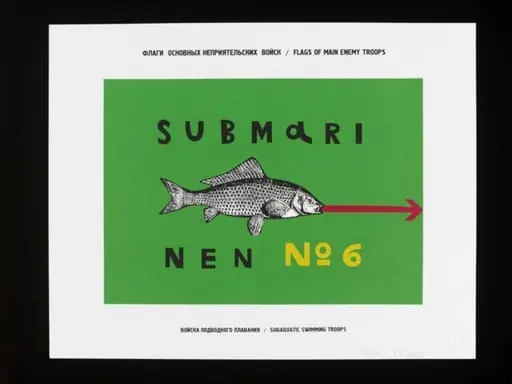
The works mimic archival artifacts from a fabricated conflict, presenting satirical trophies of imagined adversaries.
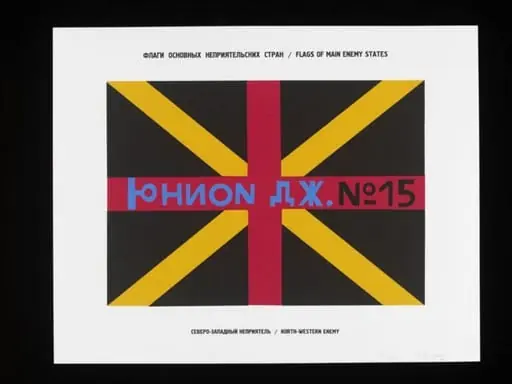
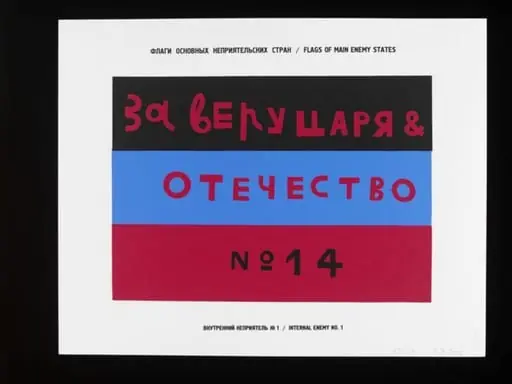
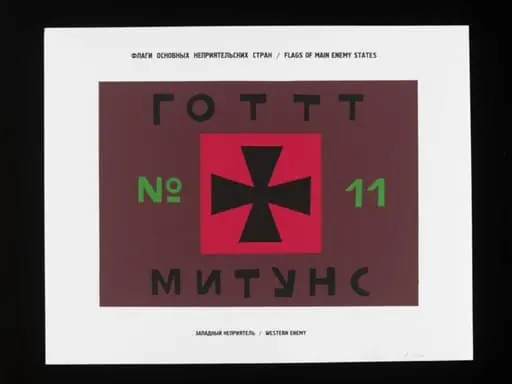
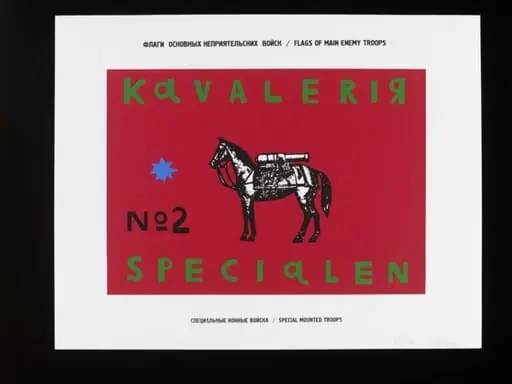
This set of prints originates from the 2002 project 'Russian Trophy' by Olga and Alexander Florensky, a fictional military museum composed of assemblages, banners, and visual materials. The works mimic archival artifacts from a fabricated conflict, presenting satirical trophies of imagined adversaries. The entire collection is housed in a sealed wooden crate, its lid fastened with wingnuts to evoke military storage, reinforcing the illusion of institutionalized militarism.
Subject & Meaning
The prints reference historical rivals of imperial and Soviet Russia without naming them directly, using coded titles like 'North-Western Enemy' for Britain and 'Eastern Enemy' for Japan. Absurd designations such as 'Subaquatic Swimming Troops' mock the paranoia and bureaucratic absurdity of perceived external threats. The work critiques nationalist ideology by treating xenophobia as a curated collection, exposing how fear is institutionalized through symbolism and display.
Technique & Style
The prints employ a crude, handcrafted aesthetic, mimicking military signage and propaganda graphics with stenciled text and simplified iconography. Materials appear deliberately makeshift, echoing the project’s use of found objects. The visual language borrows from Soviet-era posters and wartime ephemera, but with ironic distortions that undermine their original authority, creating a tension between authenticity and parody.
History & Provenance
Created in 2002, 'Russian Trophy' emerged from the Florenskys’ broader exploration of post-Soviet identity and historical memory. The prints were produced as part of a larger installation that included sculptures, films, and flags, all presented as recovered artifacts. The wooden crate housing the prints was designed to function as both container and commentary, suggesting the concealment and preservation of ideological relics.
Context
The project responds to the lingering cultural residue of Soviet-era nationalism and the resurgence of patriotic rhetoric in early 2000s Russia. By constructing a fictional military archive, the artists interrogate how states manufacture enemies to unify populations. The work aligns with broader post-Soviet artistic practices that deconstruct state narratives through irony, appropriation, and institutional mimicry.
Legacy
'Russian Trophy' has influenced subsequent artists examining state propaganda and historical mythmaking through fictional archives. Its use of materiality and presentation—treating ideology as a physical collection—has become a reference point in contemporary critiques of nationalism. The work remains relevant as a quiet, material meditation on how fear is preserved, displayed, and inherited.
Artist & collection
Artist
Olga Florenskaya’s prints from 2002 turn Cold War fears into bold, graphic shapes.