Artwork
Market Scene in the 17th Century
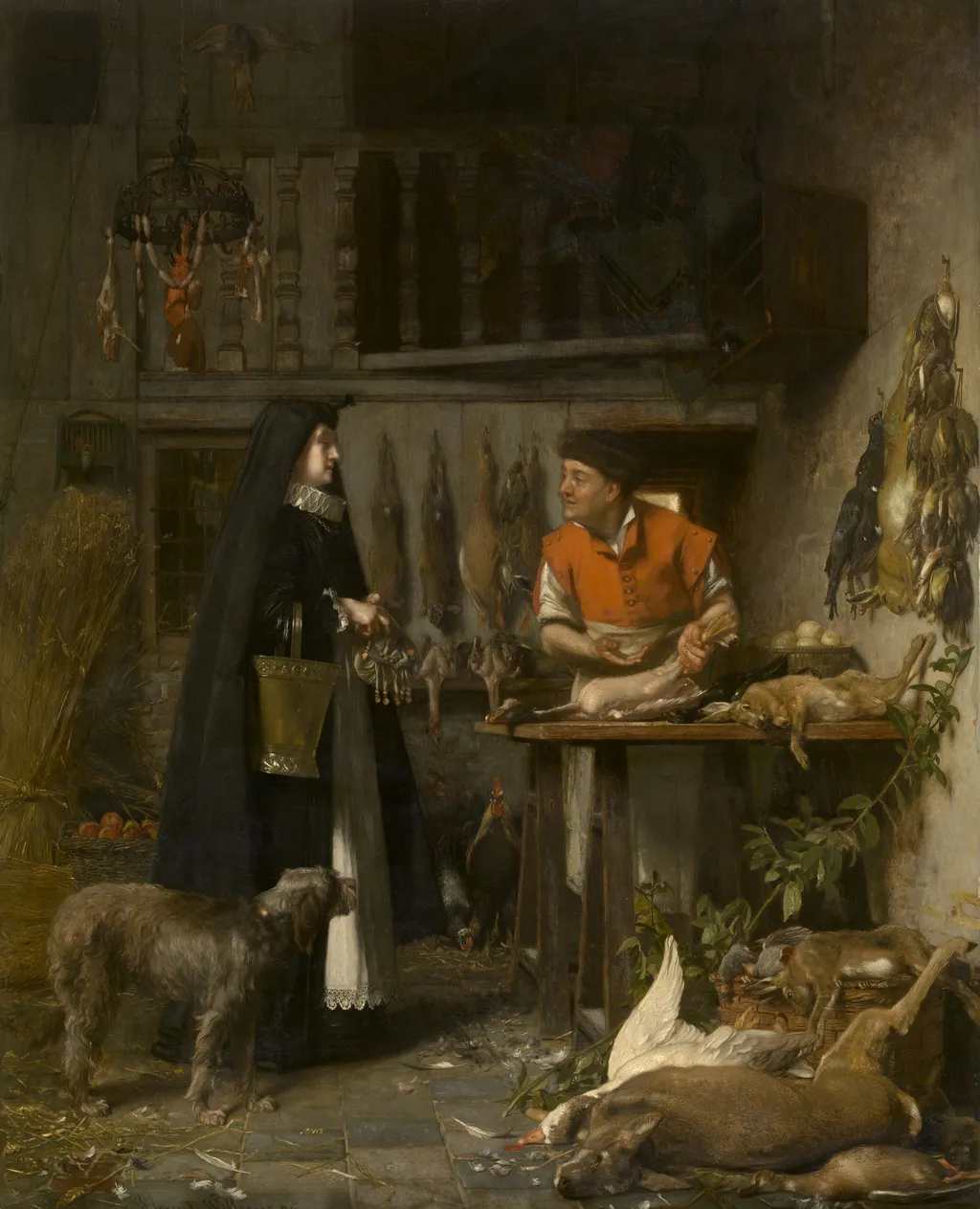
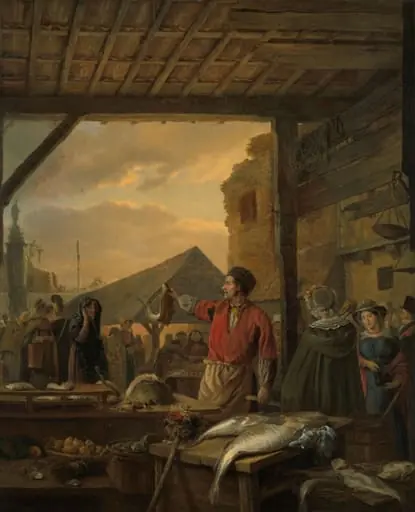
Market Scene in the 17th Century is an oil painting by the Post-Impressionist artist Florent Willems. It dates from 1894 and is held in the collection of the Royal Museum of Fine Arts Antwerp.
About this work
A woman, dressed in black, stands on the left, holding a basket and conversing with a butcher, who wears an orange vest and is seated at a wooden table.
This painting depicts a lively market scene from the 17th century. A woman, dressed in black, stands on the left, holding a basket and conversing with a butcher, who wears an orange vest and is seated at a wooden table. The table is laden with various meats, including a goose, a chicken, and a rabbit. In the foreground, a dog stands beside the woman, while a few dead animals lie on the ground. The background features a wall adorned with hanging meats and a window.
The artist's use of chiaroscuro creates a sense of depth and dimensionality in the scene, drawing the viewer's eye to the central figures. The warm tones of the painting evoke a sense of comfort and familiarity, inviting the viewer to step into the bustling market.
To explore more works like this, look up the Royal Museum of Fine Arts Antwerp.
Overview
Painted in 1894 by Belgian artist Florent Willems, this oil-on-canvas work presents a meticulously rendered market scene set in the 17th century. Though created in the late 19th century, the painting deliberately emulates the visual language of earlier Flemish and Dutch genre painting. It resides in the collection of the Royal Museum of Fine Arts Antwerp, reflecting Willems’s reputation for historical genre reconstruction.
Subject & Meaning
The scene centers on a woman in dark attire engaging with a butcher seated at a wooden stall. Around them, freshly slaughtered poultry and game are displayed, suggesting daily commerce in a pre-industrial setting. A dog rests near the woman’s feet, while carcasses lie on the ground, grounding the image in the physical reality of meat trade. The interaction implies quiet negotiation, emphasizing routine rather than spectacle.
Technique & Style
Willems employed chiaroscuro to model forms and create spatial depth, directing focus toward the central figures. His rendering of fabric textures—particularly the woman’s black dress and the butcher’s orange vest—demonstrates close study of 17th-century Dutch techniques. The palette favors warm, earthy tones, enhancing the scene’s domestic intimacy without romanticizing its labor.
History & Provenance
Florent Willems, trained as both painter and restorer, specialized in reviving the aesthetics of Baroque genre scenes. This work was produced during a period when 19th-century artists frequently revisited historical subjects to assert cultural continuity. The painting entered the Royal Museum of Fine Arts Antwerp’s collection shortly after its completion, where it remains as part of a broader effort to preserve regional artistic traditions.
Context
Willems’s work emerged amid a 19th-century revival of interest in Flemish Old Masters, particularly artists like Gerard ter Borch, whose quiet domestic scenes influenced his approach. While contemporaries pursued modernity, Willems turned to the past, using historical accuracy to convey authenticity. His scenes avoided moralizing, instead presenting everyday transactions as neutral, observed moments.
Legacy
Though not widely known outside Belgium, Willems’s commitment to historical fidelity earned him recognition among peers for technical precision. His paintings, including this market scene, contributed to the preservation of 17th-century visual vocabulary in late 19th-century academic circles. They remain valuable for their documentation of material culture and artisanal trade practices of the early modern Low Countries.
Own this work as a print
Artist & collection
Artist
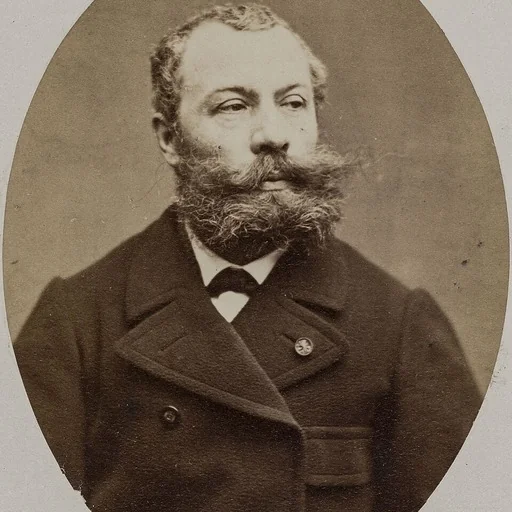
Florent Willems or Florent Willems van Edeghem (8 January 1823 – 23 October 1905) was a Belgian painter and art restorer.

 Kitchen
 Tavern Scene with Standing Couple
 Hiukan kissalle
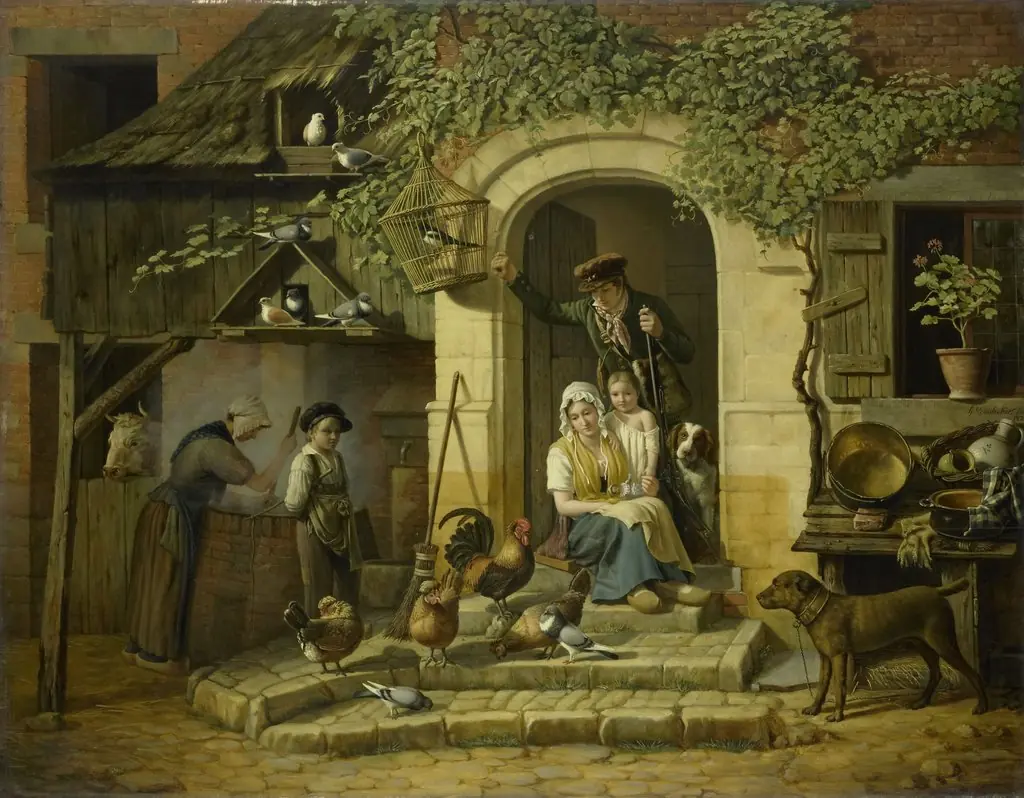 Hunter's Dwelling
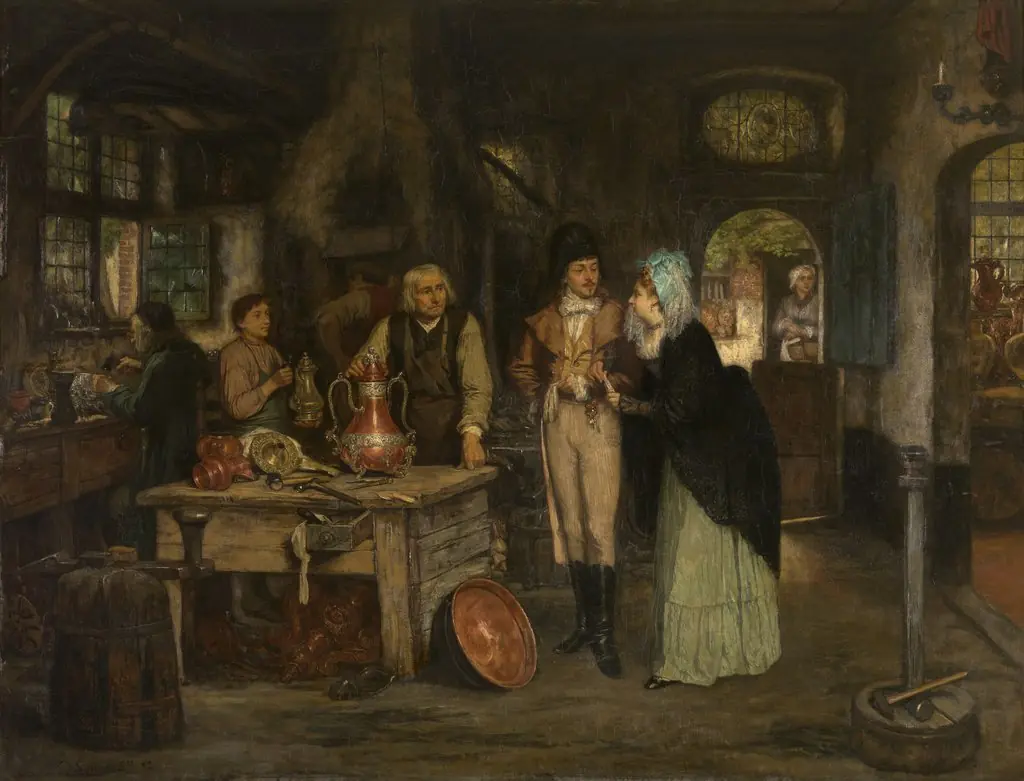 The Workshop of Geert de Winter
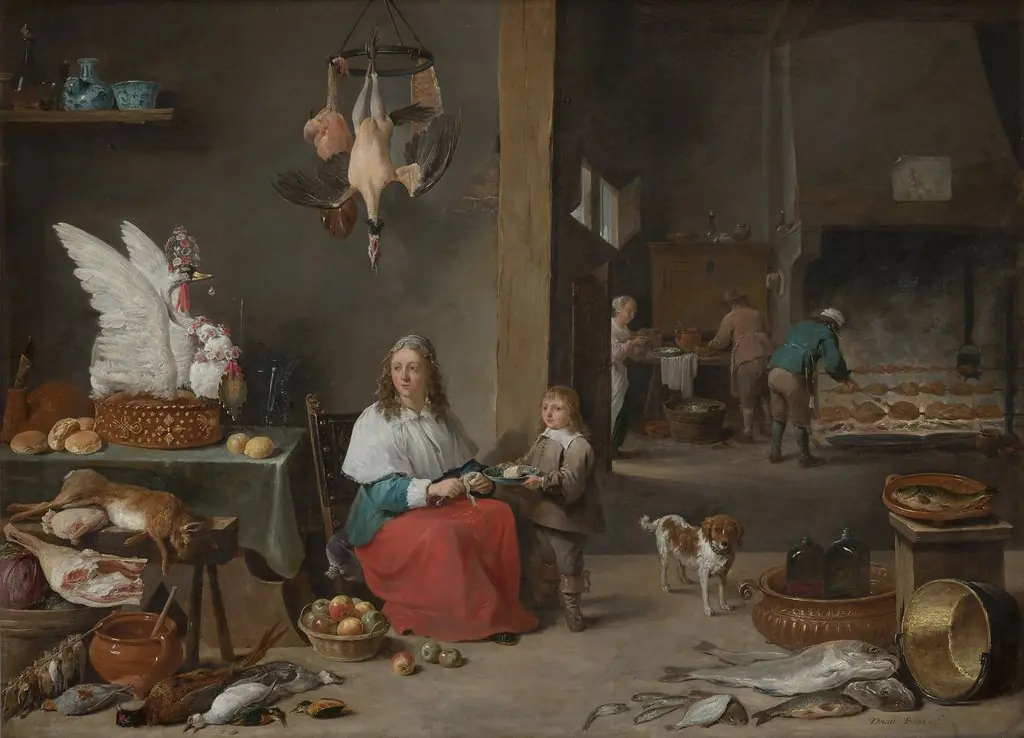 The Fat Kitchen
 Accounting for the Purchases in the Kitchen
 A Fishwife
 En tjenestepige viser sin kærestes portræt til en grønthandlerske
 An interior of a barn with a scullery maid at a well
 The Sausage Maker
 The Fish Market in Antwerp