Artwork
Still Life with Cheese
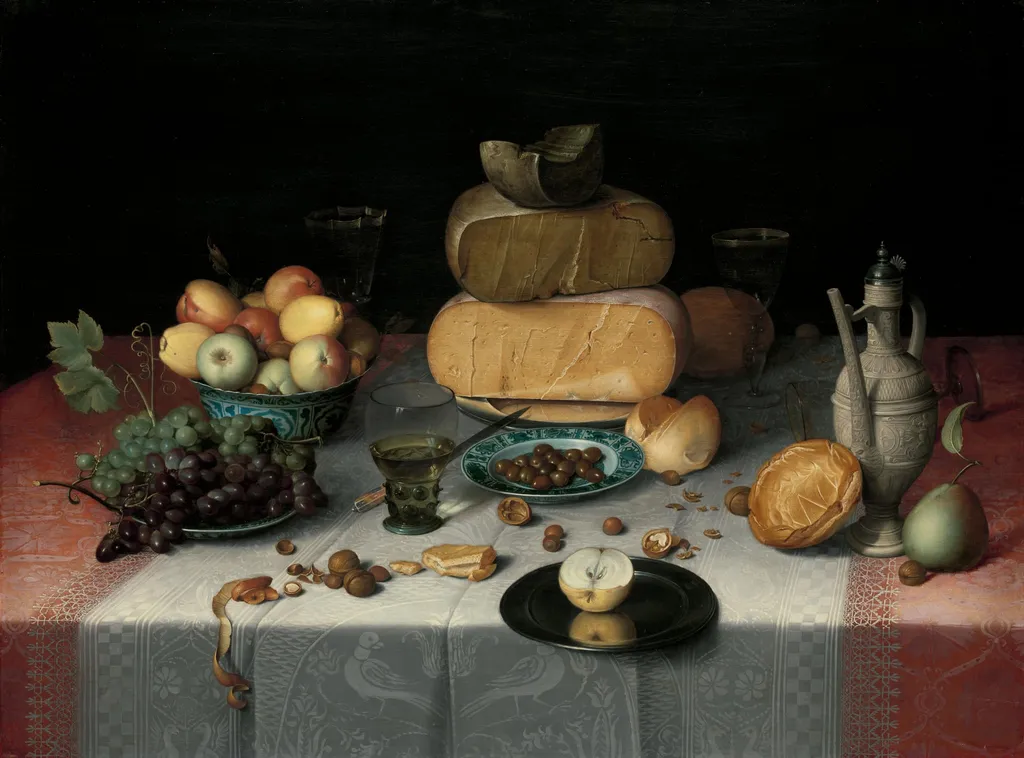
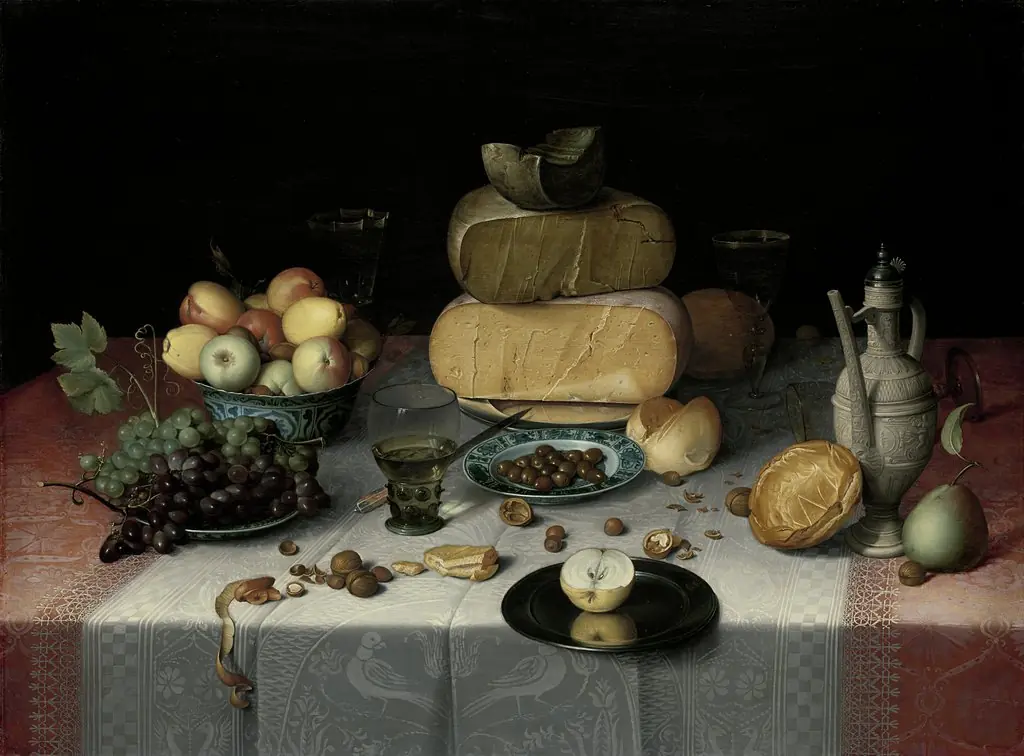
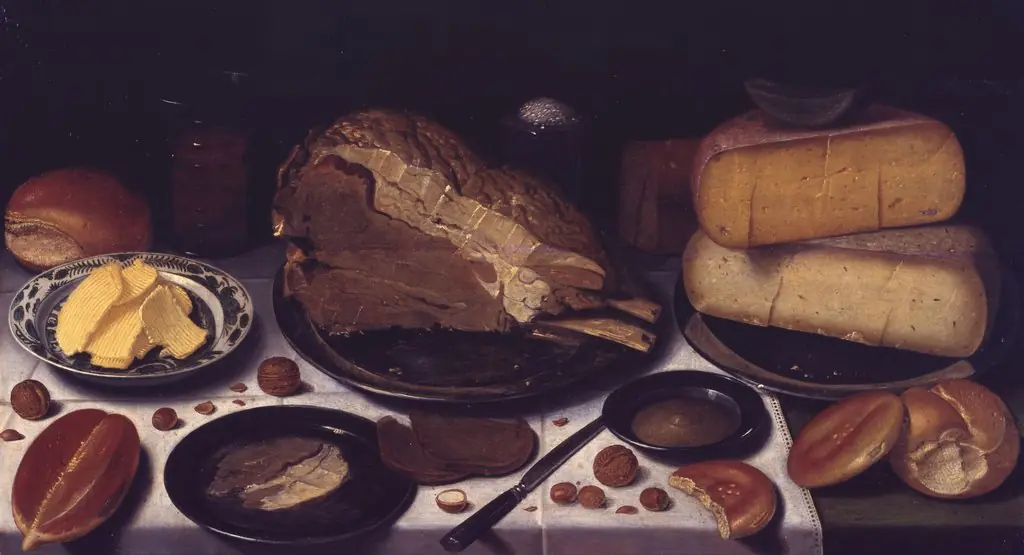
Still Life with Cheese is an unspecified painting by the Dutch Golden Age artist Floris van Dyck. It dates from 1615 and is held in the collection of the Rijksmuseum.
About this work
Overview
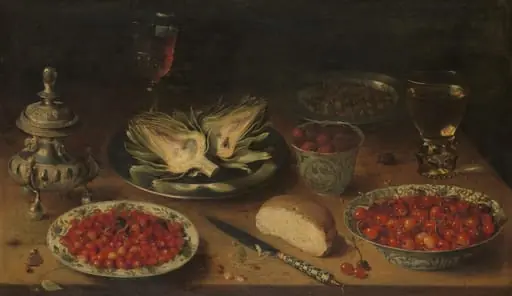
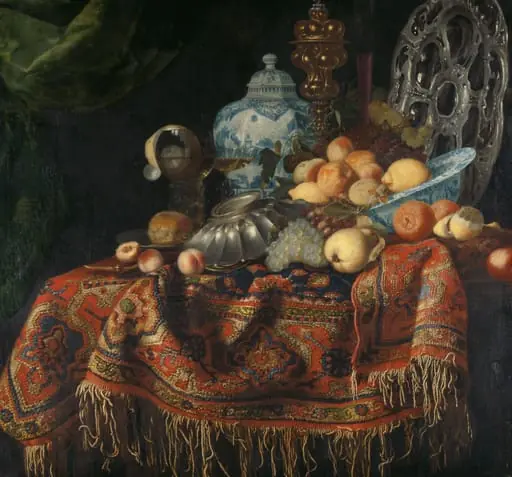
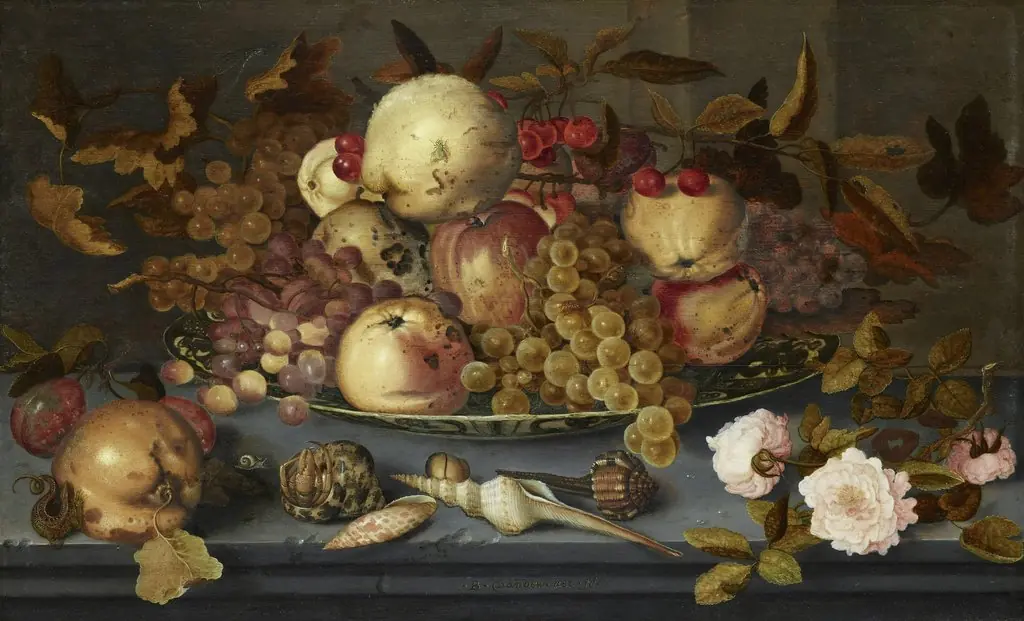
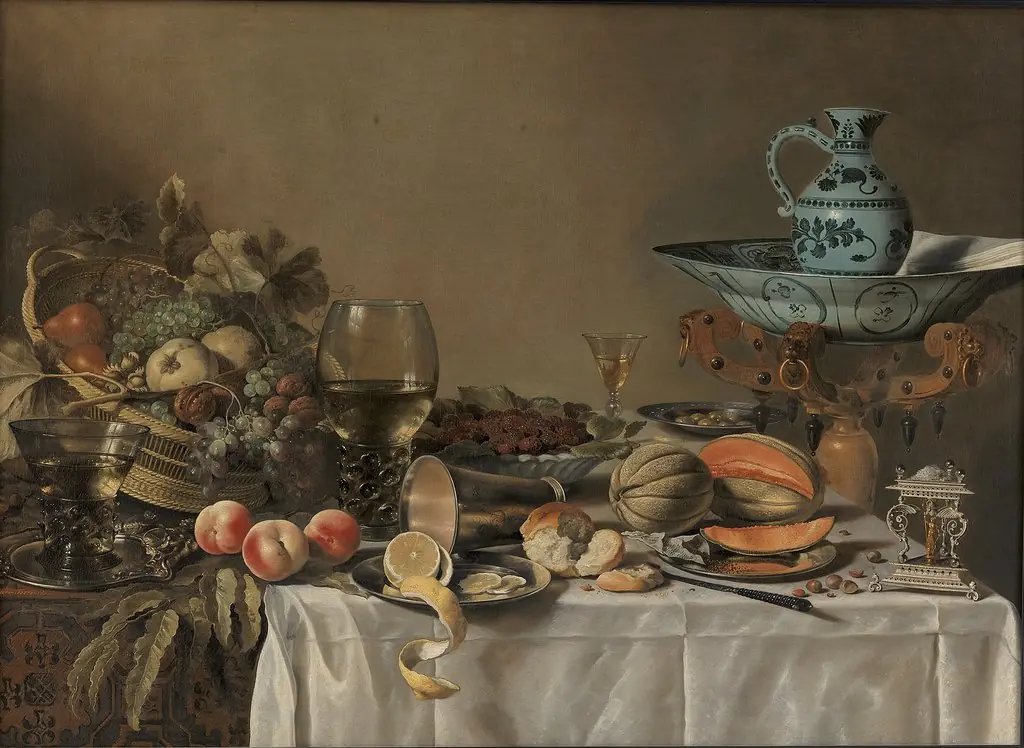
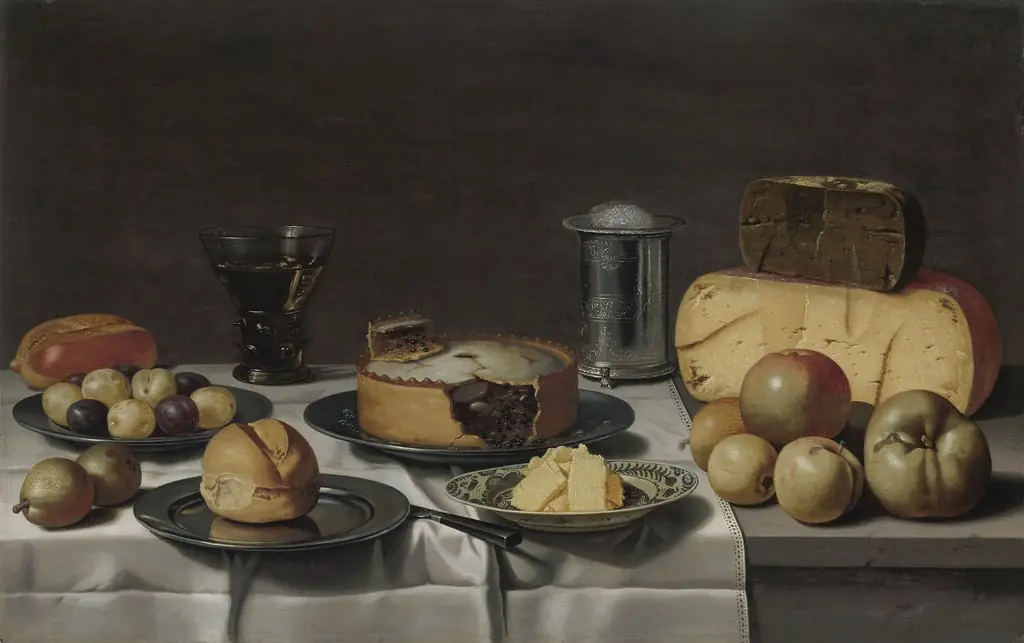
Painted in the early 17th century, this still life presents an arrangement of cheese, bread, and fruit on a wooden table draped with rich damask fabric.
Painted in the early 17th century, this still life presents an arrangement of cheese, bread, and fruit on a wooden table draped with rich damask fabric. The composition emphasizes order and material presence, with each item grouped by type. The artist, Floris van Dijck, was among the first in Haarlem to elevate everyday objects into focused, contemplative subjects, using precise observation to anchor the scene in tangible reality.
Subject & Meaning
The objects—cheese, crusty bread, and clusters of grapes—reflect domestic abundance and the Dutch appetite for careful observation of the natural world. Their arrangement suggests neither feast nor decay, but quiet stability. The inclusion of a pewter plate cantilevered beyond the table’s edge invites a physical response, subtly challenging the boundary between painted illusion and real space without overt symbolism.
Technique & Style
Van Dijck employed fine brushwork to render textures: the sheen of cheese rind, the crumbly surface of bread, the dewy skin of grapes. Light falls evenly, enhancing volume without dramatic contrast. The pewter plate’s overhanging edge is rendered with such spatial precision that it appears to project into the viewer’s space, demonstrating an early mastery of trompe l’oeil effects in Dutch still life.
History & Provenance
Created around 1615–1625, the painting is attributed to Floris van Dijck, a Haarlem-based artist known for his restrained still lifes. While signed, the work’s early provenance remains undocumented. It reflects the growing market in the Dutch Republic for small-scale, privately owned paintings that celebrated material culture and artisanal skill over religious or mythological themes.
Context
In early 17th-century Holland, rising merchant wealth fostered demand for art that mirrored domestic life. Still lifes like this one responded to a cultural shift toward empirical observation and the appreciation of ordinary objects. Artists such as van Dijck helped define a new genre, one that valued technical precision and quiet composition over narrative or grandeur.
Legacy
Van Dijck’s approach influenced later Dutch still-life painters by establishing a model of restrained realism. His focus on texture, spatial depth, and orderly arrangement became foundational to the genre. Though not widely celebrated in his time, his work contributed to a broader artistic movement that elevated the everyday into a subject worthy of sustained attention.
Own this work as a print
Artist & collection
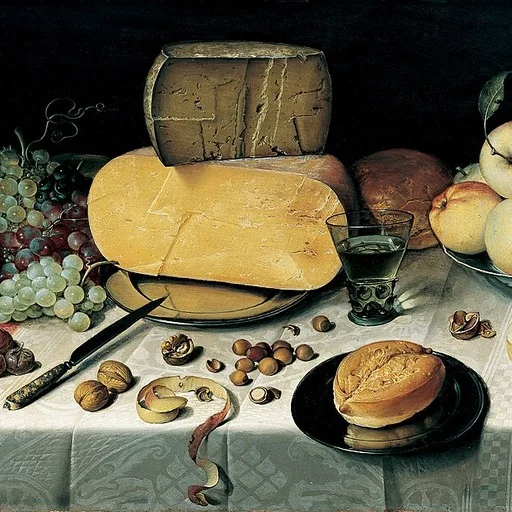
Artist
Floris van Dyck, also called Floris van Dijck or Floris Claesz. van Dyck (c.1575 – before 26 April 1651) was a Dutch Golden Age still life painter.