Artwork
Still Life with Fruit, Plates and Dishes on a Turkey Carpet
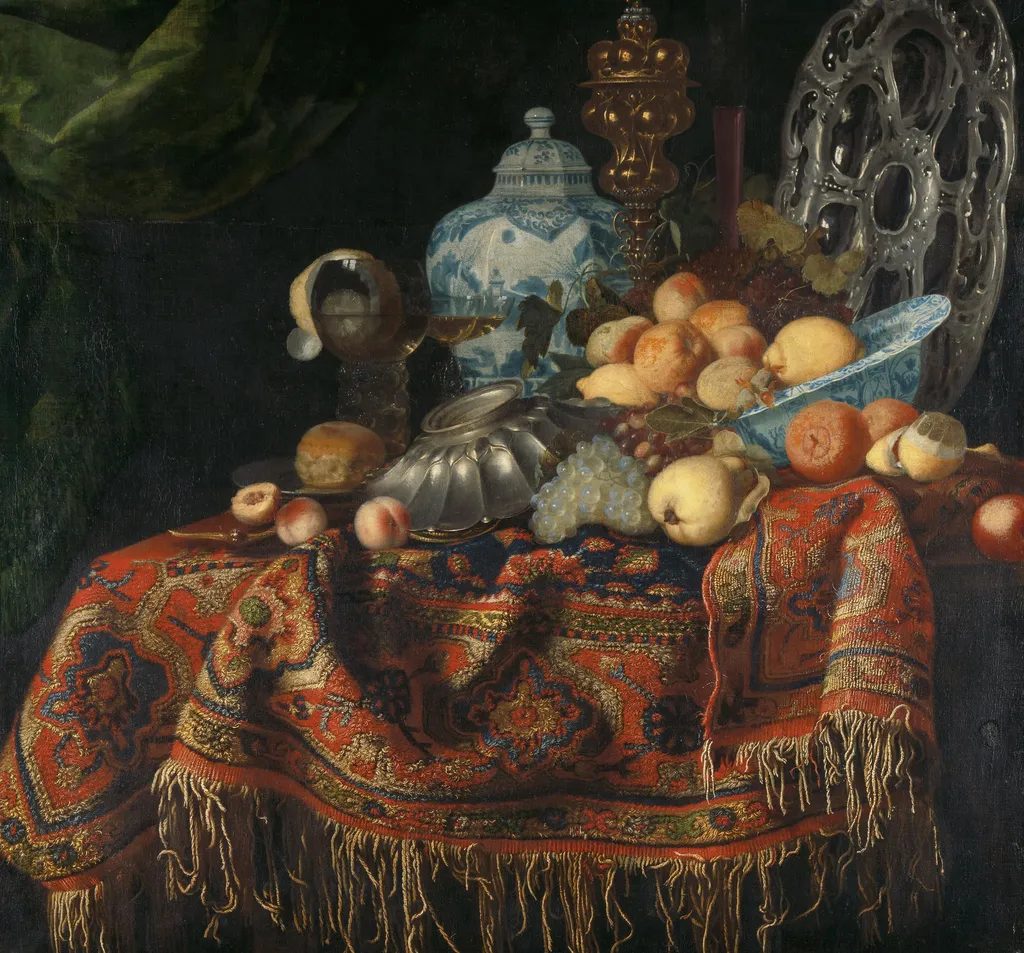
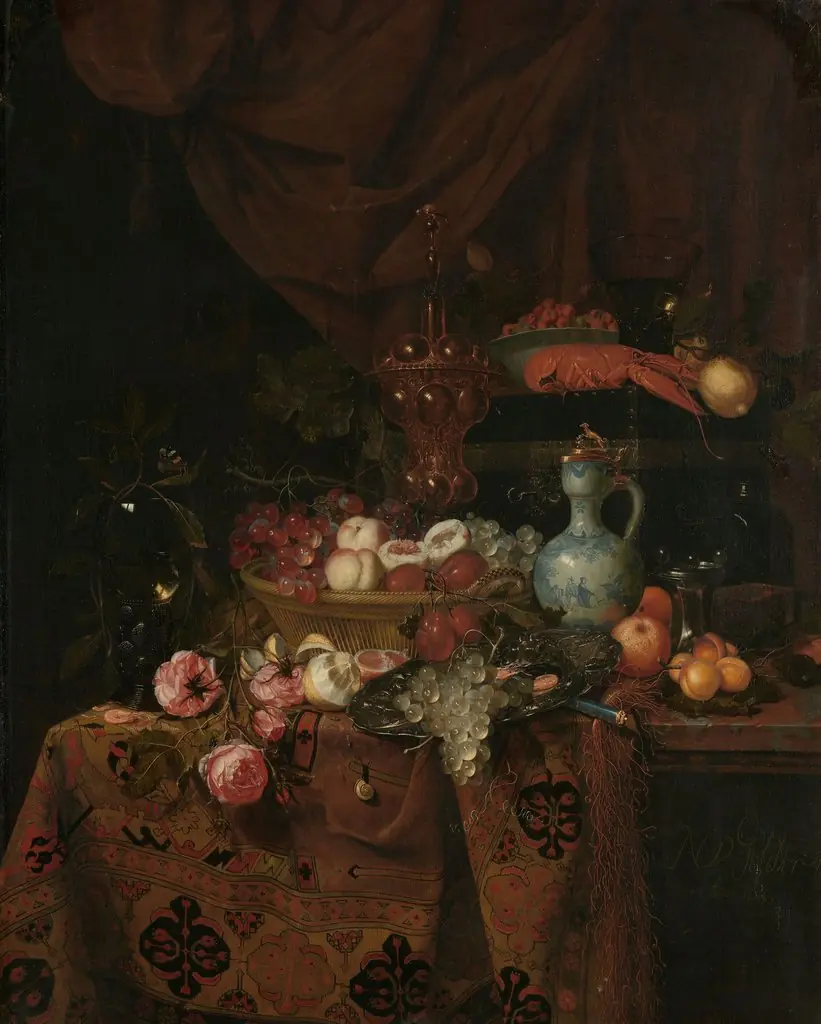
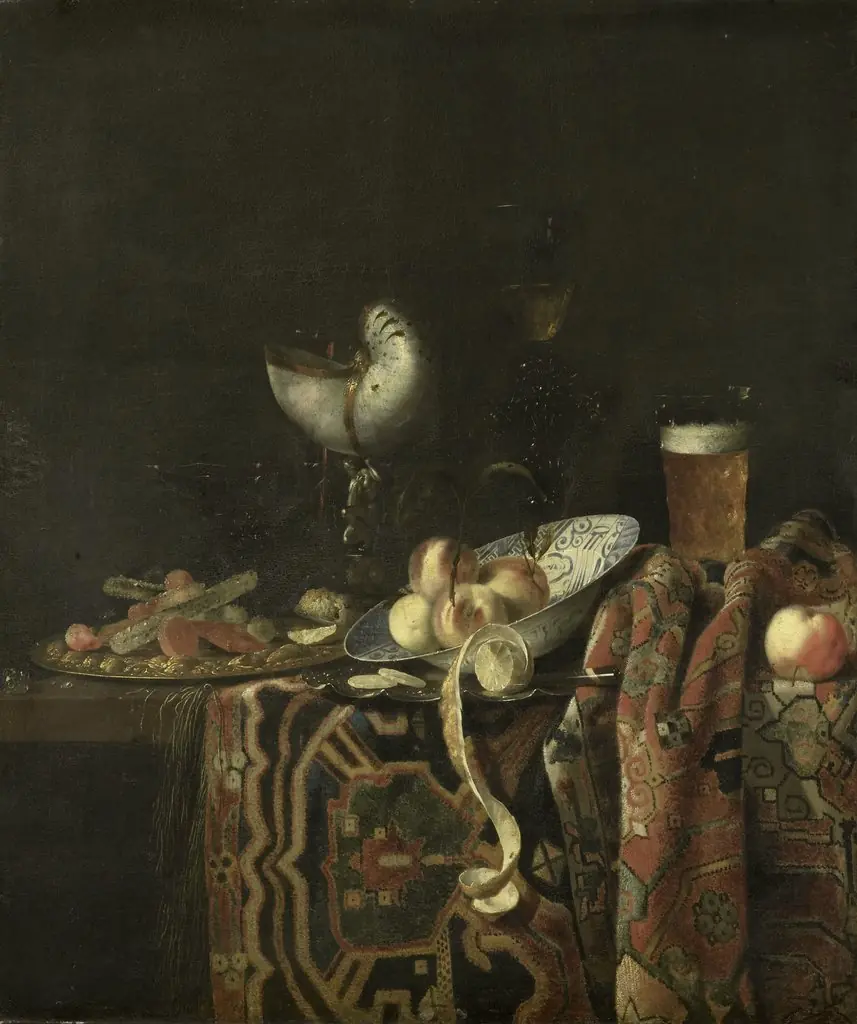
Still Life with Fruit, Plates and Dishes on a Turkey Carpet is an unspecified painting by the Dutch Golden Age artist Unknown. It dates from 1665 and is held in the collection of the Rijksmuseum. This 17th-century Dutch still life presents an arrangement of luxury goods on a richly patterned Turkish carpet.
About this work
Overview
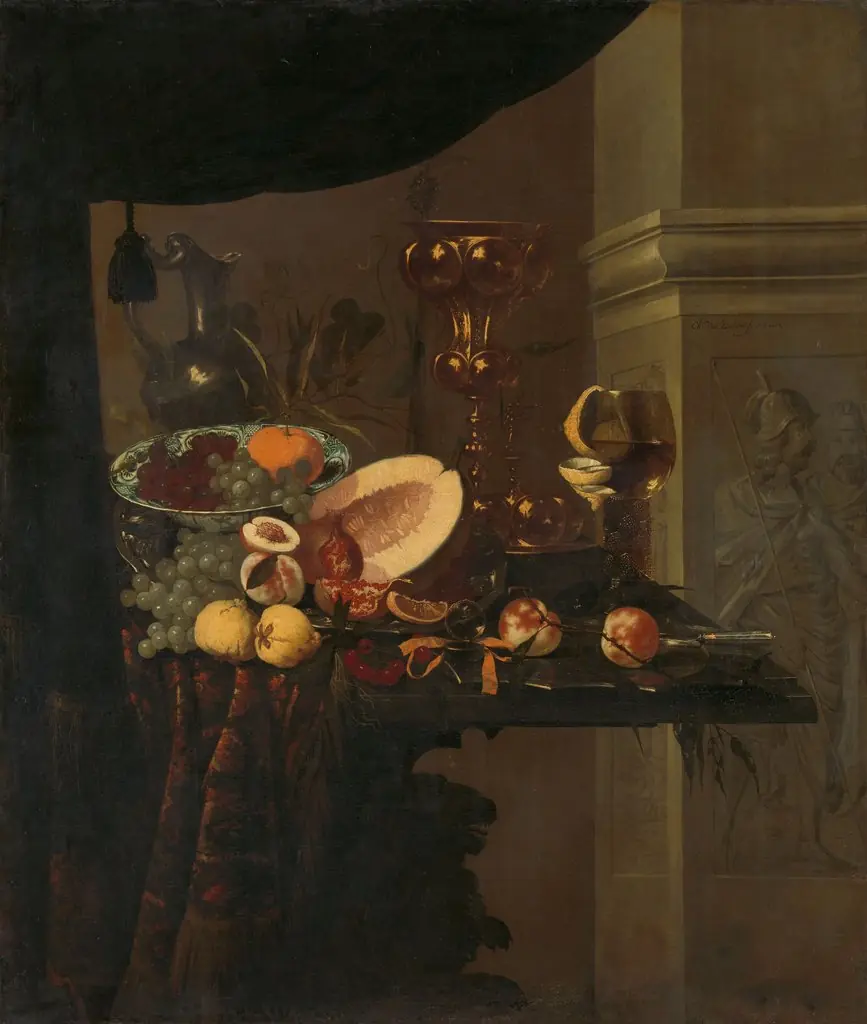
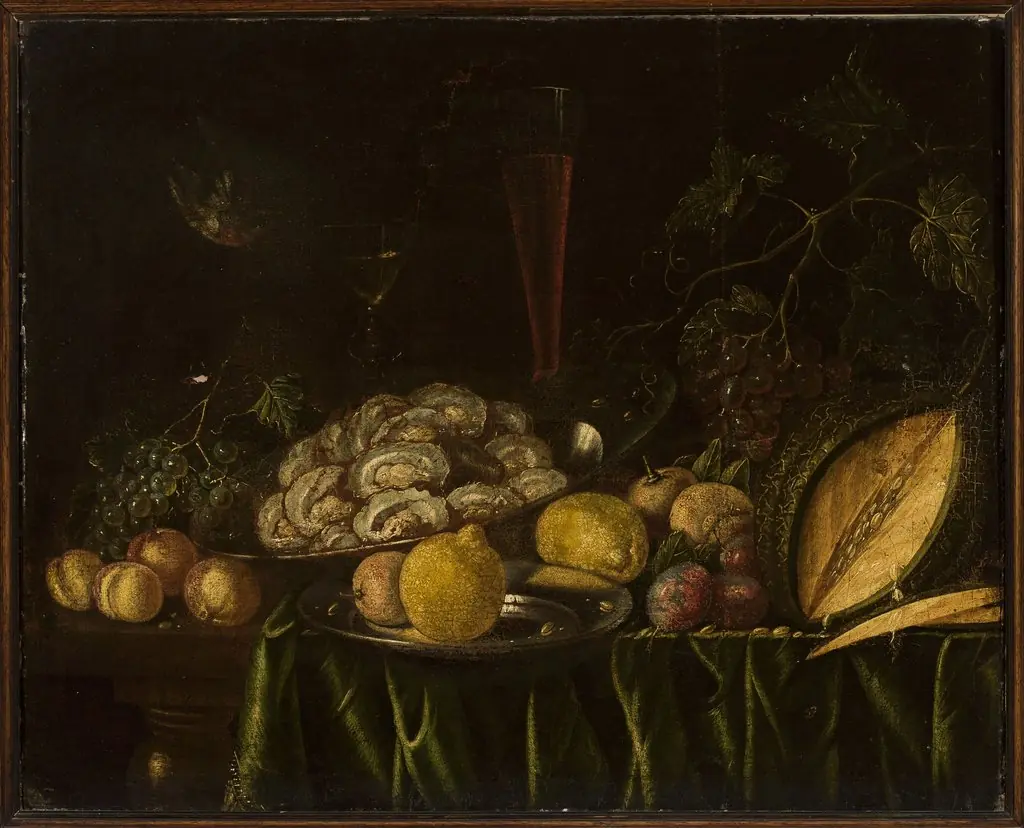
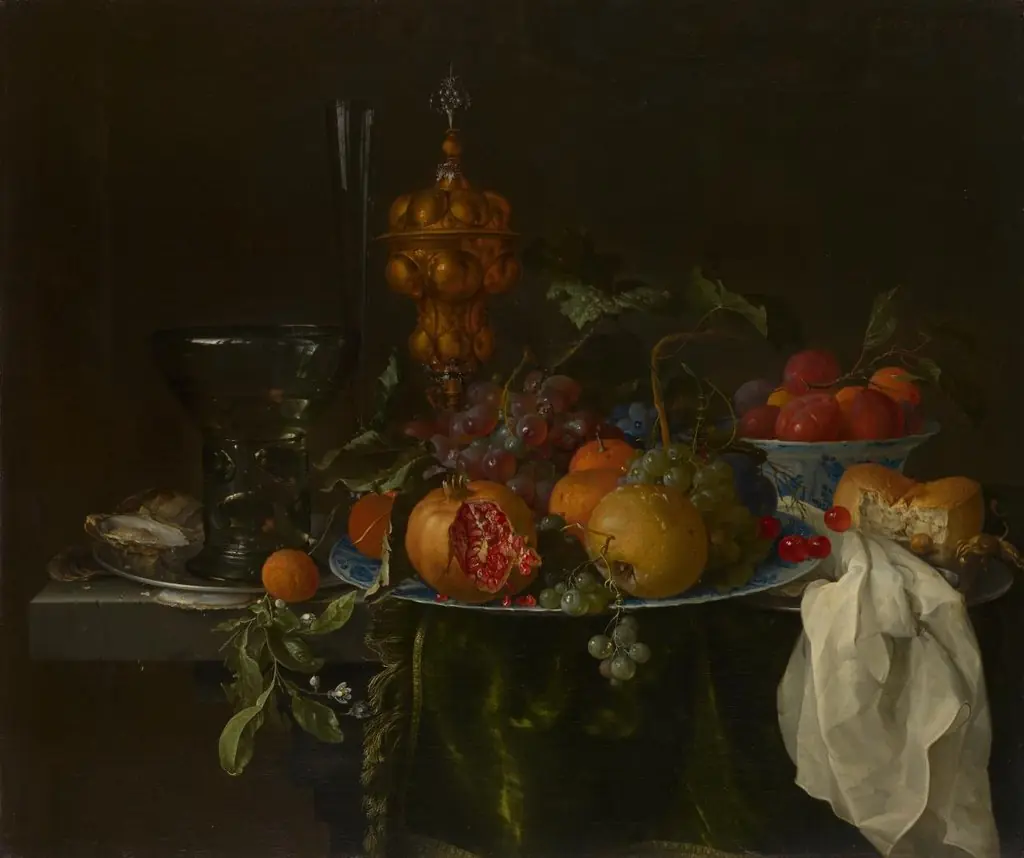
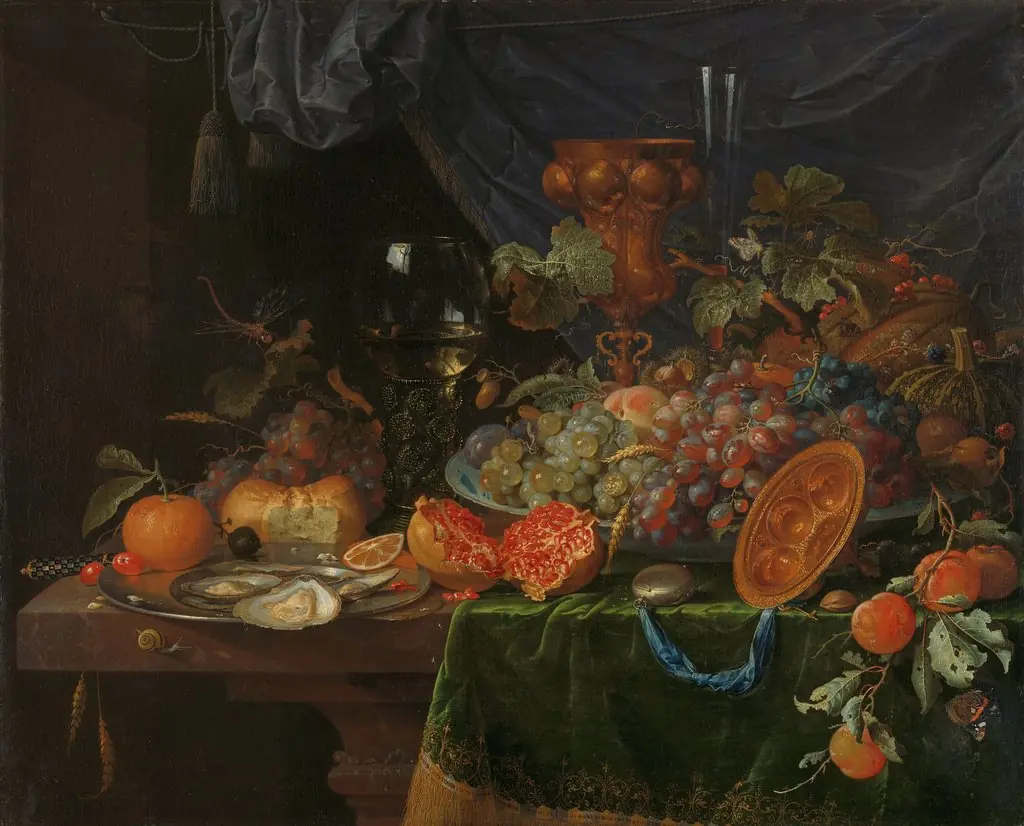
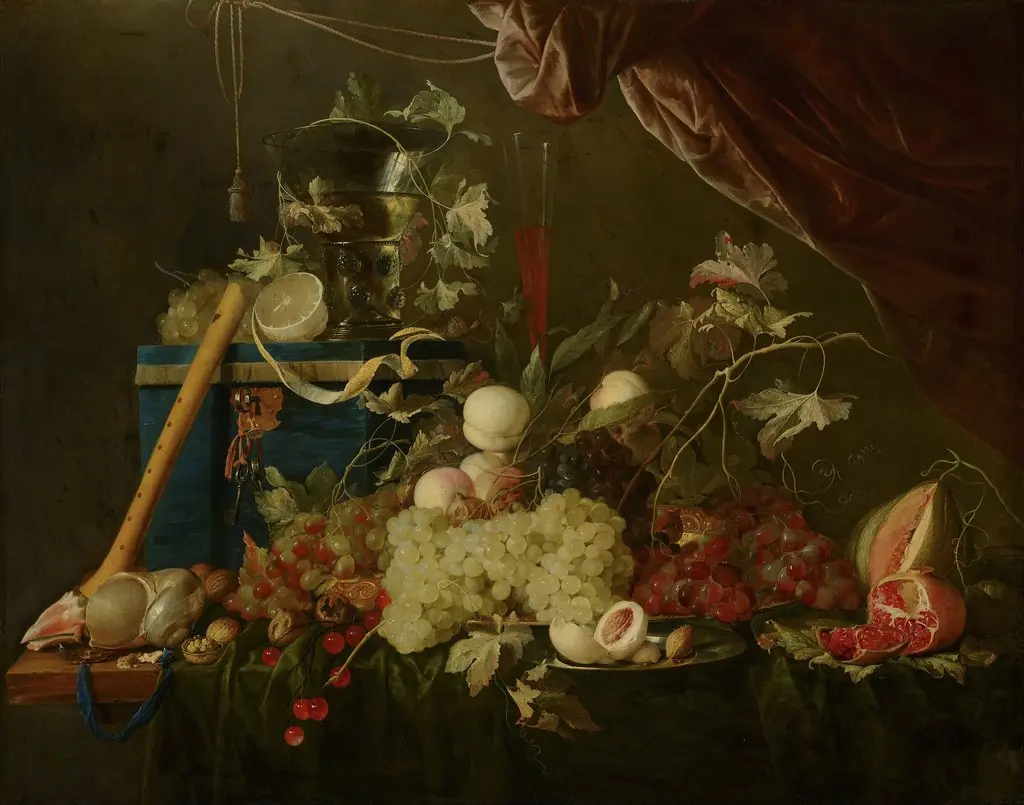
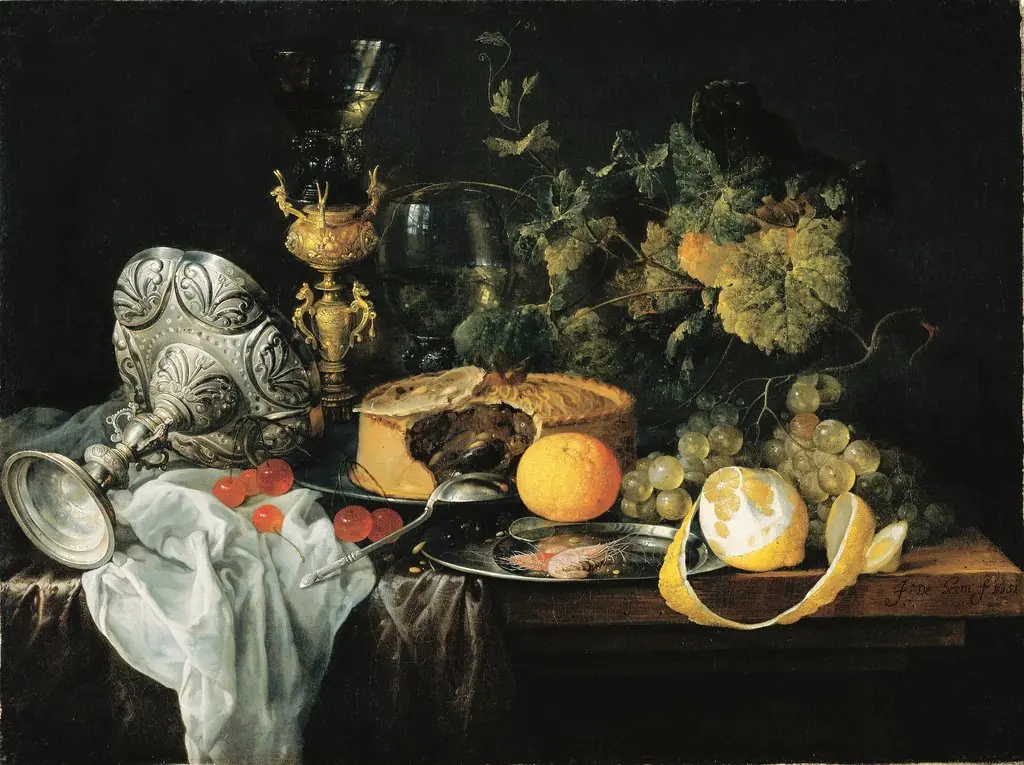
This 17th-century Dutch still life presents an arrangement of luxury goods on a richly patterned Turkish carpet. The composition includes fruit, ceramics, silverware, glass, and bread, arranged with deliberate order to emphasize material wealth. Each object was costly and often imported, signaling the owner’s access to global trade networks and refined taste.
Subject & Meaning
The objects depicted—Chinese porcelain, Venetian glass, Persian carpet, and exotic citrus—were symbols of affluence in the Dutch Republic. The peeled lemon floating in wine, though seemingly casual, was a rare and expensive indulgence. The painting functions not as a mere depiction of food, but as a statement of social status and economic reach.
Technique & Style
The artist employs precise brushwork to render textures: the glaze of porcelain, the sheen of silver, the translucency of wine, and the soft fuzz of fruit. Light falls evenly across the surface, enhancing tactile realism without dramatic contrast. The arrangement is balanced yet asymmetrical, guiding the eye through layers of objects from foreground to background.
History & Provenance
Painted during the Dutch Golden Age, the work reflects the era’s booming mercantile culture. Similar still lifes were commissioned by wealthy merchants to display their participation in international trade. The specific items, particularly the Wan Li porcelain and Smyrna carpet, align with documented imports from Asia and the Ottoman Empire during the early 1600s.
Context
Dutch still lifes of this type emerged alongside the rise of a prosperous middle class. Unlike religious or mythological scenes, these paintings celebrated domestic abundance and global commerce. The inclusion of perishable fruit and open wine suggests transience, subtly tempering the display of wealth with a quiet reminder of mortality.
Legacy
This painting exemplifies a genre that influenced European still life traditions for centuries. Its emphasis on material culture and global exchange prefigures modern still-life studies in photography and design. Collections like the Rijksmuseum preserve such works as records of economic history as much as artistic achievement.
Artist & collection

 Domestic Scene
 Giacomo and Cardinal Marco, investing Andrea, Abbot of San Zeno, with his Benefice
 The Nymph of Fontainebleau
 Portrait of a Woman
 Madonna and Child with Saints in the Enclosed Garden
 Venus and Minerva
 Family Group of Four on Sofa
 Wall painting from Room H of the Villa of P. Fannius Synistor at Boscoreale