Artwork
Blythburgh Church, Suffolk
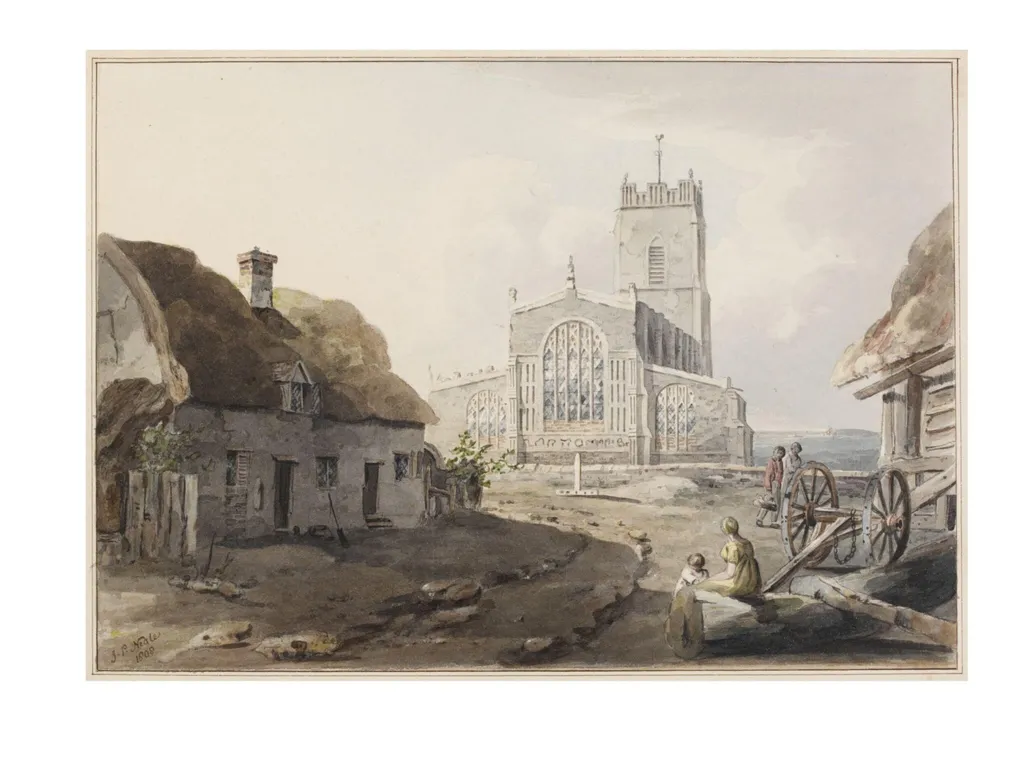
Blythburgh Church, Suffolk is a watercolor work on paper by the British Romanticist artist Robert Neale Fonnereau. It dates from 1808 and is held in the collection of the Victoria and Albert Museum.
About this work
Overview
The composition centers on the church’s tall tower and expansive windows, framed by modest domestic structures and figures going about daily life.
Robert Neale Fonnereau’s 1808 watercolour captures the parish church of Blythburgh in Suffolk, not a castle as sometimes misidentified. The scene is quiet and unembellished, rendered in delicate washes that emphasize the softness of the English countryside. The composition centers on the church’s tall tower and expansive windows, framed by modest domestic structures and figures going about daily life.
Subject & Meaning
The painting presents a humble rural setting, with a thatched cottage, a stationary cart, and two figures—a woman and child—seated near the churchyard. These elements suggest quiet domesticity and the integration of religious and communal life in early 19th-century Suffolk. There is no grand narrative; instead, the work conveys stillness and continuity in a landscape shaped by tradition.
Technique & Style
Fonnereau employed transparent watercolour washes to achieve a muted, atmospheric tone. Grays, soft browns, and pale ochres dominate, creating a sense of subdued light and weathered textures. The brushwork is gentle and deliberate, avoiding sharp detail in favor of tonal gradations that lend the scene a contemplative, almost ethereal quality.
History & Provenance
Created in 1808, the watercolour is one of several topographical works by Fonnereau documenting Suffolk’s ecclesiastical architecture. It likely served as a personal record or study, reflecting the period’s interest in regional heritage. The piece remained in private hands until its acquisition by a public collection in the late 20th century, where it is now preserved as a record of rural Suffolk.
Context
In the early 1800s, artists increasingly turned to local landscapes and vernacular architecture as subjects worthy of careful observation. Fonnereau’s work aligns with this trend, capturing the quiet dignity of rural life before industrialization transformed the English countryside. His focus on modest structures and everyday figures reflects a shift away from grand historical or mythological themes.
Legacy
Though not widely exhibited, Fonnereau’s watercolour contributes to a broader archive of topographical art from the Romantic era. Its restrained aesthetic and attention to local detail offer insight into how ordinary places were valued by artists of the time. Today, it remains a quiet testament to the enduring presence of Suffolk’s ecclesiastical heritage.
Artist & collection
Artist
Robert Neale Fonnereau painted calm, detailed watercolors of English churches in the early 1800s.

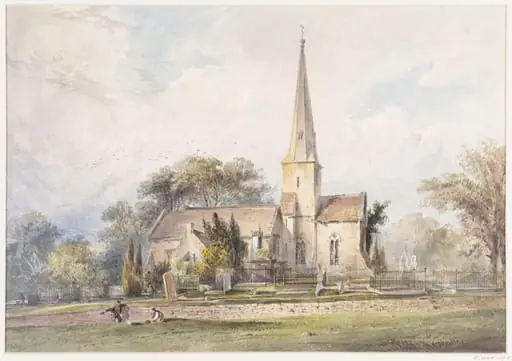 Church and churchyard
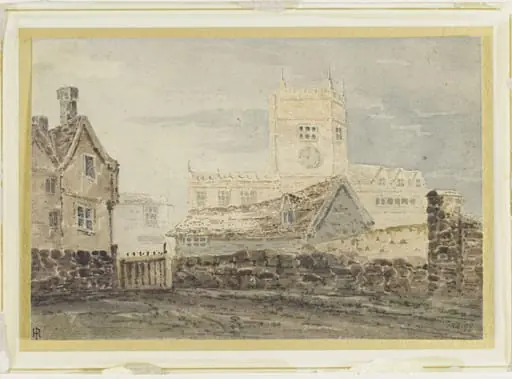 The school, Shrewsbury
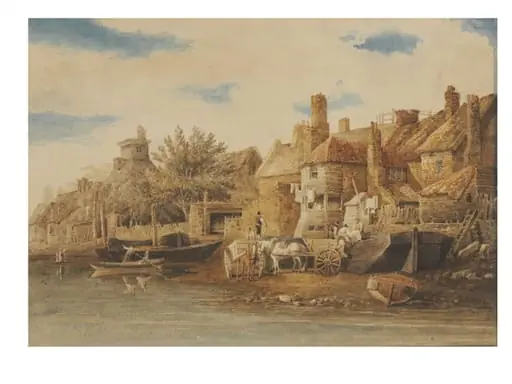 Fishermen's Houses by the Thames at Lambeth
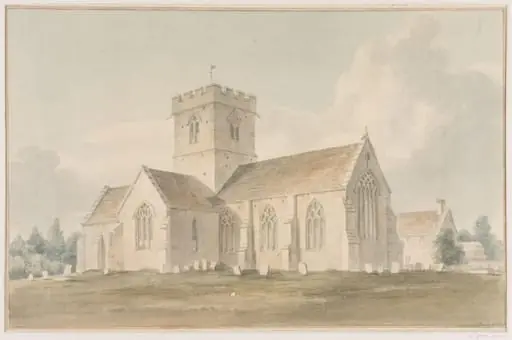 South-east view of Dinton Church, Wiltshire
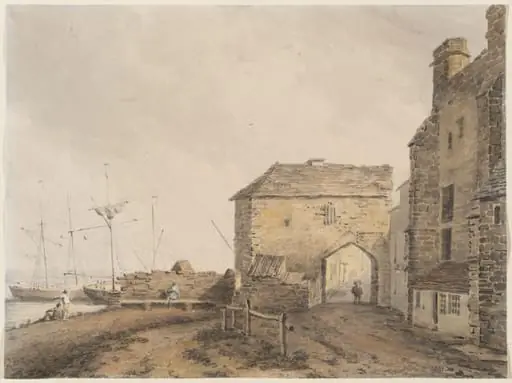 The South Gate and Old Gaol, Southampton
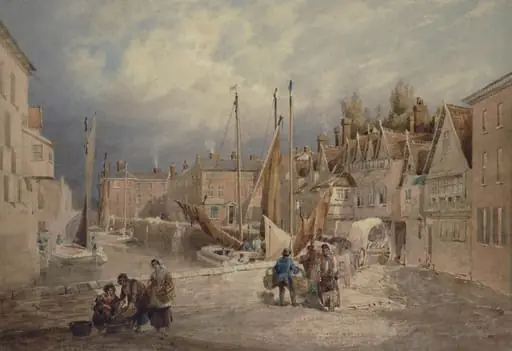 Quay Side, Norwich
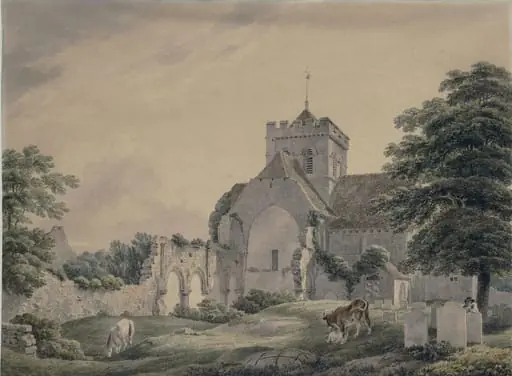 Boxgrove Priory Church, near Chichester
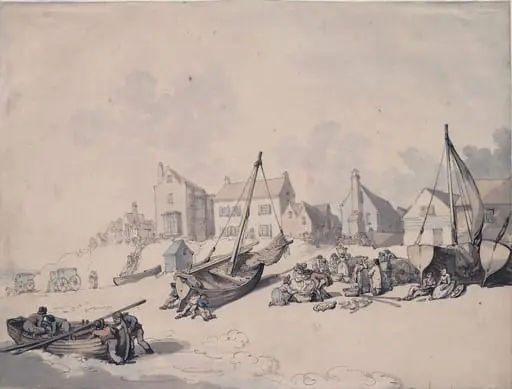 Brighton Beach
![View of the church and adjacent ruins at Dunshaghlin [Dunshaughlin], Co[unt]y of E[ast] Meath, 13 miles from Dublin [...], by Gabriel, ca.1729-1817 Beranger](https://artifactworldgallery.com/img/gabriel-ca-1729-1817-beranger--view-of-the-church-and-adjacent-ruins-at-dunshaghlin-dunshau--b4275bcb8c0ebd0f-w320.webp) View of the church and adjacent ruins at Dunshaghlin [Dunshaughlin], Co[unt]y of E[ast] Meath, 13 miles from Dublin [...]
View of the church and adjacent ruins at Dunshaghlin [Dunshaughlin], Co[unt]y of E[ast] Meath, 13 miles from Dublin [...]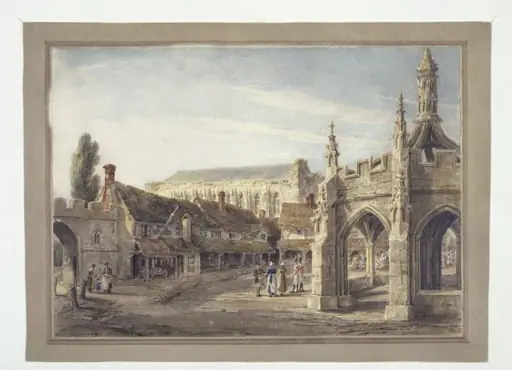 The Market Cross and Abbey Church, Malmesbury