Artwork
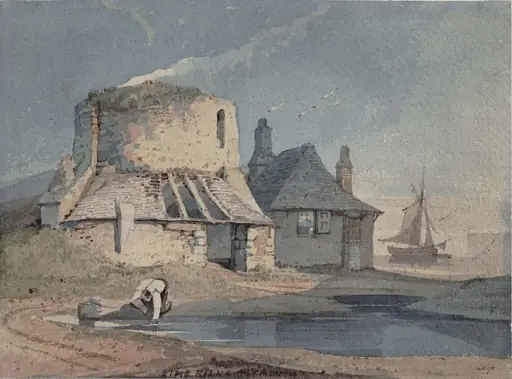
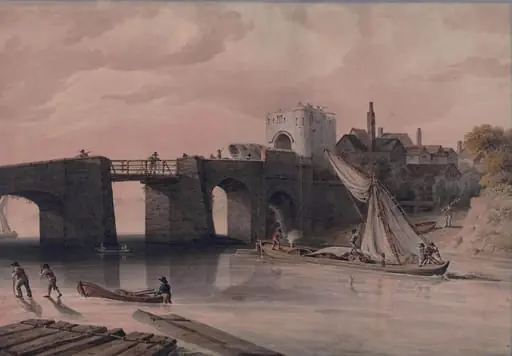
The South Gate and Old Gaol, Southampton
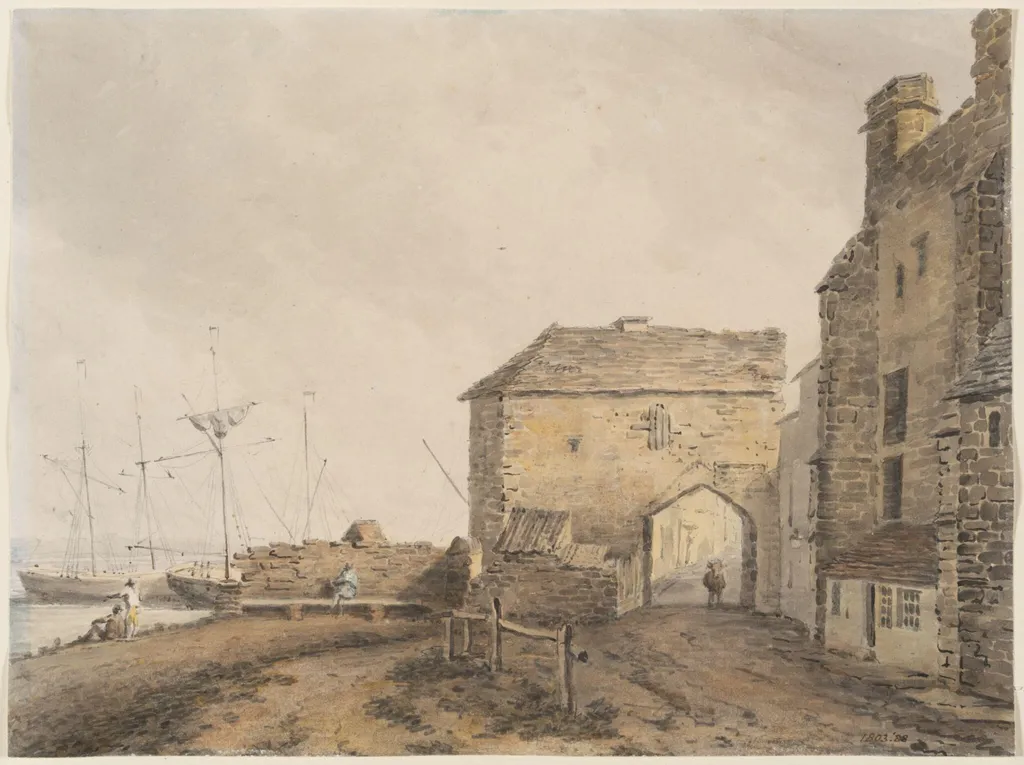
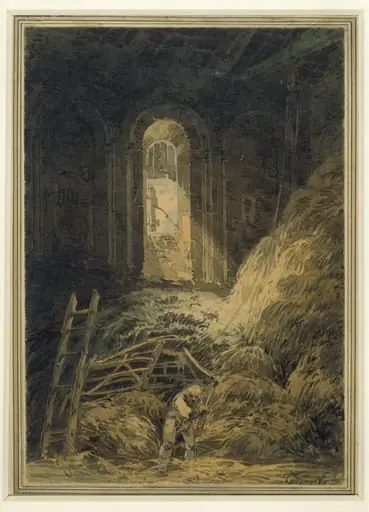
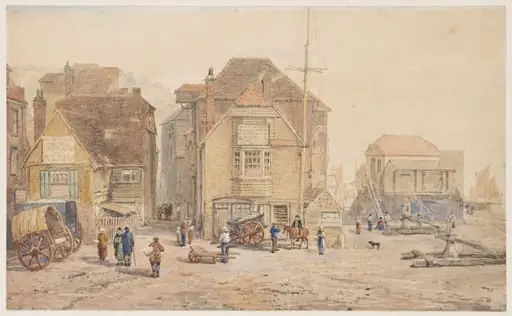
The South Gate and Old Gaol, Southampton is a watercolor work on paper by the Romanticist artist Turner. It dates from 1800 and is held in the collection of the Victoria and Albert Museum. This watercolour, dated 1800, captures the South Gate and Old Gaol in Southampton, a modest civic structure at the edge of the harbor.
About this work
Overview
The composition focuses on the gate’s open archway, flanked by weathered stone buildings and a wooden fence, with anchored vessels visible beyond.
This watercolour, dated 1800, captures the South Gate and Old Gaol in Southampton, a modest civic structure at the edge of the harbor. Rendered in delicate washes, the scene conveys a quiet, unembellished moment in the town’s daily life. The composition focuses on the gate’s open archway, flanked by weathered stone buildings and a wooden fence, with anchored vessels visible beyond. The work reflects a topographical interest common in early 19th-century British watercolour.
Subject & Meaning
The painting documents a functional urban gateway and its adjacent jail, both integral to Southampton’s maritime infrastructure. The presence of pedestrians near the gate suggests routine activity, while the anchored ships imply the town’s commercial ties to the sea. There is no overt narrative or symbolism; instead, the work serves as a quiet record of place, emphasizing the ordinary rhythms of a port town in the early 1800s.
Technique & Style
The artist employed translucent watercolour washes to suggest atmosphere and texture without heavy detail. Light is subtly modulated, fading from bright tones near the water to deeper shadows beneath building eaves, creating a sense of spatial depth. The rough stone surfaces and wooden fence are rendered with loose, suggestive strokes, evoking materiality rather than precise definition. The overall effect is airy and sketch-like, characteristic of topographical watercolours of the period.
History & Provenance
Created in 1800, the watercolour was likely made as a personal record or commission tied to Southampton’s civic landscape. It entered the collection of the Victoria and Albert Museum in the 19th century, where it remains part of a broader archive of British topographical art. Its survival reflects the growing institutional interest in documenting regional architecture and urban scenes during the early Victorian era.
Context
In the early 1800s, Southampton was a working port with medieval structures still in use. The South Gate, originally part of the town’s defensive walls, had long lost its military function but retained its role as a passage to the harbor. Watercolours like this were often made by amateur or professional artists documenting local landmarks, serving both personal and archival purposes amid rapid urban change.
Legacy
The painting contributes to a body of 19th-century British watercolours that preserved the appearance of pre-industrial towns before widespread redevelopment. Though not widely exhibited, it remains a valuable reference for historians studying Southampton’s built environment. Its modest scale and restrained technique reflect a broader trend in topographical art that valued accuracy and quiet observation over dramatic effect.
Artist & collection
Artist
Turner loved storms so much he once tied himself to a ship’s mast just to feel one, and he painted the light like no one else—even blurring his watercolors with his fingers to make the air shimmer.