Artwork
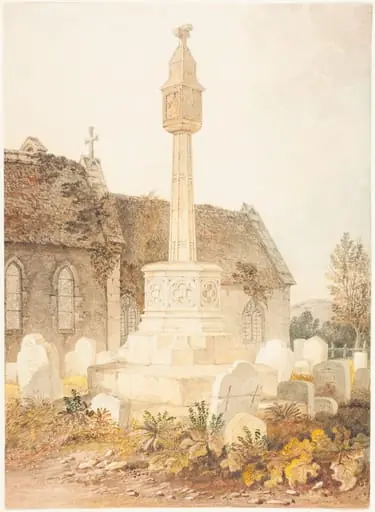
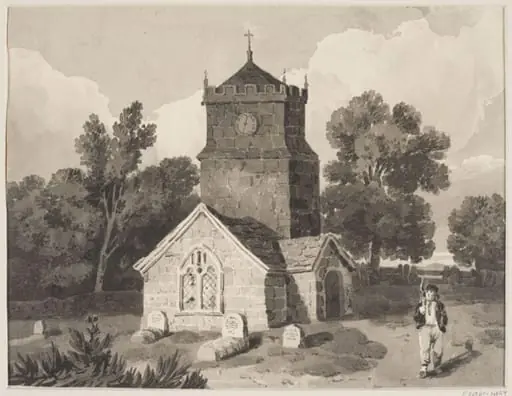
South-east view of Dinton Church, Wiltshire
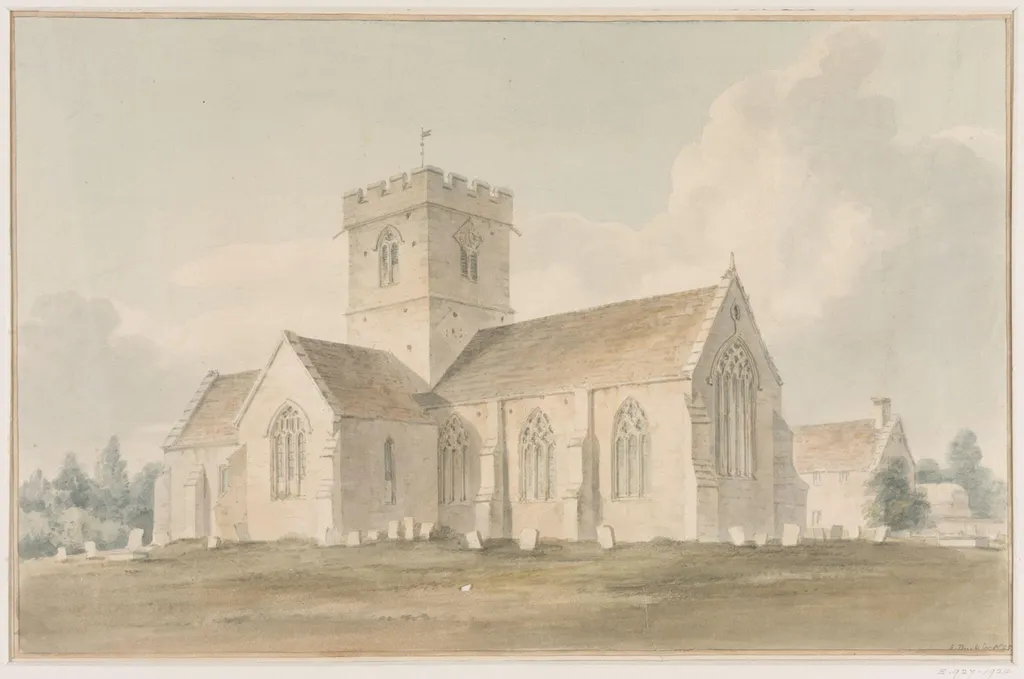
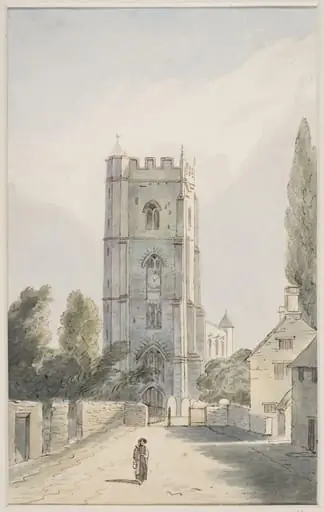
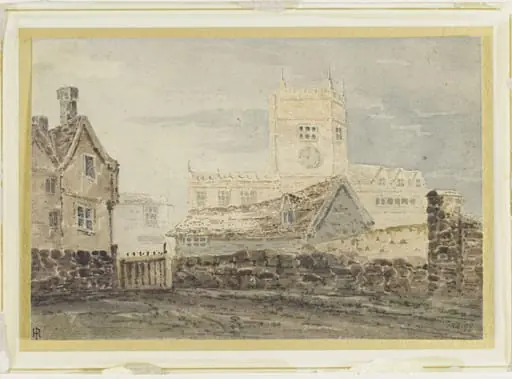
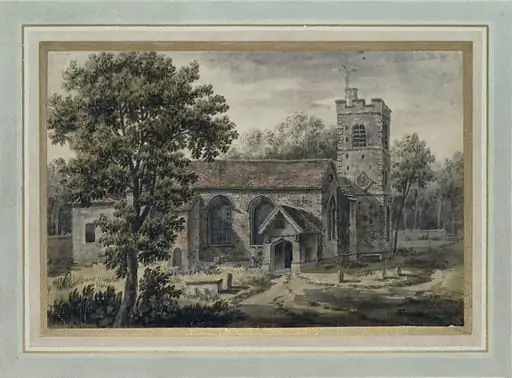
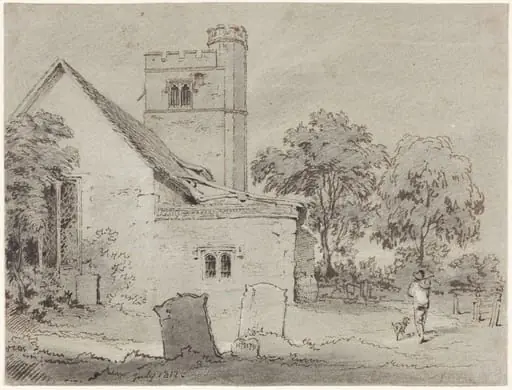
South-east view of Dinton Church, Wiltshire is a watercolor work on paper by the British Romanticist artist John Chessell Buckler. It dates from 1805 and is held in the collection of the Victoria and Albert Museum.
About this work
Overview
Its restrained palette and modest scale reflect a documentary intent rather than dramatic expression, aligning with antiquarian interests of the period.
Created in 1805, this watercolour depicts the southeast facade of Dinton Church in Wiltshire, rendered by John Chessell Buckler. The work is part of the Victoria and Albert Museum’s collection and exemplifies early 19th-century topographical watercolour practice. Its restrained palette and modest scale reflect a documentary intent rather than dramatic expression, aligning with antiquarian interests of the period.
Subject & Meaning
The painting presents the church as a quiet, enduring presence within its landscape. A tall tower rises above the nave, flanked by modest windows and framed by trees and scattered gravestones. The inclusion of burial markers suggests a contemplative focus on mortality and continuity, common in rural ecclesiastical imagery of the time. The scene conveys stillness, not narrative.
Technique & Style
Buckler employed transparent watercolour washes with minimal detail, favoring tonal gradations over fine line work. The palette is limited to muted browns, greys, and soft ochres, creating a subdued, atmospheric effect. Brushwork is deliberate but unadorned, emphasizing structure over ornament. This approach reflects a topographical tradition prioritizing accuracy over emotional intensity.
History & Provenance
The watercolour was produced during Buckler’s early career, when he was actively documenting English ecclesiastical architecture. It entered the Victoria and Albert Museum’s collection as part of its broader effort to preserve British artistic records of historic buildings. No significant alterations or provenance gaps are recorded, suggesting consistent institutional stewardship since acquisition.
Context
In the early 1800s, antiquarian societies and amateur artists increasingly recorded vernacular architecture before industrialization altered the landscape. Buckler’s work aligns with this movement, which valued precision and preservation over romantic idealization. Though not part of the Romantic art canon, his approach shares an interest in place and heritage, albeit with restraint.
Legacy
Buckler’s watercolours, including this one, remain valuable as historical records of church architecture prior to Victorian restorations. While not widely exhibited today, they contribute to scholarly understanding of early 19th-century architectural documentation. His method influenced later topographers who sought to balance aesthetic clarity with factual fidelity.
Artist & collection