Artwork
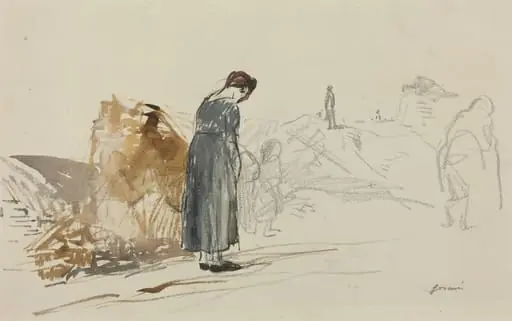
a) C'etait notre maison (recto); b) Refugees in a Landscape (verso)
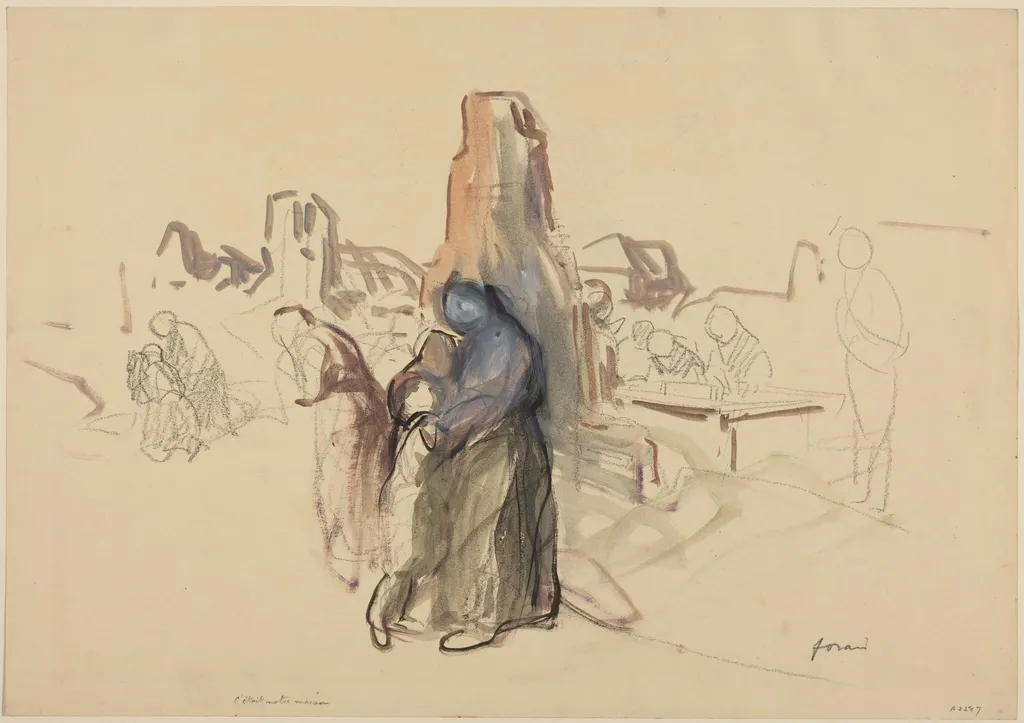
a) C'etait notre maison (recto); b) Refugees in a Landscape (verso) is a watercolor drawing by Jean-Louis Forain. It dates from 1916 and is held in the collection of the National Gallery of Art.
About this work
Overview
Jean-Louis Forain created two related drawings on opposite sides of a single sheet of wove paper around 1916.
Jean-Louis Forain created two related drawings on opposite sides of a single sheet of wove paper around 1916. One side, titled *C'etait notre maison*, employs black crayon, watercolor, and white opaque pigment; the reverse, *Refugees in a Landscape*, uses brush and ink with crayon. Both works reflect his sustained interest in capturing transient moments through spontaneous draftsmanship, a hallmark of his approach to drawing during the First World War.
Subject & Meaning
The verso depicts a group of displaced figures moving through a sparse, ambiguous landscape. A central woman, wrapped in a dark coat and hat, clutches an object to her chest, suggesting vulnerability or possession. Surrounding forms are indistinct—shadows of people, a table, and a vertical shape that may be a structure or tree—conveying dislocation rather than specific location. The title implies a response to wartime displacement, though Forain avoids literal narrative, favoring emotional resonance.
Technique & Style
Forain applied quick, gestural lines in black crayon and ink to suggest motion and atmosphere rather than detail. Watercolor washes in muted browns, grays, and faint blue establish tonal depth without saturation. The use of opaque white highlights adds subtle contrast, enhancing the sense of fleeting light or movement. His method prioritizes immediacy, aligning with Impressionist principles while retaining a raw, documentary quality suited to the era’s upheavals.
History & Provenance
Created during World War I, these drawings emerged from a period when Forain was actively documenting civilian life amid conflict. They remained in his personal collection until after his death, later entering institutional holdings. Unlike his more polished lithographs and paintings, these works were likely private studies, never intended for public exhibition, which contributes to their understated presence in his broader oeuvre.
Context
In 1916, France was deeply engaged in the First World War, and civilian displacement was widespread. Forain, though not a frontline artist, responded to the social tremors of the time through intimate sketches. His focus on ordinary people in transit reflects a broader artistic interest in the human cost of war, paralleling contemporaneous work by other French illustrators and draftsmen who turned from satire to somber observation.
Legacy
While Forain was more celebrated in his lifetime for his satirical prints and portraits, these drawings reveal a quieter, more empathetic side of his practice. Their modest scale and unfinished quality have kept them outside mainstream narratives of Impressionism, yet they offer valuable insight into how artists recorded the war’s domestic impact. Today, they are studied for their emotional restraint and technical economy.
Artist & collection

Artist
Jean-Louis Forain (French pronunciation: ; 23 October 1852 – 11 July 1931) was a French Impressionist painter and printmaker, working in media including oils, watercolour, pastel, etching and lithograph.

 a) Les Allemandes sont partis (recto); b) Sketch of a Man (verso)
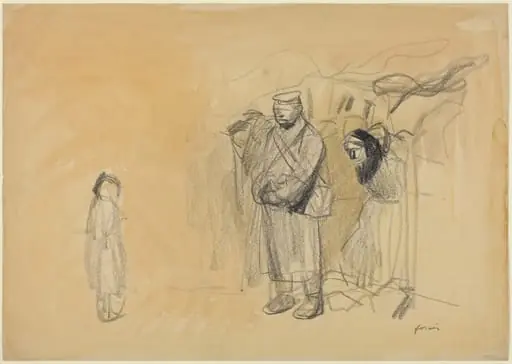 a) German Soldiers and French Child (recto); b) Woman and Child (verso)
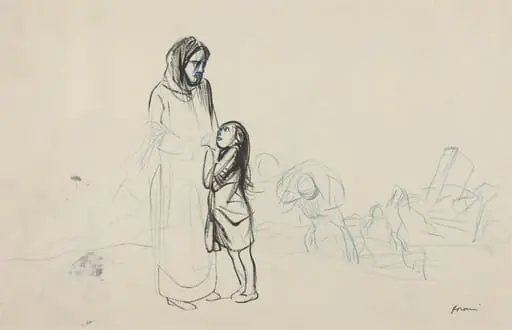 a) Refugees (recto); b) No 2 (verso)
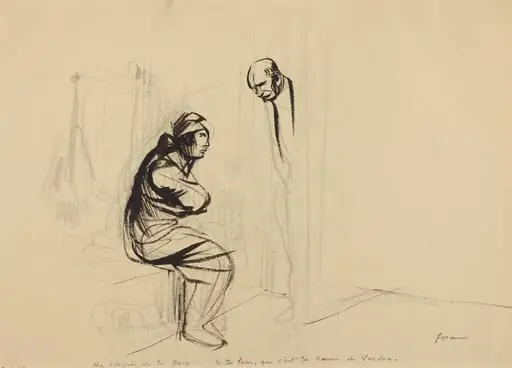 a) Au congres de la Paix (recto); b) Untitled (verso)
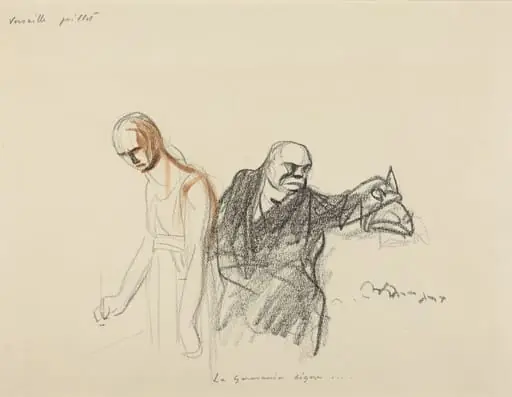 a) Versailles juillet. La Germania signe... (recto); b) Sketch for Figure of Germania (verso)
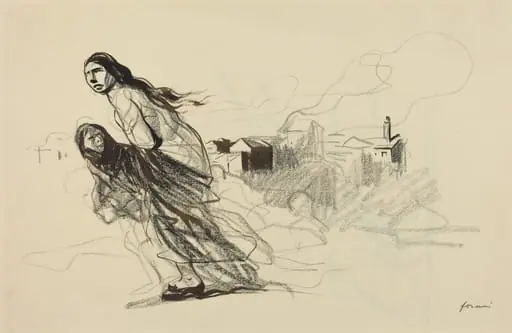 a) After Douai (recto); b) Untitled (verso)