Artwork
Le démobilisé
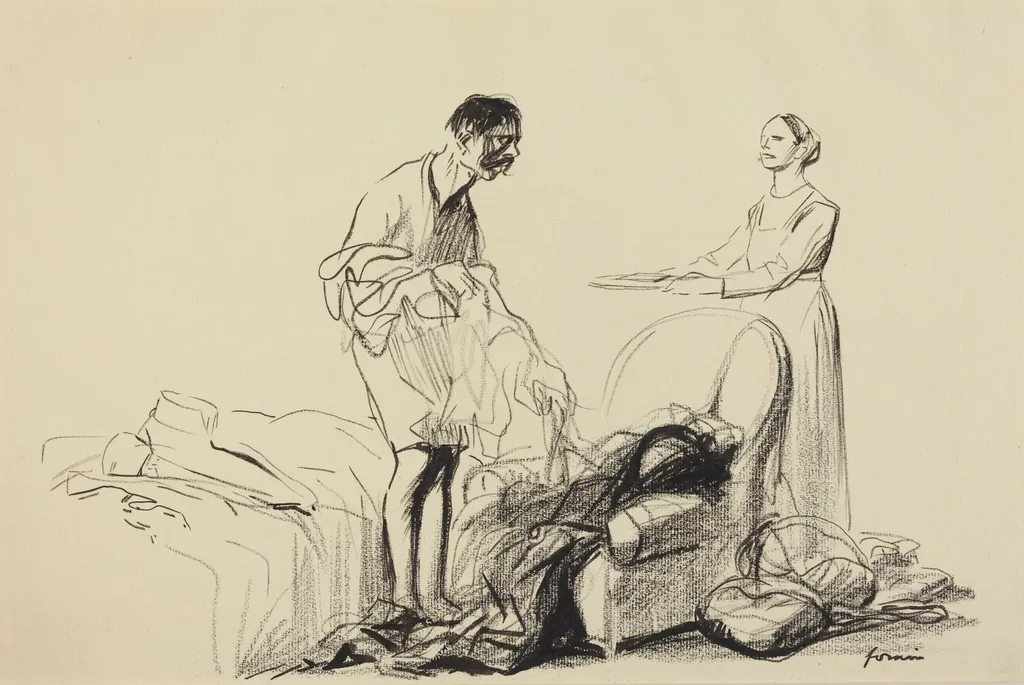
Le démobilisé is a crayon drawing by Jean-Louis Forain. It dates from 1916 and is held in the collection of the National Gallery of Art.
About this work
Overview
Created around 1916, *Le démobilisé* is a drawing by French artist Jean-Louis Forain, executed in brush and black ink with black crayon on laid paper.
Created around 1916, *Le démobilisé* is a drawing by French artist Jean-Louis Forain, executed in brush and black ink with black crayon on laid paper. The work belongs to a body of drawings that capture everyday life with quiet precision. Unlike his more celebrated oil paintings, this piece reflects a restrained, intimate mode of expression, aligned with Forain’s broader interest in human observation during times of social transition.
Subject & Meaning
The drawing portrays a returning soldier, slumped and weary, his posture conveying exhaustion rather than triumph. His untied boot and lowered head suggest disorientation and emotional fatigue, mirroring the experiences of many civilians reintegrating after World War I. Forain avoids dramatic gesture, instead using minimal lines to evoke inner turmoil, making the figure’s silence more resonant than any narrative could.
Technique & Style
Forain employed swift, economical brushwork and the textured pressure of black crayon to define form and shadow. The laid paper, now yellowed, enhances the somber tone, its fibrous surface absorbing ink to create subtle gradations. His technique favors immediacy over finish—each stroke feels deliberate yet unforced, characteristic of his journalistic approach to drawing and his affinity for capturing fleeting moments with emotional clarity.
History & Provenance
The drawing was made shortly after the Armistice, during a period when Forain focused on the human aftermath of war. While his commercial success in lithography and illustration was considerable during his lifetime, this work remained in private hands, likely among collectors of his graphic art. Its survival offers a rare, unmediated glimpse into his postwar observations, distinct from his more widely circulated prints.
Context
In the years following World War I, French artists turned from prewar optimism toward themes of loss and dislocation. Forain, though associated with Impressionist circles, diverged from their light-filled scenes, instead documenting the quiet decay of social morale. *Le démobilisé* aligns with a broader trend in postwar graphic art that prioritized psychological realism over idealism, reflecting a nation grappling with its scars.
Legacy
Though less prominent in public memory today than some of his contemporaries, Forain’s drawings like *Le démobilisé* remain significant for their unembellished humanity. They exemplify a tradition of French graphic art that valued observational honesty over spectacle. The work continues to be studied for its emotional restraint and its role in documenting the civilian experience of war’s aftermath.
Artist & collection

Artist
Jean-Louis Forain (French pronunciation: ; 23 October 1852 – 11 July 1931) was a French Impressionist painter and printmaker, working in media including oils, watercolour, pastel, etching and lithograph.

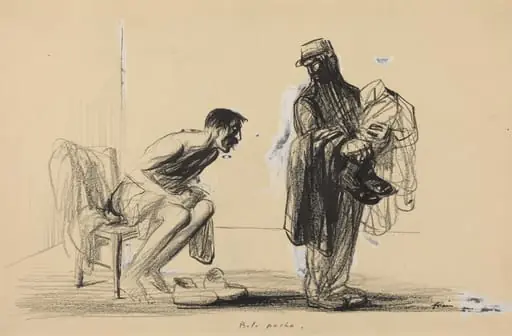 a) Bolo pacha (recto); Study for Bolo pacha (verso)
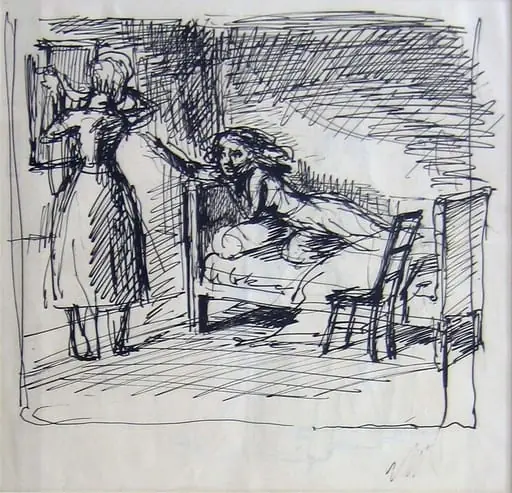 Untitled
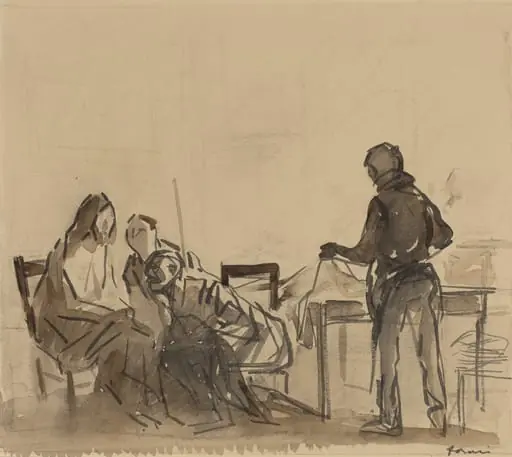 Before the Repast at Emmaus
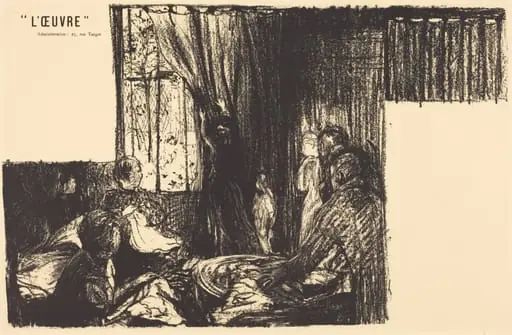 Les Soutiens de la société
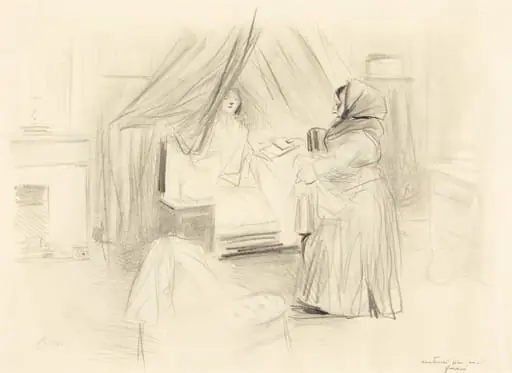 Le petit déjeuner (planche en largeur) (Breakfast) (horizontal plate)
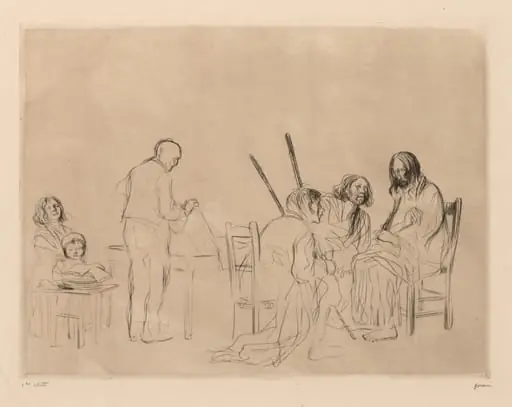 Before the Supper at Emmaus
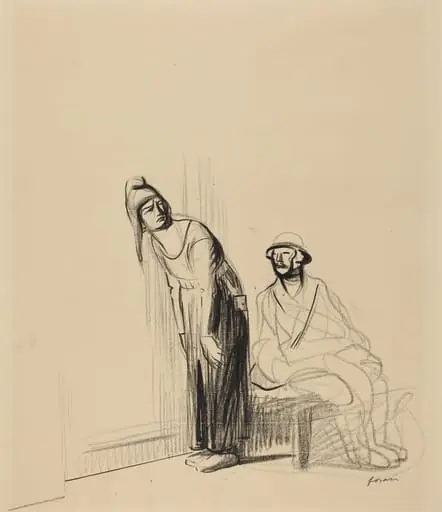 At the Peace Conference
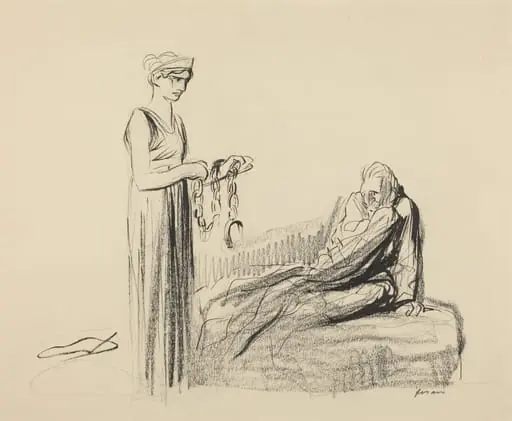 a) Fetters (recto); b) Several Figures (verso)
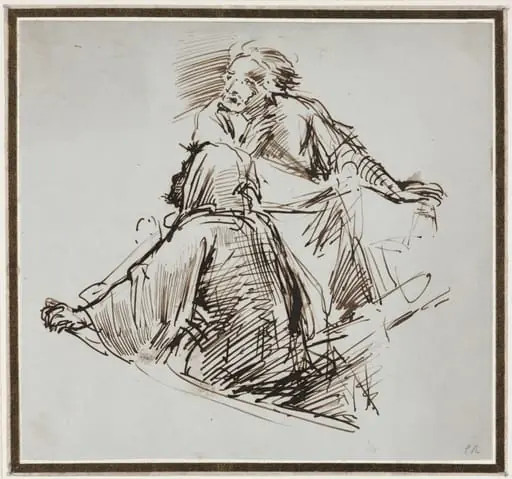 Two Male Figures
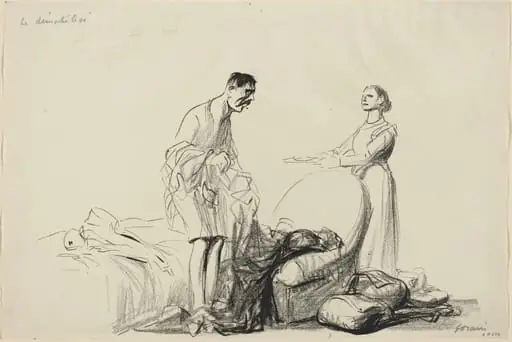 Le demobilise