Artwork
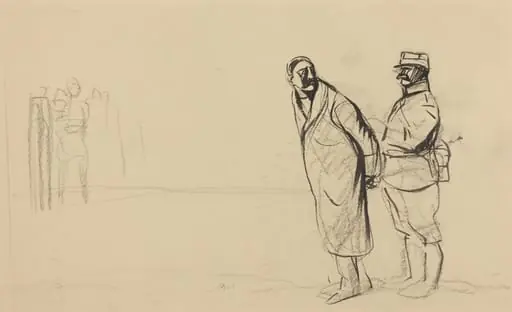
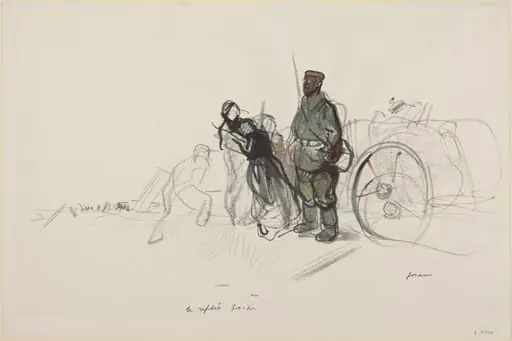
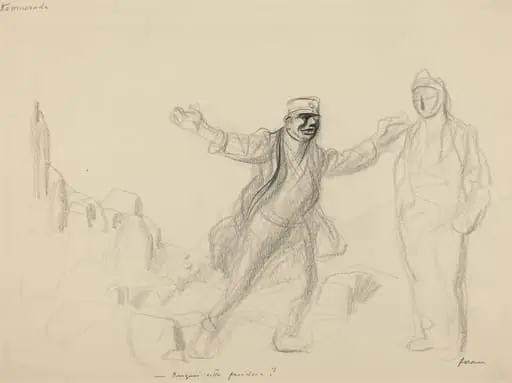
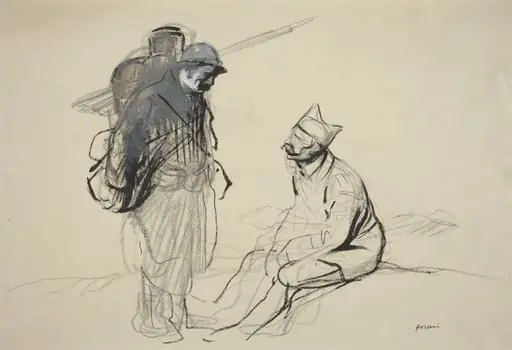
a) In the Trenches (recto); b) Study for In the Trenches (verso)
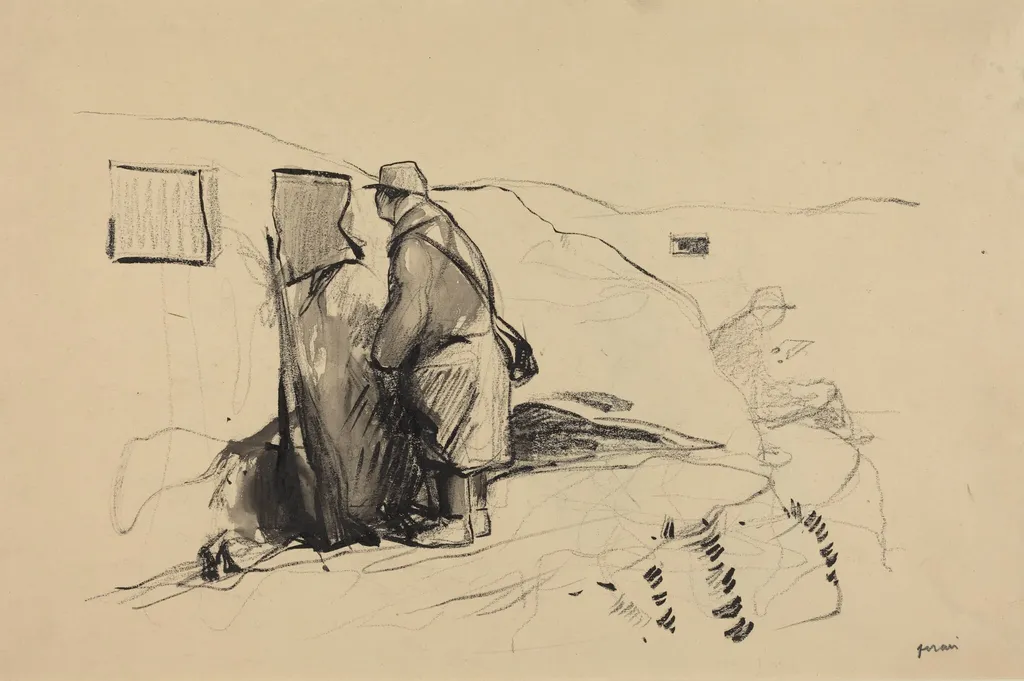
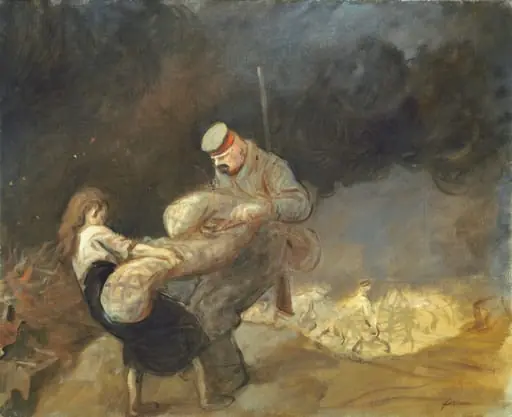
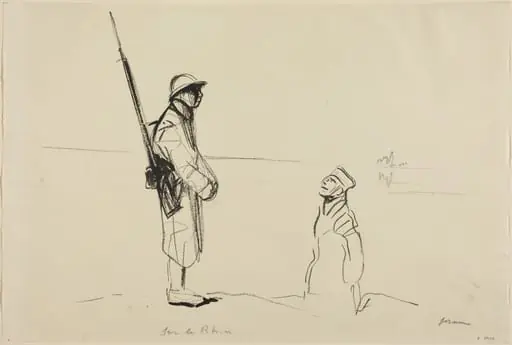
a) In the Trenches (recto); b) Study for In the Trenches (verso) is a crayon drawing by Jean-Louis Forain. It dates from 1916 and is held in the collection of the National Gallery of Art.
About this work
Overview
Created around 1916, these two drawings by Jean-Louis Forain capture the immediacy of frontline experience during World War I.
Created around 1916, these two drawings by Jean-Louis Forain capture the immediacy of frontline experience during World War I. Executed in black crayon, wash, and ink on wove paper, they were made as a finished work and its preparatory sketch, both bearing the weight of direct observation. The recto presents a completed scene; the verso, a more spontaneous study. Their shared medium and subject reflect Forain’s shift from civilian satire to wartime documentation.
Subject & Meaning
The central figure is a soldier crouched in a trench, his back turned, helmet and rifle visible, motionless amid the mud and debris. The absence of a face emphasizes anonymity and exhaustion, transforming the individual into a symbol of the common infantryman. The rough terrain and sparse details suggest the harsh, unvarnished reality of trench life. No heroism is staged; instead, the image conveys quiet endurance under relentless conditions.
Technique & Style
Forain employed loose, rapid strokes of black crayon, augmented by diluted washes and ink to model form and depth. The shading in the soldier’s coat is built through layered hatching and soft gradients, suggesting texture without detail. The drawing’s urgency is evident in its unfinished edges and minimal background, as if captured in a fleeting moment between duties. The technique prioritizes emotional resonance over polish, aligning with the chaos of the front.
History & Provenance
Forain produced these works during his service as a war artist for the French military, documenting conditions at the front lines. Unlike his earlier satirical prints, these drawings were not intended for public exhibition but as records of lived experience. Their survival as a paired set—recto and verso—suggests they were kept together by the artist or a close associate, possibly as personal testimony rather than official documentation.
Context
In 1916, France was entrenched in the brutal stalemate of the Western Front, with soldiers enduring cold, disease, and constant threat. Forain, though not a soldier, was granted access to the trenches as an observer. His work diverged from patriotic propaganda, focusing instead on the physical and psychological toll of war. This shift marked a departure from his pre-war caricatures and aligned him with a quieter, more somber artistic response to conflict.
Legacy
Though Forain was once celebrated for his satirical illustrations, his wartime drawings remain less widely known than those of contemporaries like Otto Dix or George Grosz. These sketches, however, offer a restrained yet potent record of the infantry’s daily reality. Their understated power lies in their lack of spectacle, preserving the quiet dignity of soldiers often erased from grand narratives of the war.
Artist & collection

Artist
Jean-Louis Forain (French pronunciation: ; 23 October 1852 – 11 July 1931) was a French Impressionist painter and printmaker, working in media including oils, watercolour, pastel, etching and lithograph.