Artwork
a) Le replis boche (recto); b) Sketch for the Figure of the German (verso)
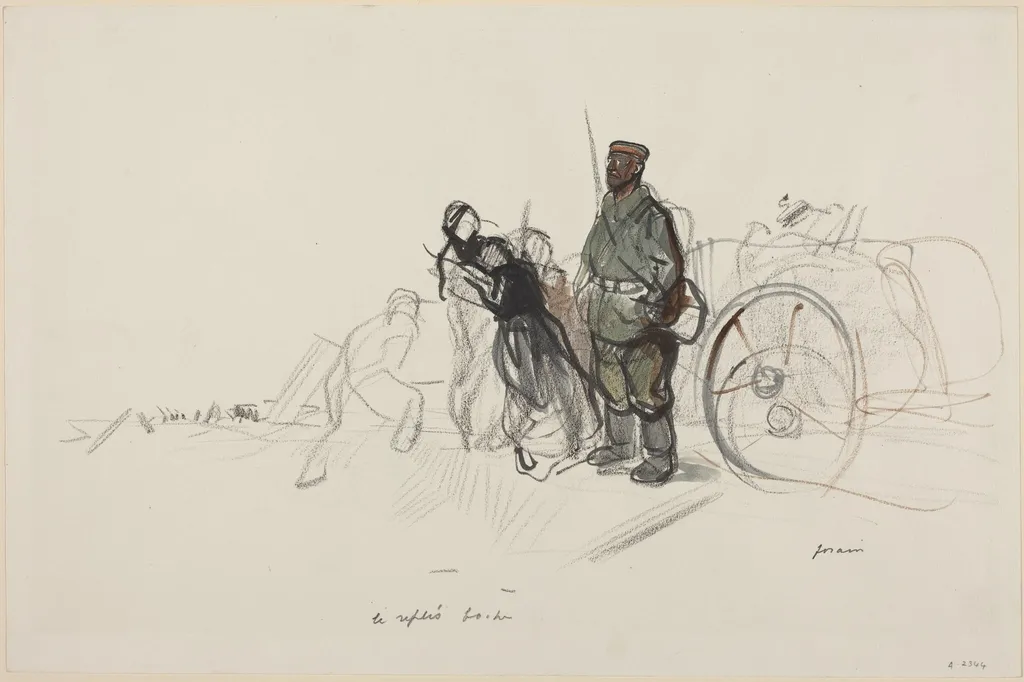
a) Le replis boche (recto); b) Sketch for the Figure of the German (verso) is a watercolor drawing by Jean-Louis Forain. It dates from 1916 and is held in the collection of the National Gallery of Art.
About this work
Overview
Though less celebrated today, Forain was a prominent figure in late 19th- and early 20th-century French art, known for his incisive observations of social life.
Created around 1916, this double-sided drawing by Jean-Louis Forain combines a finished composition on the recto with a preparatory sketch on the verso. Executed in black ink, watercolor, and crayon on wove paper, the work reflects Forain’s agile draftsmanship and his engagement with wartime imagery. Though less celebrated today, Forain was a prominent figure in late 19th- and early 20th-century French art, known for his incisive observations of social life.
Subject & Meaning
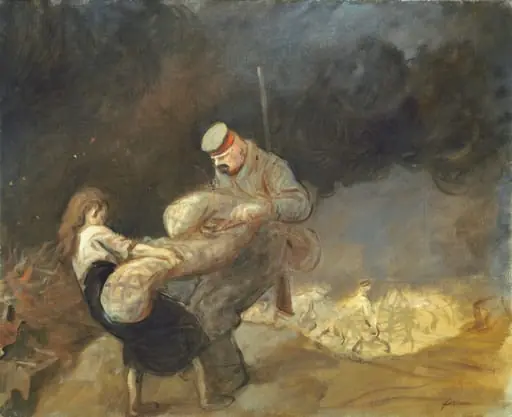
The recto depicts a German soldier in green uniform standing beside a woman and child, a rifle slung at his side. Behind them, a damaged cart and indistinct figures suggest disruption and displacement. The title, *Le replis boche*, alludes to German military presence, but the image avoids overt propaganda. Instead, it captures a quiet, tense moment of civilian encounter, leaving interpretation open to the viewer’s context.
Technique & Style
Forain employed rapid, fluid brushwork and loose crayon lines to convey immediacy. Watercolor washes define form without detail, while ink outlines anchor the figures against a sparse background. The sketch on the verso, rendered solely in crayon, reveals his process: simplified contours and shifting weight suggest an artist refining posture and gesture. The unfinished quality amplifies the sense of a moment caught in transit.
History & Provenance
The drawing emerged during Forain’s active involvement in documenting World War I, a period when he produced numerous sketches of soldiers and displaced civilians. Though its early ownership is undocumented, it aligns with a body of wartime works held in public collections. Its survival as a double-sided sheet indicates it was likely kept as a working study rather than a finished piece for exhibition.
Context
Forain’s wartime drawings responded to the shifting cultural landscape of France during the conflict. Unlike official war art, his work avoided heroism, focusing instead on the mundane and the strained interactions between soldiers and civilians. His style, rooted in Impressionist observation, adapted to the urgency of the moment, prioritizing emotional resonance over narrative clarity.
Legacy
Though overshadowed by contemporaries like Degas or Toulouse-Lautrec, Forain’s wartime drawings remain significant for their unembellished humanism. They offer a counterpoint to militarized imagery of the era, emphasizing vulnerability over victory. Today, they are studied for their technical economy and their quiet testimony to the civilian experience of war.
Artist & collection

Artist
Jean-Louis Forain (French pronunciation: ; 23 October 1852 – 11 July 1931) was a French Impressionist painter and printmaker, working in media including oils, watercolour, pastel, etching and lithograph.

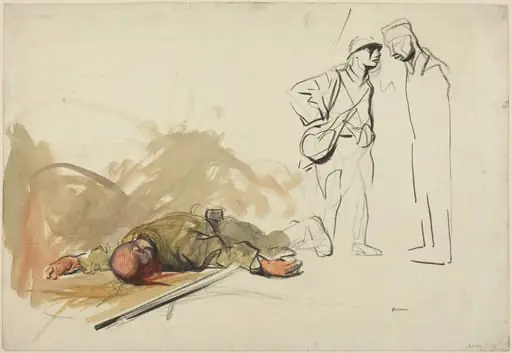 a) Dead German Soldier (recto); b) Head of a Soldier (verso)
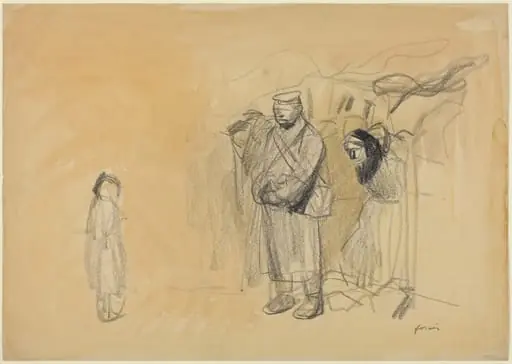 a) German Soldiers and French Child (recto); b) Woman and Child (verso)
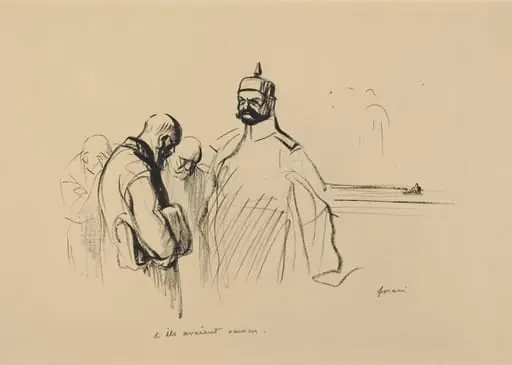 a) Si ils avaient vaincu (recto); b) Sketch of Si ils avaient vaincu (verso)
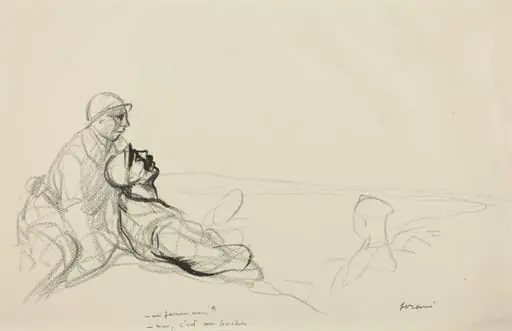 a) -Un farman? -non, c'est un boche. (recto); b) Sketch of Figure (verso)
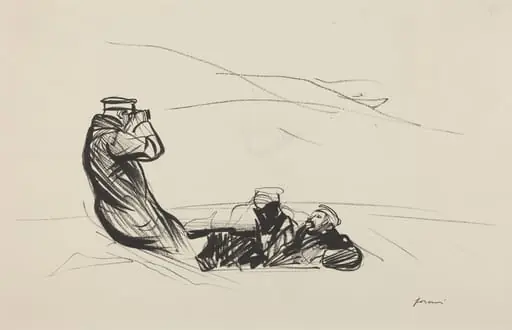 a) Looking for the Enemy (recto); b) Sketch for Looking for the Enemy (verso)
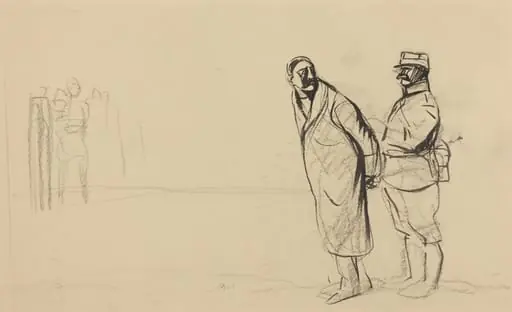 a) Au front de Vincennes, Bolo pacha (recto); b) Sketch for Au front de Vincennes, Bolo pacha (verso)
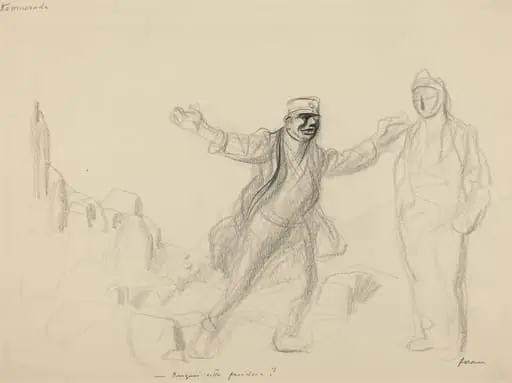 a) Kammerade. Porquoi cette froideur? (recto); b) Study for German Figure (verso)
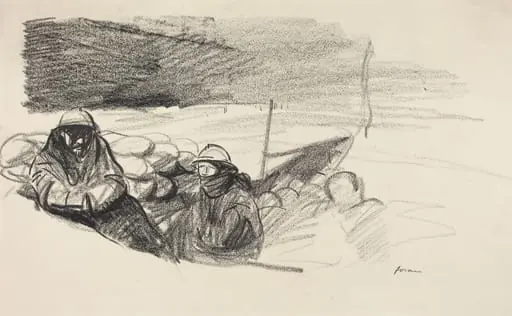 a) Two Soldiers in a Trench (recto); b) Interior with Figures Seated Behind Table (verso)
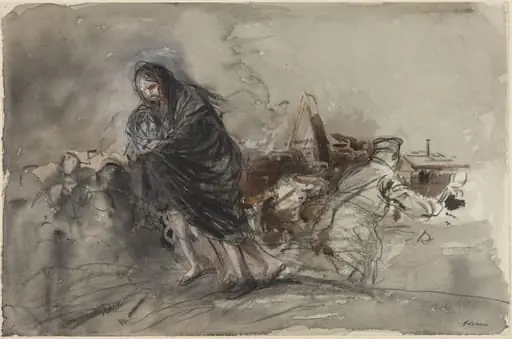 a) Après Douai (After Douai) (recto); b) Figure (verso)