Artwork
Quand le boche se retire...
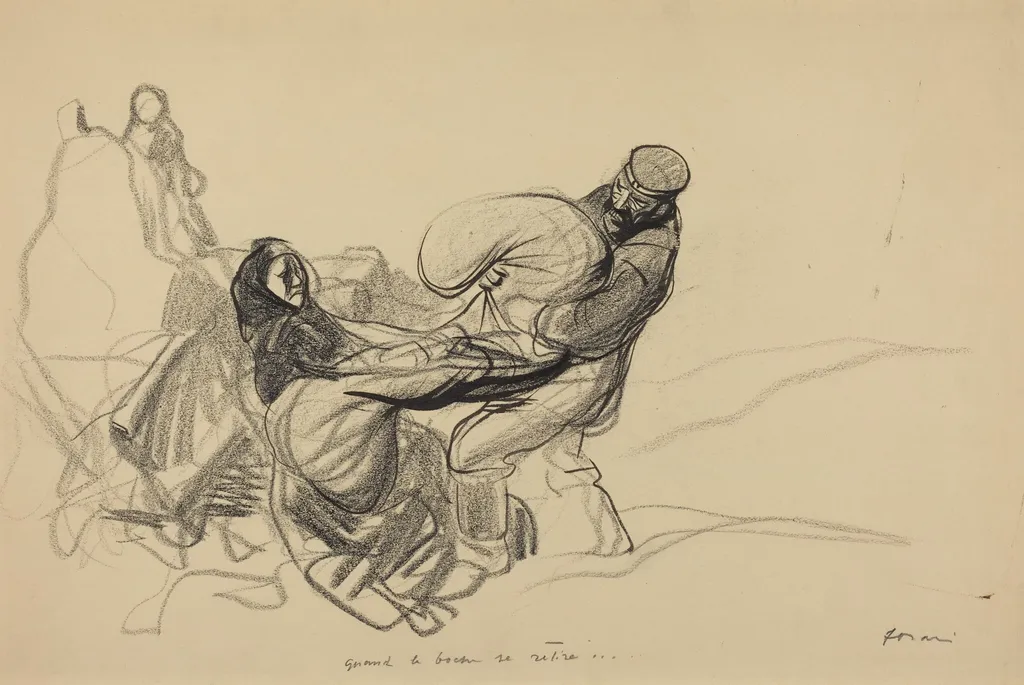
Quand le boche se retire... is an ink drawing by Jean-Louis Forain. It dates from 1917 and is held in the collection of the National Gallery of Art.
About this work
Overview
Created around 1917, this drawing by Jean-Louis Forain employs black crayon and ink on wove paper to capture a moment of physical tension between two figures.
Created around 1917, this drawing by Jean-Louis Forain employs black crayon and ink on wove paper to capture a moment of physical tension between two figures. Executed during the later phase of his career, the work reflects Forain’s continued engagement with graphic media, particularly in response to the social and political climate of World War I. Its spontaneous, energetic lines suggest a rapid, observational approach, typical of his sketch-based practice.
Subject & Meaning
The scene depicts two figures in close, forceful interaction—one in military uniform, the other in a long coat and head covering—suggesting a confrontation between soldiers or between a soldier and a civilian. The title, referencing the retreat of the 'boche' (a derogatory term for Germans), implies a moment of retribution or displacement during the war. The ambiguity of their roles and the rawness of the gesture evoke the chaos and moral complexity of wartime encounters.
Technique & Style
Forain uses bold, fluid strokes of black crayon and ink to convey motion and emotional intensity. Loose, overlapping lines define form without detailed rendering, while cross-hatching adds depth and texture to clothing and shadowed areas. The absence of background detail focuses attention on the figures’ physical struggle, emphasizing immediacy over narrative clarity. The paper’s neutral tone enhances the stark contrast of the ink, reinforcing the drawing’s urgency.
History & Provenance
The drawing was produced during Forain’s mature period, when he was actively documenting the war through sketches and prints. While its early ownership is undocumented, it aligns with a broader body of wartime works he created for periodicals and private collections. Unlike his more polished lithographs, this piece retains the intimacy of a private study, likely made on-site or from memory during the conflict.
Context
Created in 1917, amid the stalemate and attrition of the Western Front, the drawing responds to the pervasive cultural mood of resentment and upheaval. Forain, though not a combatant, used his art to reflect public sentiment toward the enemy and the human toll of war. His choice of a sketch-like medium underscores the immediacy of wartime experience, contrasting with official propaganda imagery of the era.
Legacy
This work exemplifies Forain’s role as a keen observer of social dynamics during wartime, bridging his earlier satirical style with the gravity of modern conflict. Though less known than his color prints, such drawings reveal his mastery of expressive line and his commitment to capturing fleeting, unvarnished moments. It remains a quiet but potent record of civilian and military tension during a defining historical moment.
Artist & collection

Artist
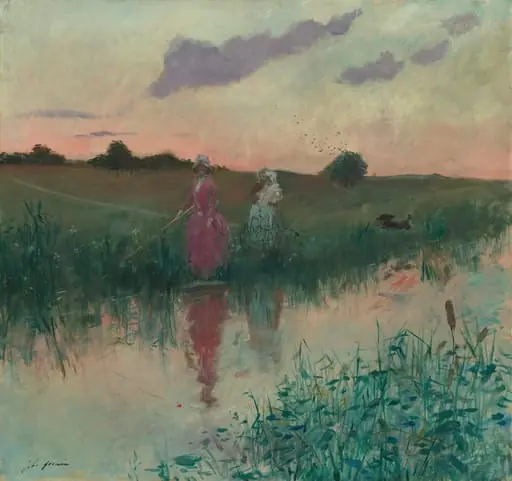
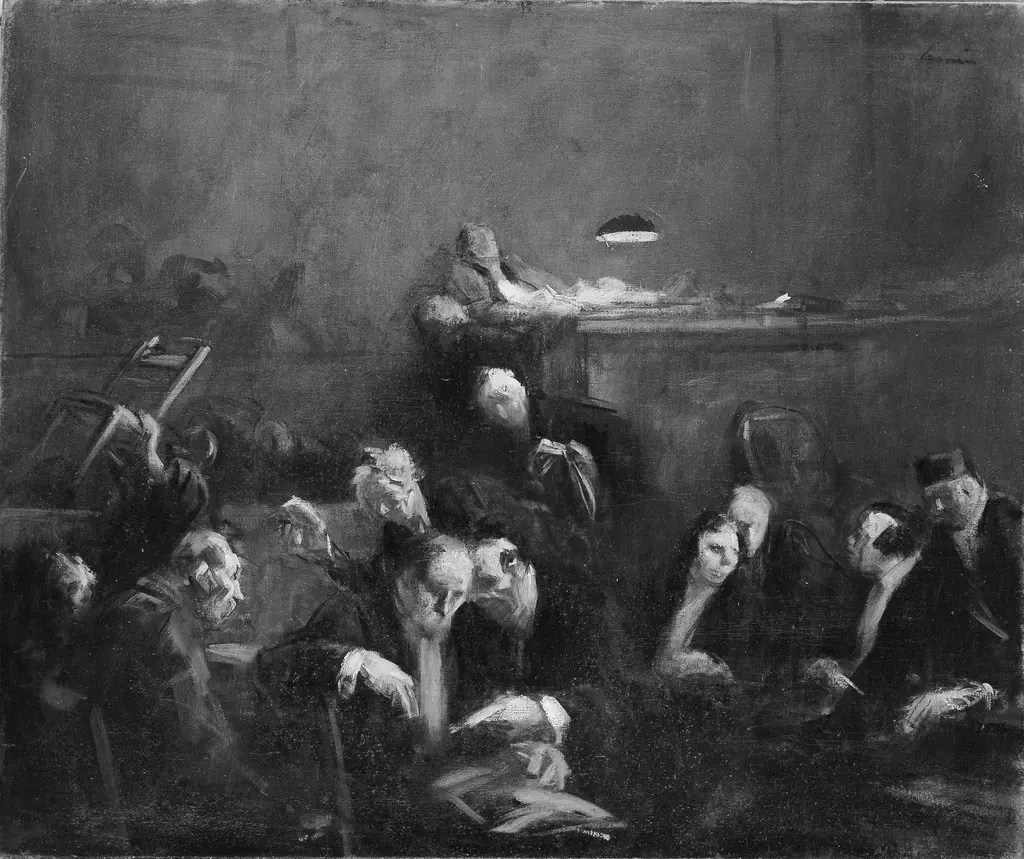
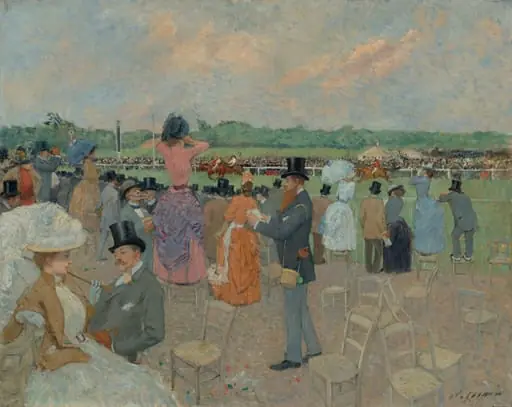
Jean-Louis Forain (French pronunciation: ; 23 October 1852 – 11 July 1931) was a French Impressionist painter and printmaker, working in media including oils, watercolour, pastel, etching and lithograph.

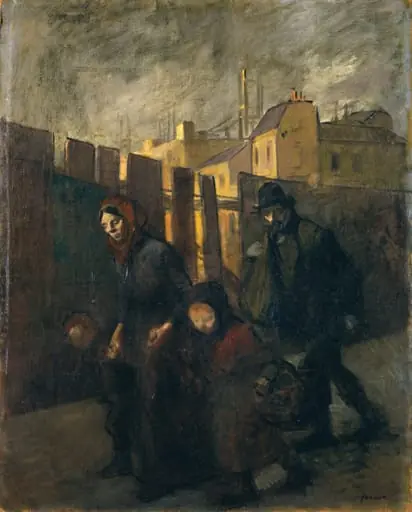
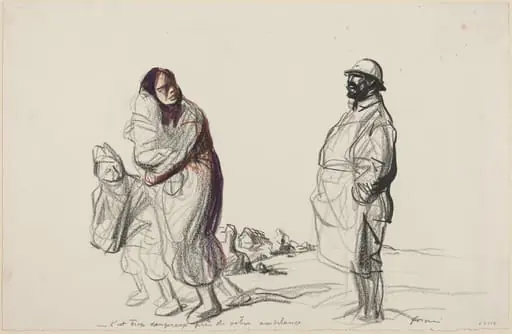 a) C'est trop dangereux pres de votre ambulance (recto); b) Study of Mother and Children (verso)
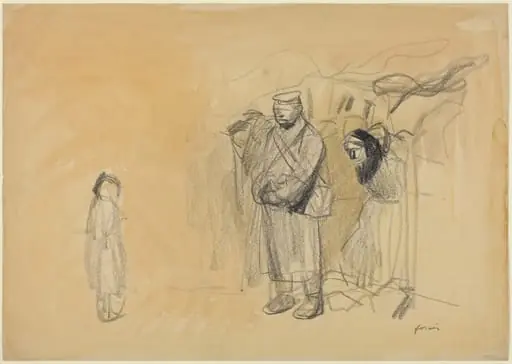 a) German Soldiers and French Child (recto); b) Woman and Child (verso)
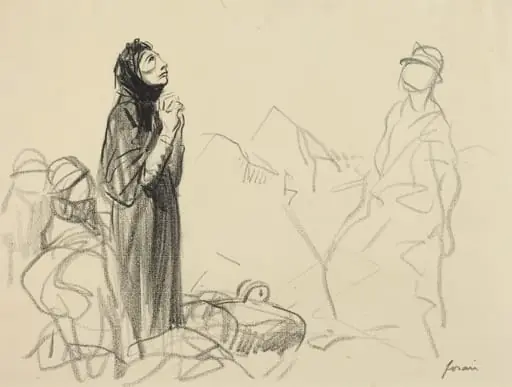 During the Armistice
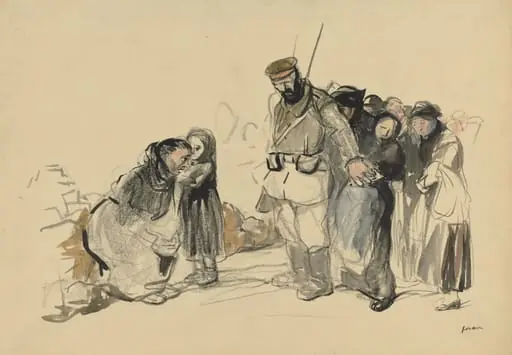 The Slavery in the North
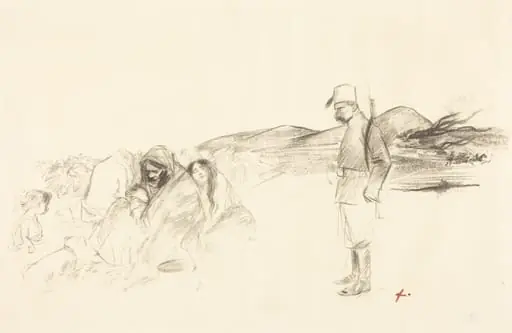 En Grèce (In Greece)
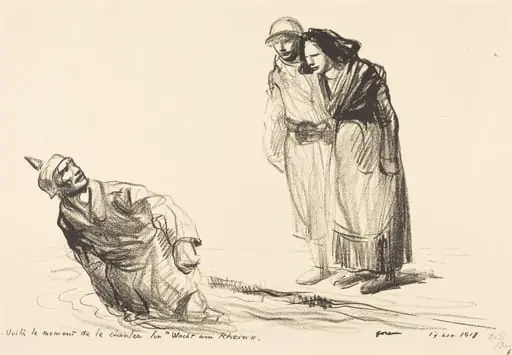 Voilà le Moment de le chantes tun "Wacht am Rhein"
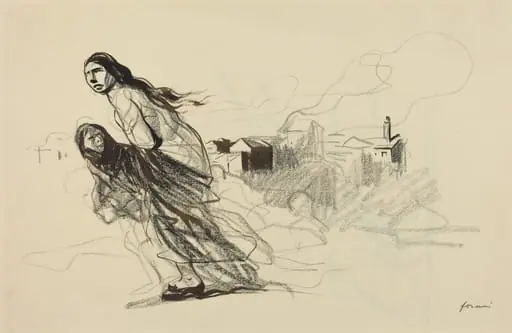 a) After Douai (recto); b) Untitled (verso)
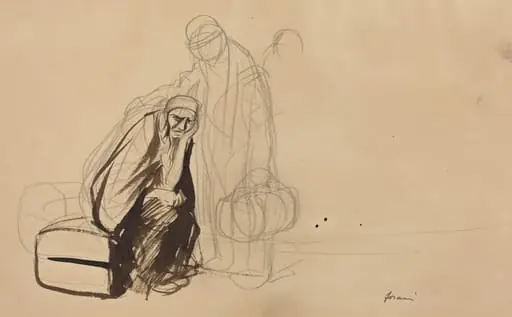 The Departure for Versailles
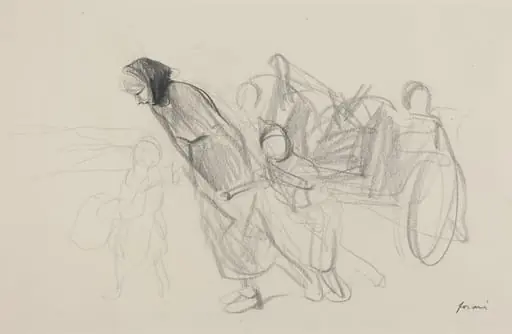 Refugees
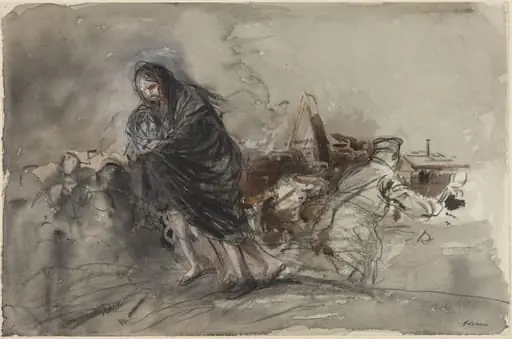 a) Après Douai (After Douai) (recto); b) Figure (verso)