Artwork
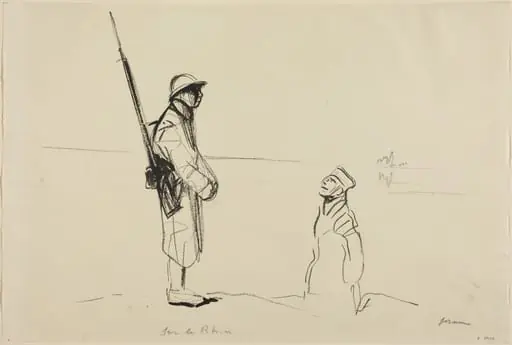
-Am Rhien? -Ya.
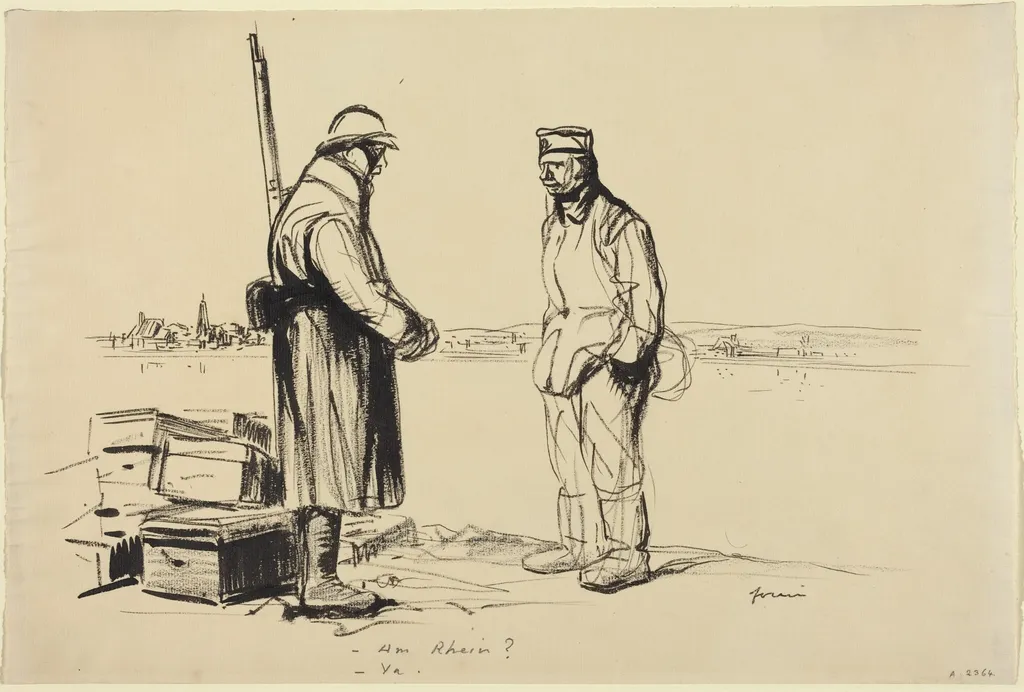
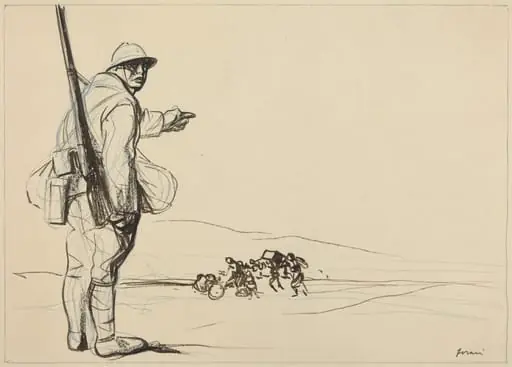
-Am Rhien? -Ya. is an ink drawing by Jean-Louis Forain. It dates from 1918 and is held in the collection of the National Gallery of Art.
About this work
Overview
Created around 1918, this drawing by Jean-Louis Forain combines brushwork and black crayon on laid paper to capture a quiet moment during wartime.
Created around 1918, this drawing by Jean-Louis Forain combines brushwork and black crayon on laid paper to capture a quiet moment during wartime. Though known primarily for his paintings and prints, Forain turned to drawing with heightened immediacy in this period. The work’s modest scale and spontaneous execution reflect his interest in capturing fleeting scenes, particularly those shaped by the social and geographic tensions of the era.
Subject & Meaning
Two soldiers stand outdoors near a body of water, one gripping a rifle, the other relaxed with hands in pockets. Behind them, a distant town and bridge suggest the Rhine River region. The terse exchange at the bottom—'Am Rhein?' 'Ya.'—hints at uncertainty or confirmation of location, possibly reflecting the disorientation of troops stationed far from home. The presence of crates and a barrel implies temporary encampment, grounding the scene in the mundane reality of military life.
Technique & Style
Forain employed rapid, fluid brushstrokes and bold crayon lines to convey texture and movement without detail. Shadows are suggested through loose cross-hatching and varying pressure, avoiding heavy modeling. The ink’s fluidity captures the weight of uniforms and the roughness of terrain, while the sketchy quality conveys a sense of immediacy. The composition is deliberately unpolished, prioritizing atmosphere over precision, aligning with Impressionist sensibilities adapted to drawing.
History & Provenance
The drawing emerged during Forain’s later years, a period when his focus shifted from commercial success to more personal, observational works. Created in the final year of World War I, it likely stems from his time as a war artist or from sketches made near occupied territories. Its survival in private collections until entering institutional hands reflects its status as a lesser-known but significant fragment of his wartime output.
Context
In 1918, as the war neared its end, many artists turned to intimate, observational works rather than grand narratives. Forain, though associated with Impressionism, was increasingly drawn to the human condition under duress. This drawing aligns with a broader trend among European artists who used drawing to document the quiet, unheroic moments of wartime—soldiers in transit, waiting, or simply being.
Legacy
While Forain’s paintings and lithographs once enjoyed wider recognition, this drawing exemplifies the quiet power of his draftsmanship. It stands as a testament to his ability to distill complex social realities into minimal, evocative marks. Today, it contributes to a reassessment of his oeuvre, highlighting his role not just as a chronicler of Parisian life, but as a witness to the quieter tragedies of war.
Own this work as a print
Artist & collection

Artist
Jean-Louis Forain (French pronunciation: ; 23 October 1852 – 11 July 1931) was a French Impressionist painter and printmaker, working in media including oils, watercolour, pastel, etching and lithograph.

 Sur le Rhin
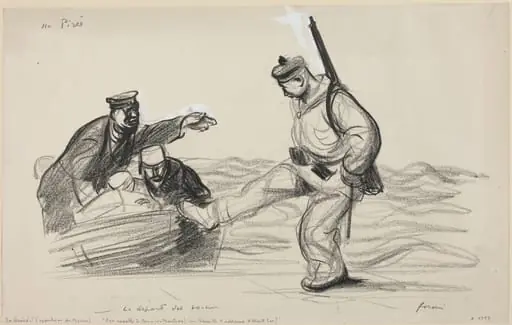 Au Pireê. -Le depart des boches.
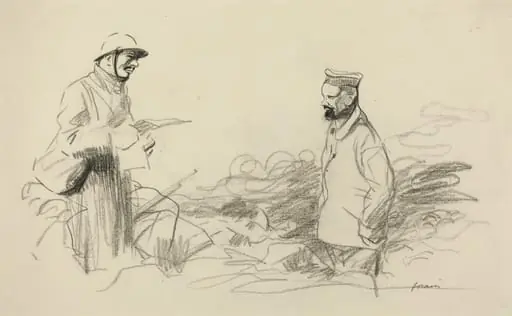 Poilu Acknowledging German Soldier
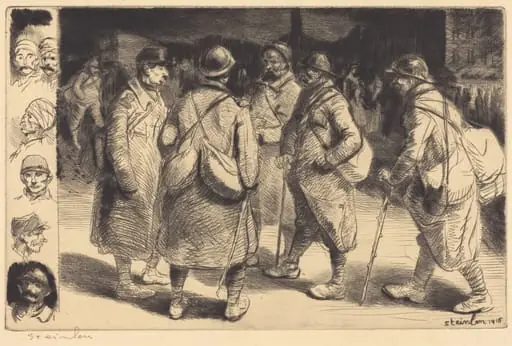 Soldiers on Leave - Night Scene (Permissionnaires - Effet de Nuit)
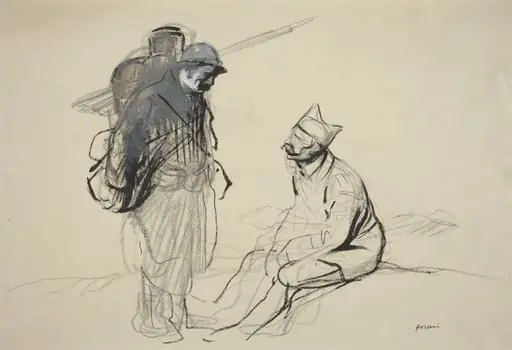 Poilu and Tommy Conversing
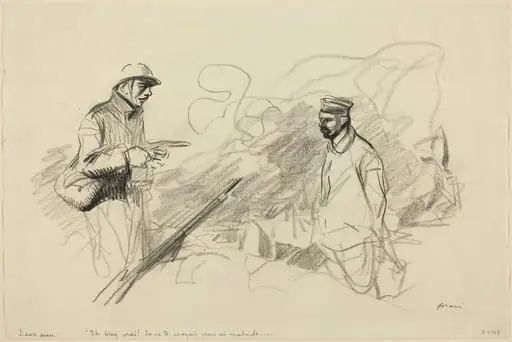 Poilu Acknowledging German Soldier
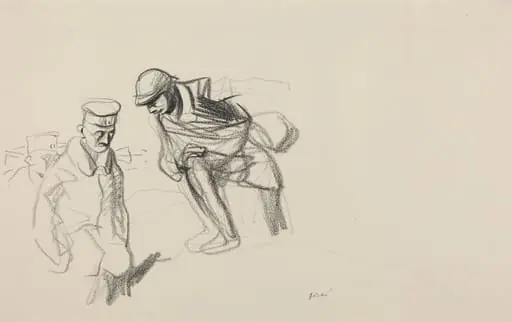 Lost Illusions
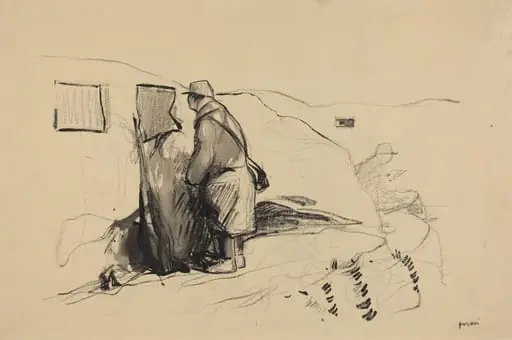 a) In the Trenches (recto); b) Study for In the Trenches (verso)
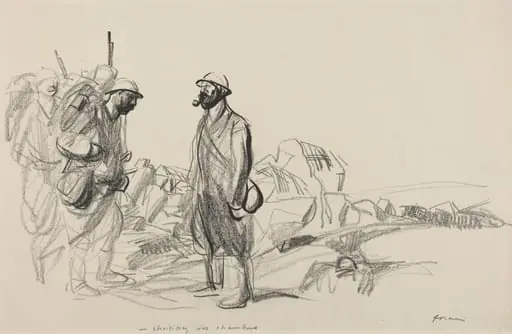 Choisissez vos chambres
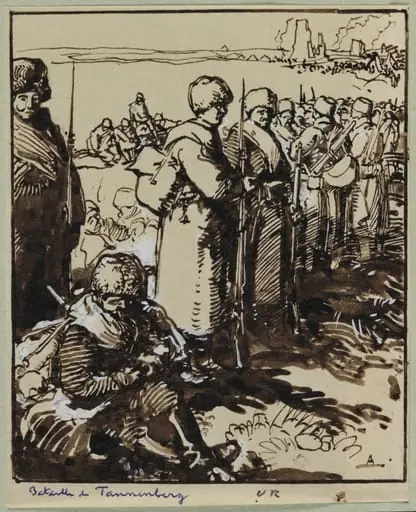 Bataille de Tannenberg
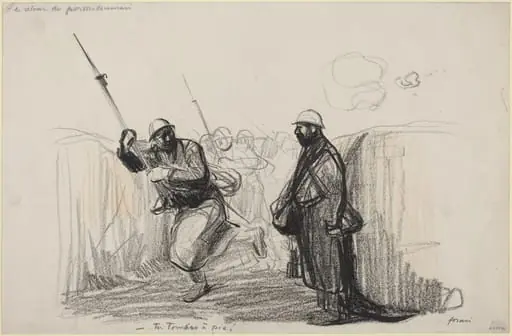 Le retour du permissionnaire. -Tu Tombes a pie!
 German Advance