Artwork
Déclaration d'amour (Declaration of Love)
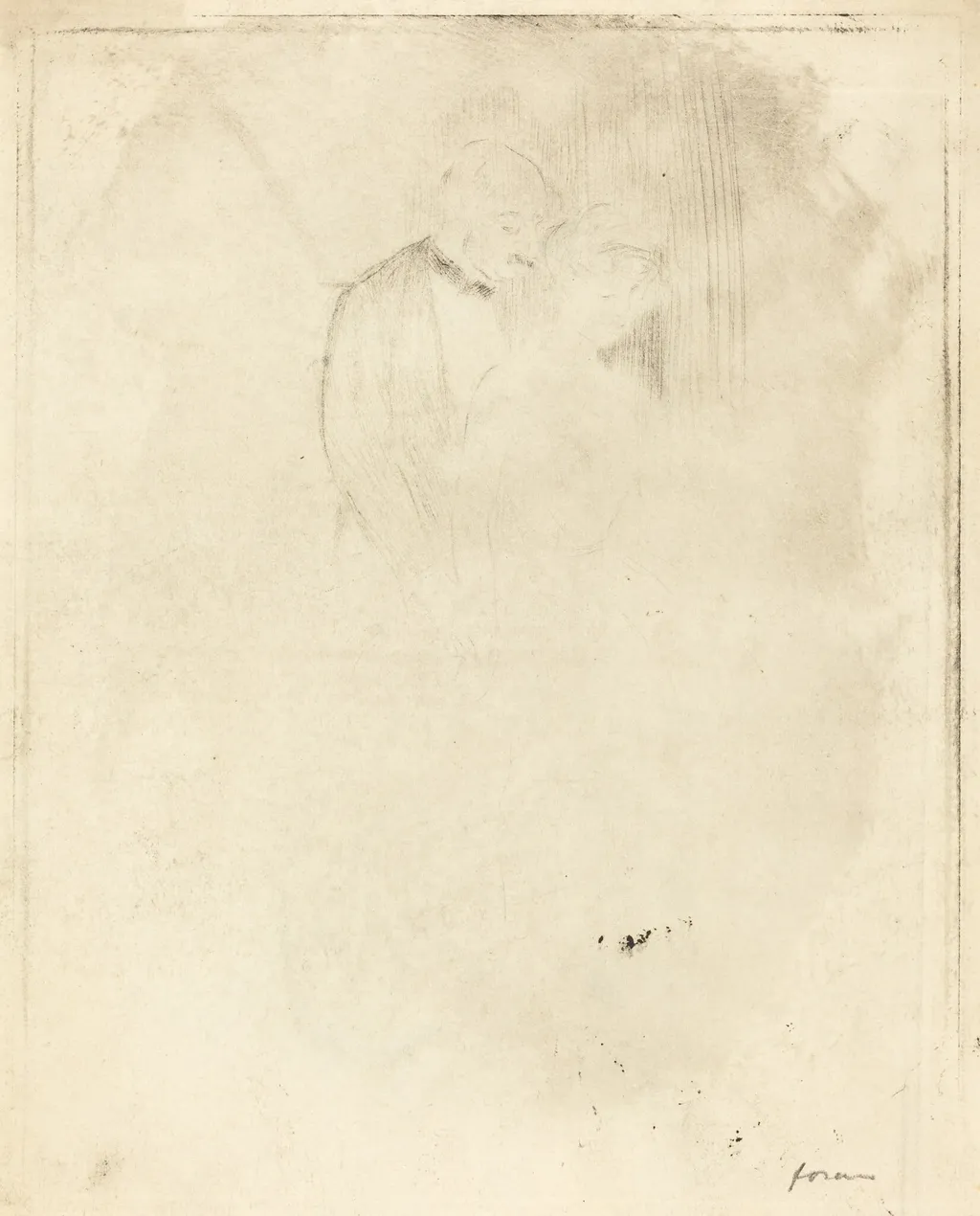
Déclaration d'amour (Declaration of Love) is an ink print by the Impressionist artist Jean-Louis Forain. It dates from 1880 and is held in the collection of the National Gallery of Art. Created circa 1880, *Déclaration d’amour* is a drypoint print on wove paper by French artist Jean‑Louis Forain.
About this work
Overview
Created circa 1880, *Déclaration d’amour* is a drypoint print on wove paper by French artist Jean‑Louis Forain. The work captures a brief, intimate encounter between a man and a woman, their faces close and bodies entwined, set against an unadorned backdrop that isolates the moment. The composition relies on delicate lines to convey the quiet emotional tension of a private declaration.
Subject & Meaning
The image portrays a tender courtship scene: a man leans forward, his cheek near the woman’s, while his arm encircles her.
The image portrays a tender courtship scene: a man leans forward, his cheek near the woman’s, while his arm encircles her. She looks upward, eyes lowered, suggesting a blend of anticipation and modesty. The lack of surrounding detail directs attention to the subtle gestures, inviting viewers to contemplate the nuances of affection and the social codes of romantic exchange in the late nineteenth century.
Technique & Style
Forain employed drypoint, incising the design directly into a copper plate and printing onto smooth wove paper. This method yields soft, velvety lines and a characteristic burr that produces rich, slightly fuzzy edges, enhancing the work’s intimate atmosphere. Though rooted in Impressionist concerns with fleeting moments, the print’s graphic clarity and controlled linework distinguish it from the painterly brushstrokes typical of the movement.
History & Provenance
Jean‑Louis Forain, a versatile painter and printmaker, enjoyed considerable commercial success during his lifetime, surpassing many of his Impressionist contemporaries. *Déclaration d’amour* reflects his productive period in the 1880s when he produced numerous prints for the burgeoning market of affordable art. The piece later entered private collections, and its attribution has been consistently documented in catalogues of Forain’s graphic oeuvre.
Context
The print emerges from a Parisian art world where print media provided a rapid means of disseminating contemporary scenes. Forain’s work often depicted urban life, leisure, and social interaction; this intimate tableau aligns with his interest in everyday human drama, rendered through the lens of Impressionist sensibility while retaining a distinct, almost satirical, graphic voice.
Legacy
While Forain’s reputation has receded compared with more celebrated Impressionists, his prints remain valuable for illustrating the breadth of the movement’s visual language. *Déclaration d’amour* exemplifies how drypoint could convey emotional subtlety, offering scholars insight into the interplay between fine art and popular print culture at the turn of the century.
Artist & collection

Artist
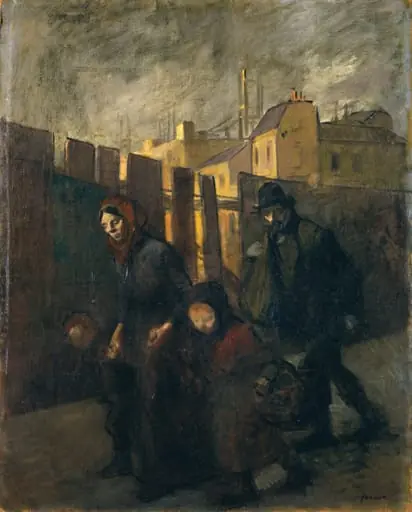
Jean-Louis Forain (French pronunciation: ; 23 October 1852 – 11 July 1931) was a French Impressionist painter and printmaker, working in media including oils, watercolour, pastel, etching and lithograph.

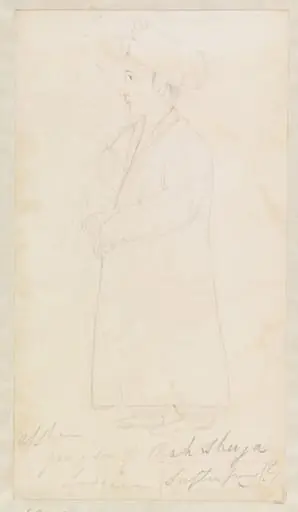 Young son of Shah Shuja Lodiana
![Man on a Horse [verso], by Jean Honoré Fragonard](https://artifactworldgallery.com/img/jean-honore-fragonard--man-on-a-horse-verso--7bf78fe7013dcb54-w320.webp) Man on a Horse [verso]
Man on a Horse [verso]![Figure Studies [verso], by Thomas Sully](https://artifactworldgallery.com/img/thomas-sully--figure-studies-verso--951eb42592bb5e4f-w320.webp) Figure Studies [verso]
Figure Studies [verso]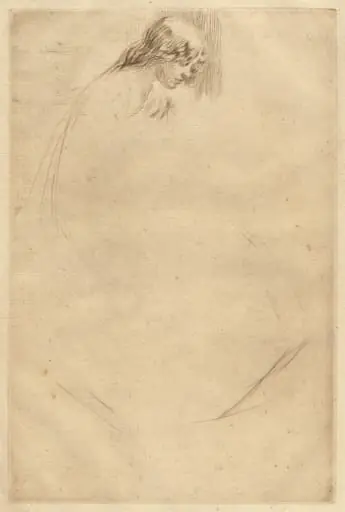 Jo's Bent Head
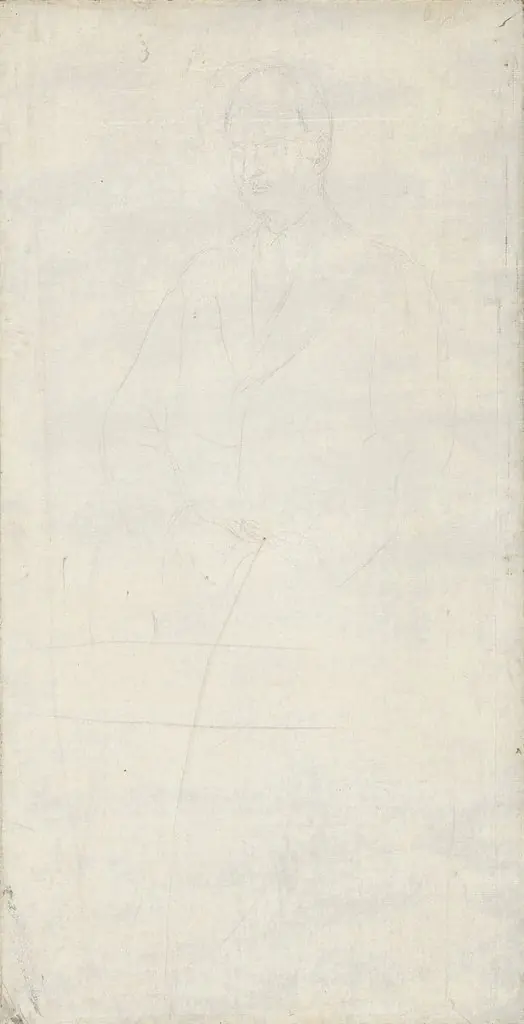 Standing Man
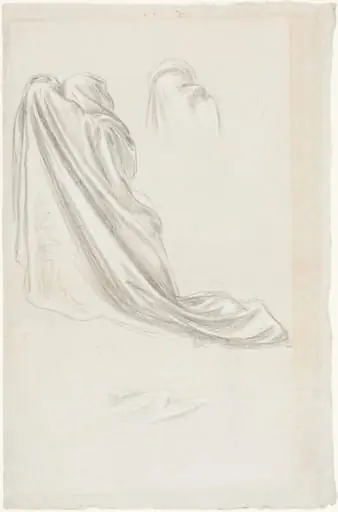 Study for "The Wise and Foolish Virgins"
![Statue of a Roman Woman (Female Deity?) Seen from the Side [verso], by Hubert Robert](https://artifactworldgallery.com/img/hubert-robert--statue-of-a-roman-woman-female-deity-seen-from-the-side-vers--4bf9208a795411cc-w320.webp) Statue of a Roman Woman (Female Deity?) Seen from the Side [verso]
Statue of a Roman Woman (Female Deity?) Seen from the Side [verso]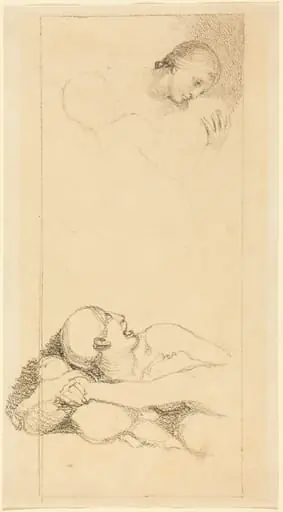 Frightened Man Looking Up; Woman and Children
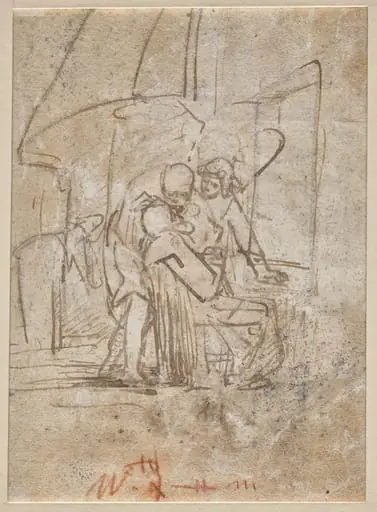 The Healing of Tobit (verso)
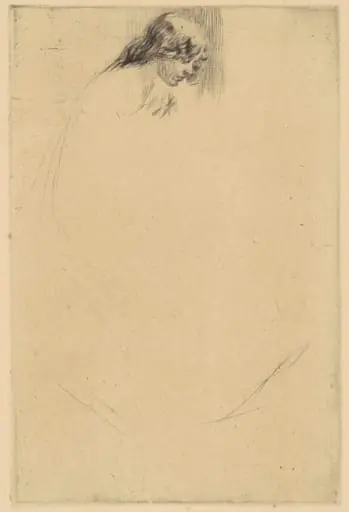 Jo's Bent Head
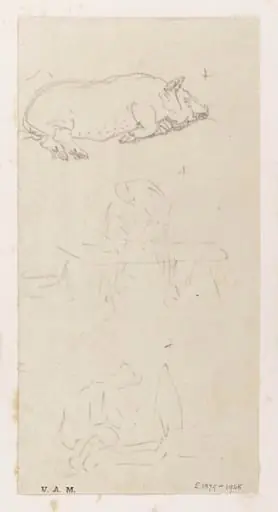 A pig lying on its side
![Sheet of Studies [recto and verso], by John Flaxman](https://artifactworldgallery.com/img/john-flaxman--sheet-of-studies-recto-and-verso--c82bf77b351cdf13-w320.webp) Sheet of Studies [recto and verso]
Sheet of Studies [recto and verso]