Artwork
Young son of Shah Shuja Lodiana
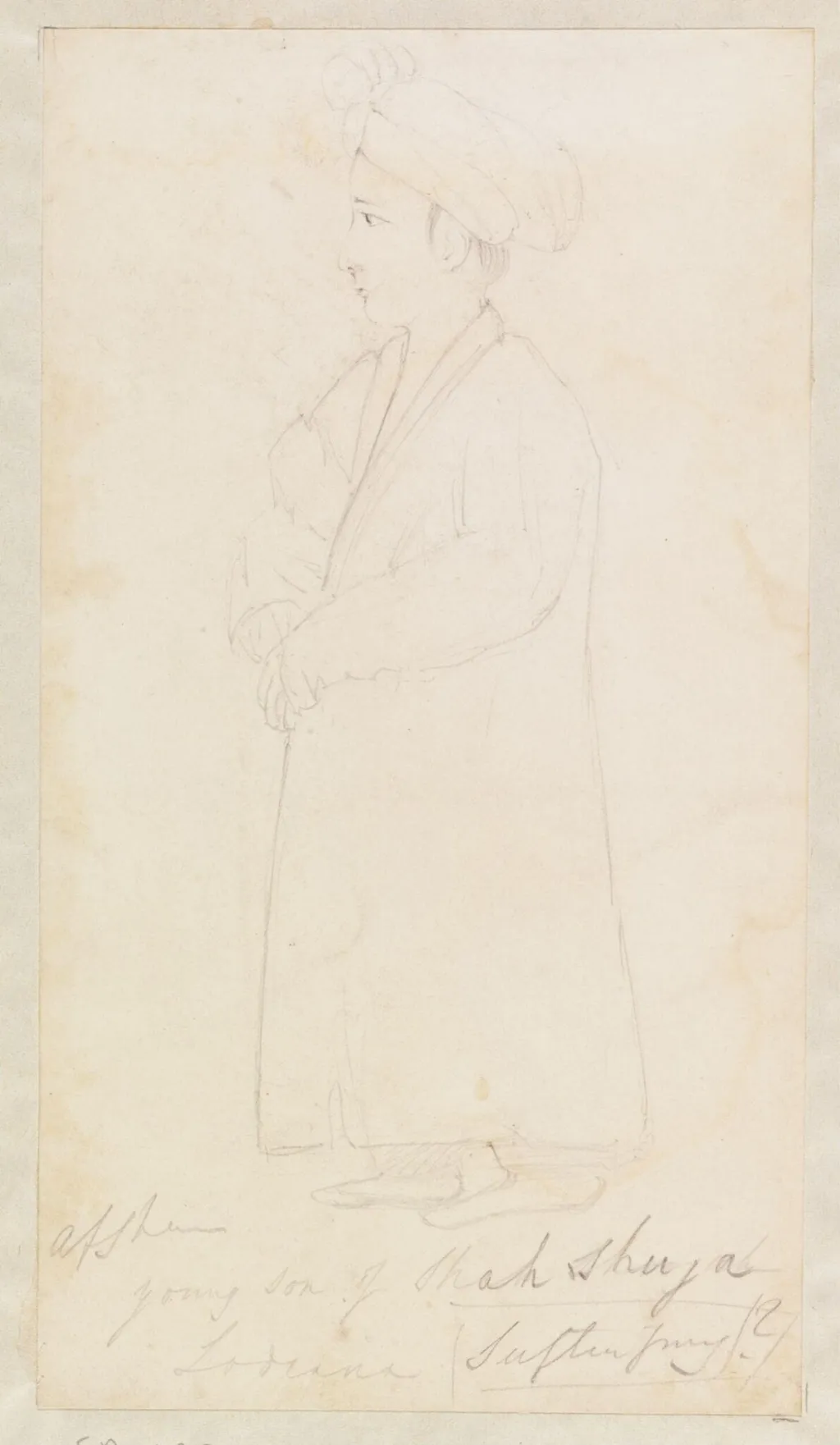
Young son of Shah Shuja Lodiana is a watercolor work on paper by the Patna School of Painting artist Godfrey Thomas Vigne. It dates from 1835 and is held in the collection of the Victoria and Albert Museum.
About this work
Overview
The piece was later acquired by the Victoria and Albert Museum in 1971 from the artist’s great-nephew.
This watercolour sketch, created in 1835 by Godfrey Thomas Vigne, portrays the young son of Shah Shuja, a deposed Afghan ruler living in exile under the protection of Maharaja Ranjit Singh in Ludhiana. Executed during Vigne’s travels in the Punjab, the work is one of several observational drawings made as part of a broader effort to document regional figures and landscapes. The piece was later acquired by the Victoria and Albert Museum in 1971 from the artist’s great-nephew.
Subject & Meaning
The subject is identified as the son of Shah Shuja, a figure of political significance despite his youth and displaced status. The boy’s poised stance and modest attire reflect his royal lineage, even in exile. Vigne’s inscription explicitly links the child to his father’s legacy, suggesting an intent to preserve the identity of a diminished dynasty. The quiet dignity of the portrayal contrasts with the instability of his family’s fortunes.
Technique & Style
Vigne employed light pencil lines and restrained watercolour washes to capture the boy’s form with immediacy. The sketch’s loose, economical handling suggests a rapid, on-site observation rather than a polished studio piece. The figure occupies only a portion of the paper, emphasizing spontaneity. The signature and label at the base confirm the artist’s documentary purpose, aligning the work with ethnographic practices of the period.
History & Provenance
Created during Vigne’s journey through northern India, the drawing was part of a personal collection of sketches later inherited by his great-nephew, Henry D'Olier Vigne. In 1971, the work entered the Victoria and Albert Museum’s holdings as part of a larger group of Vigne’s Indian studies. These materials, including related drawings, are also preserved in the India Office Library and Records, underscoring their historical value as primary visual records.
Context
In the 1830s, European travelers and artists frequently documented South Asian courts and elites, often under the patronage or protection of local rulers. Shah Shuja’s exile in Ludhiana placed him within Ranjit Singh’s sphere, attracting foreign observers. Vigne’s sketch reflects this intersection of colonial curiosity and regional politics, offering a quiet glimpse into the lives of displaced royalty during a period of shifting power in the Punjab.
Legacy
The drawing contributes to a body of 19th-century visual records that capture South Asian figures outside formal portraiture traditions. Its preservation in a major museum collection ensures continued access for scholars studying cross-cultural representation and the role of amateur artists in colonial-era ethnography. The work remains a modest but significant artifact of its time, valued for its authenticity rather than artistic grandeur.
Artist & collection


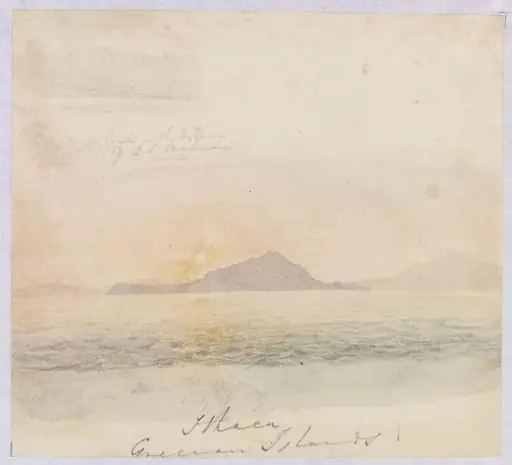
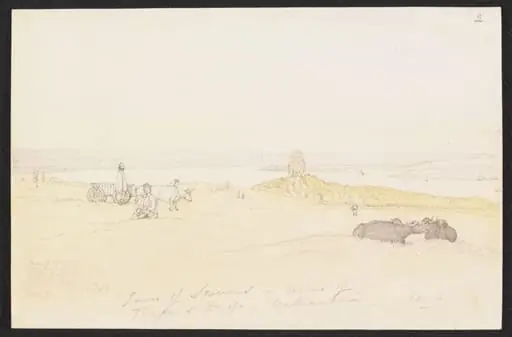
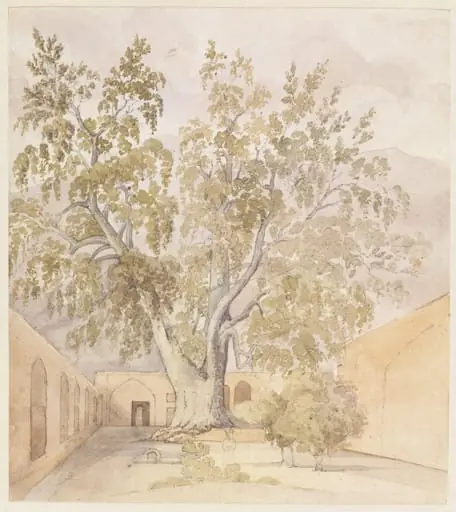
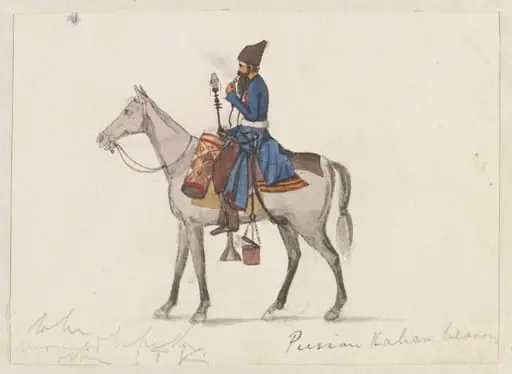
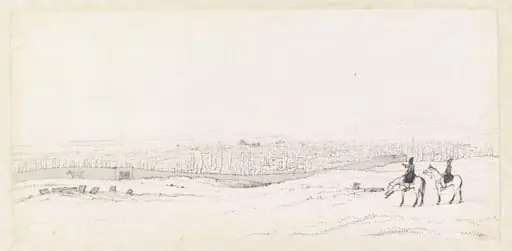
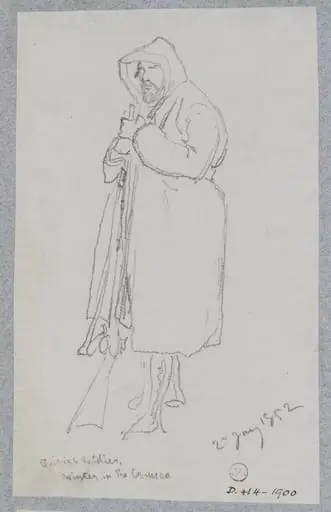 Sketches made during the Campaign of 1854-55 in the Crimea, Circassia and Constantinople
 Drawing of a man
![Man Wearing a Cloak [verso], by Edouard Manet](https://artifactworldgallery.com/img/edouard-manet--man-wearing-a-cloak-verso--0bd057994533d120-w320.webp) Man Wearing a Cloak [verso]
Man Wearing a Cloak [verso]![Figure of a Man [recto], by Ventura Salimbeni](https://artifactworldgallery.com/img/ventura-salimbeni--figure-of-a-man-recto--31a0299707350915-w320.webp) Figure of a Man [recto]
Figure of a Man [recto] African-American Figure
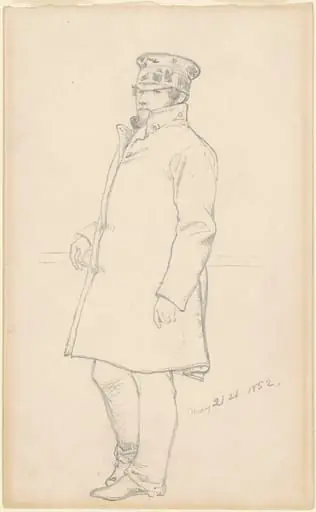 Man in Cap and Coat
 Standing Man
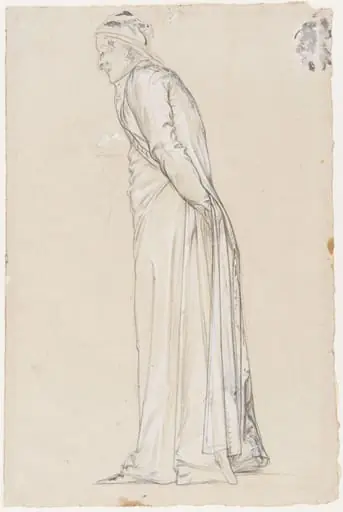 Untitled
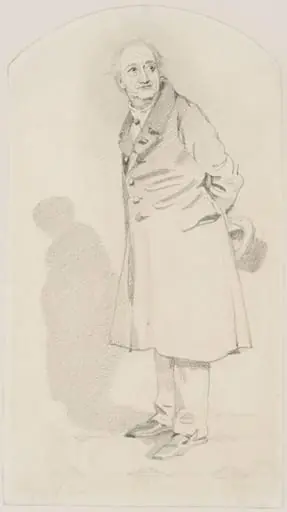 Johann Wolfgang von Goethe
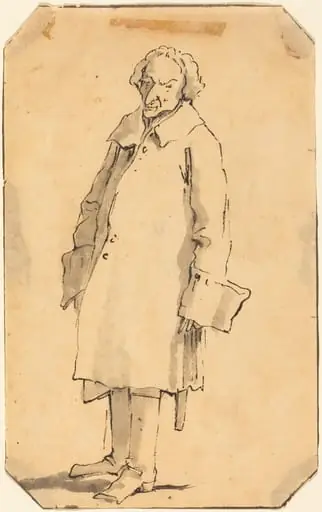 A Standing Man Wearing a Great Coat and Boots
![Figure Studies [verso], by Thomas Sully](https://artifactworldgallery.com/img/thomas-sully--figure-studies-verso--951eb42592bb5e4f-w320.webp) Figure Studies [verso]
Figure Studies [verso]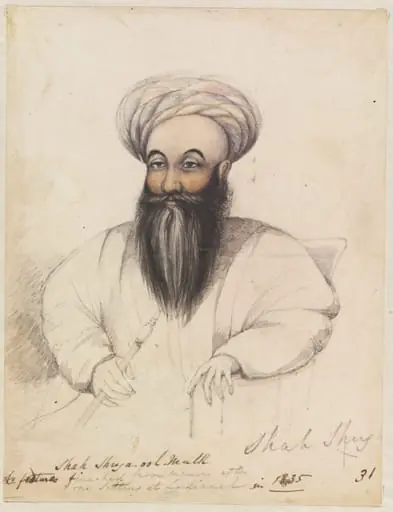 Shah Shuja-ool-Mulk