Artwork
Lourdes, la paralytique (2e planche) (Lourdes, the Paralytic) (second plate)
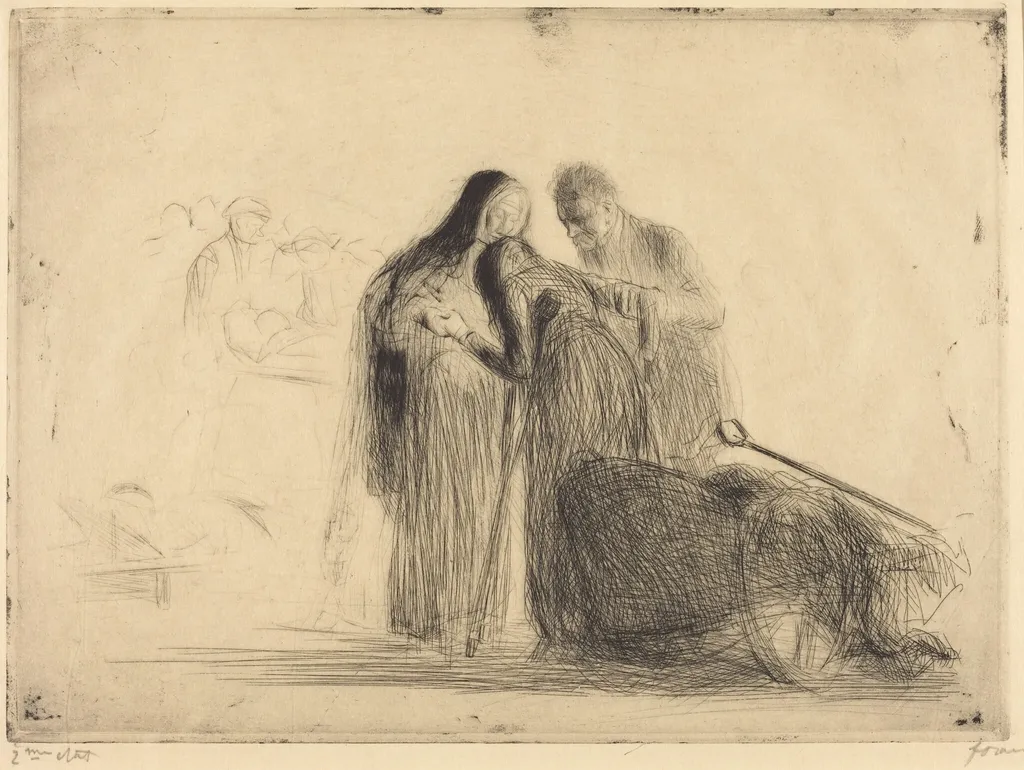
Lourdes, la paralytique (2e planche) (Lourdes, the Paralytic) (second plate) is an ink print by Jean-Louis Forain. It dates from 1912 and is held in the collection of the National Gallery of Art.
About this work
Overview
Though known for his work across multiple media—including oil, watercolor, and pastel—Forain devoted significant attention to printmaking in his later years.
Created in 1912, *Lourdes, la paralytique (2e planche)* is an etching and drypoint on wove paper by French artist Jean-Louis Forain. Though known for his work across multiple media—including oil, watercolor, and pastel—Forain devoted significant attention to printmaking in his later years. This piece belongs to a series inspired by pilgrimages to Lourdes, reflecting his interest in religious devotion and human vulnerability during this period.
Subject & Meaning
The scene portrays a paralyzed woman, her head resting on the lap of a nun, while a priest stands nearby with hands clasped in prayer. The figures are rendered with quiet intimacy, emphasizing care rather than spectacle. Background crowds are blurred, focusing attention on the tender interaction between the sick woman and her attendants. The image conveys humility and spiritual solidarity, avoiding theatricality in favor of restrained compassion.
Technique & Style
Forain employed etching and drypoint to achieve fine, expressive lines and rich tonal variation. The drypoint’s burr creates soft, velvety shadows, especially around the figures’ forms, while the etched contours define their gestures with precision. The texture enhances the emotional weight of the scene, guiding the viewer’s eye toward the physical and spiritual closeness of the central group without overt sentimentality.
History & Provenance
The print was produced during a phase of Forain’s career when he increasingly turned to religious and social themes. It was part of a small body of work centered on Lourdes, a site he visited and depicted repeatedly after 1900. Though widely exhibited and collected in his lifetime, the work remained less prominent in posthumous narratives, overshadowed by the broader Impressionist canon.
Context
Early 20th-century France saw renewed public interest in pilgrimage sites like Lourdes, particularly among the urban middle class. Forain’s depictions of these scenes diverged from devotional imagery, instead focusing on quiet, everyday moments of care. His approach aligned with a broader artistic trend toward realism in religious subjects, emphasizing human dignity over miraculous narrative.
Legacy
While Forain’s reputation as a printmaker has not endured as strongly as that of his contemporaries, *Lourdes, la paralytique* remains a significant example of his mature style. The work stands as a quiet testament to his ability to convey spiritual gravity through understated observation, offering a counterpoint to the more sensational portrayals of faith common in his era.
Artist & collection

Artist
Jean-Louis Forain (French pronunciation: ; 23 October 1852 – 11 July 1931) was a French Impressionist painter and printmaker, working in media including oils, watercolour, pastel, etching and lithograph.

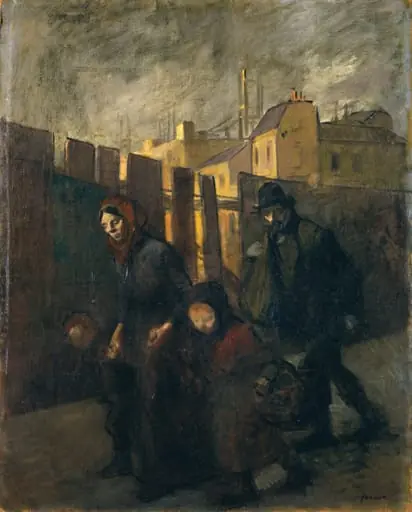
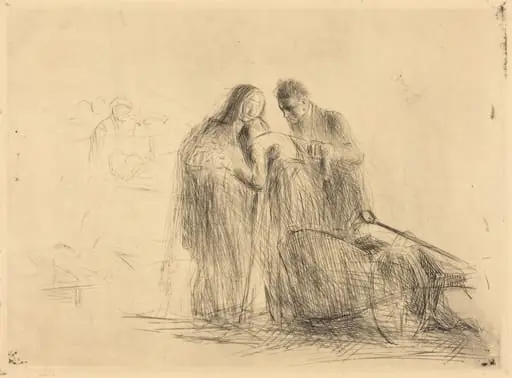 Lourdes, la paralytique (2e planche) (Lourdes, the Paralytic) (second plate)
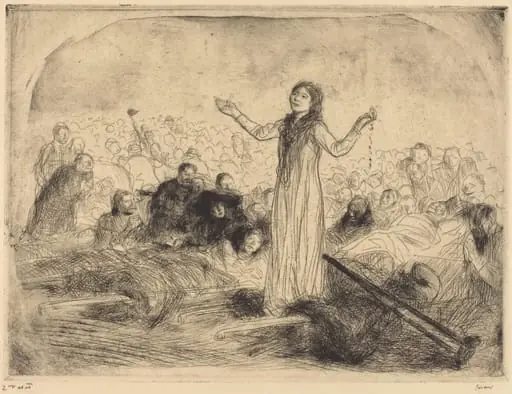 Lourdes, la miraculée (2e planche) (Lourdes, the Miracle) (second plate)
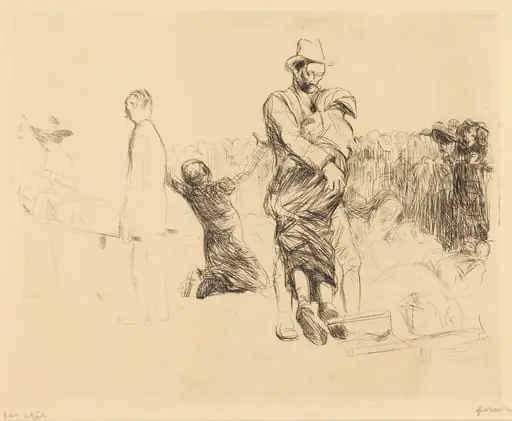 Lourdes, transport des paralysées (Lourdes, Transport of the Paralyzed)
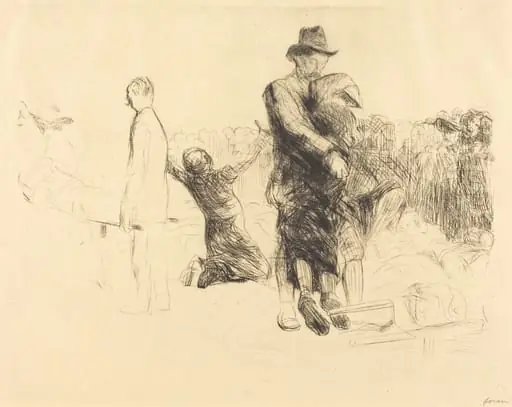 Lourdes, transport des paralysées (Lourdes, Transport of the Paralyzed)
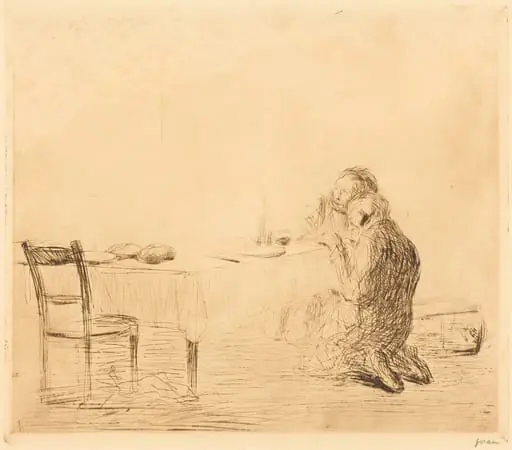 Après l'apparition (2e planche) (After the Vision) (second plate)
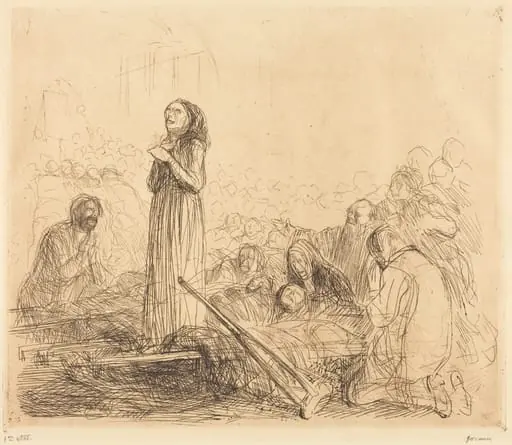 Lourdes, la miraculée (1ère planche) (Lourdes, the Miracle) (first plate)
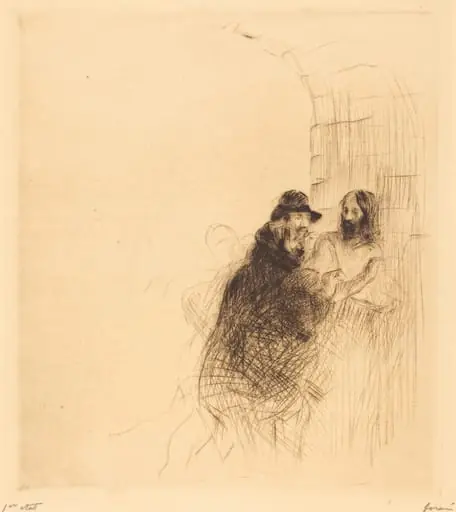 La rencontre sous la voute (2e planche) (The Meeting under the Arch) (second plate)
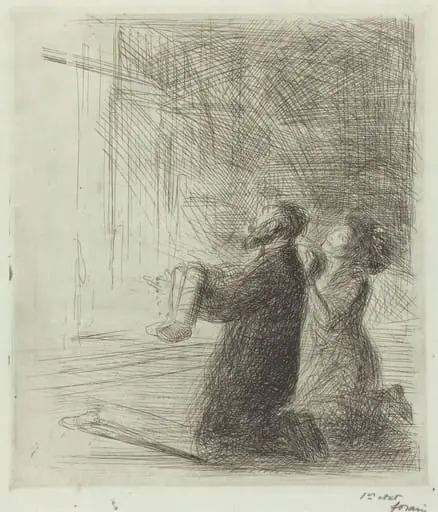 Lourdes, l'imploration devant la Grotte (4e planche) (Lourdes, Imploring before the Grotto) (fourth plate)
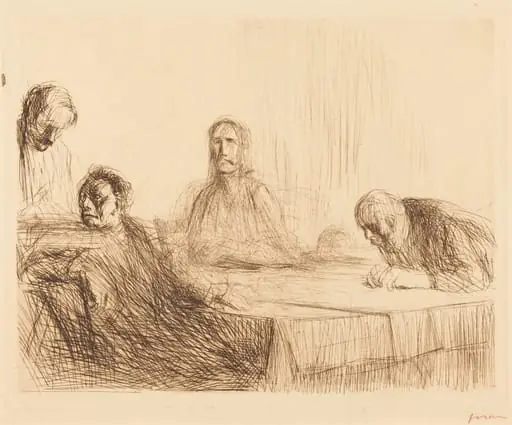 Le repas à Emmaus (2e planche) (The Supper at Emmaus) (second plate)
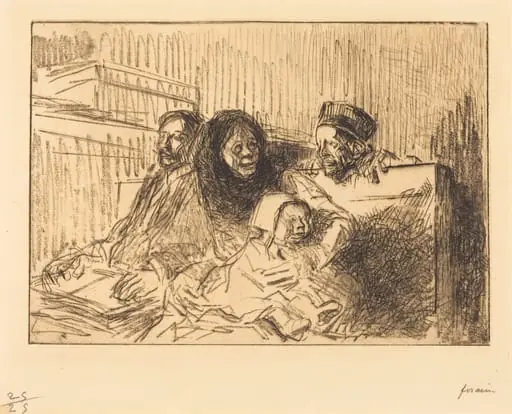 Témoins à l'audience (2e planche) (Evidence at the Hearing) (second plate)