Artwork
Lourdes, l'imploration devant la Grotte (4e planche) (Lourdes, Imploring before the Grotto) (fourth plate)
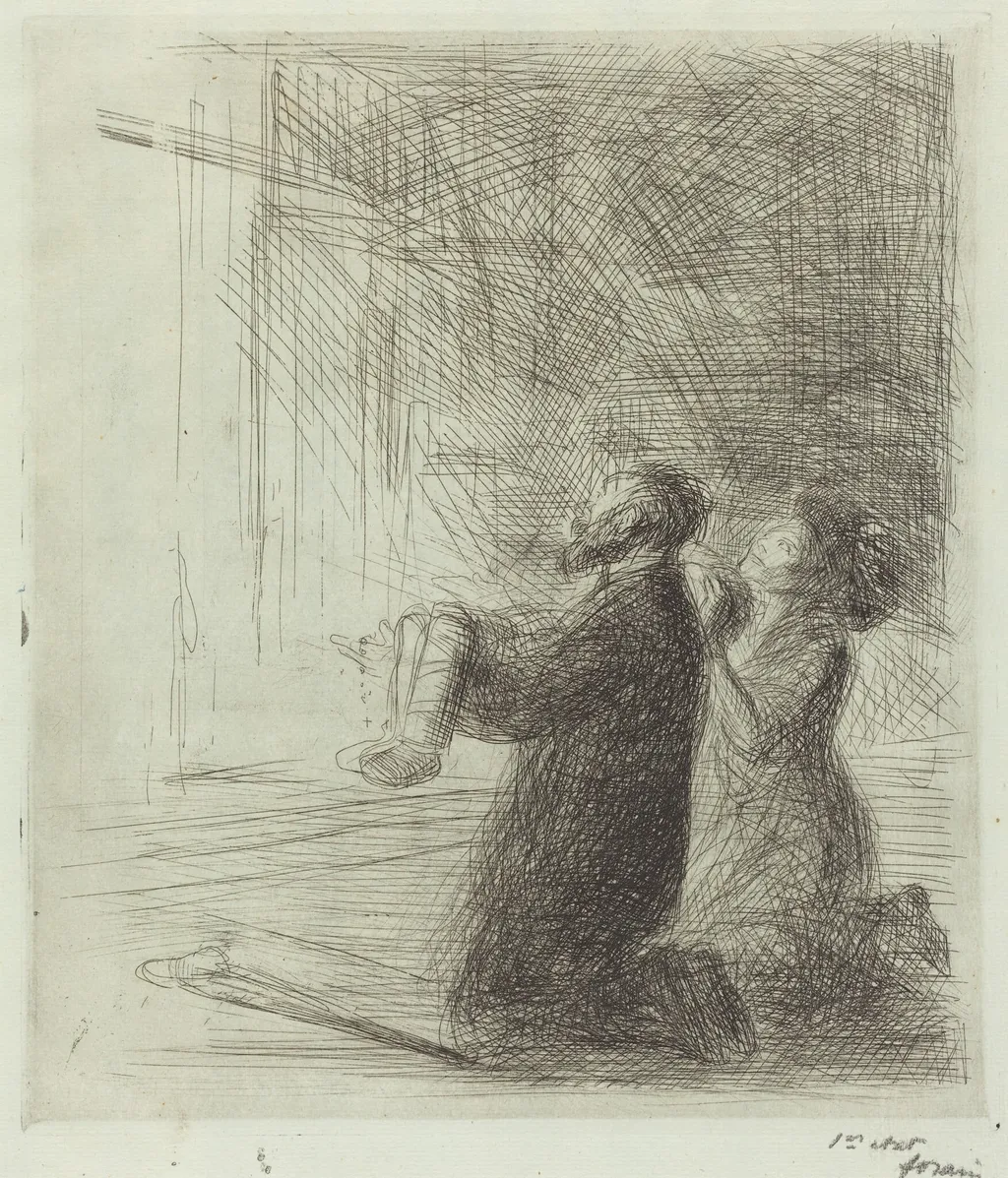
Lourdes, l'imploration devant la Grotte (4e planche) (Lourdes, Imploring before the Grotto) (fourth plate) is an ink print by Jean-Louis Forain. It dates from 1912 and is held in the collection of the National Gallery of Art.
About this work
Overview
Unlike his more satirical subjects, this piece reflects a restrained engagement with religious practice, emphasizing atmosphere over narrative.
Jean-Louis Forain created this etching in 1912 as the fourth plate in a series documenting his visit to the pilgrimage site of Lourdes. Executed in drypoint on blue laid paper, the work captures a quiet, intimate moment of devotion. Unlike his more satirical subjects, this piece reflects a restrained engagement with religious practice, emphasizing atmosphere over narrative. The choice of blue paper adds a cool, somber tone that enhances the spiritual gravity of the scene.
Subject & Meaning
The image portrays a group of pilgrims kneeling in front of the grotto where Bernadette Soubirous claimed to have seen the Virgin Mary. Their postures convey fatigue and quiet hope, their faces and hands faintly illuminated by an unseen light. Forain avoids overt symbolism, instead focusing on the physicality of prayer—bent backs, clasped hands, lowered heads—to suggest the emotional weight of faith and endurance in the face of suffering.
Technique & Style
Forain employed drypoint etching to create deep, textured shadows and delicate highlights. The rough, scratchy lines of the needle on the copper plate produce a tactile surface that mimics the grit of stone and the dampness of the grotto. The blue paper, rarely used in printmaking, absorbs ink unevenly, softening contrasts and lending the scene a muted, almost spectral quality. His precision in rendering light on skin contrasts with the dense, unyielding darkness surrounding the figures.
History & Provenance
Forain visited Lourdes in the early 1910s, drawn by its cultural significance rather than religious conviction. This print was part of a small series documenting his observations, likely intended for private circulation among collectors. It was not widely exhibited during his lifetime, and few impressions survive. The work remained largely outside the public eye until later 20th-century reassessments of his graphic oeuvre brought renewed scholarly attention.
Context
In early 20th-century France, Lourdes was a focal point of Catholic devotion amid rising secularism. Forain, known for his critical portrayals of bourgeois society, turned his gaze toward this pilgrimage with unusual solemnity. His depiction avoids both reverence and ridicule, instead offering a neutral, almost anthropological record of collective ritual. The print reflects a broader artistic interest in the intersection of faith, modernity, and human vulnerability.
Legacy
Though not among Forain’s most celebrated works, this etching stands as a rare example of his engagement with spiritual themes. Its quiet intensity distinguishes it from his sharper social satires, revealing a more contemplative side of his practice. Later print scholars have noted its technical refinement and emotional restraint as evidence of his versatility. It remains a subtle but significant document of religious life in early modern France.
Own this work as a print
Artist & collection

Artist
Jean-Louis Forain (French pronunciation: ; 23 October 1852 – 11 July 1931) was a French Impressionist painter and printmaker, working in media including oils, watercolour, pastel, etching and lithograph.


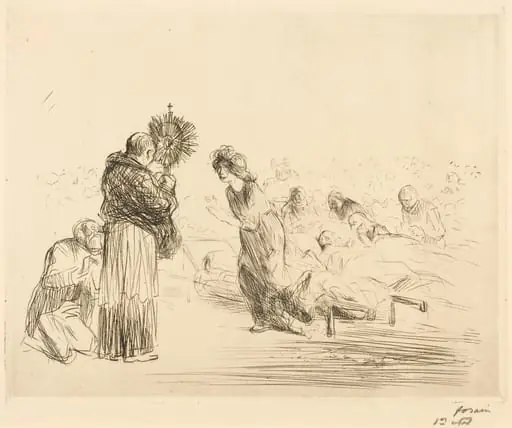 Le miraculé devant l'ostensoir (4e planche) (The Miracle before the Blessed Sacrament) (fourth plate)
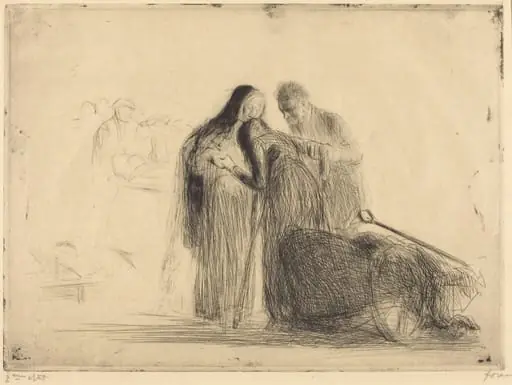 Lourdes, la paralytique (2e planche) (Lourdes, the Paralytic) (second plate)
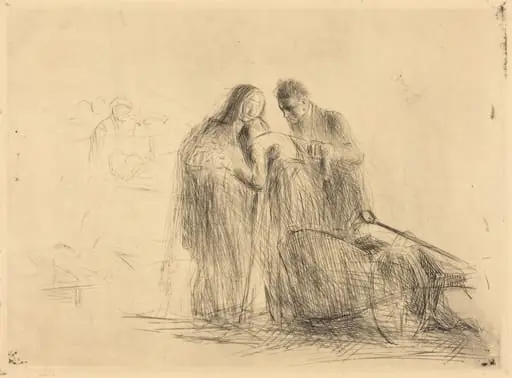 Lourdes, la paralytique (2e planche) (Lourdes, the Paralytic) (second plate)
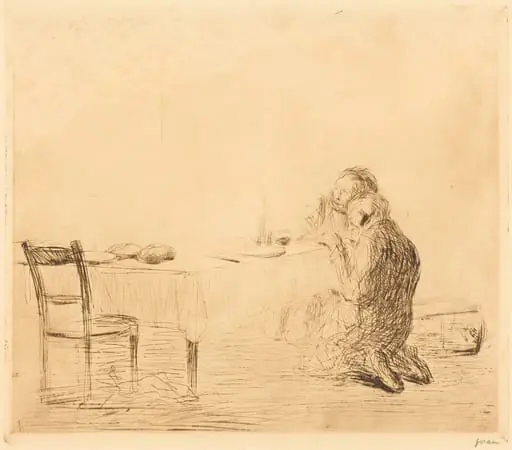 Après l'apparition (2e planche) (After the Vision) (second plate)
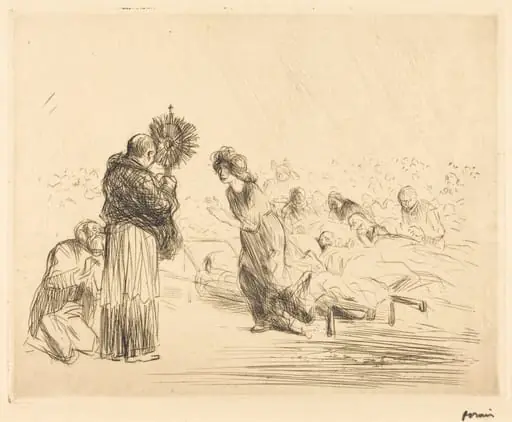 The Miracle before the Blessed Sacrament (fourth plate)
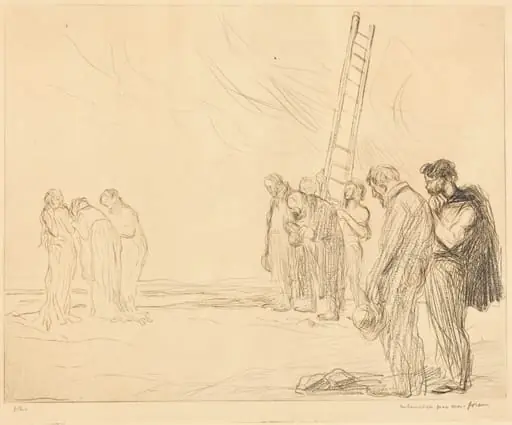 Le calvaire (2e planche) (Calvary) (second plate)
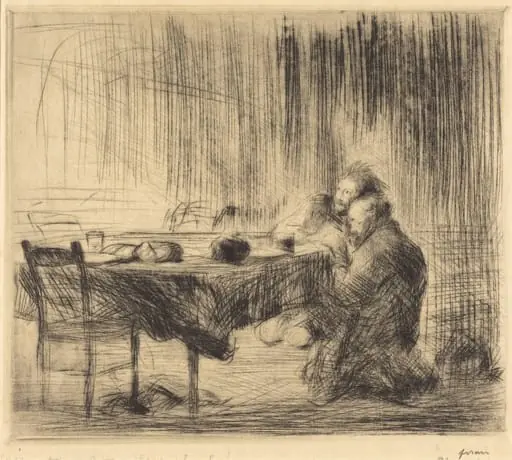 Après l'apparition (2e planche) (After the Vision) (second plate)
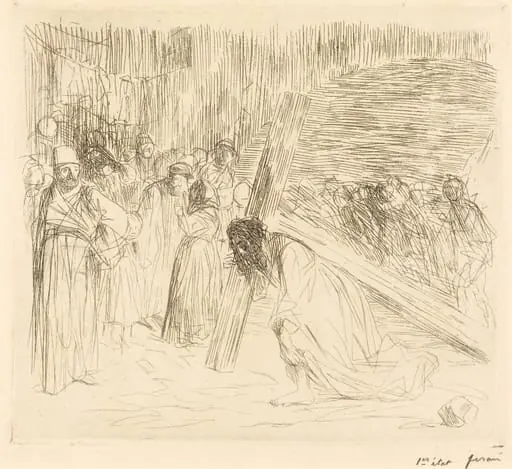 Le Christ portant sa croix (5e planche) (Christ Carrying the Cross) (fifth plate)