Artwork
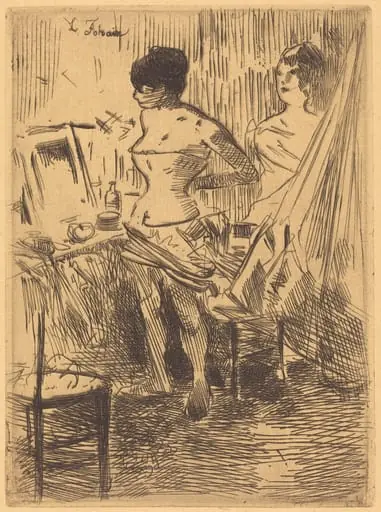
Two Ladies in a Loge
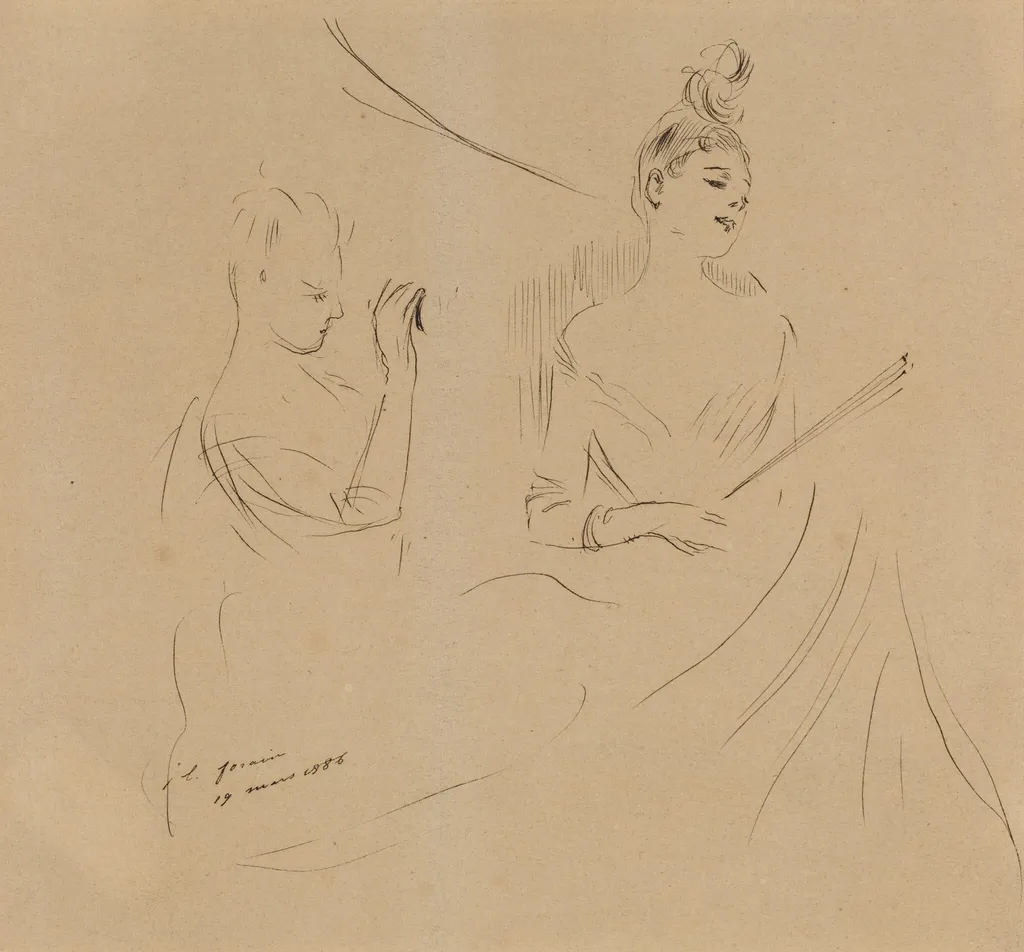
Two Ladies in a Loge is an ink drawing by the Impressionist artist Jean-Louis Forain. It dates from 1886 and is held in the collection of the National Gallery of Art.
About this work
Overview
Forain, active across multiple media including printmaking and painting, used drawing to capture fleeting moments of public and private interaction.
Created in 1886, *Two Ladies in a Loge* is a pen-and-ink drawing by French artist Jean-Louis Forain. Executed on wove paper, it belongs to a body of work centered on urban social life. Forain, active across multiple media including printmaking and painting, used drawing to capture fleeting moments of public and private interaction. This piece exemplifies his interest in the rhythms of modern Parisian leisure, rendered with immediacy and precision.
Subject & Meaning
The drawing portrays two women in a theater box, engaged in quiet conversation. One lifts a hand near her face, the other rests a fan in her lap, suggesting a moment of intimate exchange amid a public setting. Forain often focused on such scenes to observe the subtleties of social behavior. The composition invites the viewer into a private sphere within a shared cultural space, highlighting the tension between visibility and concealment in urban life.
Technique & Style
Forain employed bold, fluid lines and dynamic cross-hatching to model form and suggest texture. The black ink on wove paper allows for sharp contrasts and expressive gestural marks, capturing movement without detail. His technique avoids softness, instead using rhythmic strokes to convey posture and presence. The absence of color directs attention to gesture and composition, aligning with the immediacy favored by contemporaries in the Impressionist circle.
History & Provenance
The drawing was made during a period when Forain was closely associated with the Impressionist group, though he maintained a distinct focus on social observation. It was likely created for personal or exhibition use, as many of his ink drawings were circulated among collectors and artists. While its early ownership is undocumented, it has since entered institutional collections, reflecting its recognition as a representative work of late 19th-century French draftsmanship.
Context
In 1880s Paris, the theater was a key site of social performance, frequented by the middle and upper classes. Forain, like Degas, turned to such venues to study human behavior under the gaze of others. His drawings responded to the era’s fascination with modernity, anonymity, and the rituals of public leisure. This work situates itself within a broader visual culture that valued candid observation over idealized narrative.
Legacy
Forain’s ink drawings, including this one, influenced later generations of illustrators and realist draftsmen for their economy of line and psychological insight. Though less celebrated than his paintings, these works remain vital for understanding the role of drawing in documenting modern life. They preserve the quiet intensity of everyday moments, offering a counterpoint to the grander narratives of academic art.
Artist & collection

Artist
Jean-Louis Forain (French pronunciation: ; 23 October 1852 – 11 July 1931) was a French Impressionist painter and printmaker, working in media including oils, watercolour, pastel, etching and lithograph.

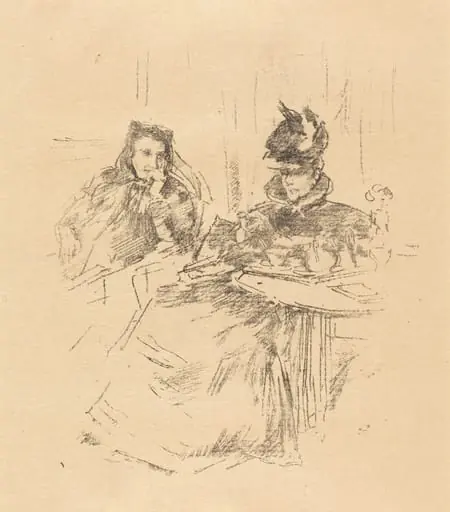 Afternoon Tea
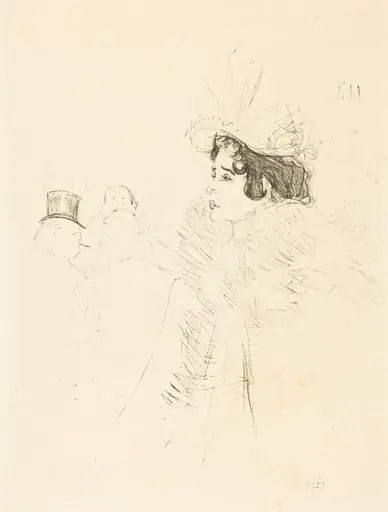 Miss May Belfort in the Irish and American Bar, rue Royale (Miss Belfort Belfort au Irish and American Bar, Rue Royale)
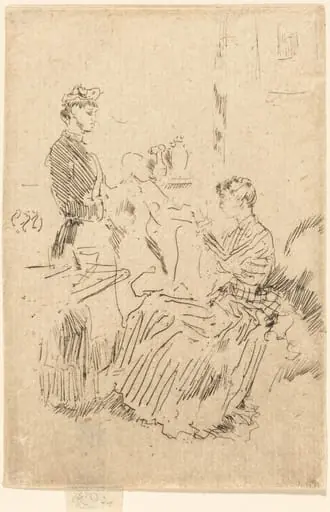 The Seamstress
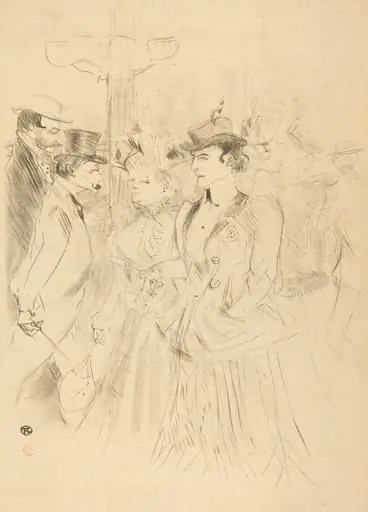 Promenade (Promenoir)
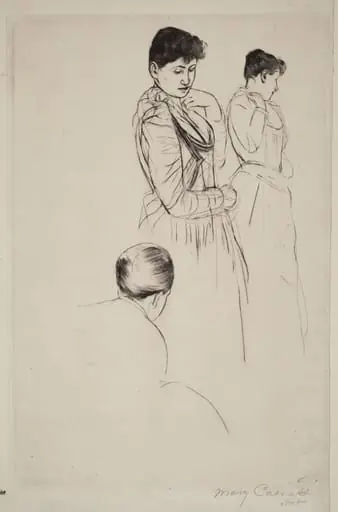 The Fitting
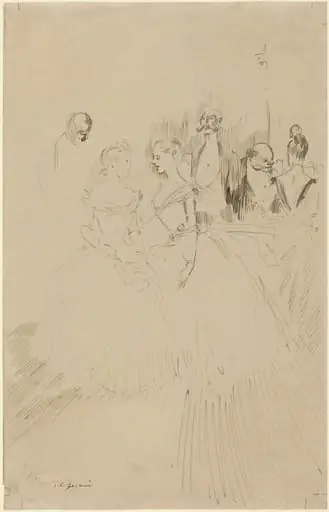 At an Evening Party
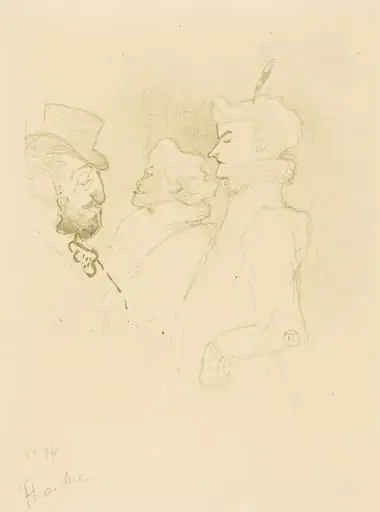 Why Not?...Once Is Not a Habit (Pourquoi pas?...Une fois n'est pas coutume)
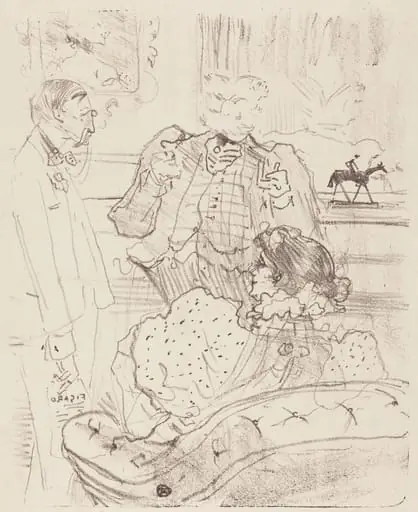 The Forfeit (La gage)
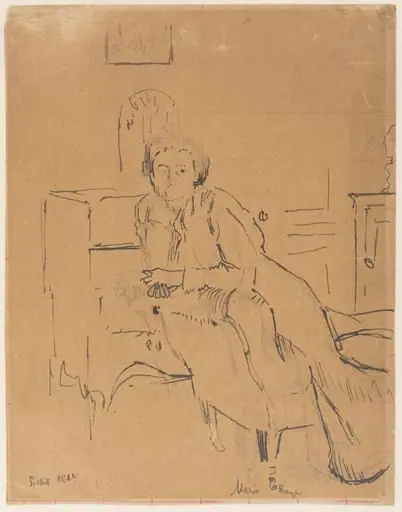 'Marie Hayes'
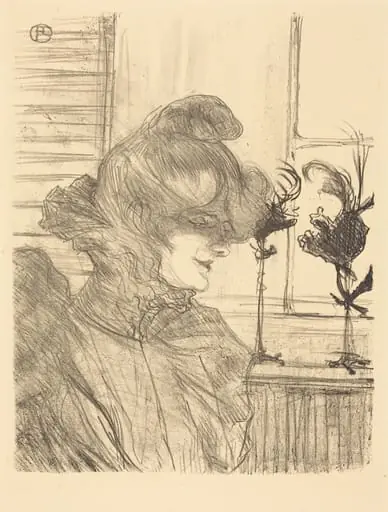 Mme. Le Marguoin, Milliner (Mme. Le Marguoin, modiste)
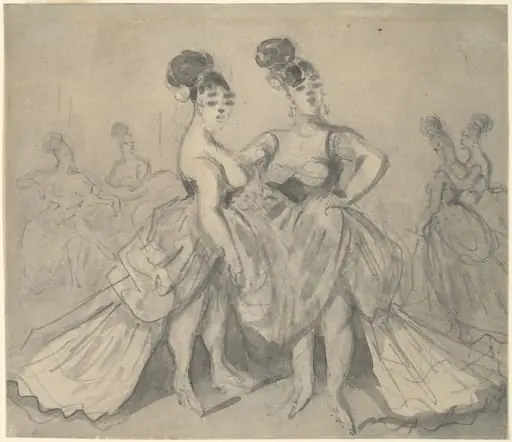 Two Women of Pleasure
 Danseuses dans leur loge (Dancers in Their Dressing Room)