Artwork
The Halt of the Line of Battle
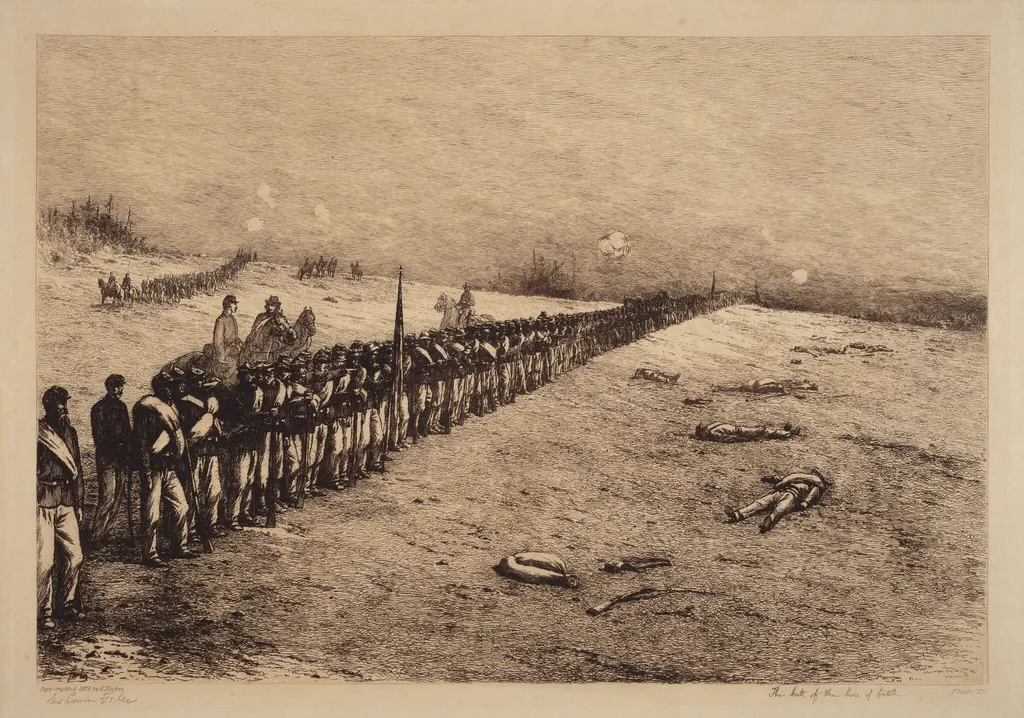
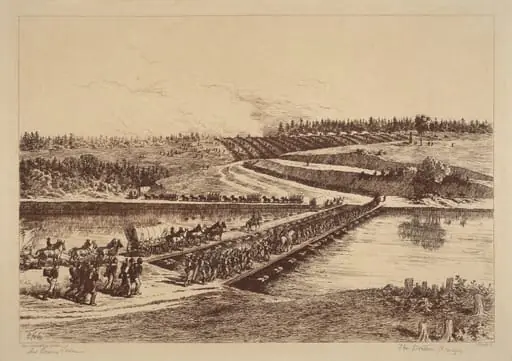
The Halt of the Line of Battle is an ink print by the Impressionist artist Edwin Forbes. It dates from 1876 and is held in the collection of the National Gallery of Art.
About this work
Overview
The scene depicts mounted soldiers arranged in a line across a muddy field, their horses covered in white cloths.
Created in 1876 by Edwin Forbes, this etching captures a moment of stillness within a military formation. The scene depicts mounted soldiers arranged in a line across a muddy field, their horses covered in white cloths. Figures stand on foot nearby, while distant troops move along a rise. A flag is visible near the center, anchoring the composition. The work belongs to a series documenting Civil War campaigns, rendered after the conflict ended.
Subject & Meaning
The image portrays a pause in military movement rather than active combat. The white cloths draped over horses may suggest mourning, identification, or practical concealment, though their precise purpose remains ambiguous. Scattered bodies on the ground imply recent violence, while the orderly ranks and distant movement suggest discipline amid chaos. The title emphasizes the tension between action and repose, reflecting the uneasy rhythm of wartime.
Technique & Style
Forbes employed etching to achieve fine linear detail and tonal variation. The muddy ground and textured uniforms are rendered with controlled incisions, while the white cloths stand out through negative space. The composition uses recession to convey depth: foreground figures are sharply defined, while distant troops fade into softer lines. The absence of bright contrast reinforces the somber mood, consistent with Forbes’s documentary approach to wartime imagery.
History & Provenance
The work was produced as part of Forbes’s postwar series based on sketches made during his time as a battlefield artist for Harper’s Weekly. He accompanied Union forces between 1861 and 1865, recording daily life and engagements. This etching was likely drawn from memory and field notes, later refined in his studio. It was published in the 1870s as part of a broader effort to preserve visual records of the Civil War.
Context
In the decade following the Civil War, there was a growing public interest in documenting the conflict through art and print. Forbes’s work contributed to a shift from glorified battle scenes to quieter, more observational depictions of military life. His focus on pauses, camps, and aftermaths offered a counterpoint to heroic narratives, aligning with a broader cultural movement toward realism in postwar American art.
Legacy
Forbes’s etchings, including this one, remain among the most detailed visual records of Union Army life. They influenced later historical illustrators and provided reference for museum exhibitions and educational materials. While not widely exhibited today, his body of work continues to be cited by historians for its fidelity to the physical and emotional texture of wartime experience.
Artist & collection


 Battle Scene
 Album for 1835: Carré enfoncé...
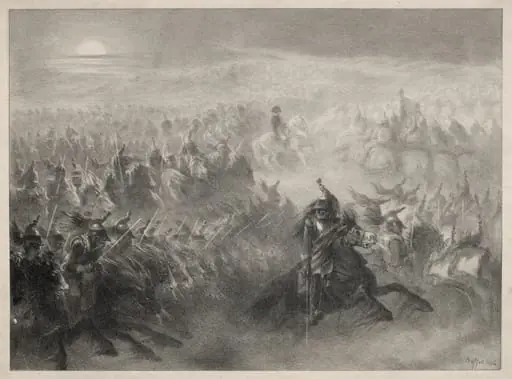 Review at Night
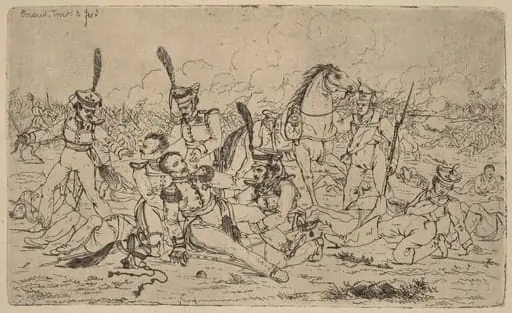 Death of a Russian General (Le Mort d'un general russe)
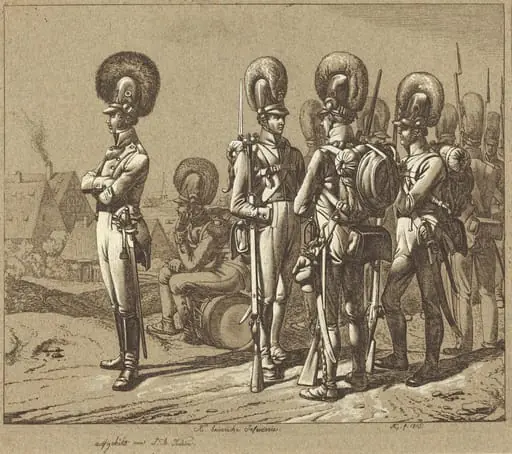 K. baierische Infanterie (Bavarian Infantrymen)
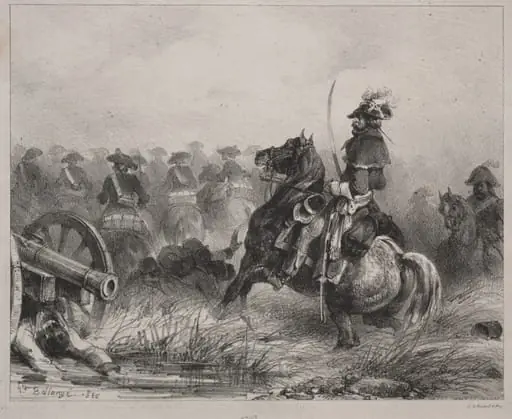 Cavalry Scene
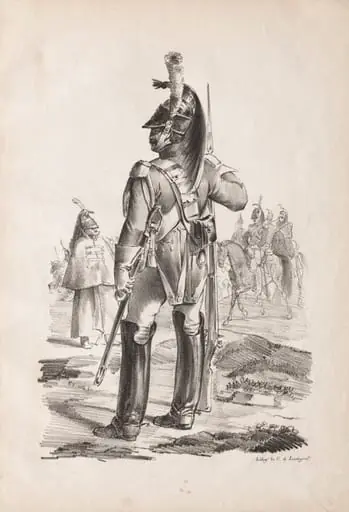 Military Costumes: Grenadier of the Royal Guard
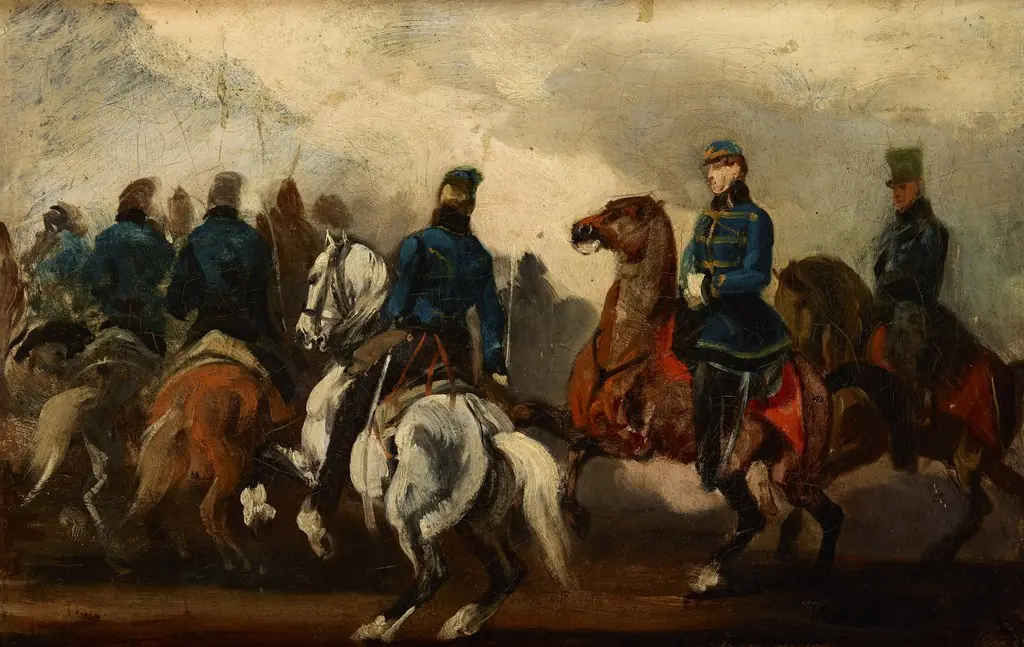 Detachment of Austrian Hussars
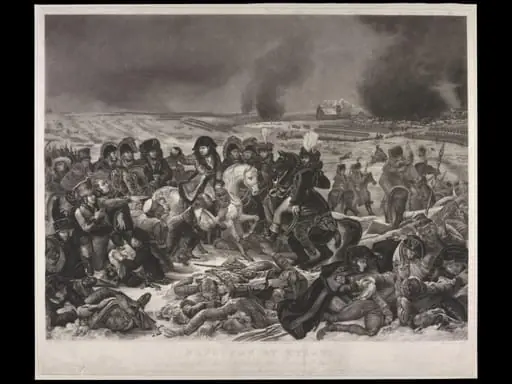 H Beard Print Collection
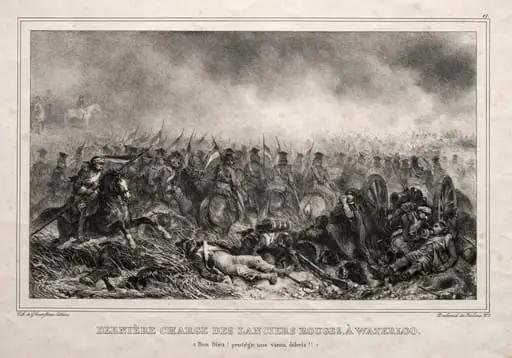 Dernière Charge des Lanciers Rouges à Waterloo