Artwork
Jania
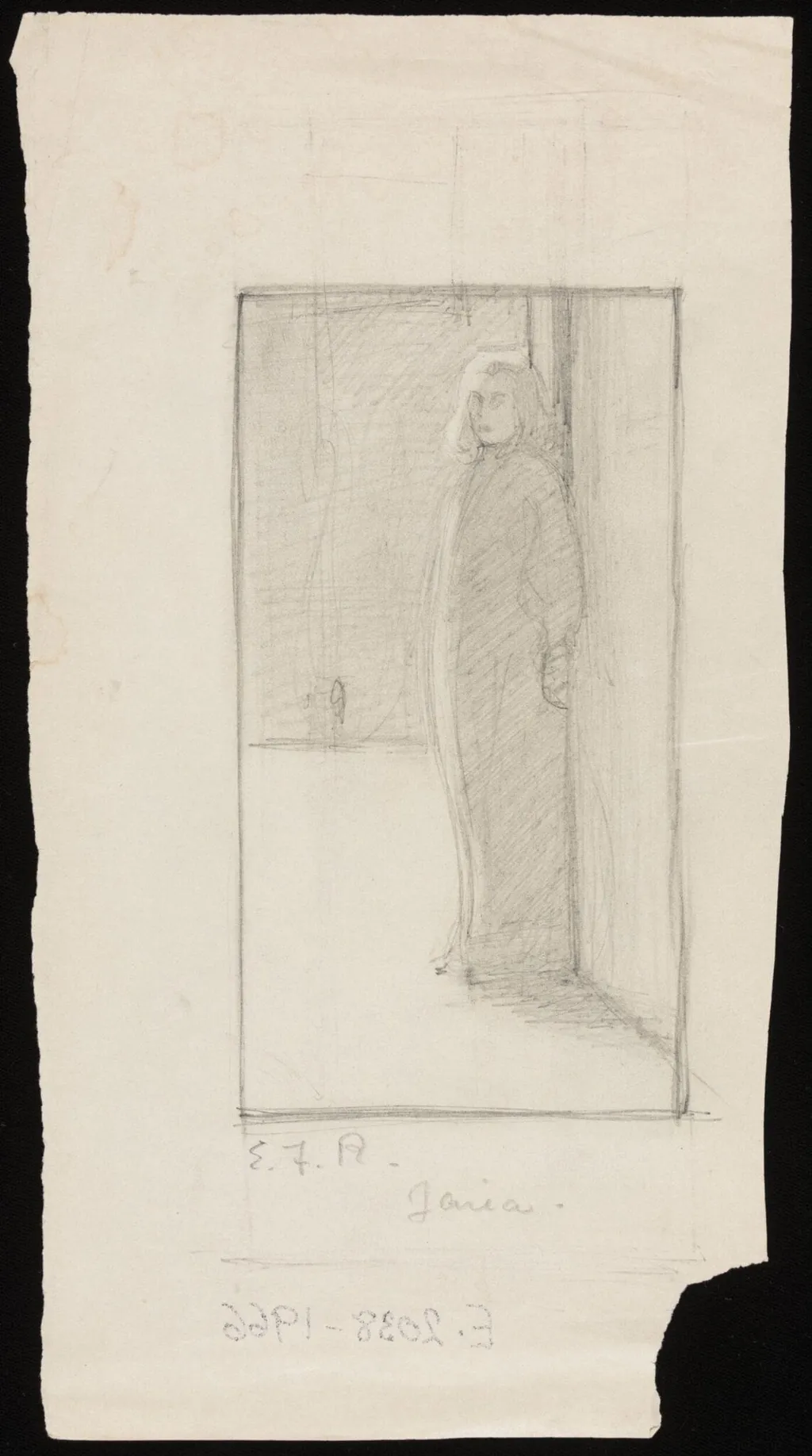
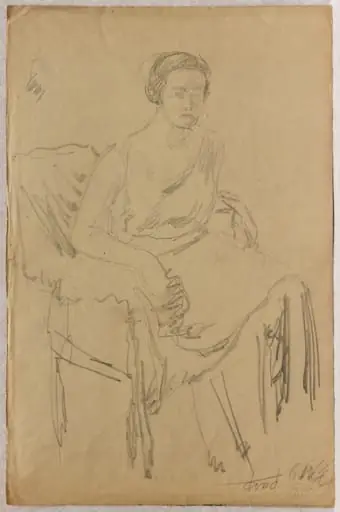
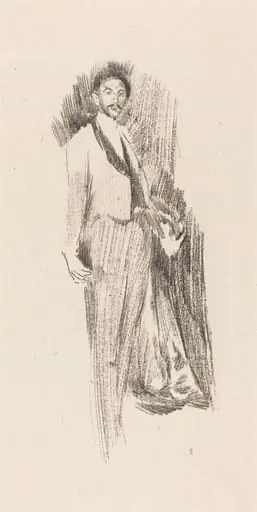
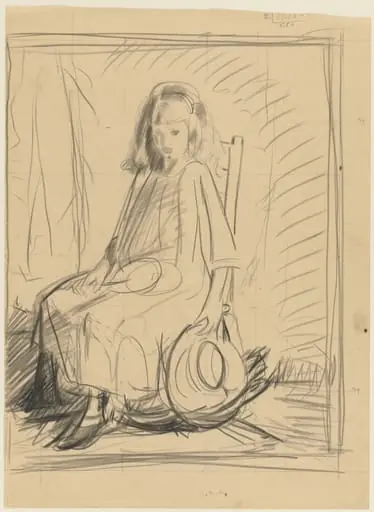
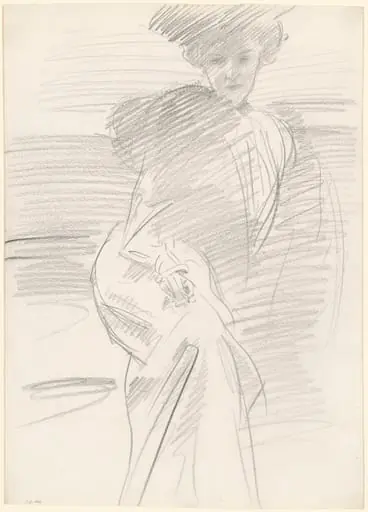
Jania is a drawing by Forbes-Robertson. It dates from 1850 and is held in the collection of the Victoria and Albert Museum.
About this work
Overview
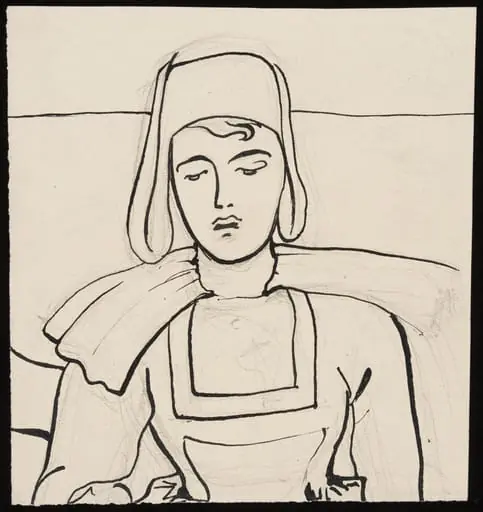
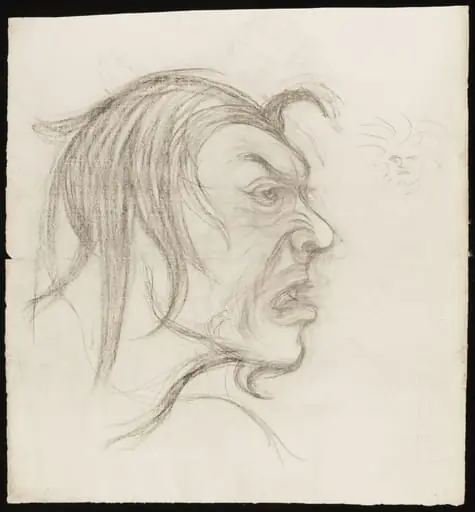
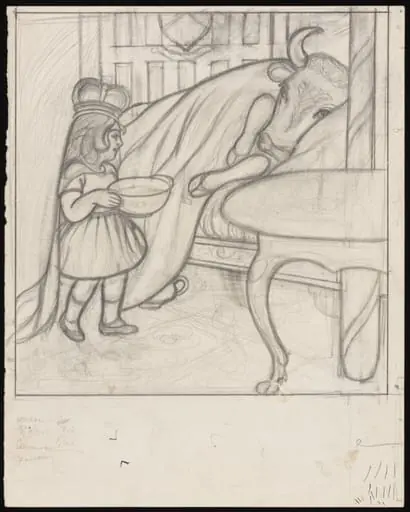
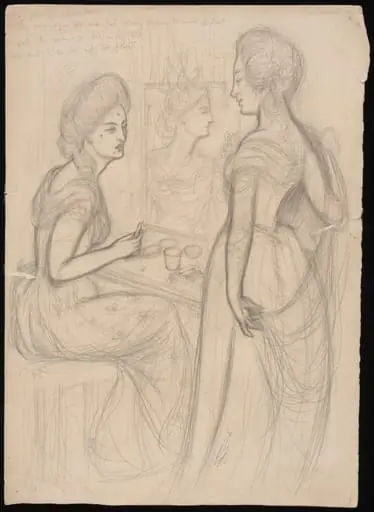
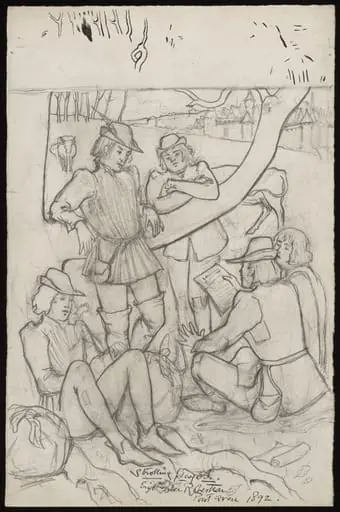
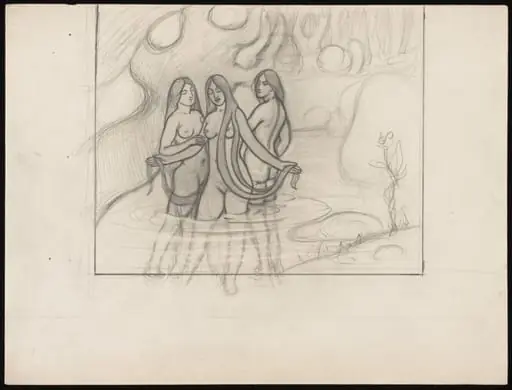
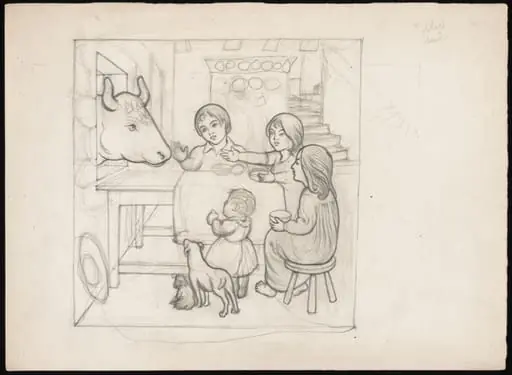
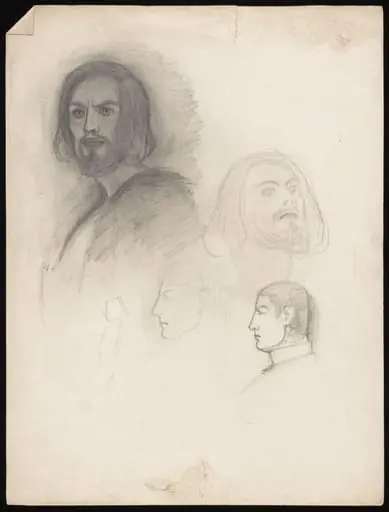
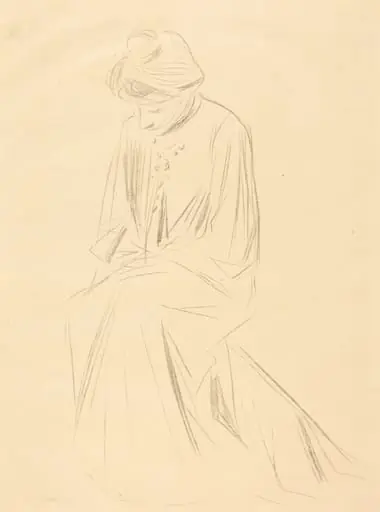
This 1850 drawing by Forbes-Robertson depicts a solitary figure in a modest interior setting. Executed in light, rapid strokes, the work lacks fine detail and appears deliberately unrefined. It captures a moment of stillness rather than a completed composition, suggesting it was made as a preliminary observation rather than a finished piece.
Subject & Meaning
The figure, a woman in a long, flowing robe, stands near a doorway with hands at her sides, facing the viewer. Her posture conveys quiet contemplation, and the absence of narrative elements or expressive gestures invites interpretation as a study of presence rather than a story. The simplicity of the setting emphasizes the figure’s solitude.
Technique & Style
The artist used minimal, sketch-like lines to define form and space, avoiding shading or precise contours. The draftsmanship is economical, focusing on the essential shapes of the figure and room. This approach reflects a working method oriented toward capturing immediate visual impressions, typical of observational studies in 19th-century drawing practice.
History & Provenance
Created in 1850, the drawing is part of a broader body of works by Forbes-Robertson that document everyday scenes and figures. It entered the Victoria and Albert Museum’s collection as part of a larger archive of 19th-century British drawings, where it remains accessible for study and public viewing.
Context
In mid-19th-century Britain, artists increasingly turned to informal sketches as tools for learning and recording. This drawing aligns with that trend, reflecting a shift away from highly finished compositions toward direct observation. Such studies were often kept private, serving as exercises in perception and form.
Legacy
Though not intended for public display, the drawing contributes to understanding the artist’s process and the broader culture of observational drawing in Victorian Britain. It stands as an example of how artists engaged with quiet, unadorned moments, preserving them not as finished works but as records of seeing.
Artist & collection
Artist
Forbes-Robertson fills sketchbooks with late-Victorian and early-Edwardian life, mostly in black ink on paper.