Artwork
Mission San Carlos Borromeo
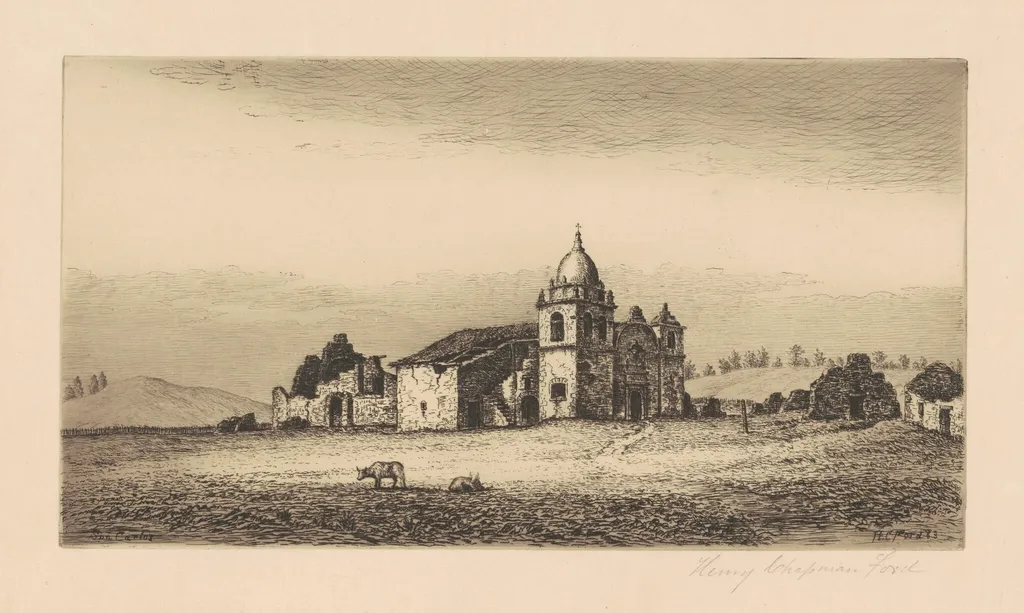
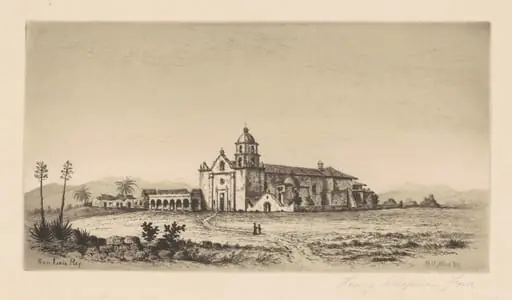
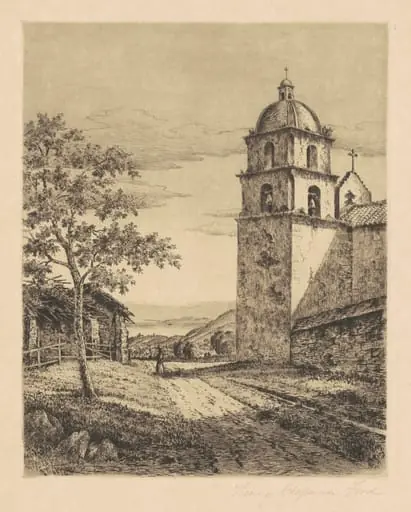
Mission San Carlos Borromeo is an ink print by the Impressionist artist Henry Chapman Ford. It dates from 1883 and is held in the collection of the National Gallery of Art.
About this work
Overview
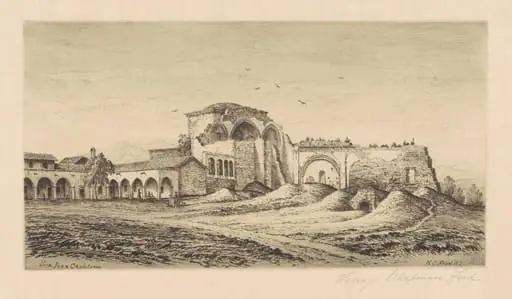
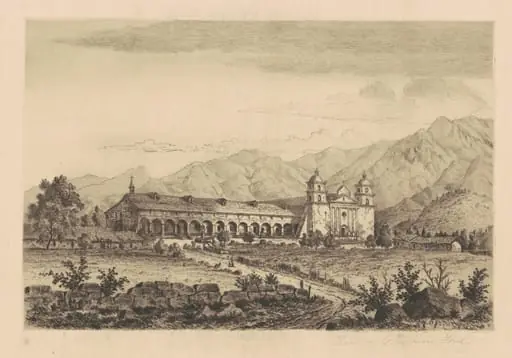
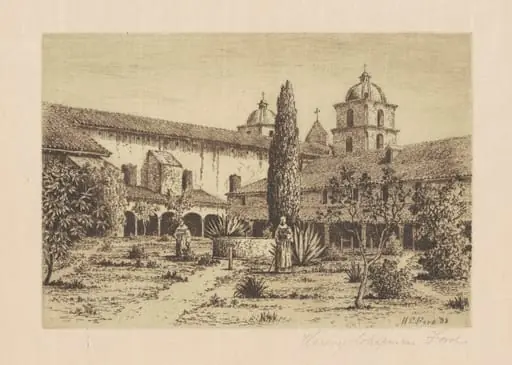
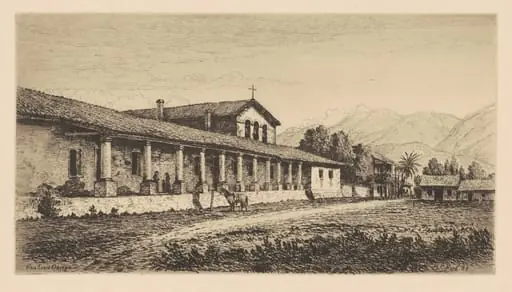
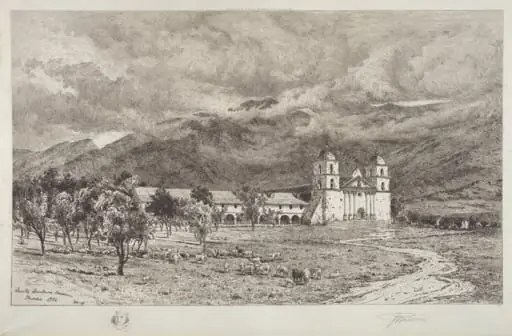
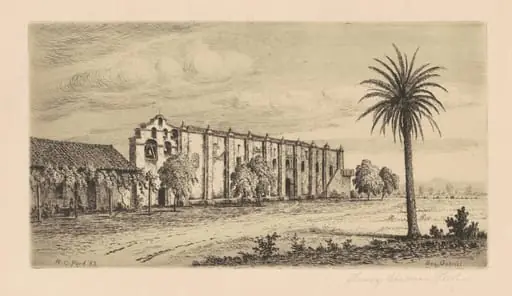
Henry Chapman Ford’s 1883 etching titled Mission San Carlos Borromeo presents a tranquil landscape centered on a modest church capped with a dome and a bell tower. In the foreground a stone structure and a handful of cattle stand beside a river, while gentle hills and a pale sky recede into the distance. The composition is rendered in black on laid paper, emphasizing line and tone over color.
Subject & Meaning
The image captures a peaceful moment in a rural mission setting, highlighting the simplicity of the architecture and the everyday presence of livestock. The juxtaposition of the sacred building with the natural environment suggests a harmonious coexistence between human settlement and the surrounding landscape, inviting contemplation of the mission’s role within its pastoral surroundings.
Technique & Style
Ford employed traditional intaglio etching, incising the scene onto a copper plate before inking and pressing it onto laid paper. This process allows for fine line work and subtle gradations of shade, giving the print a delicate texture and depth. The restrained black palette and light, sketch‑like lines convey atmospheric softness while retaining precise architectural detail.
History & Provenance
Created in 1883, the print reflects Ford’s interest in documenting California’s historic missions during a period of renewed public fascination with the state’s colonial heritage. Though specific ownership records are limited, the work has appeared in collections of American Western prints and is cited in surveys of 19th‑century etchings that focus on regional architecture.
Context
The etching belongs to a broader 19th‑century movement that sought to record and romanticize the Spanish missions of California as symbols of cultural identity. Ford’s depiction aligns with contemporary travel literature and photographic surveys that emphasized the missions’ architectural forms amid a rapidly changing frontier landscape.
Artist & collection