Artwork
Mission Santa Barbara
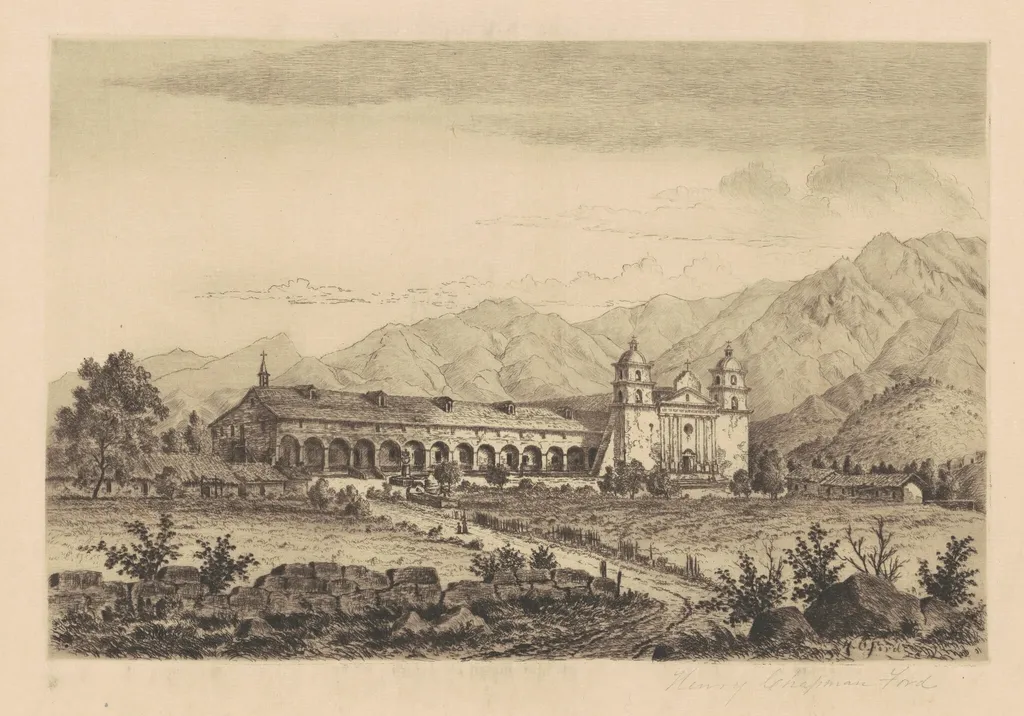
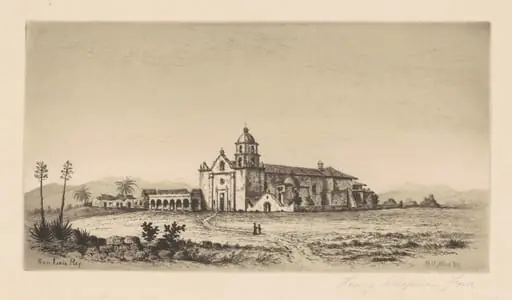
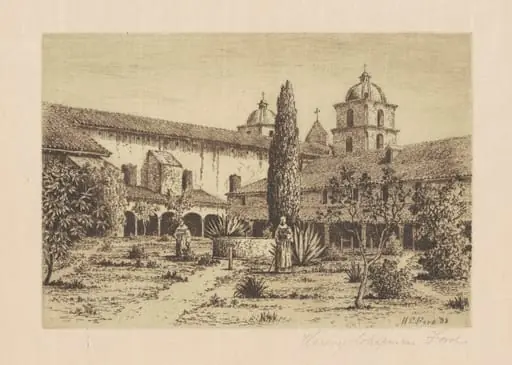
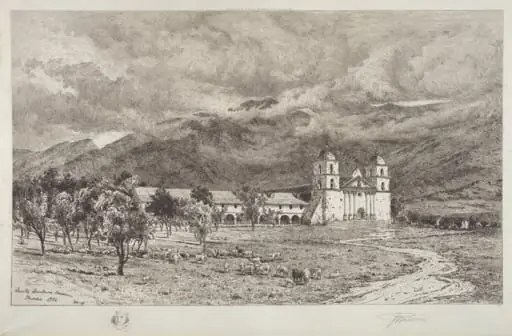
Mission Santa Barbara is an ink print by the Impressionist artist Henry Chapman Ford. It dates from 1883 and is held in the collection of the National Gallery of Art.
About this work
Overview
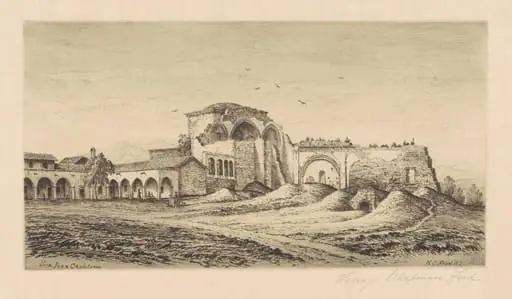
Created in 1883, this black‑ink etching on laid paper by Henry Chapman Ford portrays the historic Mission Santa Barbara set within a tranquil Californian landscape. The composition centers on the mission’s expansive façade, framed by distant mountains, and invites the eye along a winding dirt path that leads toward the structure.
Subject & Meaning
The work captures the mission’s architectural prominence, highlighting its long arched colonnade and a smaller, ornamented church flanked by twin towers. Sparse vegetation and a few scattered trees in the foreground reinforce a sense of quietude, suggesting the enduring calm of the site amid its natural surroundings.
Technique & Style
Ford employed traditional intaglio etching, using fine lines and varied hatching to render tonal gradations. The contrast between deep blacks and delicate washes creates a layered sense of depth, while the texture of the laid paper adds subtle visual interest to the overall composition.
History & Provenance
The print was produced during a period when American artists were documenting western landmarks. Though specific ownership records are limited, the etching has appeared in several collections of 19th‑century American prints, reflecting its role in visualizing California’s mission heritage.
Artist & collection