Artwork
Päävartiossa
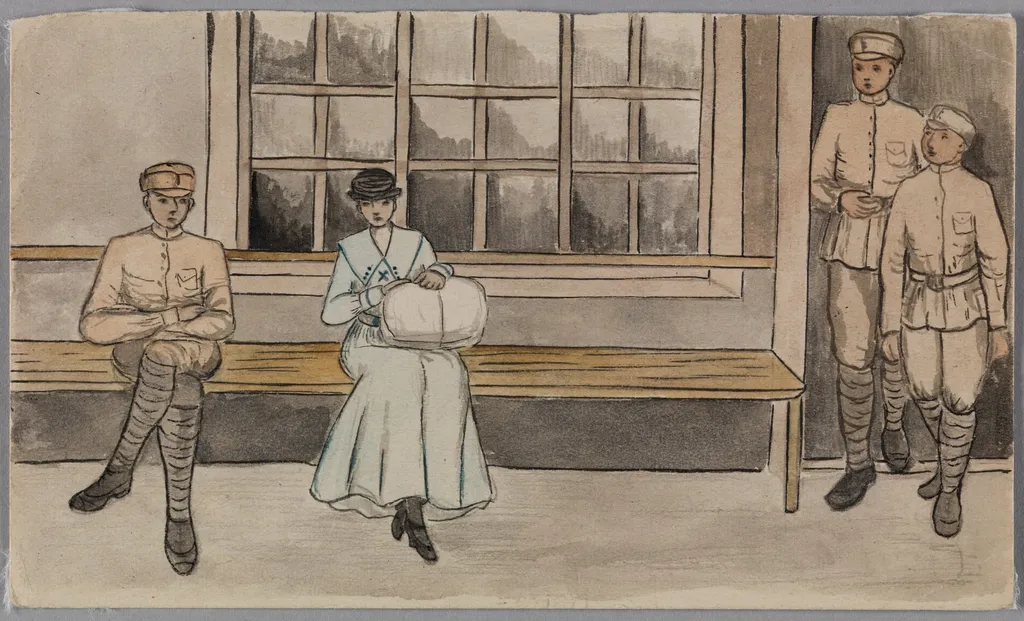
Päävartiossa is a drawing by Olga Forslund. It is held in the collection of the Helsinki City Museum. This pencil or ink drawing depicts three figures seated on a wooden bench within a modest interior.
About this work
Overview
The figures are arranged symmetrically, their postures deliberate and unanimated, suggesting a moment suspended in time rather than captured in motion.
This pencil or ink drawing depicts three figures seated on a wooden bench within a modest interior. Large windows admit soft, diffused light, casting gentle shadows across plain walls. The composition is restrained, emphasizing stillness and quiet formality. The figures are arranged symmetrically, their postures deliberate and unanimated, suggesting a moment suspended in time rather than captured in motion.
Subject & Meaning
The central figure is a woman in a long white dress and hat, holding a small bag, flanked by two men in identical uniforms with caps. Their attire implies institutional or ceremonial roles, possibly military or bureaucratic. The woman’s attire contrasts with their rigidity, hinting at a relationship of authority or ritual. The scene evokes formality without narrative clarity, inviting contemplation rather than explanation.
Technique & Style
The drawing employs clean, precise lines with minimal shading, relying on contour and placement to define form. Muted tones and restrained detail reflect a deliberate simplicity. The artist uses subtle variations in line weight to suggest texture and volume, particularly in fabric and wood. The absence of overt cross-hatching or heavy tonal modeling reinforces a quiet, observational approach.
History & Provenance
The work’s origin and creator are not documented in the provided details. Its style and subject suggest a late 19th or early 20th-century European context, possibly from a regional artist or amateur draftsman. No known exhibition history or collection record is indicated, leaving its provenance unresolved but consistent with private or domestic artistic practice of the period.
Context
The uniforms and formal dress reflect societal norms of a time when dress signaled status and role, particularly in state or institutional settings. The interior space, sparse and unadorned, aligns with functional architecture of public or administrative buildings. The muted lighting and stillness evoke a sense of quiet routine, perhaps capturing a moment between duties or official engagements.
Legacy
Though not widely recognized, the drawing exemplifies a quiet tradition of observational drawing focused on everyday formality. Its restraint and attention to posture and attire offer insight into how ordinary moments were recorded by artists outside the mainstream. It remains a quiet testament to the dignity found in unremarkable scenes of institutional life.
Artist & collection
Artist
Olga Forslund left a small but vivid slice of early 20th-century life in her pencil drawings.

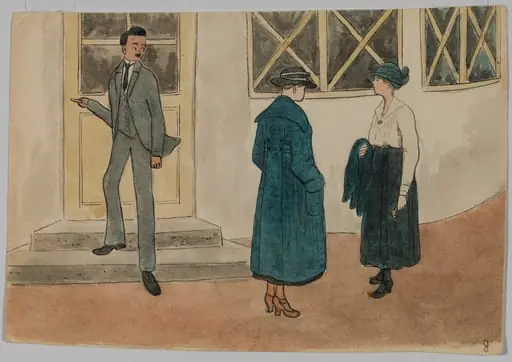 Sisarukset Forslund ja heidän kavaljeerinsa. Sisarukset ja Cyrus Florström Kulosaaren kasinolla.
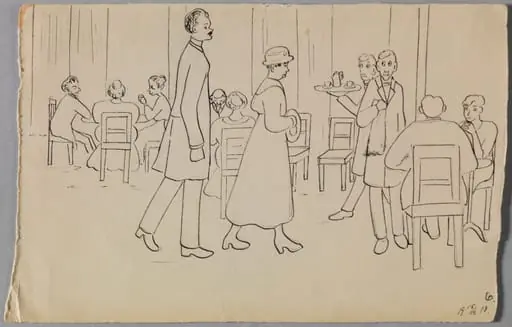 Sisarukset Forslund.
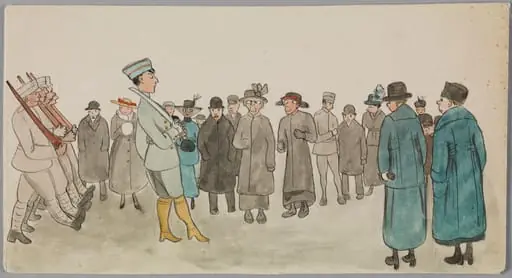 Paraati
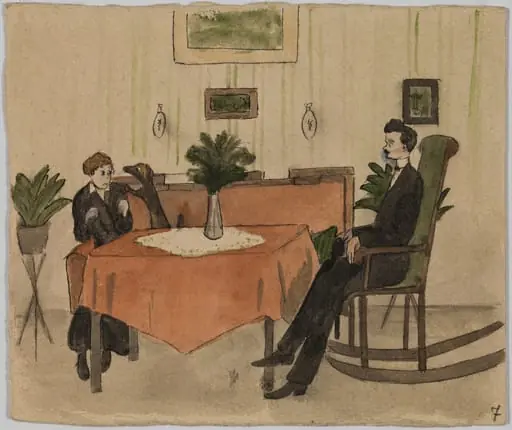 Sisarukset Forslund ja heidän kavaljeerinsa. Cyrus Florström vierailulla.
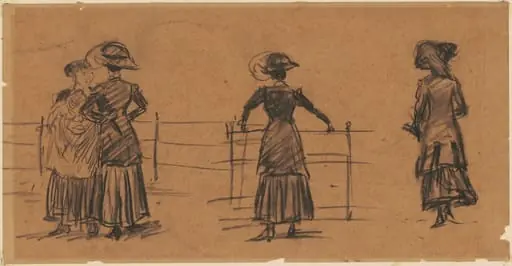 Studies of Women by the Park Railing
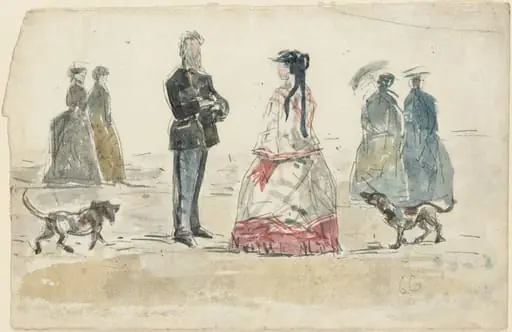 Ladies and Gentleman Walking on the Beach with Two Dogs
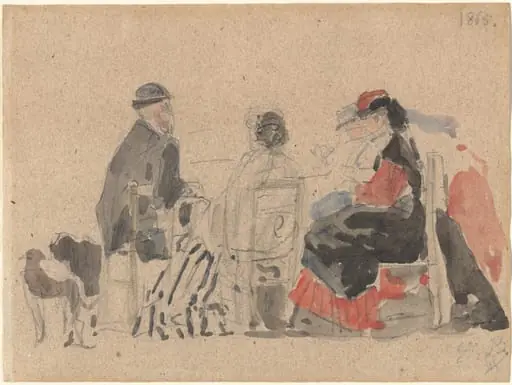 Conversation on the Beach
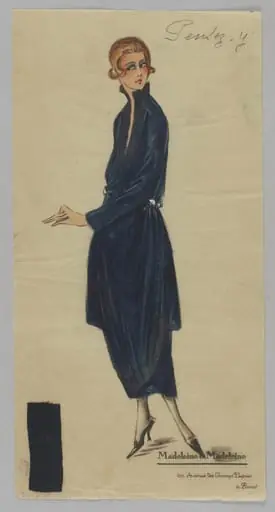 Pensez-y
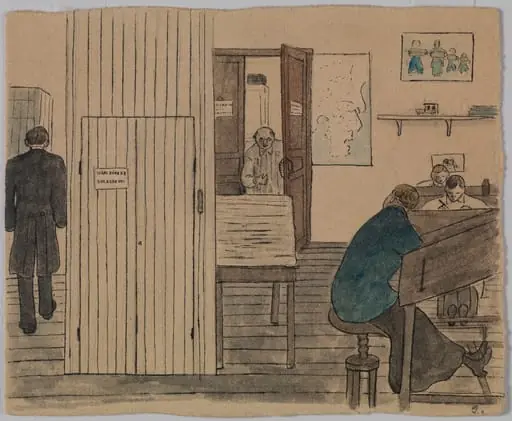 Arvidssonin litografinen ateljee
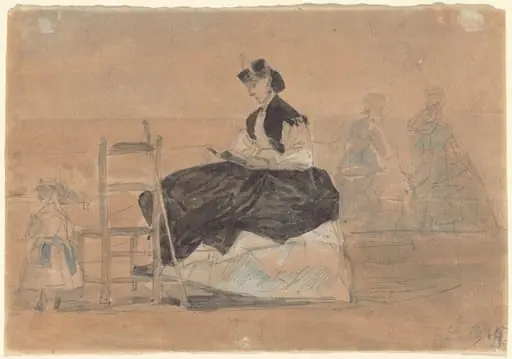 Woman in a Crinoline on the Beach of Trouville
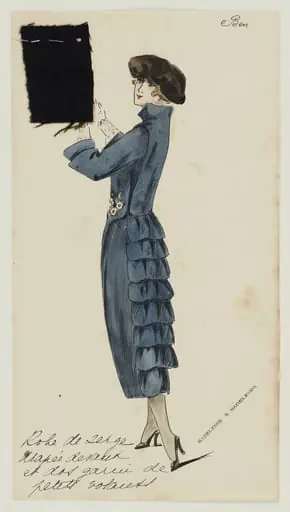 Ben
Ben Nyson
Nyson