Artwork
Porvoo
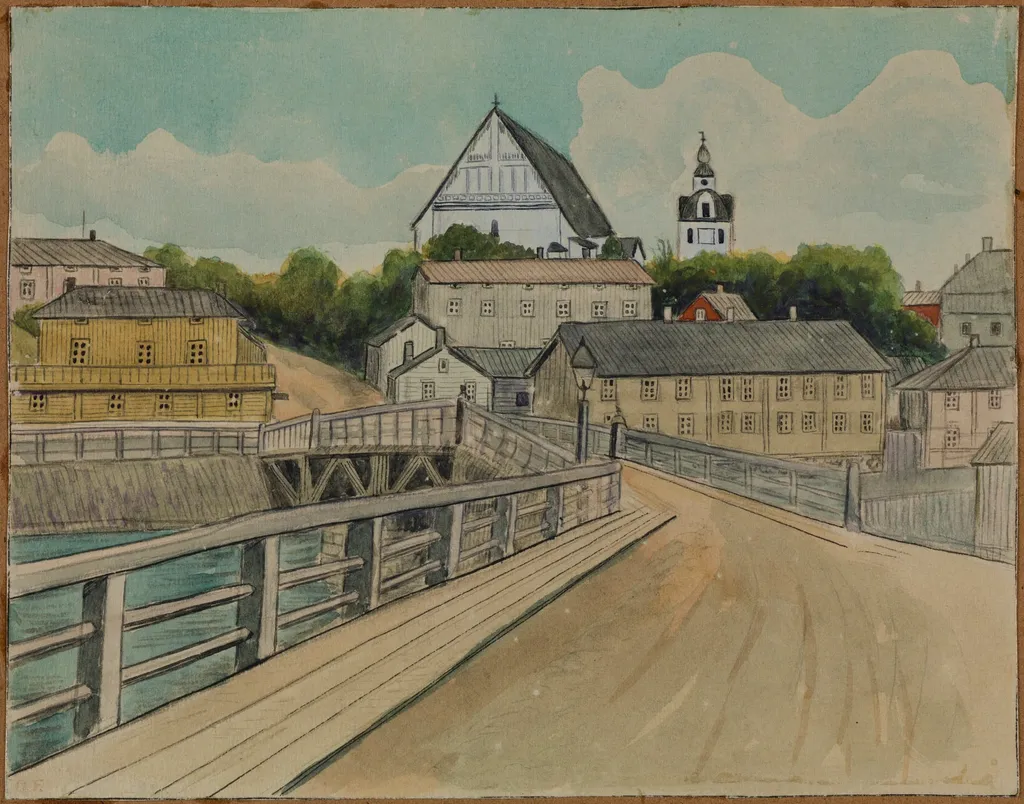
Porvoo is a drawing by Olga Forslund. It is held in the collection of the Helsinki City Museum.
About this work
Overview
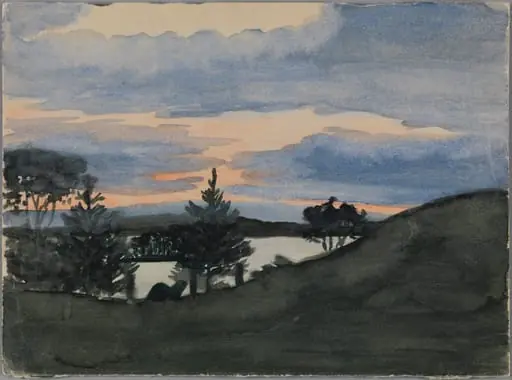
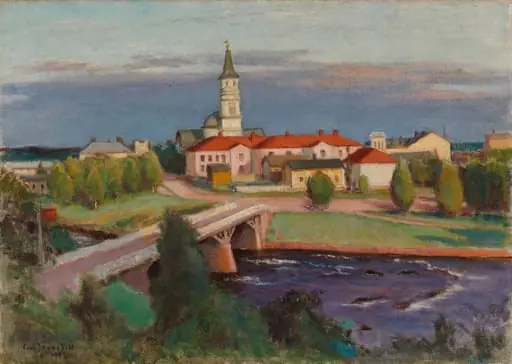
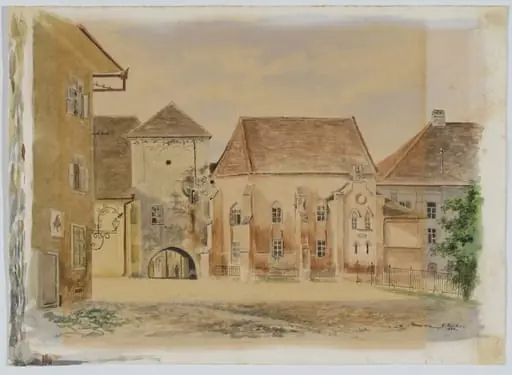
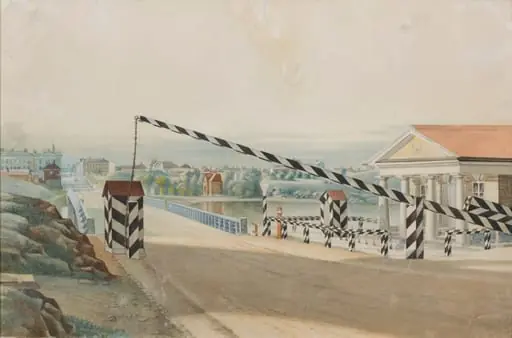
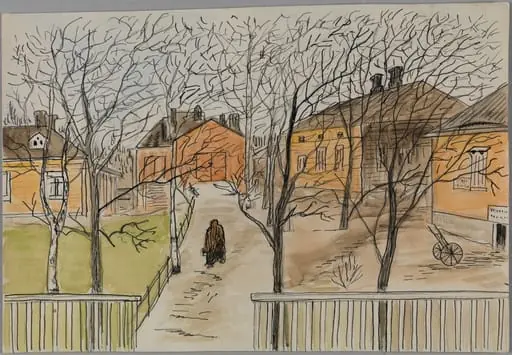
This drawing depicts Porvoo, a Finnish town situated along a river, rendered in quiet, restrained tones.
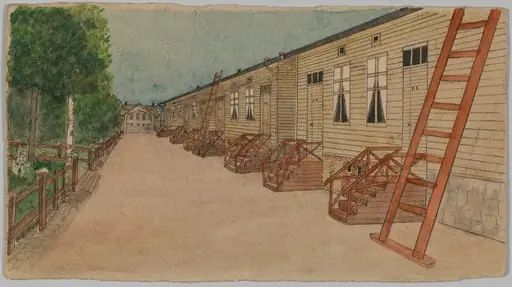
This drawing depicts Porvoo, a Finnish town situated along a river, rendered in quiet, restrained tones. The composition centers on a wooden bridge that leads the eye toward a cluster of modest buildings, their light walls and dark roofs suggesting traditional Nordic architecture. A church spire and a pyramid-roofed structure rise behind, anchoring the scene in a specific place. The overall effect is serene, achieved through minimal detail and a muted palette.
Subject & Meaning
The image captures a tranquil moment in a small Finnish town, emphasizing stillness over activity. The absence of figures and the calm water suggest a pause in daily life. The bridge acts as a quiet connector—not between people, but between land and architecture. The church and distinctive pyramid structure imply civic and religious continuity, grounding the scene in local identity rather than narrative drama.
Technique & Style
The artist employed clean, precise lines and subdued colors to evoke calm. Wooden railings on the bridge are simplified to parallel slats; rooftops are rendered in flat dark tones against lighter walls. The sky is a soft wash of blue, unbroken by clouds. There is no texture or shading beyond what is necessary to suggest form, reinforcing a sense of quiet order and deliberate restraint.
History & Provenance
The drawing is held by the Museum of Ethnography, suggesting it was collected as a record of Finnish vernacular architecture and landscape. Its creation likely dates to the 19th or early 20th century, a period when artists and ethnographers documented regional towns before industrialization altered their appearance. The work may have been made for study or personal reflection rather than public display.
Context
Porvoo, one of Finland’s oldest towns, was known for its timber buildings and riverfront layout during the time this drawing was likely made. Such depictions were part of a broader movement to preserve visual records of rural and small-town life across Scandinavia. The focus on architecture over people aligns with ethnographic interests in material culture and spatial organization.
Legacy
As a document of Finnish townscape, this drawing contributes to the historical record of regional architecture and urban form. Its quiet aesthetic reflects a period when artists and collectors valued simplicity and authenticity in depicting everyday environments. It remains a quiet reference point for understanding how Finnish communities visually defined themselves before modernization.
Artist & collection
Artist
Olga Forslund left a small but vivid slice of early 20th-century life in her pencil drawings.