Artwork
Capela Sf. Jakob și Turnul preoților
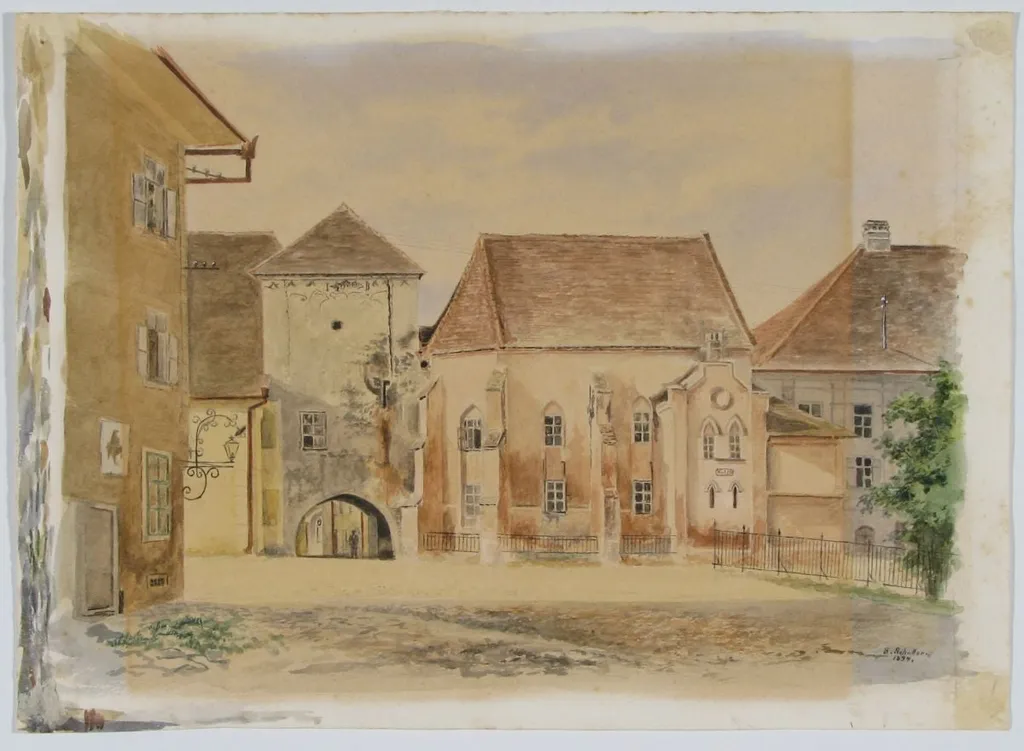
Capela Sf. Jakob și Turnul preoților is an unspecified painting by Betty Schuller. It is held in the collection of the Brukenthal National Museum. This image portrays a quiet rural scene centered on a small chapel and a neighboring tower, both rendered with restrained detail.
About this work
Overview
This image portrays a quiet rural scene centered on a small chapel and a neighboring tower, both rendered with restrained detail. A modest building to the left, with a visible door and window, complements the architecture. A cobblestone path leads toward the chapel, bordered by a simple iron fence. The sky, softly graded in gray tones, enhances the calm mood without dramatic contrast.
Subject & Meaning
The chapel and tower suggest a place of worship and community, likely in a small village. The absence of figures or movement emphasizes stillness and solitude. The composition invites contemplation rather than narrative, framing the structures as quiet witnesses to daily life, their simplicity underscoring a sense of enduring, unremarkable devotion.
Technique & Style
The artist employs muted tones and soft brushwork to avoid sharp definition, creating a hazy, atmospheric effect. Light is diffused evenly across surfaces, with no strong highlights or deep shadows. The gentle gradation in the sky and the subtle texture of the cobblestones contribute to a tranquil, almost meditative quality, prioritizing mood over precision.
History & Provenance
No documented origin or ownership history is available for this image. It appears to be a standalone work, possibly a study or sketch, lacking signatures or inscriptions that might link it to a known artist or period. Its informal presentation suggests it was not commissioned for public display.
Context
The architectural elements reflect vernacular design common in Eastern European villages, particularly in regions with Orthodox or Catholic traditions. The presence of a chapel and priest’s tower implies a small, self-sufficient religious community. The scene’s quiet realism aligns with 19th-century regionalist tendencies that valued everyday landscapes over grand historical themes.
Legacy
This image remains an unremarked example of regional pictorial tradition, neither widely exhibited nor critically analyzed. Its value lies in its unembellished depiction of rural spiritual life, offering a quiet counterpoint to more dramatic religious art of the era. It survives as a modest record of place and atmosphere.
Artist & collection
Artist
Betty Schuller made prints and paintings of European town scenes. Her two prints—Curte veche din Sibiu and Colibă de țigani—show old Saxon and Roma architecture in sharp lines and soft color. Her paintings Strada…

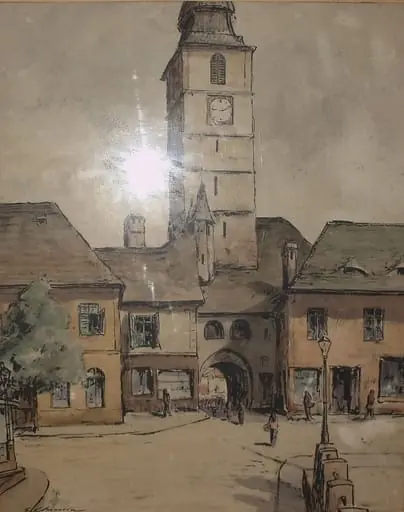 Turnul Sfatului - Sibiu (intrarea în piața mică Sibiu)
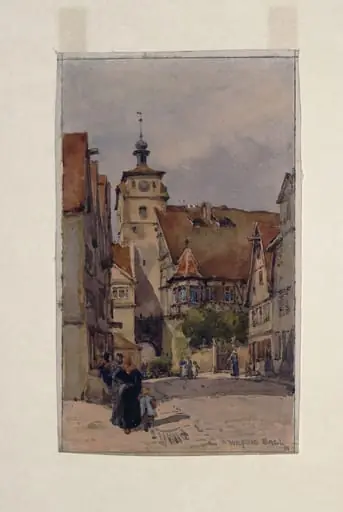 Street scene, Rotenburg, showing the White Tower and the Judentanzhaus
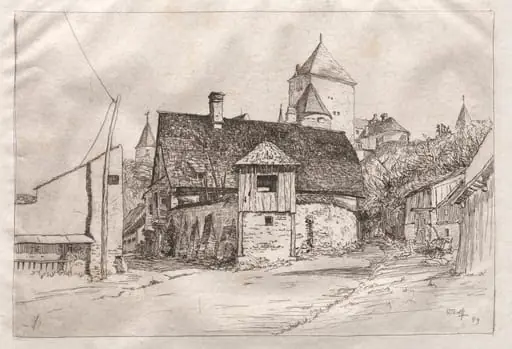 Worth: A Lane
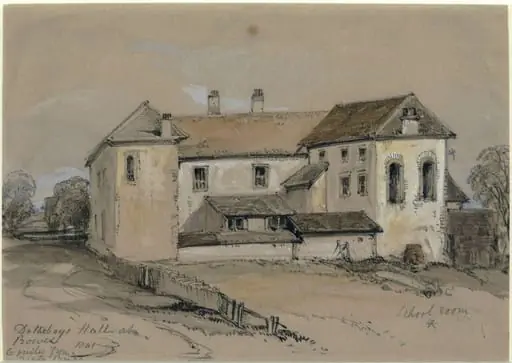 Dotheboy's Hall, near Bowes, six miles from Greta Bridge
 House in Amberley Grove, Sydenham, built by an Astronomer c.1867
 Topographical drawing
 Old Museum, Beauvais
 Karl Jauslin (1842-1904) - Malerei, Dorfansicht
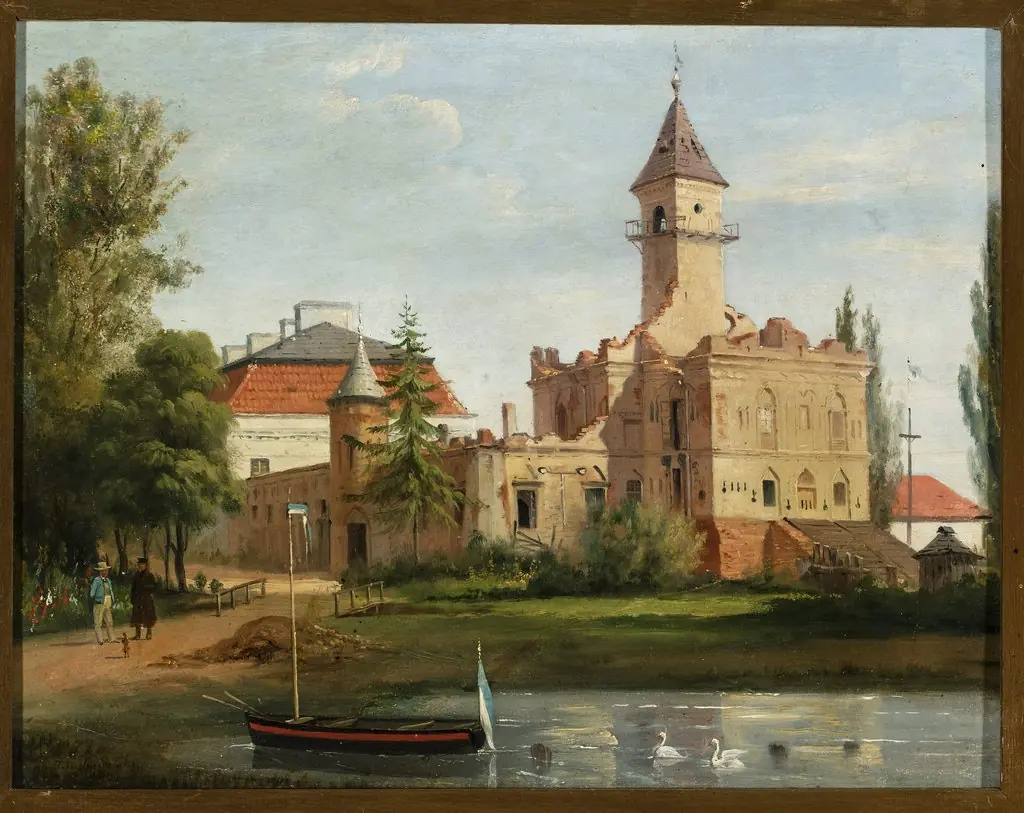 View of the castle in Radziejowice
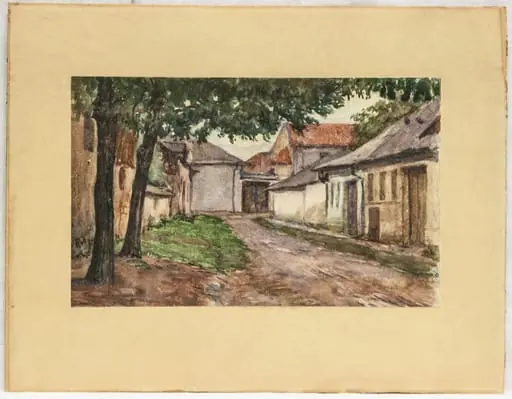 Ulița
Ulița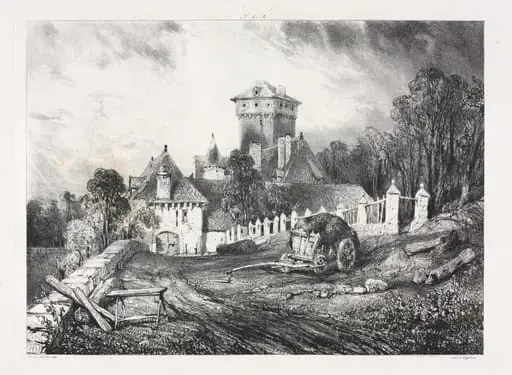 Voyages pittoresques et romantiques dans l'ancienne France, Auvergne: Château de Pesteil à Polminhac