Artwork
Râul Darro la Granada
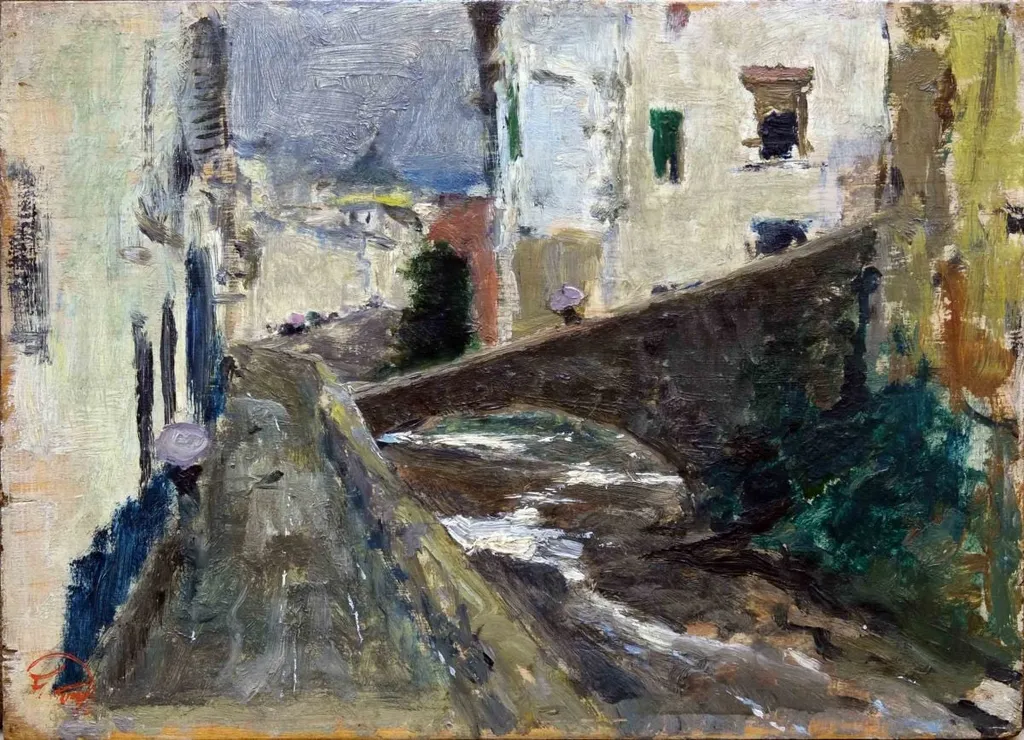
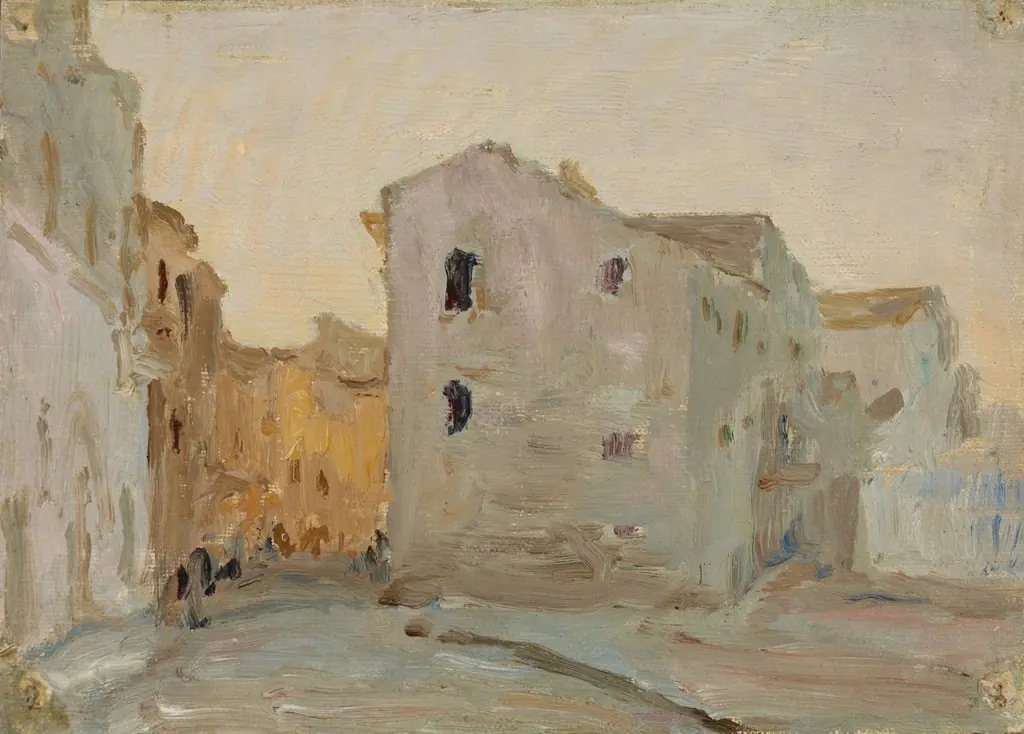
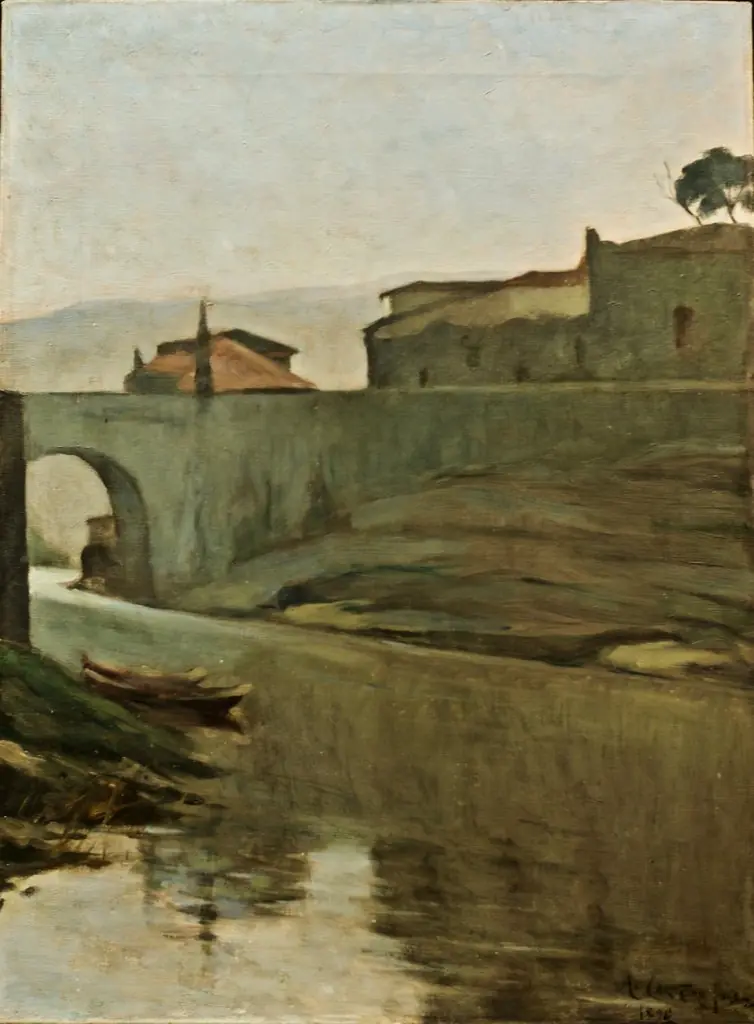
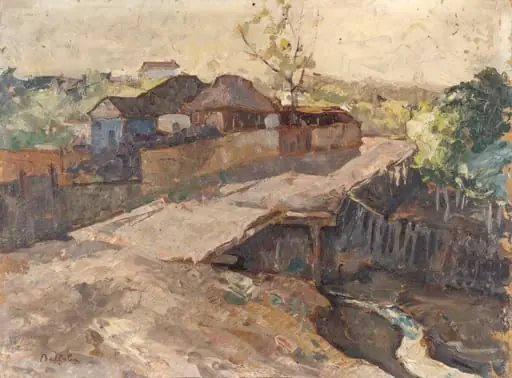
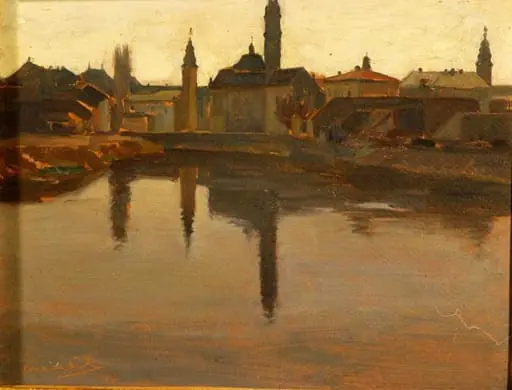
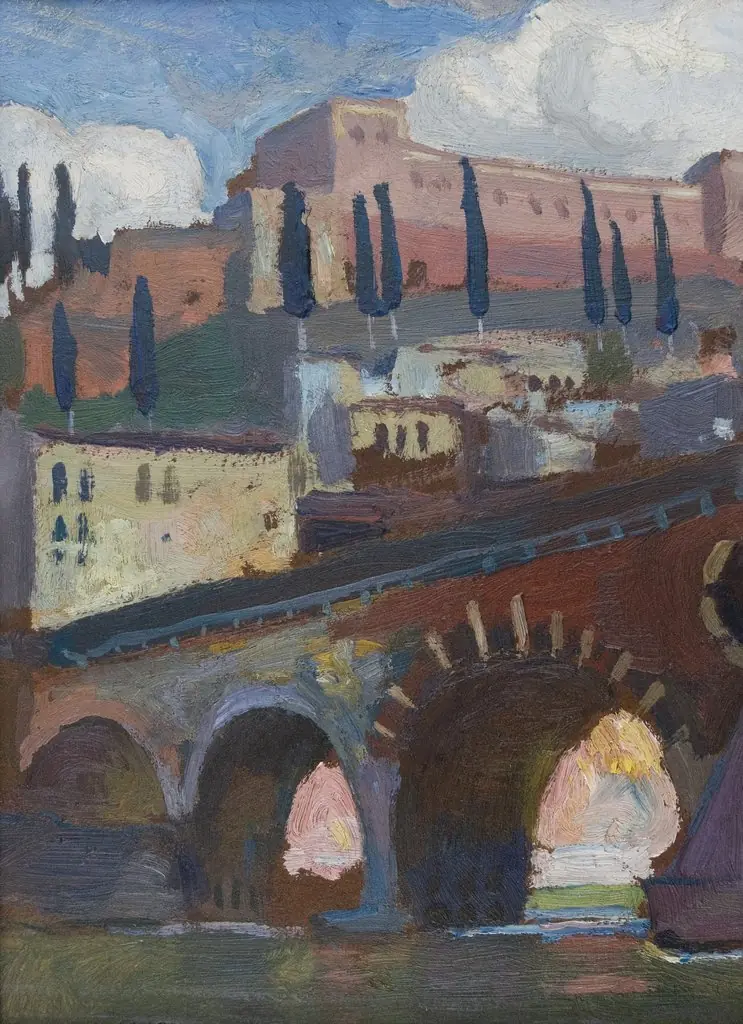
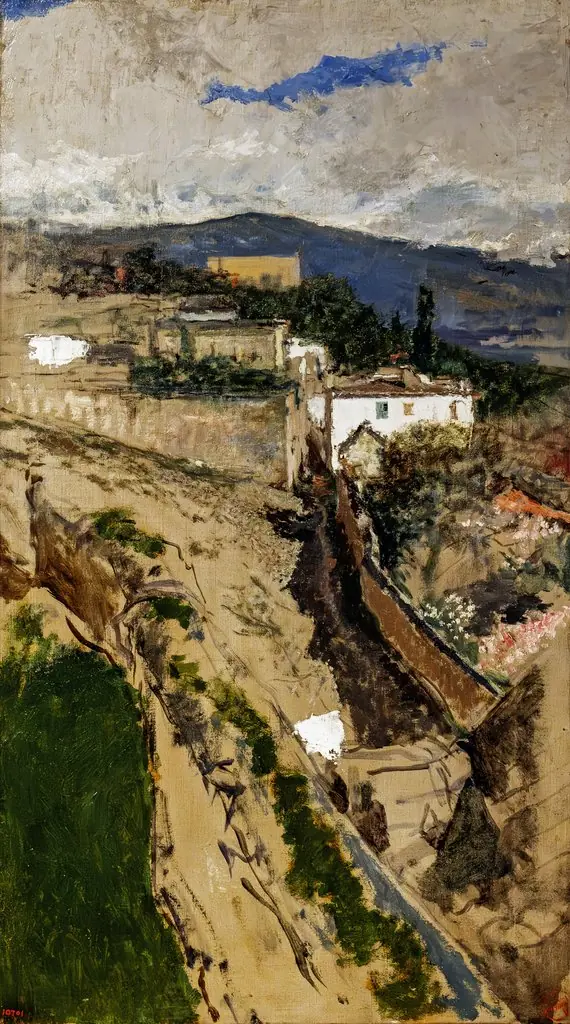
Râul Darro la Granada is an unspecified painting by Marià José Fortuny i Marsal. It is held in the collection of the National Museum of Art of Romania. The work depicts a stone bridge spanning a shallow gorge, its uneven surface rendered with thick, textured brushwork.
About this work
Overview
The work depicts a stone bridge spanning a shallow gorge, its uneven surface rendered with thick, textured brushwork.
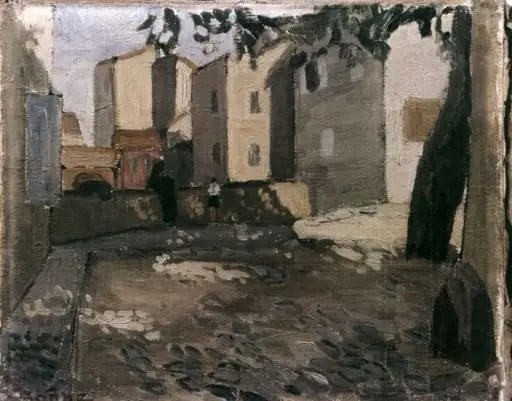
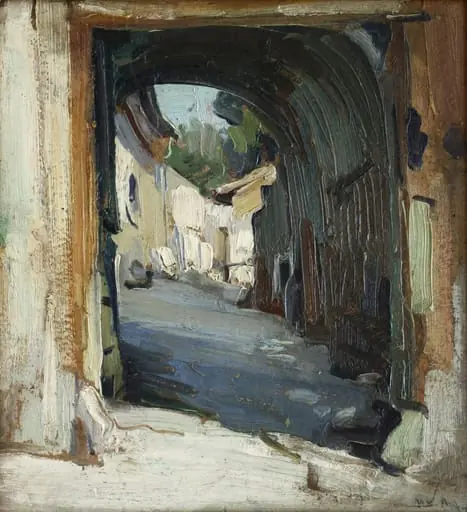
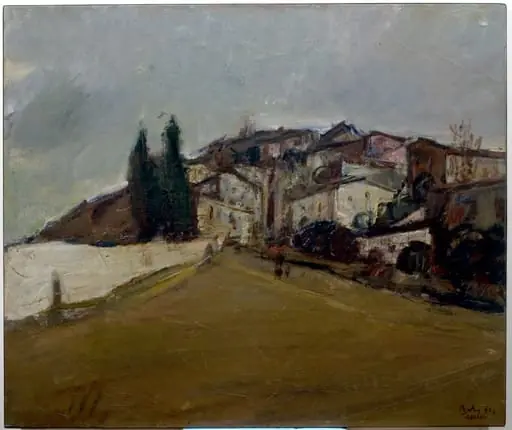
The work depicts a stone bridge spanning a shallow gorge, its uneven surface rendered with thick, textured brushwork. Figures traverse the bridge, while modest dwellings cling to the slope behind it. A muted sky hovers above, rendered in a faint, blurred wash that recedes behind the architectural forms. The overall palette is dominated by grays, blues, and earthy browns, giving the scene a subdued, atmospheric quality.
Subject & Meaning
The composition centers on a rural crossing, suggesting everyday movement across a landscape shaped by the river Darro near Granada. The presence of pedestrians and modest homes conveys a sense of ordinary life integrated with the natural environment, while the bridge’s ruggedness hints at the passage of time and the endurance of local infrastructure.
Technique & Style
The artist employs impasto, applying paint in dense, raised strokes that create a palpable surface texture. This method emphasizes the physicality of stone and water, allowing light to catch the ridges of pigment. The brushwork is deliberately uneven, producing a lively, almost tactile visual effect that contrasts with the subdued color scheme.
Context
The painting reflects a 19th‑century interest in regional Spanish scenery, where artists often recorded familiar landmarks with a focus on atmospheric conditions. The emphasis on texture and the modest, unidealized setting aligns with broader trends toward realism and the exploration of local topography during that period.
Artist & collection
Artist
Marià Fortuny painted sunlit scenes of 19th-century Granada, especially the Darro river as it wound past old houses and bridges.