Artwork
Contrejour (Apus de soare la Oradea)
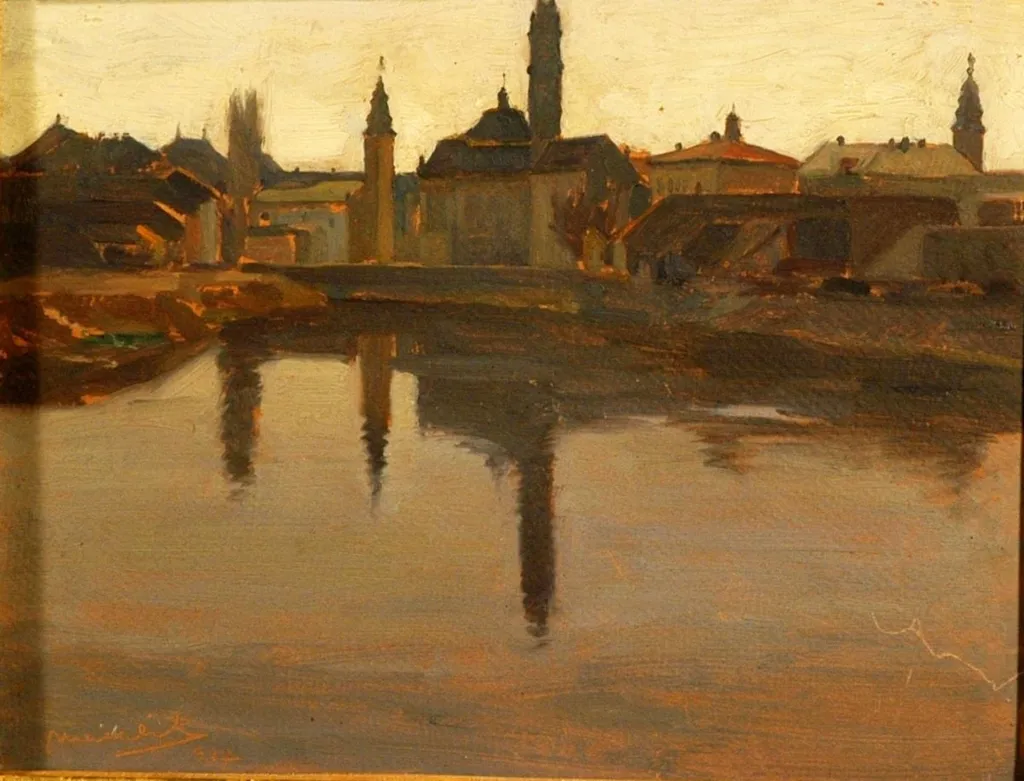
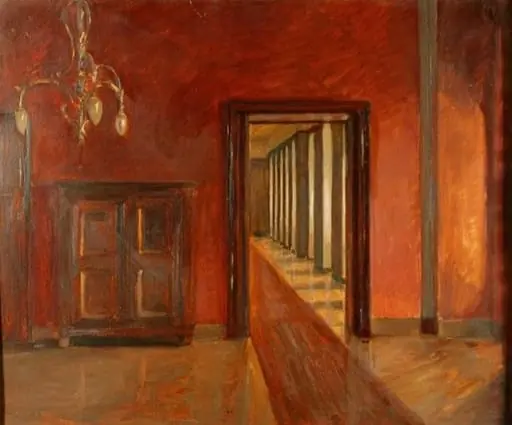
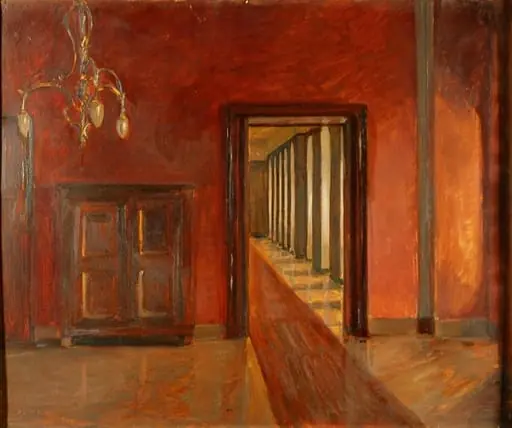
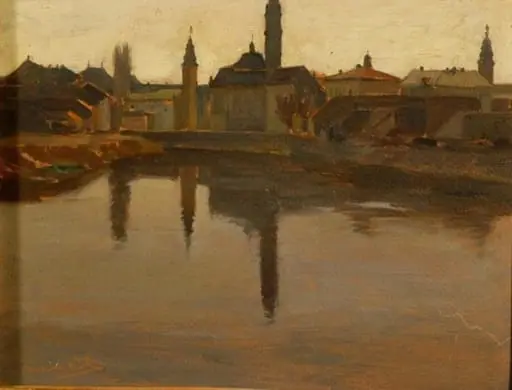
Contrejour (Apus de soare la Oradea) is a print by Alfred Macalik. It dates from 1927 and is held in the collection of the Țării Crișurilor Museum.
About this work
Overview
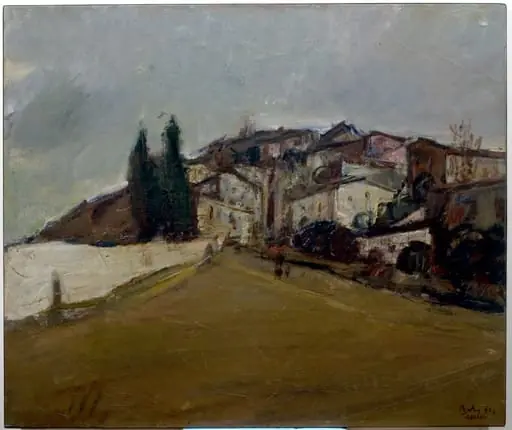
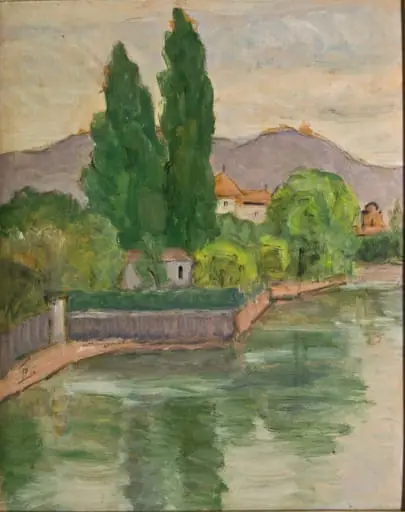
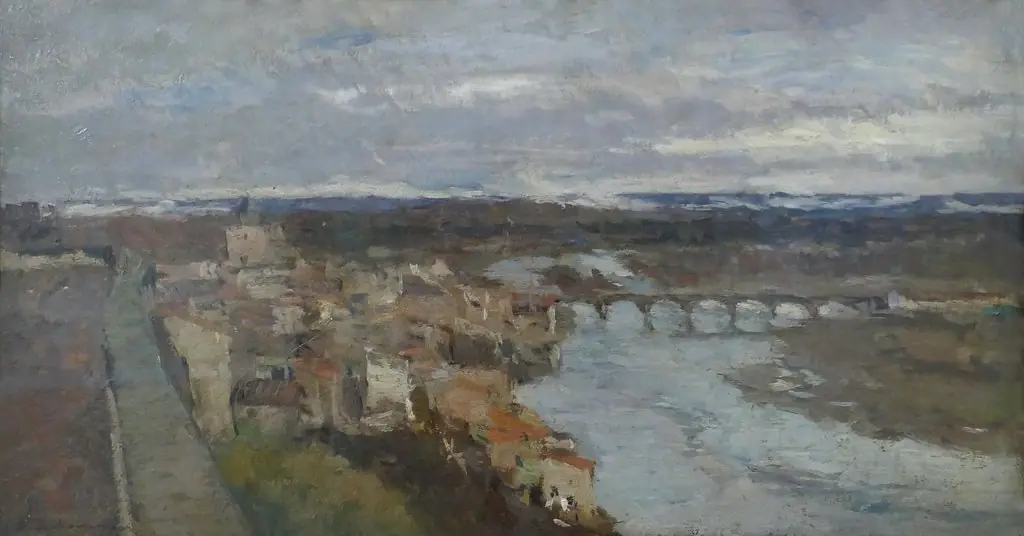
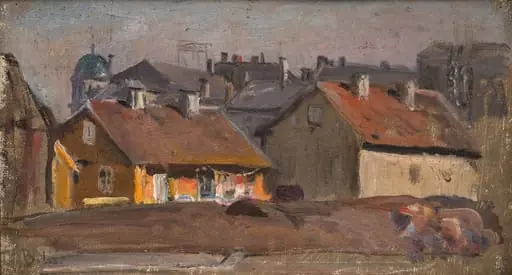
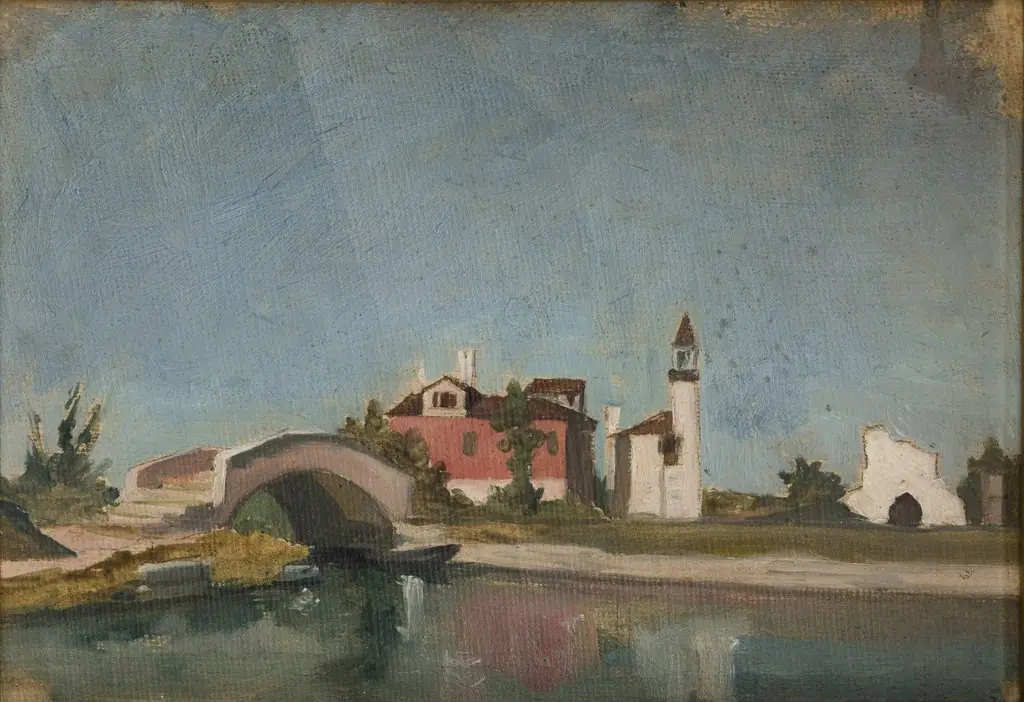
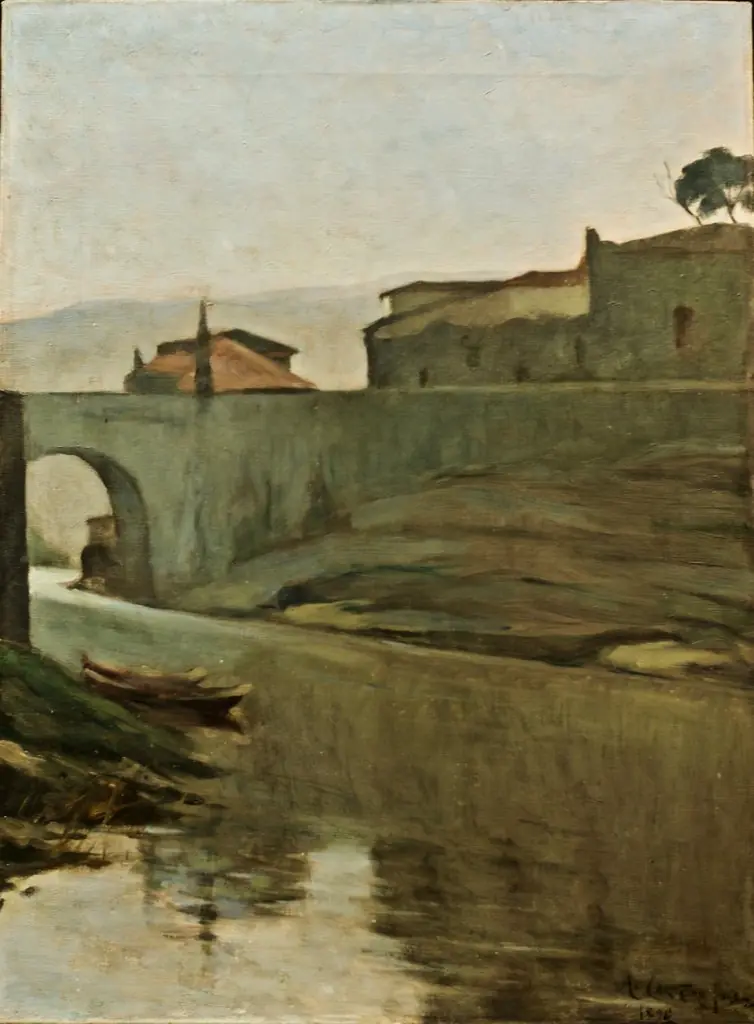
Created in 1927 by Alfred Macalik, Contrejour (Apus de soare la Oradea) is a landscape painting depicting a quiet riverside at twilight. The work is part of the collection at the Museum of Ethnography. Its composition centers on the interplay of light and reflection, capturing the moment when daylight fades and the water becomes a mirror for the surrounding architecture.
Subject & Meaning
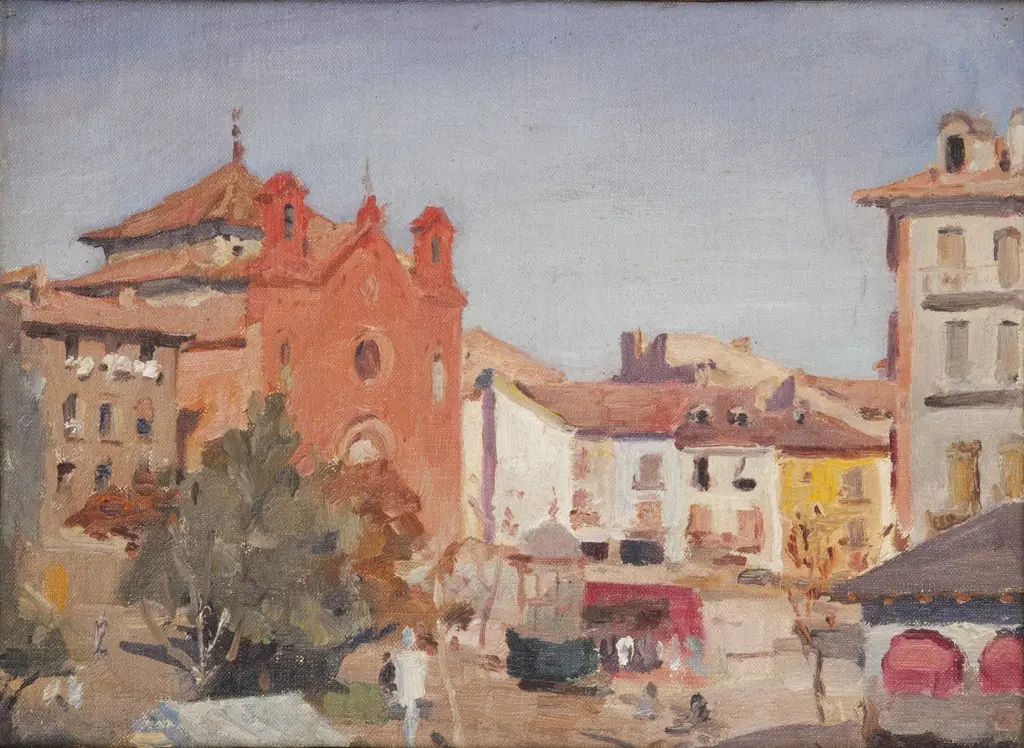
The scene portrays Oradea’s riverside buildings at dusk, their pointed roofs aligned along the water’s edge. The stillness of the water and the muted tones suggest a contemplative pause in the day’s rhythm. Rather than documenting a specific event, the painting evokes a sense of quiet transition—between day and night, presence and memory—through its softened forms and subdued palette.
Technique & Style
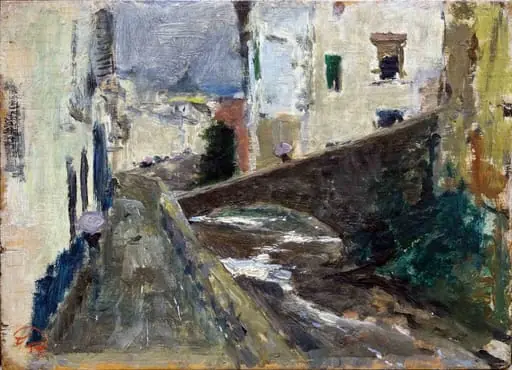
Macalik employed thick, textured brushwork to build the surfaces of buildings and their reflections, using impasto to create a tactile, hazy atmosphere. The sky is rendered in thin, pale washes, contrasting with the heavier pigment of the structures. Details dissolve toward the horizon, blurring boundaries between land, water, and sky, enhancing the dreamlike quality of the moment.
History & Provenance
The painting was completed in 1927 and entered the collection of the Museum of Ethnography shortly thereafter. Its acquisition reflects the institution’s interest in capturing regional visual culture during the interwar period. No significant changes in ownership are documented, and it has remained in the museum’s care since its initial acquisition.
Context
Painted during a period of cultural consolidation in interwar Romania, the work aligns with regionalist tendencies that sought to portray everyday landscapes with emotional resonance. Macalik’s focus on Oradea—a city with mixed cultural influences—reflects broader efforts to define local identity through quiet, unidealized scenes rather than grand historical narratives.
Legacy
Contrejour remains a quiet example of early 20th-century Romanian landscape painting, noted for its atmospheric sensitivity rather than formal innovation. While not widely exhibited beyond its home institution, it contributes to an understanding of how regional artists interpreted light and memory, influencing later generations interested in tonal subtlety over dramatic composition.
Artist & collection
Artist
Alfred Macalik painted quiet, warm rooms and soft evening scenes in the 1920s and 1940s.