Artwork
Poartă
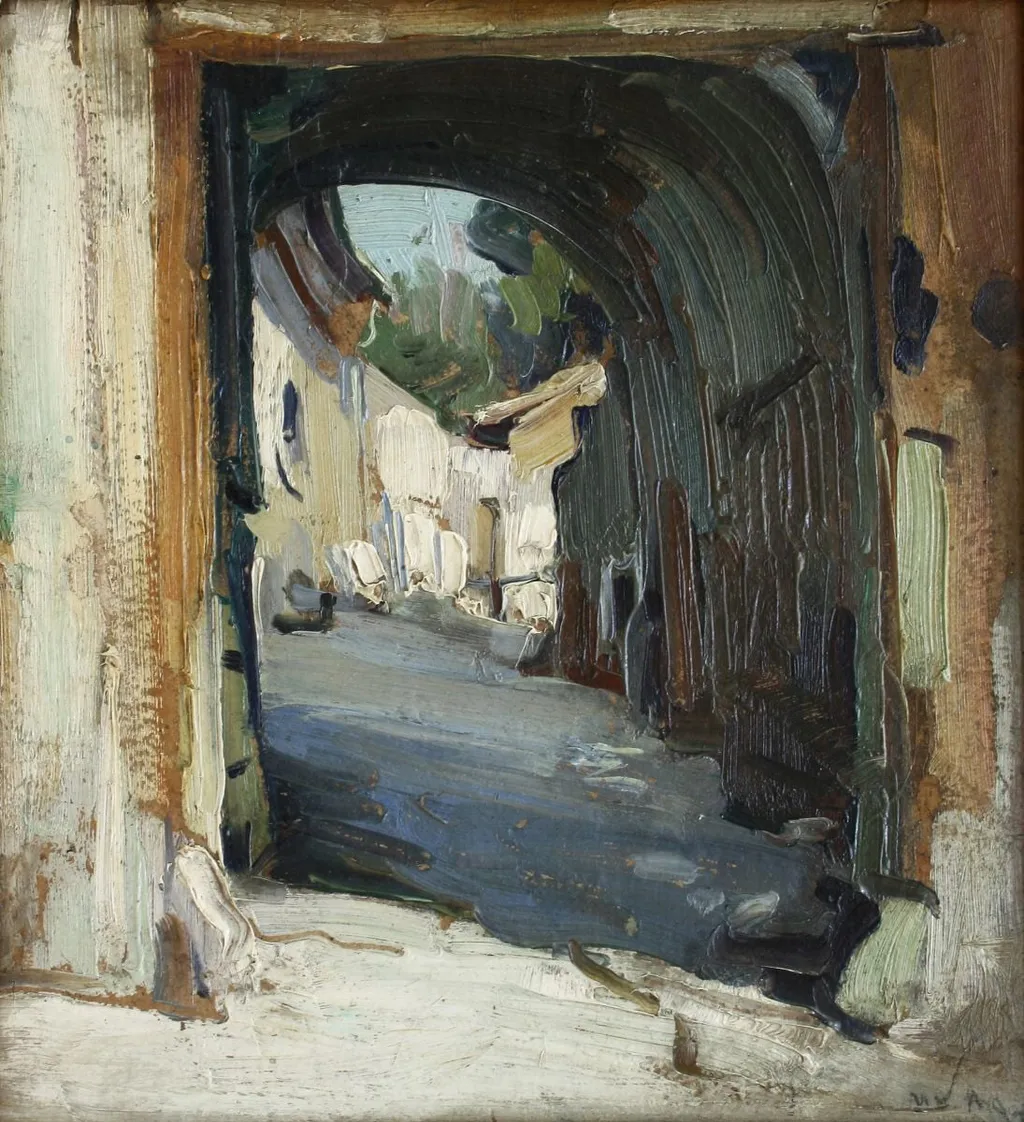
Poartă is an unspecified painting by Arnold Max Wexler. It dates from 1949 and is held in the collection of the Gavrilă Simion Eco-Museum Research Institute Tulcea - Art Museum.
About this work
Overview
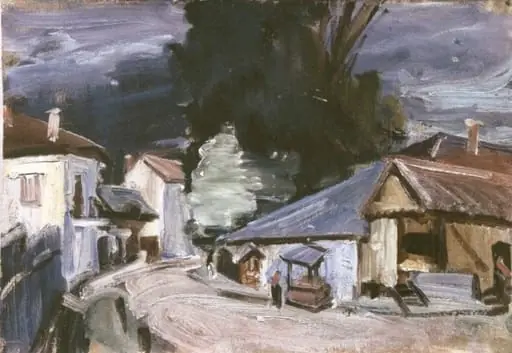
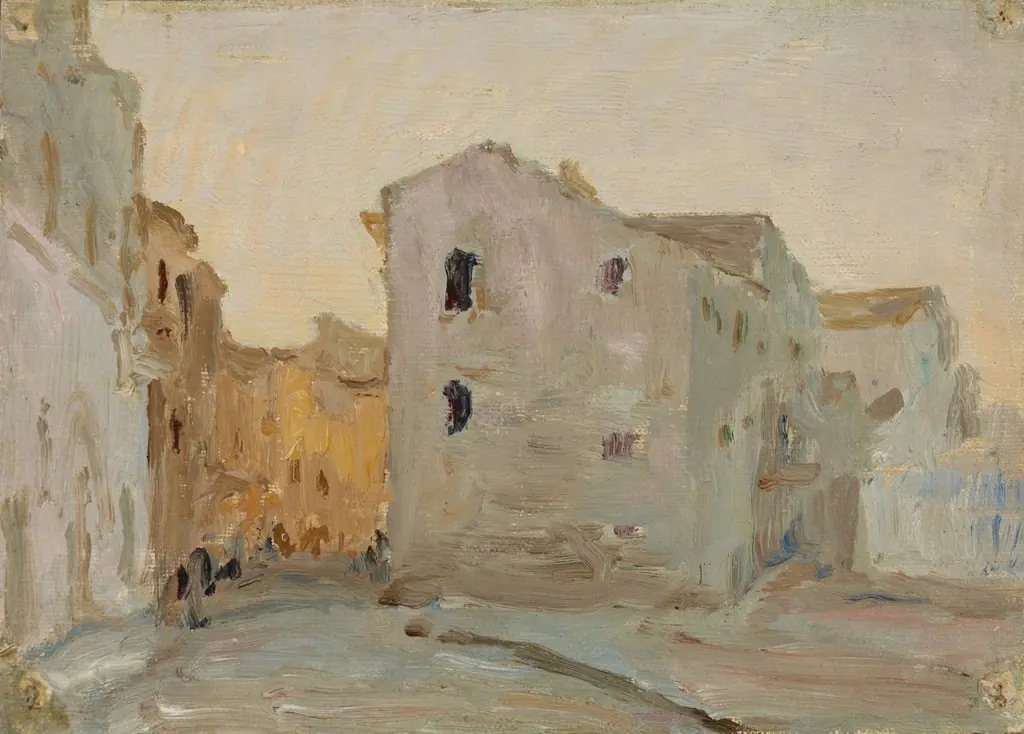
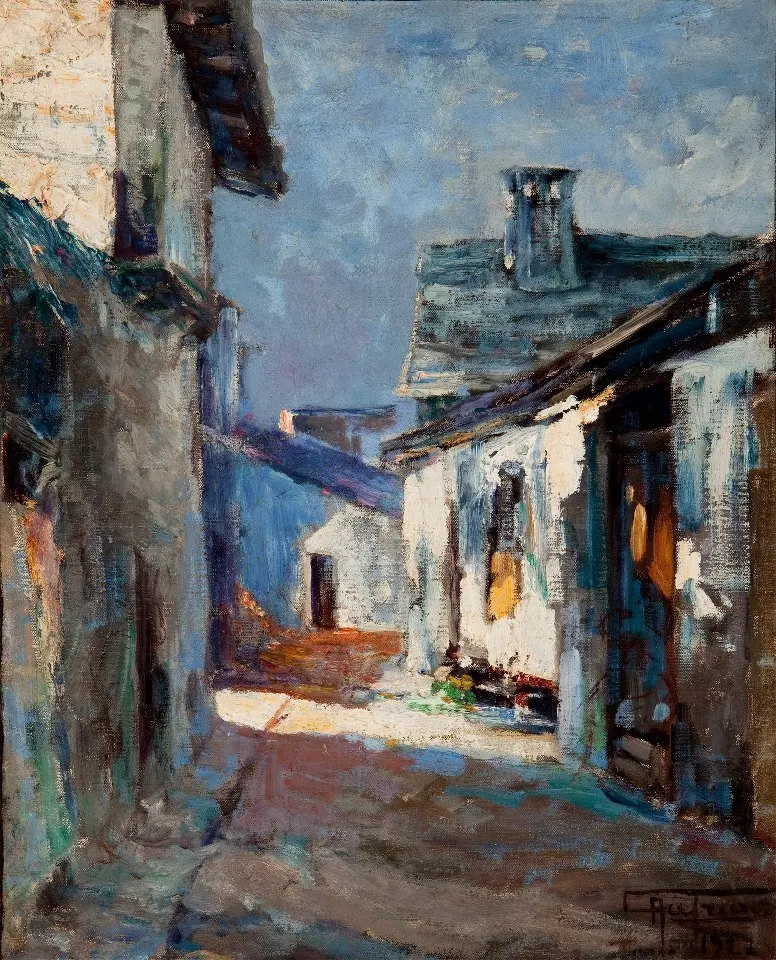
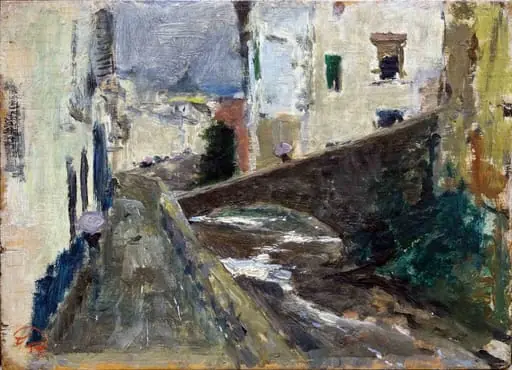
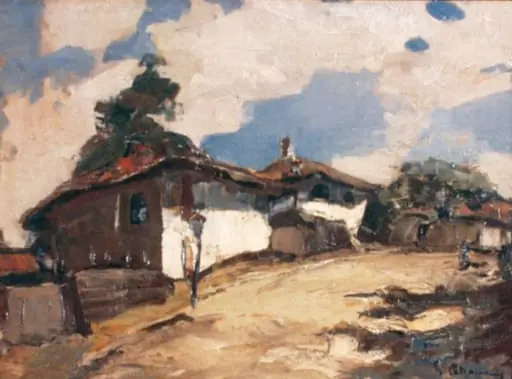
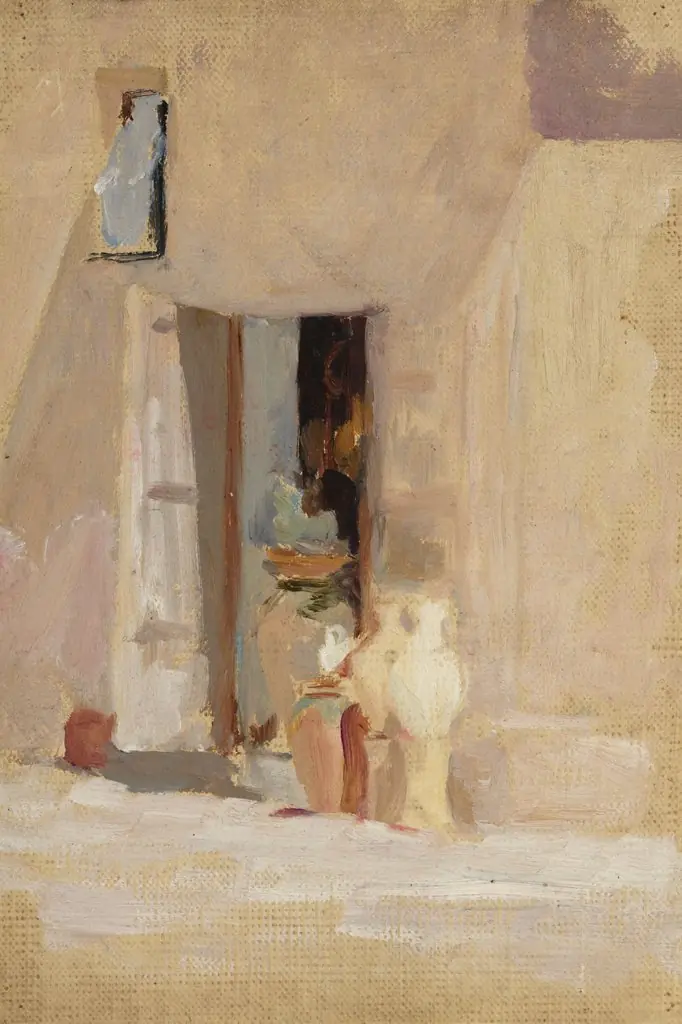
Poartă / Curte interioară, dated around 1949, is a painting by Arnold Max Wexler that captures the threshold between an exterior space and an obscure interior. Executed in oil, the work is part of the collection at the Museum of Ethnography. Its emphasis on architectural entry and atmospheric ambiguity distinguishes it as a study of transition rather than a literal depiction.
Subject & Meaning
The painting centers on a heavy, unadorned doorway leading into a shadowed courtyard or room. The obscured interior suggests absence or mystery—figures or objects are hinted at but never clearly defined. The threshold becomes a metaphor for the unseen or the inaccessible, inviting contemplation rather than narrative interpretation.
Technique & Style
Wexler applied paint thickly, using impasto to build texture and depth. Brushstrokes are deliberate yet unrefined, with colors layered and smeared to dissolve edges. The contrast between the bright, defined exterior and the murky interior is achieved through tonal shifts rather than linear detail, emphasizing mood over clarity.
History & Provenance
Created in the late 1940s, the work entered the Museum of Ethnography’s collection without documented exhibition history prior to its acquisition. Its origins remain tied to Wexler’s personal artistic development during a period of postwar experimentation, though little is known about its immediate reception or ownership.
Context
Painted shortly after World War II, the piece reflects a broader European tendency toward expressive abstraction and psychological atmosphere in art. While not aligned with any formal movement, its focus on spatial ambiguity and emotional weight resonates with contemporaneous works exploring memory, loss, and the liminal.
Legacy
Poartă / Curte interioară remains a quiet example of Wexler’s exploration of light, texture, and psychological space. Though not widely exhibited, it contributes to understanding how mid-century artists used materiality and obscurity to convey inner states, influencing later generations interested in non-narrative painting.
Artist & collection
Artist
Arnold Max Wexler made drawings and paintings of everyday scenes and landscapes around the 1930s–40s.
Museum
Gavrilă Simion Eco-Museum Research Institute Tulcea - Art Museum
Continue through works from the same source collection.