Artwork
View of the Western facade of the Boukoleon Palace
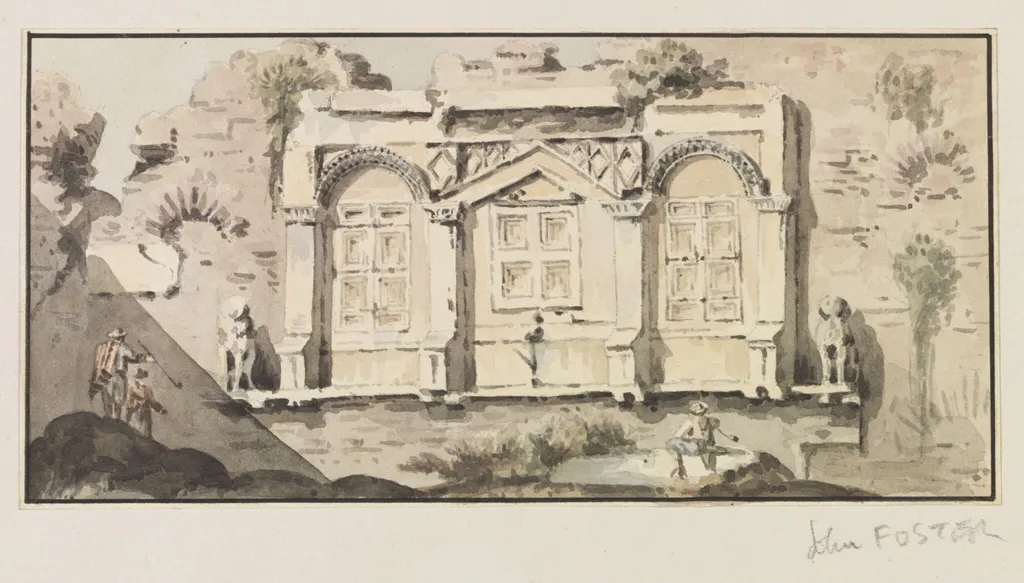
View of the Western facade of the Boukoleon Palace is a watercolor work on paper by the British Romanticist artist John Foster. It dates from 1811 and is held in the collection of the Victoria and Albert Museum. This watercolour captures the western facade of the Boukoleon Palace, a Byzantine structure along the Sea of Marmara.
About this work
Overview
Executed in soft, translucent washes, the work conveys the palace’s decayed grandeur through muted tones and fluid brushwork.
This watercolour captures the western facade of the Boukoleon Palace, a Byzantine structure along the Sea of Marmara. Executed in soft, translucent washes, the work conveys the palace’s decayed grandeur through muted tones and fluid brushwork. The scene is neither meticulously detailed nor romantically idealized, instead offering a quiet, observational record of the ruin as it appeared in the 19th century.
Subject & Meaning
The composition centers on the palace’s three arched openings and flat roofline, framed by palm trees and distant hills. Figures scattered near the steps and shoreline suggest daily life continuing amid the ruins. The image does not dramatize the past but quietly acknowledges the passage of time, presenting the structure as both enduring and diminished by neglect.
Technique & Style
The artist employed loose, rapid watercolour strokes to suggest texture and light. Colors blend softly, creating a sense of atmospheric haze and weathered stone. The lack of sharp outlines and the transparency of the medium enhance the feeling of erosion, while the deliberate absence of fine detail reinforces the sketchlike immediacy of the observation.
History & Provenance
The watercolour entered the collection of Abbott & Holder in December 1970, purchased for £12. Its earlier provenance is undocumented, but its style and subject align with 19th-century travel sketches made by European artists visiting Constantinople. The modest price suggests it was regarded as a modest work, not a finished painting.
Context
The Boukoleon Palace, once part of the Great Palace complex, had fallen into ruin by the 1800s. This watercolour reflects a broader trend among travelers and artists documenting Byzantine remains before further decay or urban development. Its quiet tone contrasts with more dramatic archaeological illustrations of the period, favoring observation over reconstruction.
Legacy
The work contributes to a visual archive of Constantinople’s architectural heritage during a period of transition. Though not widely exhibited, it remains a tangible record of how the palace appeared before modern excavation or restoration efforts. Its modest scale and technique reflect the personal, documentary impulse behind many 19th-century topographical studies.
Artist & collection
Artist

![Yediküle with a Muslim Cemetery, Constantinople, by Michel-François Préaulx [Préaux]](https://artifactworldgallery.com/img/michel-francois-preaulx-preaux--yedikule-with-a-muslim-cemetery-constantinople--c422bdec8e9c6ba8-w320.webp) Yediküle with a Muslim Cemetery, Constantinople
Yediküle with a Muslim Cemetery, Constantinople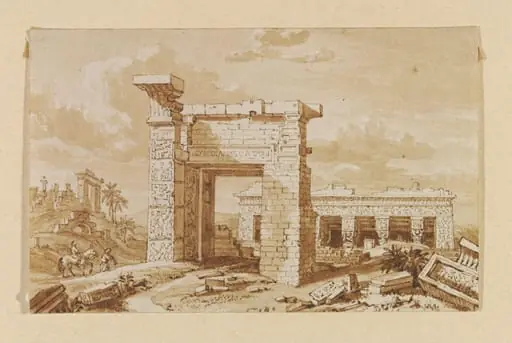 View of the Northern Gate of Dendera or Tentyra
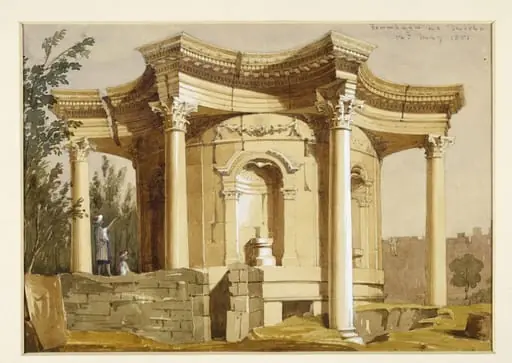 Fountain at Balbec
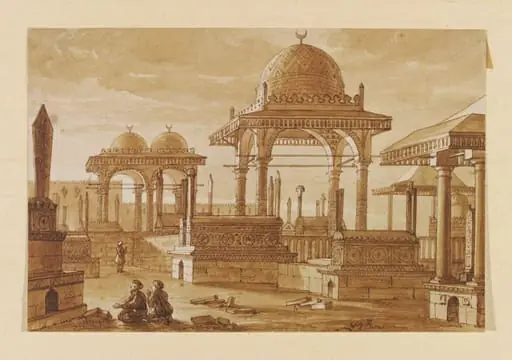 Part of the City of Tombs at Cairo
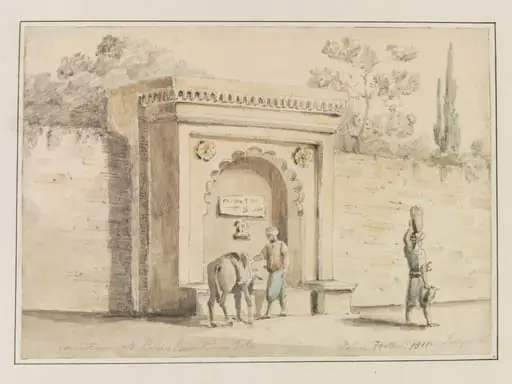 Fountain At Constantinople
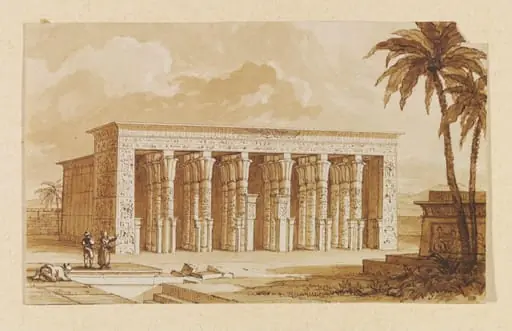 Perspective view of the Temple of Antaeopolis
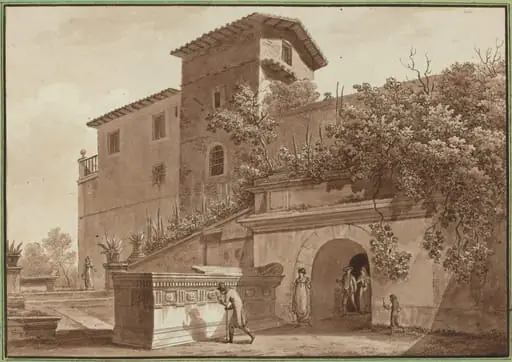 Tomb of Scipios
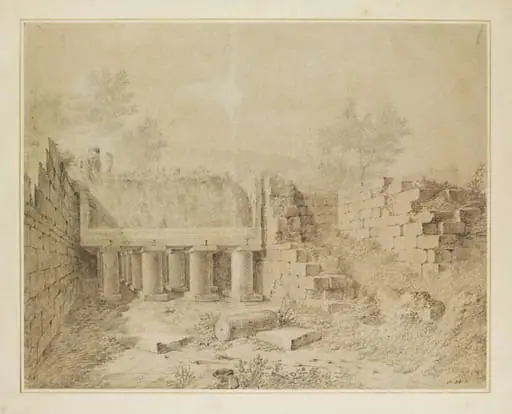 Figures among Classical Ruins, probably in Sicily
 The Grotto of the Nymph Egeria
 Part of the old fort: the mosque in the chowk and gate of the Great Katra, Dhaka (Dacca)
 The Temple of Hercules at Cori
 A Tomb in Lycia, Turkey