Artwork
A Tomb in Lycia, Turkey
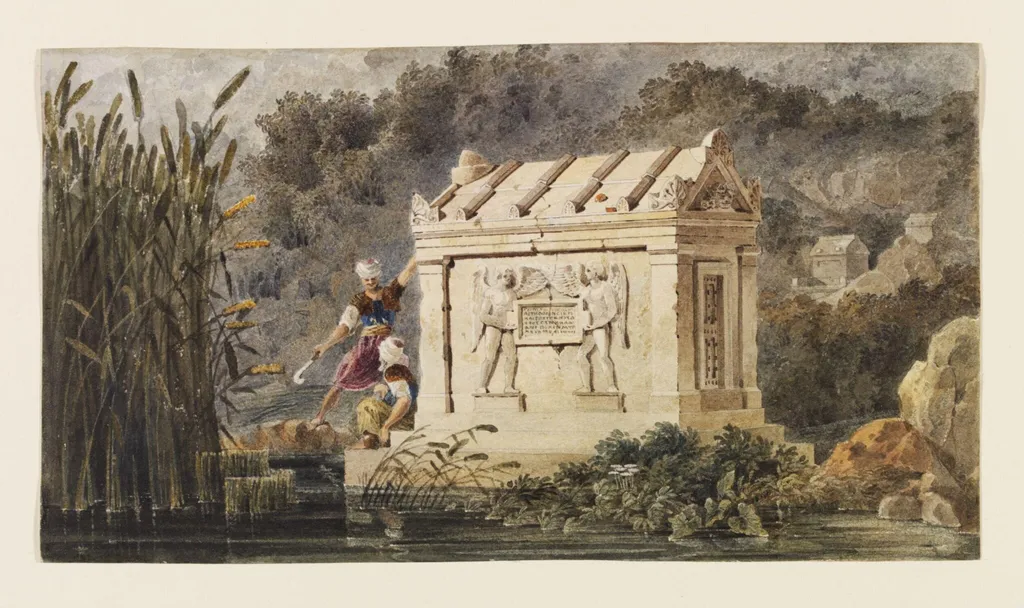
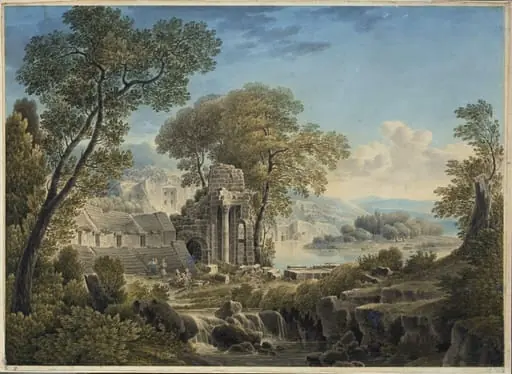
A Tomb in Lycia, Turkey is a watercolor work on paper by the British Romanticist artist John Peter Gandy. It dates from 1812 and is held in the collection of the Victoria and Albert Museum.
About this work
This watercolour is titled A Tomb in Lycia, Turkey. It was created by John Peter Gandy in 1812.
Gandy was an architect and draftsman who took part in an expedition to investigate antiquities in Greece and south-west Turkey. The watercolour may have been done after this trip.
To learn more about the style and period of this work, look up the movement: Romanticism.
Overview
A Tomb in Lycia, Turkey is a watercolour created by John Peter Gandy in 1812, following his participation in an archaeological expedition to Greece and southwest Turkey. The work depicts a tomb set amidst a picturesque landscape, though the specific tomb's identity remains unknown.
Subject & Meaning
The subject is a Lycian tomb, potentially inspired by Gandy's expedition experiences. Despite uncertainty over the tomb's actual existence, the detailed rendering suggests either meticulous observation of a real site or Gandy's skill in synthesizing elements from various sources.
Technique & Style
Executed in watercolour, the piece showcases Gandy's architectural drafting precision alongside artistic flair, characteristic of the Romanticism movement. Intricate details, such as carved inscriptions and natural surroundings, demonstrate his ability to blend architectural accuracy with scenic beauty.
History & Provenance
Created post-expedition (1812), the watercolour's exact inspiration remains unclear. While many expedition drawings are housed at the RIBA, this piece's specific provenance and the tomb's identity are unresolved, with theories suggesting destruction, conflation, or invention of the depicted tomb.
Context
The work reflects Gandy's dual role as architect and draftsman, influencing and influenced by the neo-classical architectural trends in Britain. Elements from Lycian monuments, like those in the painting, were later incorporated into British buildings.
Artist & collection
Artist
John Gandy had a habit of wandering graveyards at dusk, sketching ruins by moonlight when no one else would look.

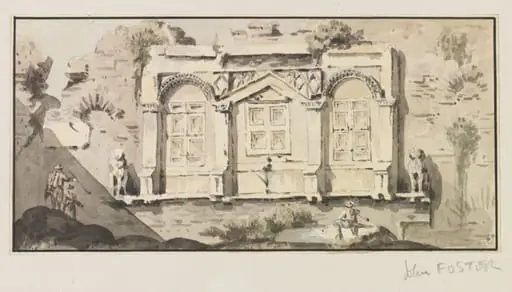 View of the Western facade of the Boukoleon Palace
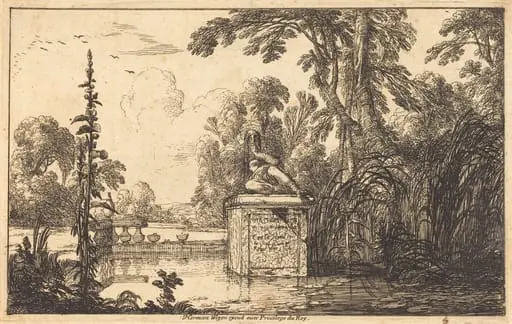 Pool in a Formal Garden
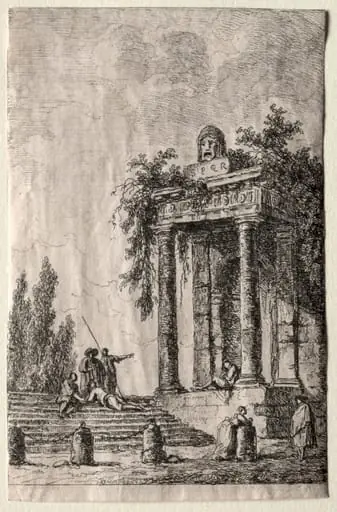 Les Soirées de Rome: The Stairs
 I was also in Arcadia (Kai ego en Arkadia)
 Ruins: A Classical Composition
 Le moineau de lesbie
 Red Peppers, Capiscum
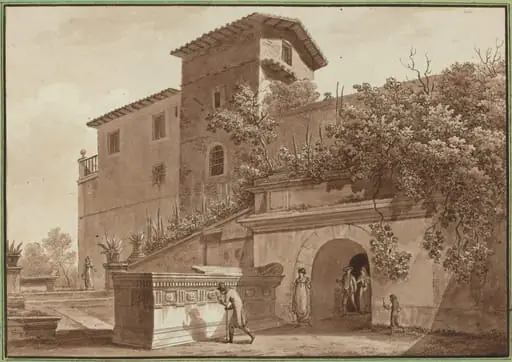 Tomb of Scipios
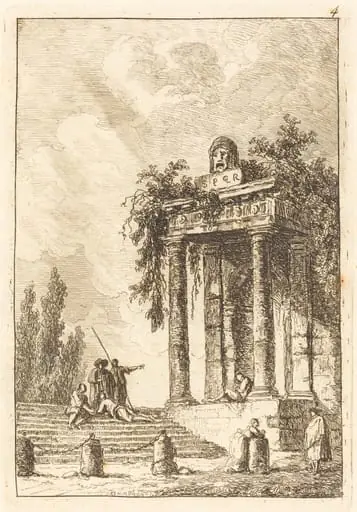 Steps to the Four Landmarks
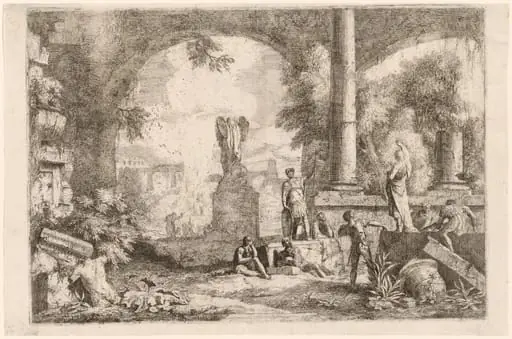 Capriccio of Antique Ruins with Men Gazing at a Classical Orator
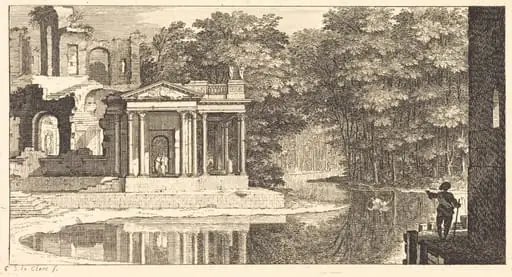 Landscape with Temple Ruins and Pond
 Theatre of Myra, now Demre, in Lycia