Artwork
Saint Anthony Abbot Shunning the Mass of Gold
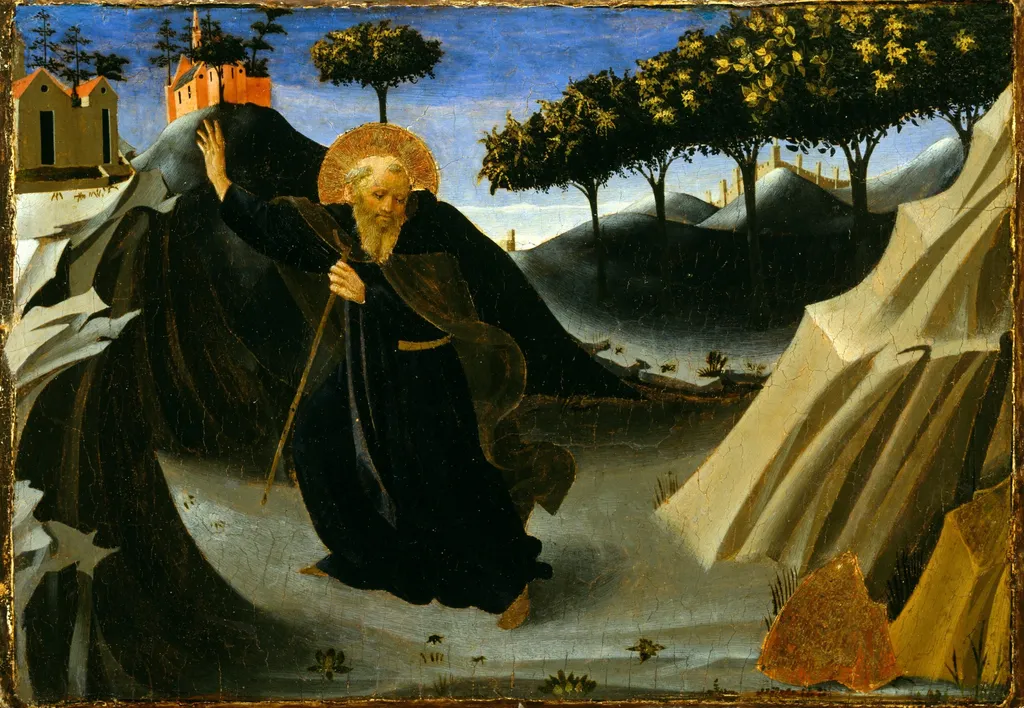
Saint Anthony Abbot Shunning the Mass of Gold is a tempera painting by the Early Renaissance artist Fra Angelico. It dates from 1430 and is held in the collection of the Museum of Fine Arts, Houston.
About this work
Overview
Created during the early Florentine Renaissance, it reflects the artist’s commitment to religious themes and monastic discipline.
Painted around 1430 in tempera on panel, this work by Fra Angelico portrays Saint Anthony Abbot rejecting a pile of gold coins. Created during the early Florentine Renaissance, it reflects the artist’s commitment to religious themes and monastic discipline. As a Dominican friar, Angelico produced devotional images for contemplative use, and this piece aligns with his broader output for convents like San Marco in Florence.
Subject & Meaning
The painting illustrates the legendary moment when Saint Anthony, an early Christian hermit, turns away from a vision of gold, symbolizing his renunciation of worldly riches. His raised hand and solemn gaze convey spiritual resolve. The scene draws from hagiographic traditions that celebrated asceticism as a path to divine closeness, reinforcing ideals of poverty and inner purity central to monastic life.
Technique & Style
Angelico employed tempera to achieve fine detail and luminous color, with careful modeling of the saint’s robe and the landscape behind him. The background features softly rendered hills, trees, and distant architecture, creating a shallow but atmospheric space. The saint’s halo and expressive face anchor the composition, guiding the viewer’s focus to his act of refusal without overt drama.
History & Provenance
The painting entered the collection of the Museum of Fine Arts, Houston, where it remains today. Its early history is not fully documented, but its style and subject suggest it was made for private devotion, possibly within a Dominican context. It reflects the devotional culture fostered by patrons like Cosimo de’ Medici, who supported religious art for spiritual reflection.
Context
In early 15th-century Florence, religious imagery served both liturgical and moral functions. Fra Angelico’s works, produced under Dominican patronage, emphasized humility and detachment from materialism. This painting aligns with broader trends in Florentine art that blended naturalistic detail with spiritual symbolism, responding to the era’s renewed interest in personal piety and monastic ideals.
Legacy
Though not widely exhibited, the painting exemplifies Angelico’s quiet, reverent approach to sacred narrative. His ability to convey spiritual conviction through restrained composition and delicate technique influenced later generations of religious painters. The work endures as a testament to the enduring power of ascetic imagery in Renaissance devotional practice.
Artist & collection
Artist
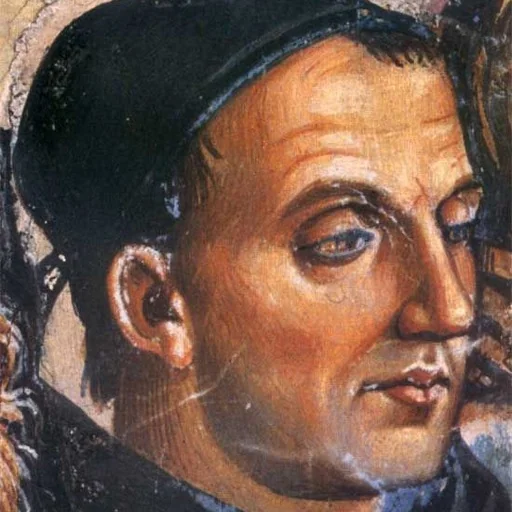
Fra Giovanni da Fiesole (born Guido di Pietro; c. 1395 – 18 February 1455), known posthumously as Fra Angelico ( FRAH an-JEL-ik-oh, Italian: ), was an Italian Dominican friar and painter active during the early…

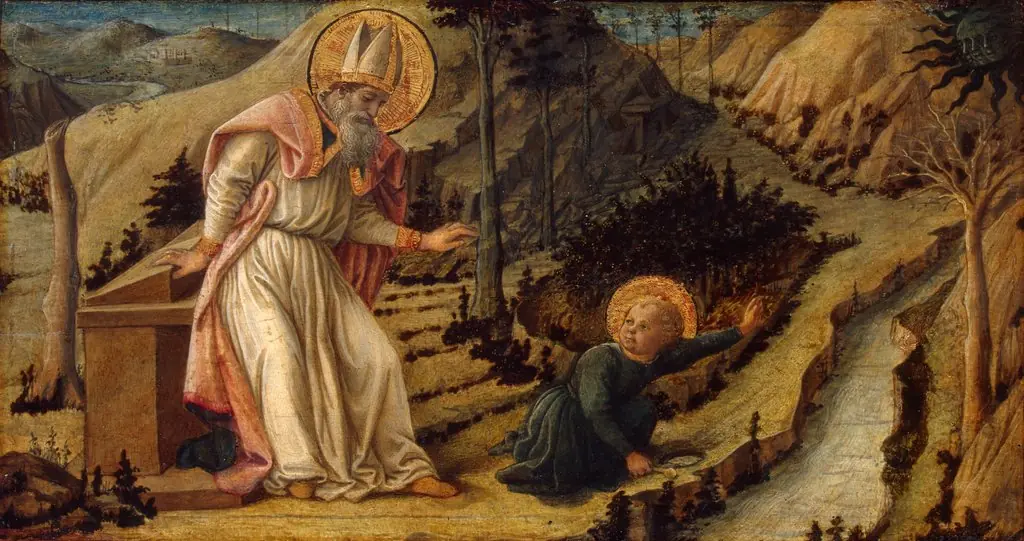 Vision of St Augustine
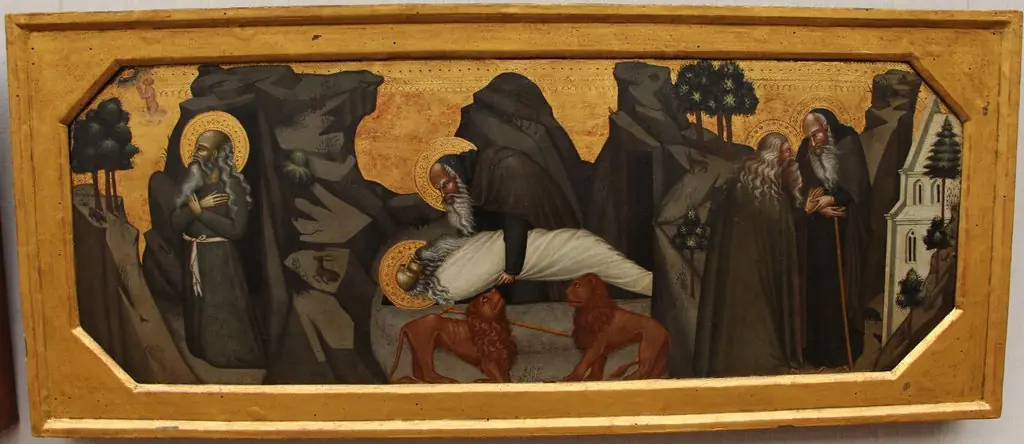 Scenes from the Life of Sacred Hermits
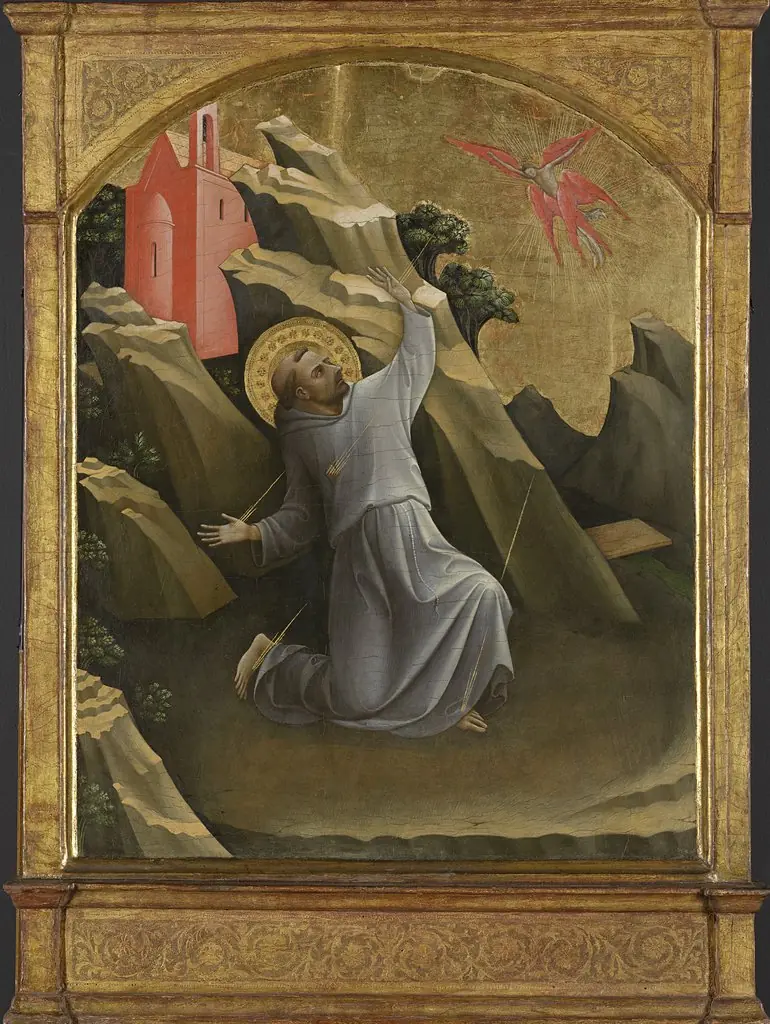 Saint Francis Receiving the Stigmata
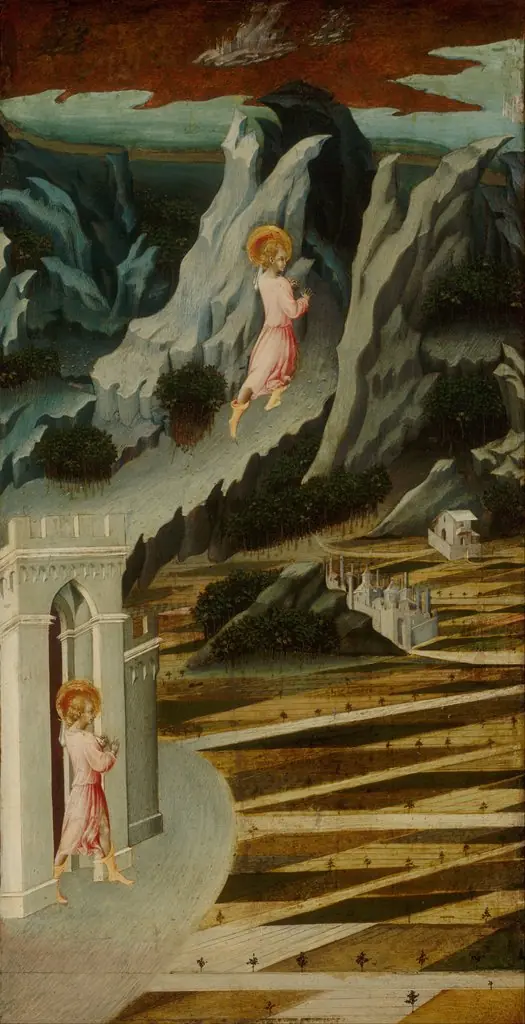 Saint John the Baptist Entering the Wilderness
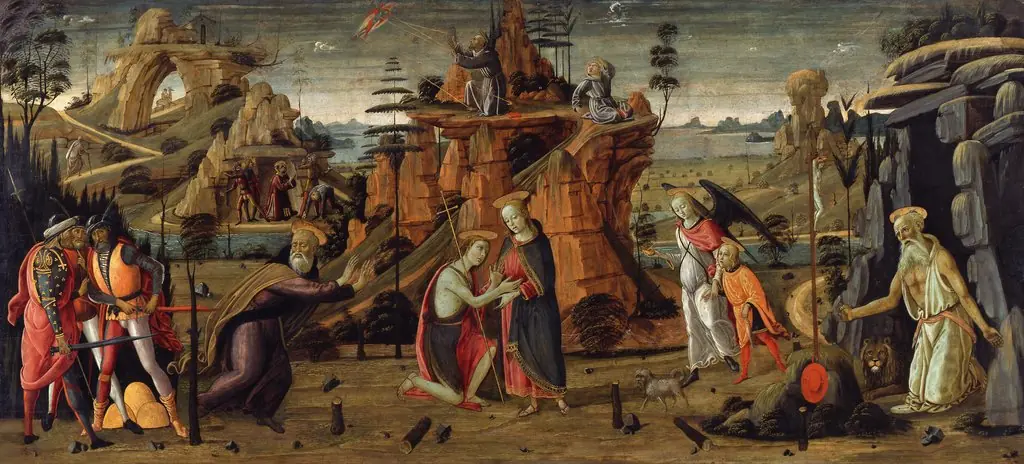 Landscape with biblical scenes and scenes from the legends of saints
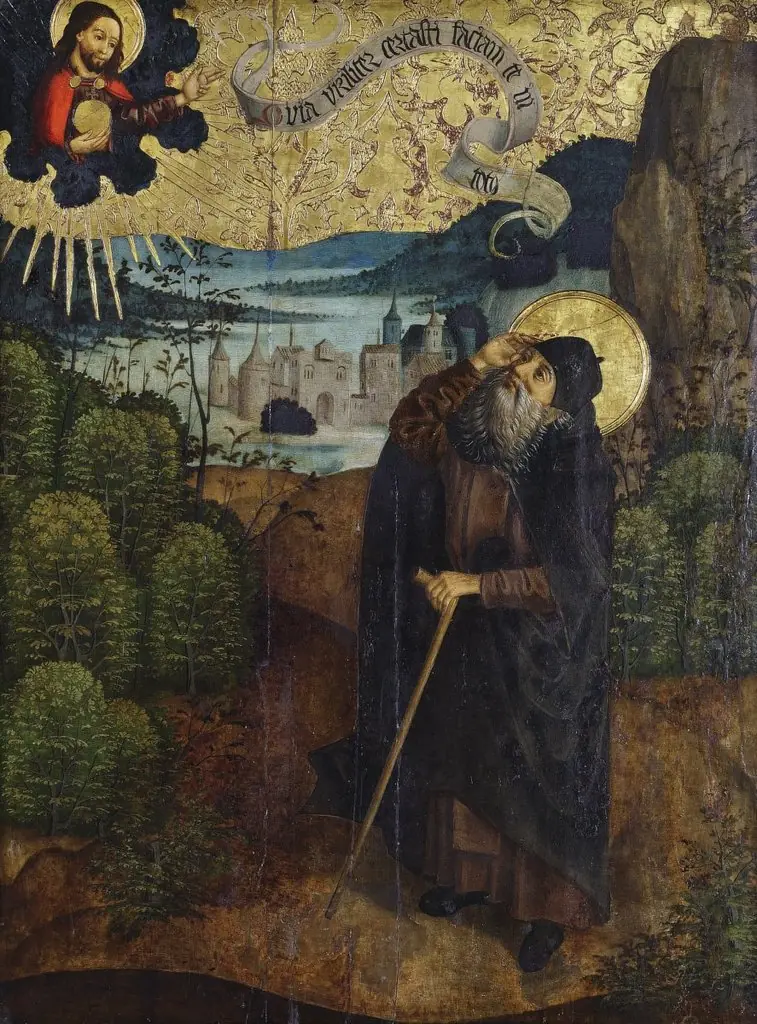 Vision of St. Anthony the Hermit, detail of an altar wing from the Church of Saint Anthony in Szepesbéla (today Spišská Belá, Slovakia)
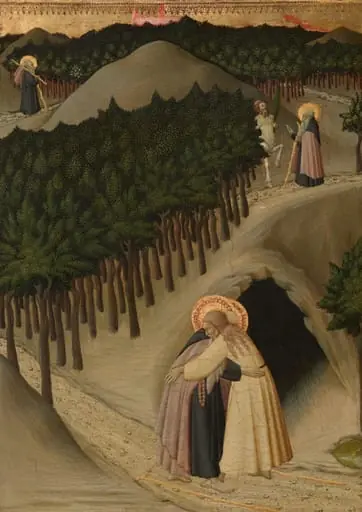 The Meeting of Saint Anthony and Saint Paul
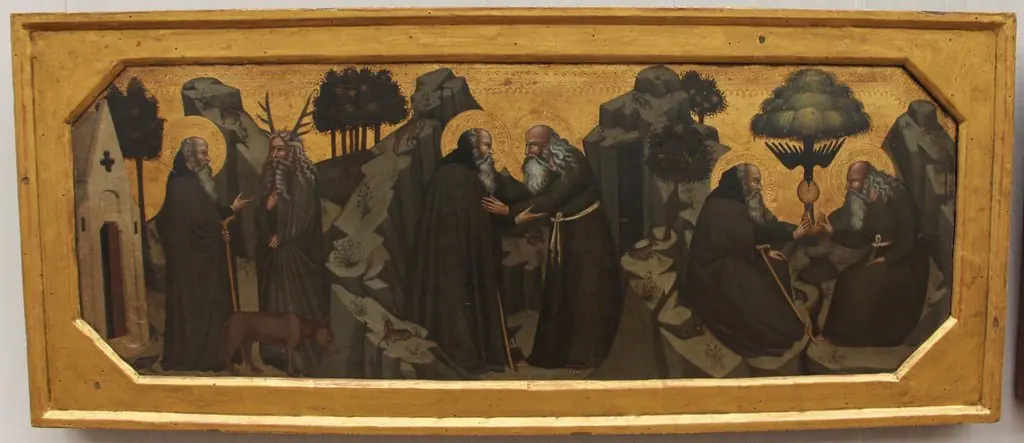 Scenes from the Life of Sacred Hermits
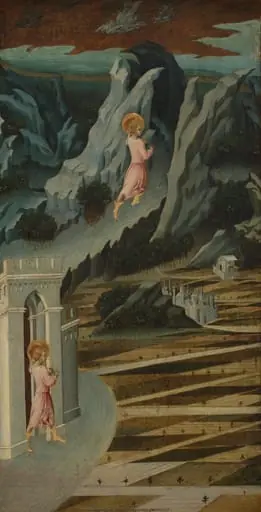 Saint John the Baptist Entering the Wilderness