Artwork
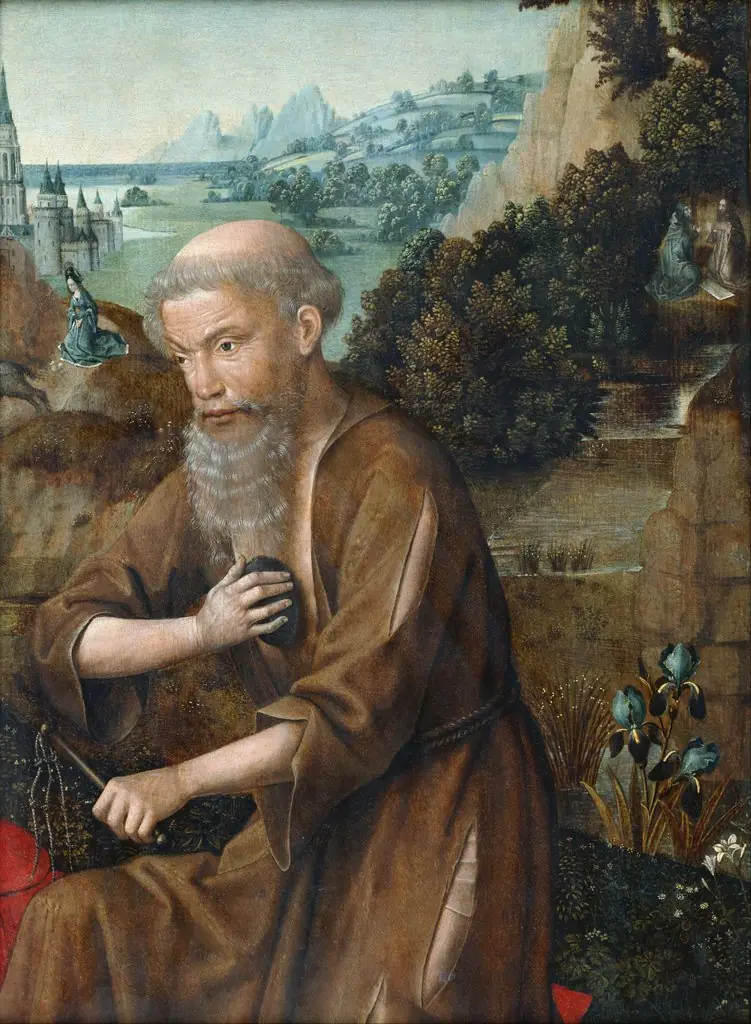
Vision of St. Anthony the Hermit, detail of an altar wing from the Church of Saint Anthony in Szepesbéla (today Spišská Belá, Slovakia)
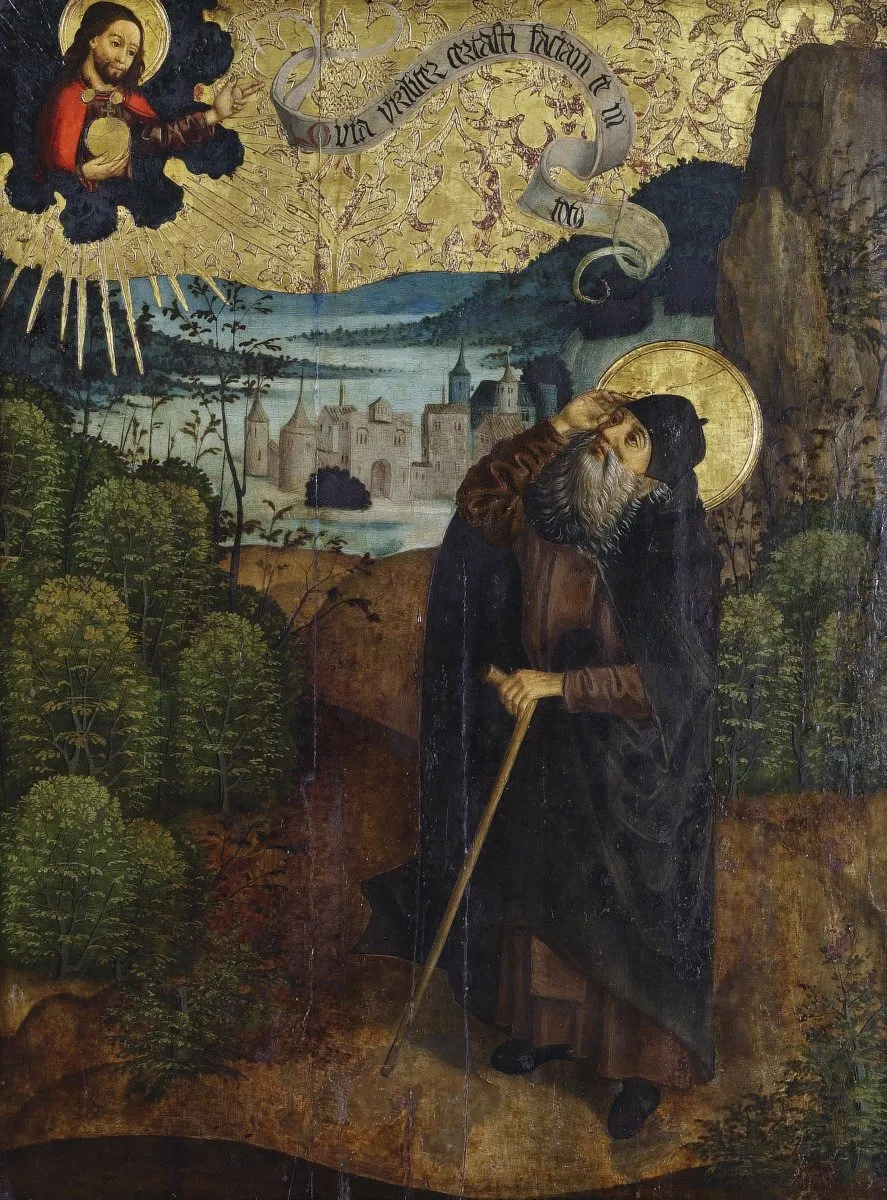
Vision of St. Anthony the Hermit, detail of an altar wing from the Church of Saint Anthony in Szepesbéla (today Spišská Belá, Slovakia) is an unspecified painting by the Northern Renaissance artist Unknown. It dates from 1510 and is held in the collection of the Hungarian National Gallery.
About this work
Overview
The work is a painted panel forming part of an altar wing originally installed in the Church of Saint Anthony at Szepesbéla, now Spišská Belá in Slovakia. It depicts the hermit saint in a devotional pose, set against a gold ground that incorporates a stylised cityscape and foliage. The composition is framed by intricate decorative motifs typical of late medieval altar panels.
Subject & Meaning
In the upper left a diminutive representation of the Christ Child appears, holding an object that may allude to his role as a patron of the poor.
At the centre stands Saint Anthony, recognizable by his long white beard, dark habit and staff, his gaze directed upward toward a luminous halo that encloses a celestial figure. In the upper left a diminutive representation of the Christ Child appears, holding an object that may allude to his role as a patron of the poor. The juxtaposition of earthly and heavenly elements underscores the saint’s intercessory function.
Technique & Style
Executed in tempera on a wooden panel, the image employs a gold leaf background that creates a flat, radiant surface characteristic of Gothic devotional art. Fine linear detailing defines the robes, foliage and architectural forms, while the use of hierarchical scaling—larger saint, smaller Christ figure—reflects the iconographic conventions of the period. The palette is limited, emphasizing rich gold, deep reds and muted earth tones.
History & Provenance
The panel formed part of a larger altarpiece commissioned for the parish church dedicated to Saint Anthony in the 15th‑century town of Szepesbéla. Following the re‑organisation of the church’s interior in the 18th century, the wing was detached and later entered museum collections, where it remains a documented example of regional ecclesiastical painting.
Context
The work belongs to the Central European tradition of altar wing panels that combined narrative scenes with symbolic motifs to aid contemplation. Its visual language aligns with other Gothic artworks from the Spiš region, where itinerant workshops produced richly ornamented panels for rural parishes, reflecting both local devotional practices and broader European artistic trends.
Artist & collection

 Domestic Scene
 Giacomo and Cardinal Marco, investing Andrea, Abbot of San Zeno, with his Benefice
 The Nymph of Fontainebleau
 Portrait of a Woman
 Madonna and Child with Saints in the Enclosed Garden
 Venus and Minerva
 Family Group of Four on Sofa
 Wall painting from Room H of the Villa of P. Fannius Synistor at Boscoreale
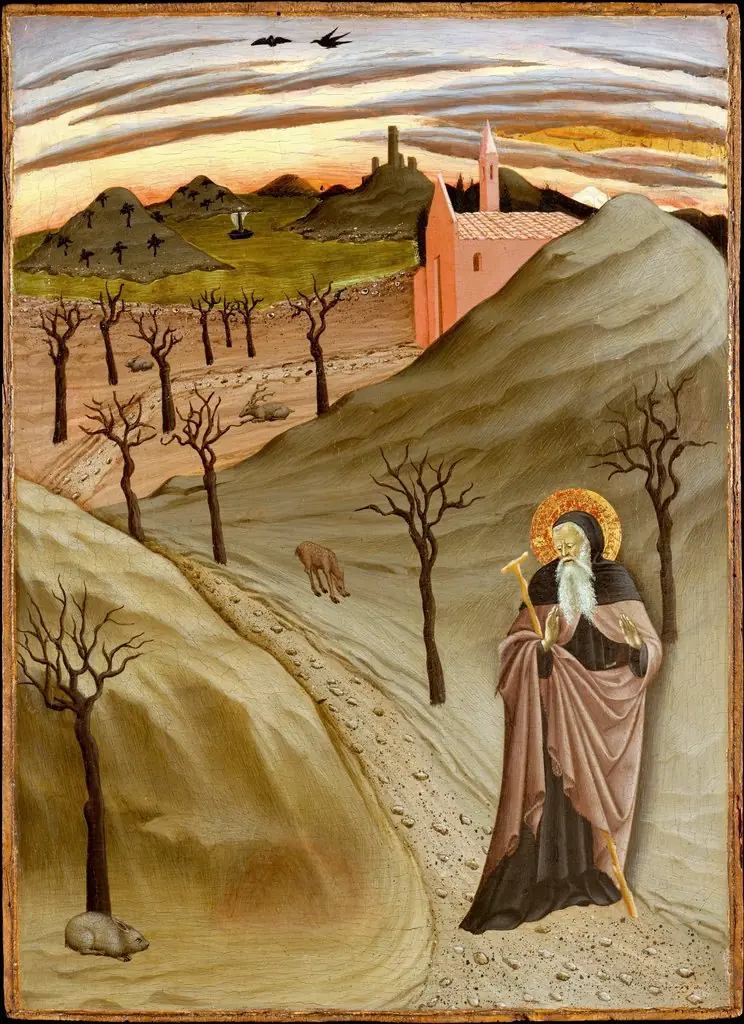 Saint Anthony Abbot Tempted by a Heap of Gold
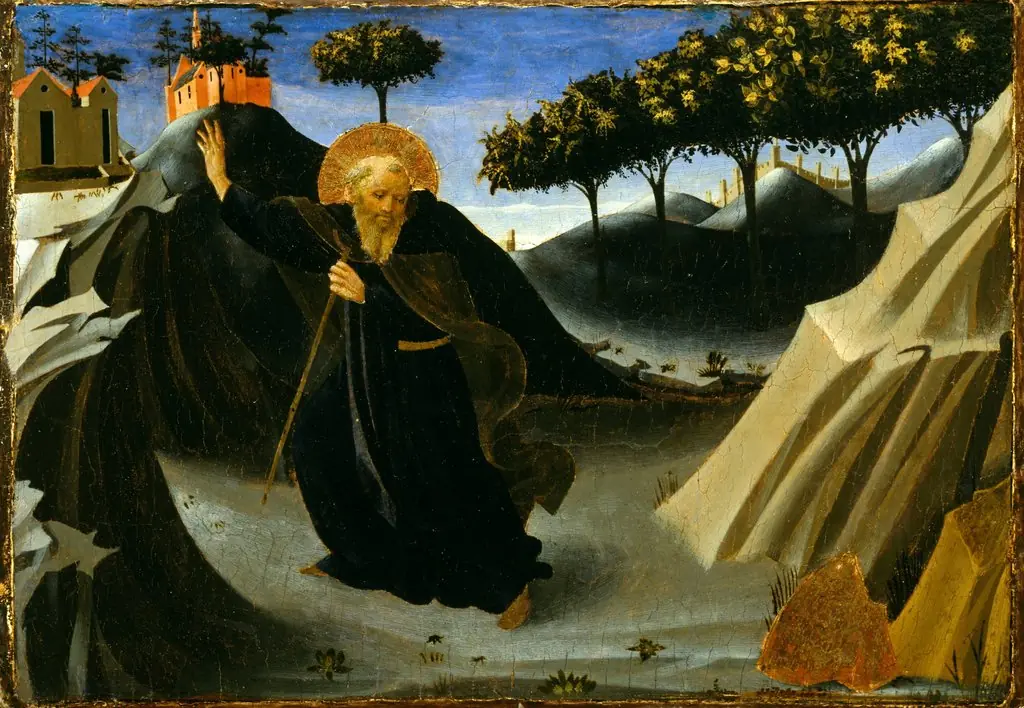 Saint Anthony Abbot Shunning the Mass of Gold
 Saint Jerome Reading
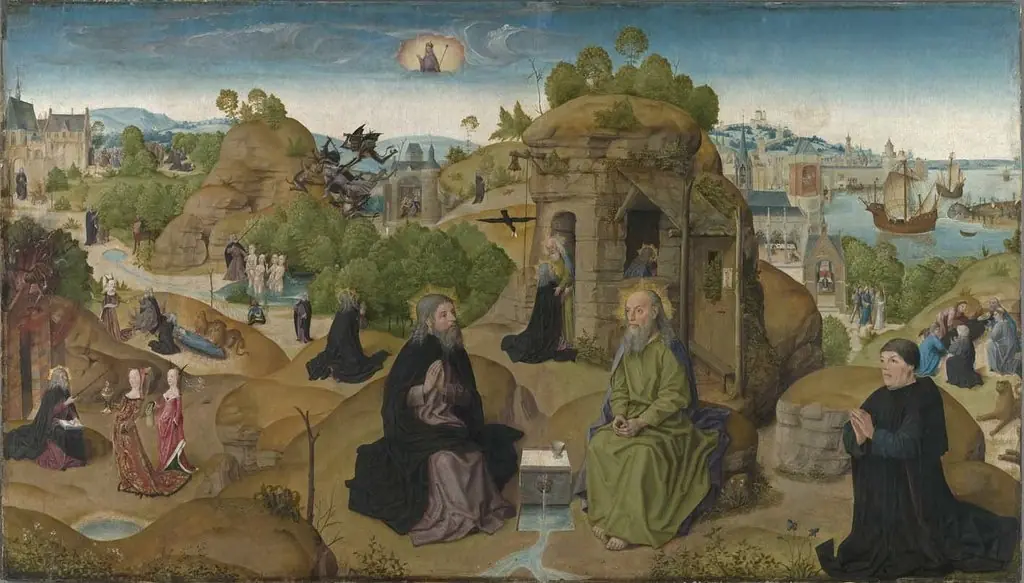 Legend of the Holy Ermite Anthony
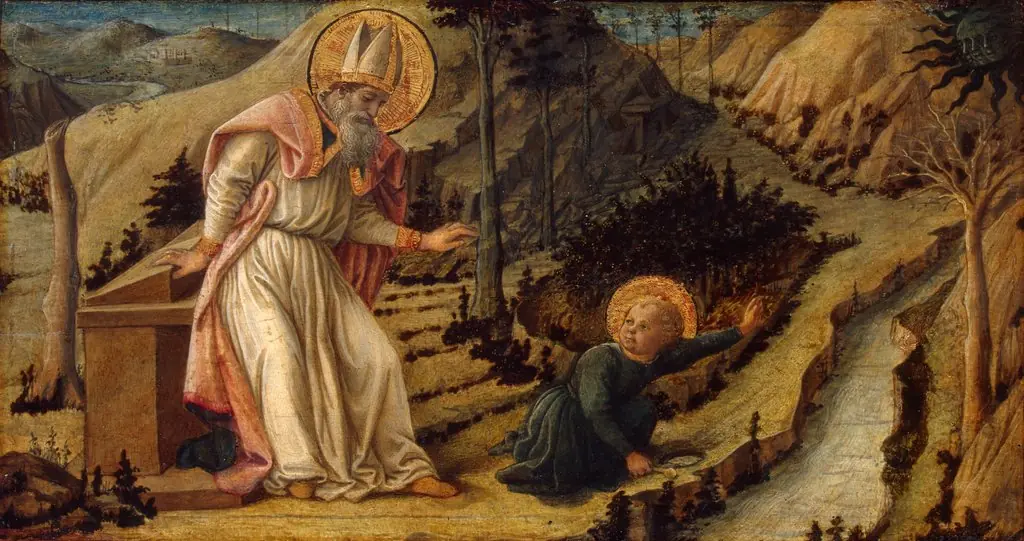 Vision of St Augustine
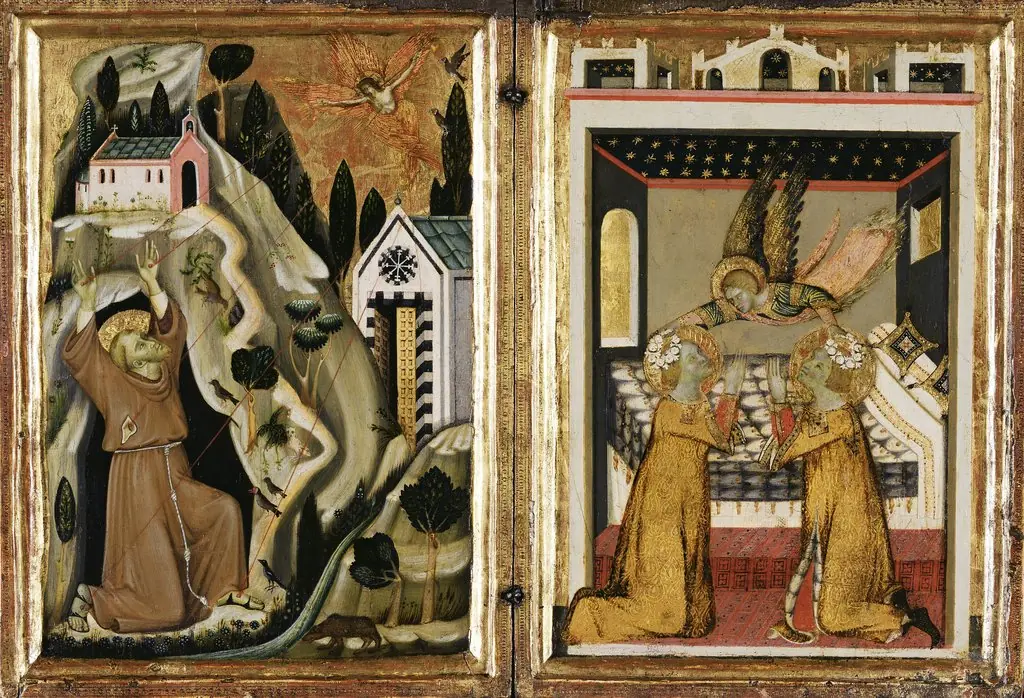 The Stigmatization of St. Francis, and Angel Crowning Saints Cecilia and Valerian
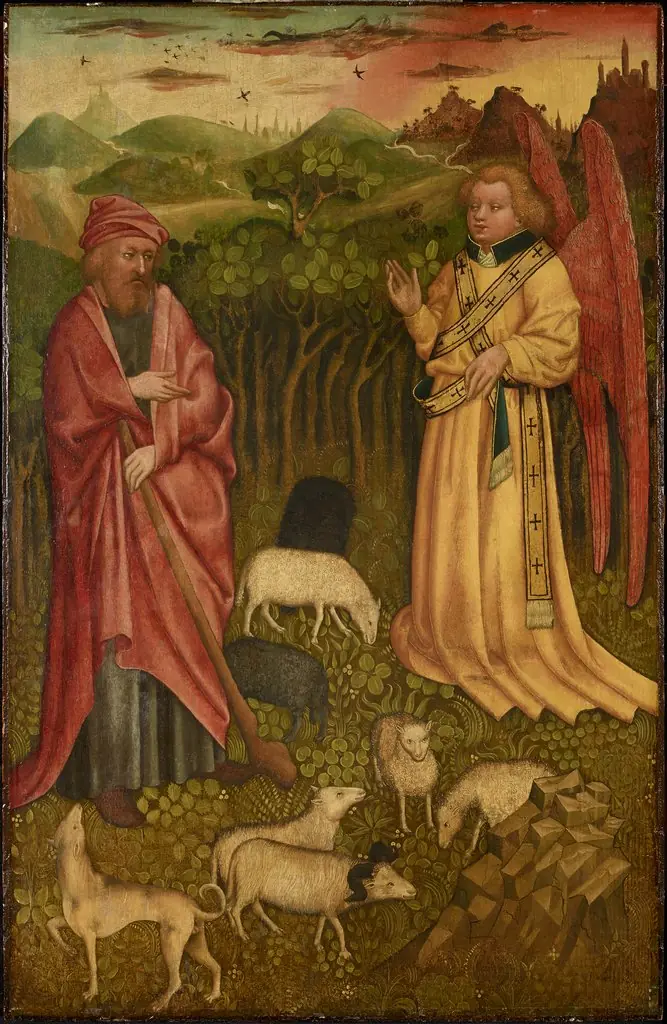 Botschaft des Engels an Joachim
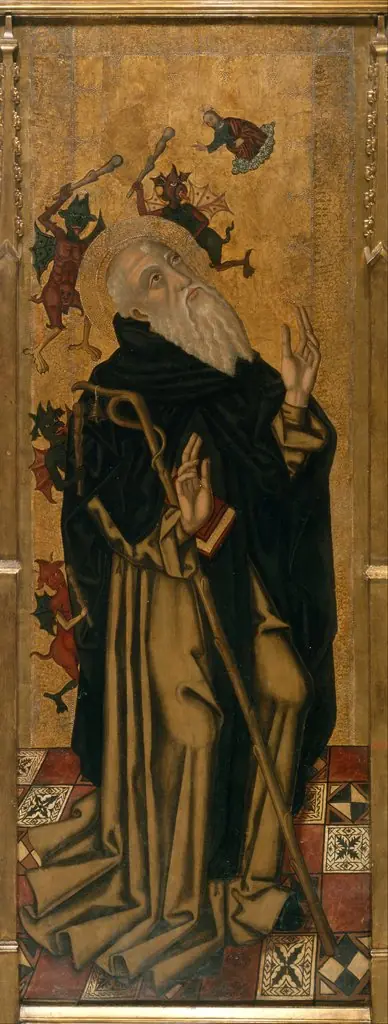 Saint Anthony the Abbot Tormented by Demons
 St. Jerome