Artwork
The Rest on the Flight into Egypt with St. John the Baptist
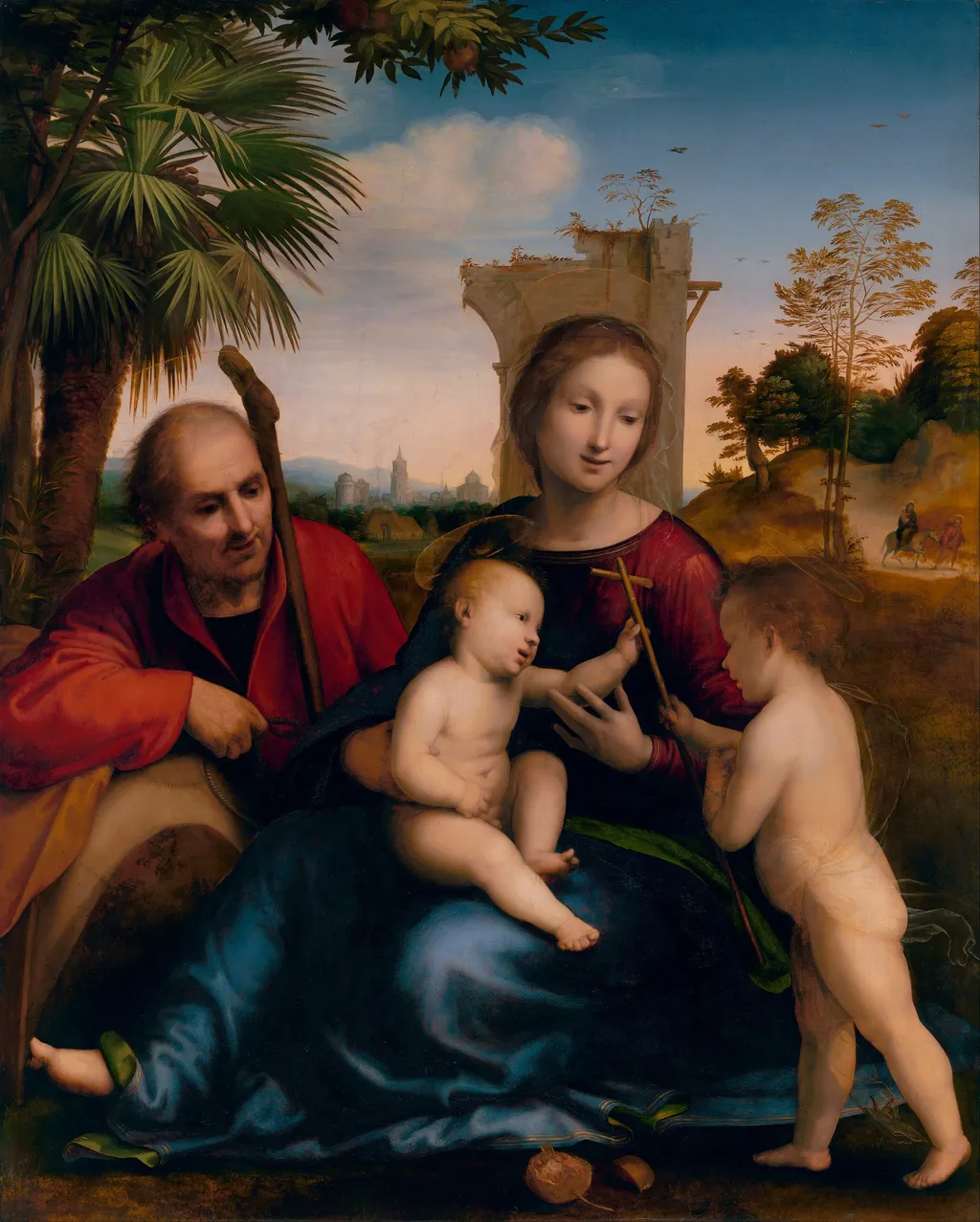
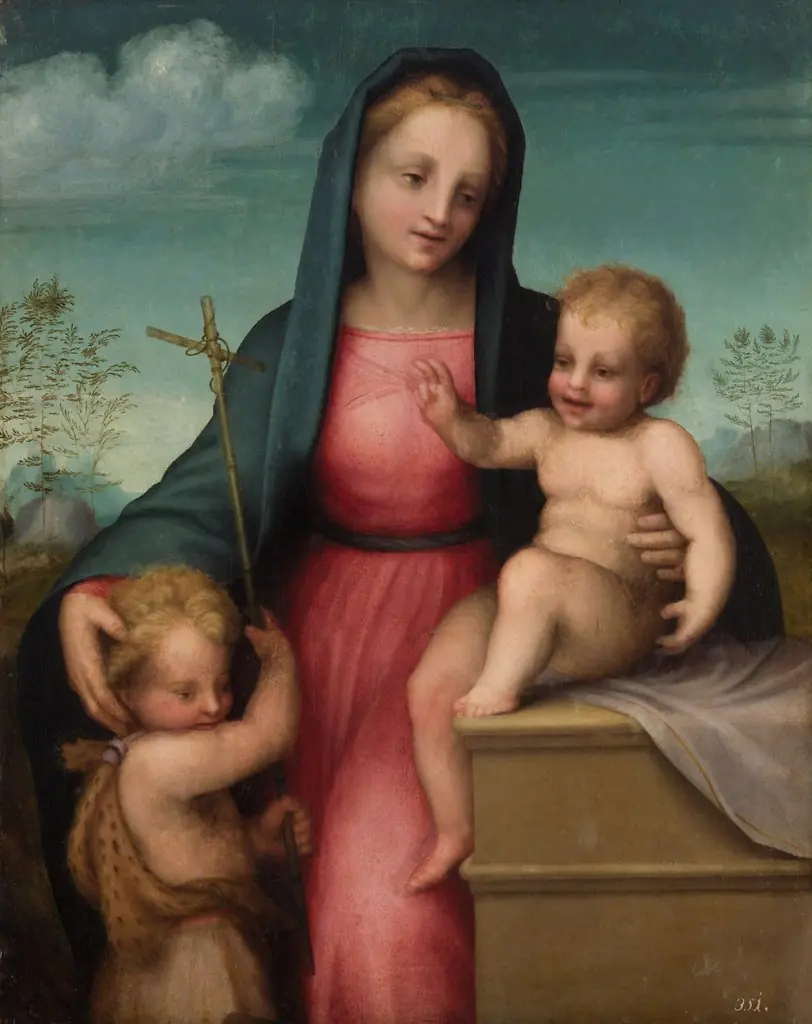
The Rest on the Flight into Egypt with St. John the Baptist is an oil painting by the High Renaissance artist Fra Bartolomeo. It dates from 1509 and is held in the collection of the J. Paul Getty Museum.
About this work
Overview
Originally known as Baccio della Porta, the artist had taken Dominican vows a decade earlier, and his religious devotion deeply informed his approach.
Painted in 1509 by Fra Bartolomeo, this oil on panel work portrays a quiet moment from the Holy Family’s journey into Egypt. Originally known as Baccio della Porta, the artist had taken Dominican vows a decade earlier, and his religious devotion deeply informed his approach. The painting is now part of the J. Paul Getty Museum’s collection, where it stands as a representative example of High Renaissance devotional art from Florence.
Subject & Meaning
The scene captures the Virgin Mary resting with the infant Jesus, while Saint John the Baptist, identified by his cross, stands nearby as a prophetic figure. Joseph, seated to the left, observes them with quiet vigilance. The inclusion of John the Baptist, who would later herald Christ’s ministry, introduces a theological layer—foreshadowing Jesus’s divine mission even in exile. Mary’s subdued expression suggests contemplative worry, reinforcing the vulnerability of the Holy Family in flight.
Technique & Style
Fra Bartolomeo employed oil paint to achieve soft transitions in light and color, particularly in the drapery and skin tones. The figures are arranged in a stable, pyramidal composition, characteristic of High Renaissance ideals. The landscape, though simplified, includes detailed elements like palm trees and a distant city, grounding the sacred moment in a tangible world. Subtle modeling and restrained gestures reflect the artist’s training under Cosimo Rosselli and his later absorption of Raphael’s harmony.
History & Provenance
Commissioned during Fra Bartolomeo’s mature period, the painting reflects his post-monastic artistic output after the decline of Savonarola’s influence. It remained in private collections in Italy before entering the Getty Museum’s holdings. Its preservation has allowed scholars to trace the evolution of Florentine religious painting in the early 16th century, particularly how monastic discipline shaped visual narratives of sacred history.
Context
Created shortly after the fall of Savonarola’s theocratic regime in Florence, the work emerged during a time when religious art was reasserting itself with renewed calm and order. Fra Bartolomeo’s shift from fiery preacher’s disciple to disciplined friar mirrored broader cultural shifts. This painting aligns with contemporaneous works by Raphael and Perugino, emphasizing serenity, balance, and spiritual introspection over dramatic intensity.
Legacy
Though less widely known than some of his peers, Fra Bartolomeo’s influence endured through his synthesis of devotional clarity and formal harmony. This painting exemplifies how Dominican spirituality informed Renaissance aesthetics, prioritizing quiet reverence over spectacle. It remains a key reference for understanding the transition from early to high Renaissance religious imagery in central Italy.
Own this work as a print
Artist & collection
Artist
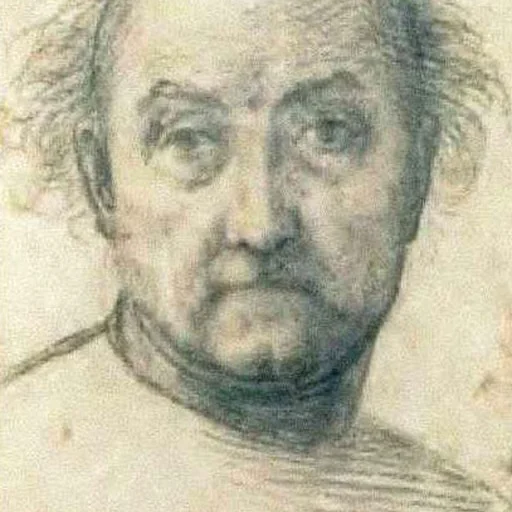
Fra Bartolomeo or Bartolommeo (UK: , US: , Italian: ; 28 March 1472 – 31 October 1517), also known as Bartolommeo di Pagholo, Bartolommeo di San Marco, Bartolomeo di Paolo di Jacopo del Fattorino, and his original…

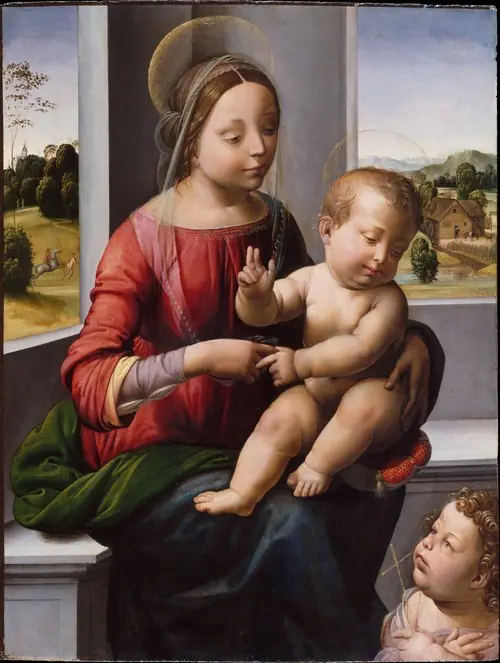 Madonna and Child with the Young Saint John the Baptist
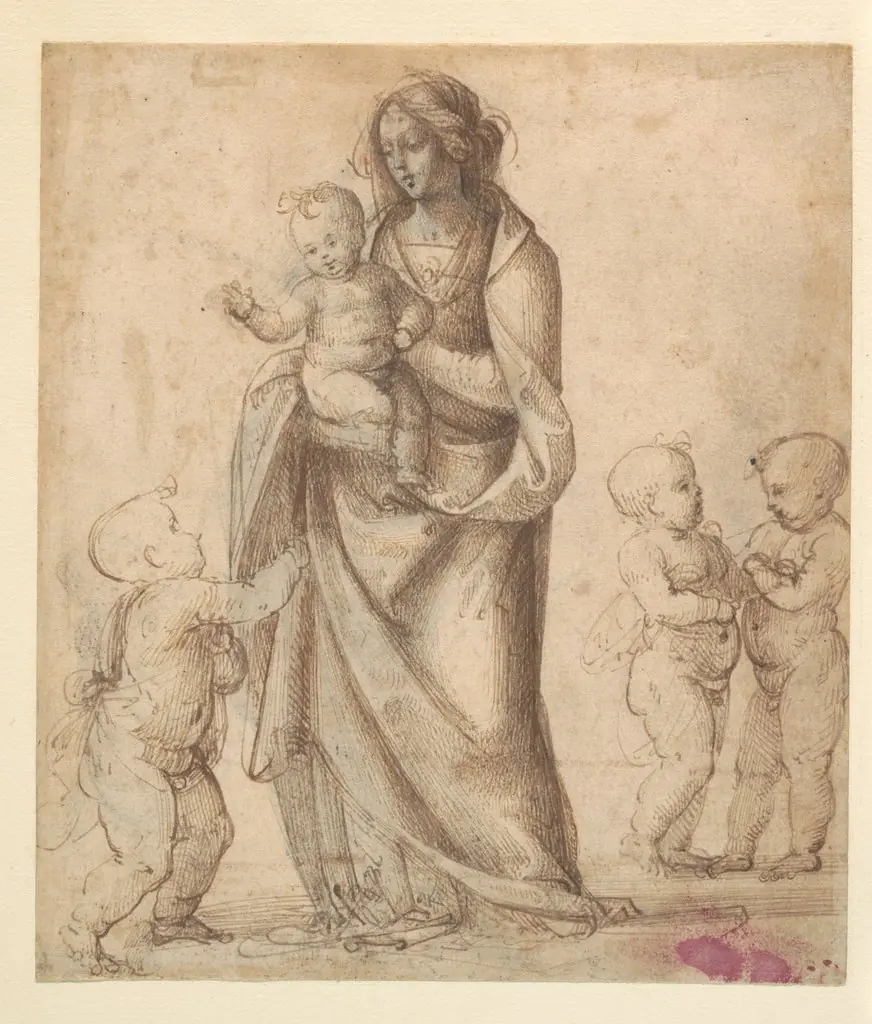 Madonna and Child with the Infant Saint John the Baptist and Two Putti (recto); Madonna and Child with the Infant Saint John the Baptist and a Putto (verso)
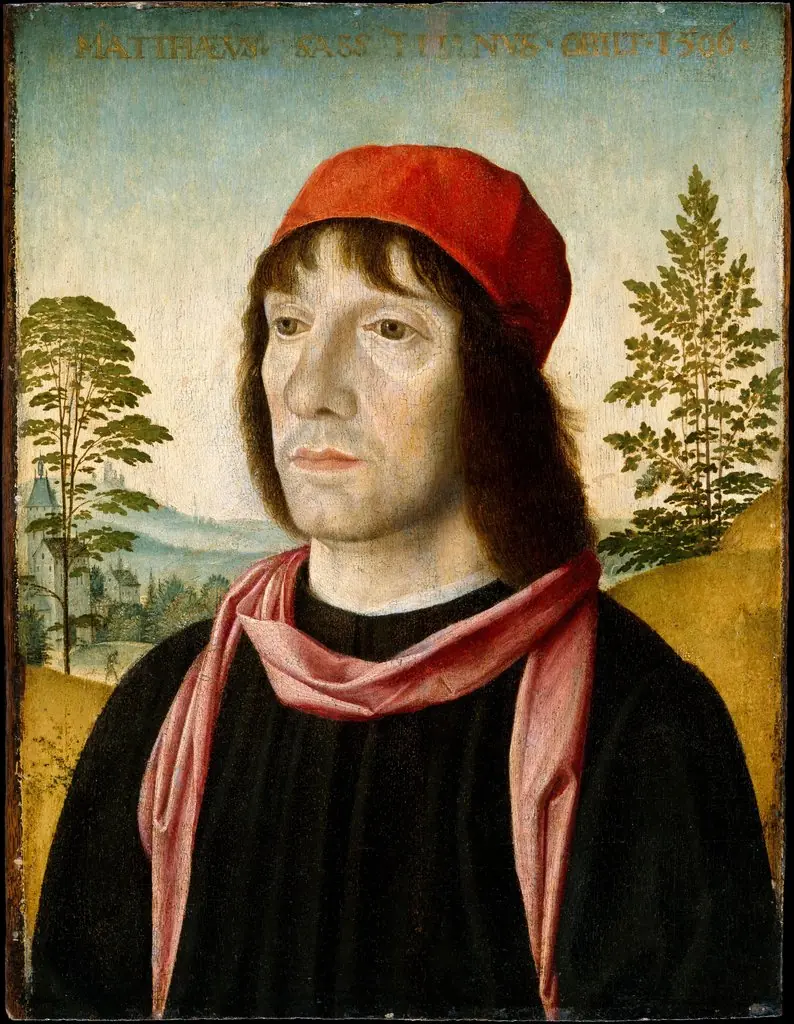 Portrait of a Man
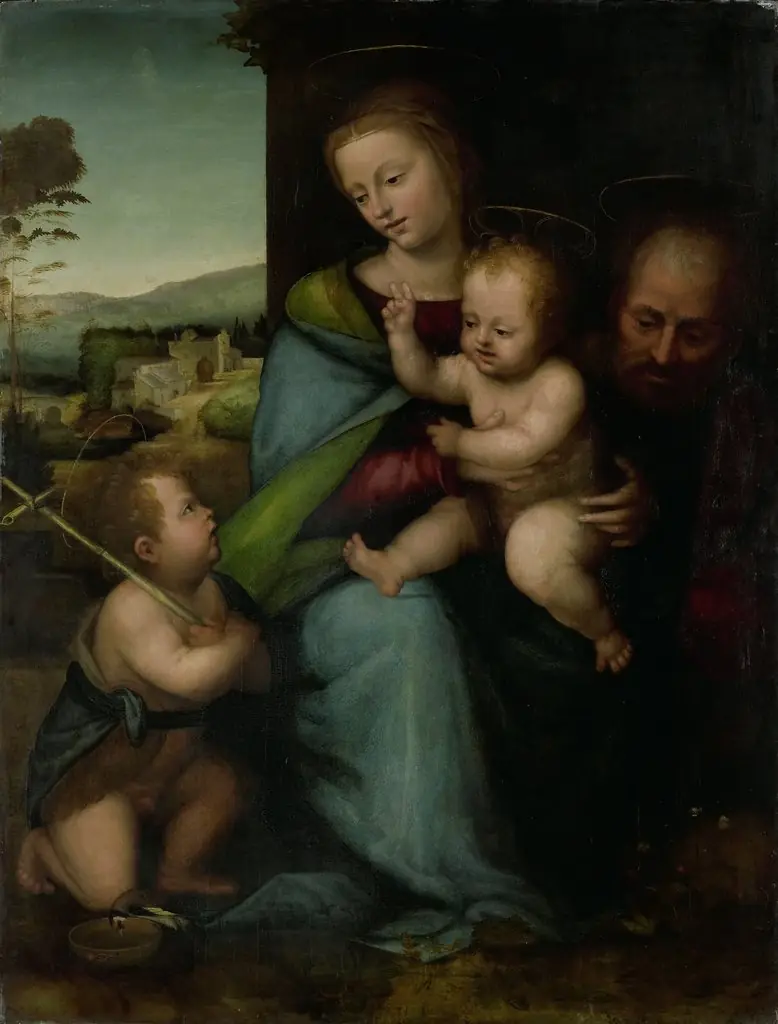 The Holy Family with the Infant John the Baptist
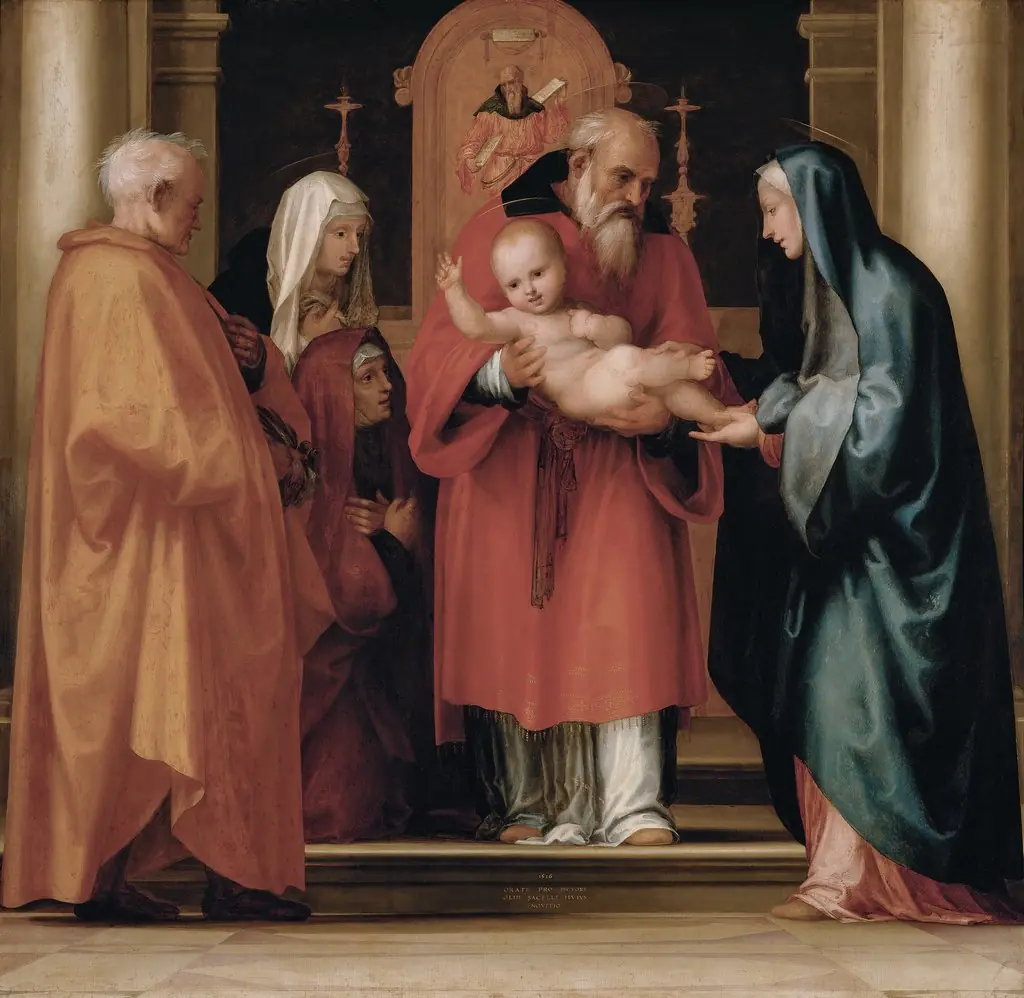 Presentation of Christ in the Temple
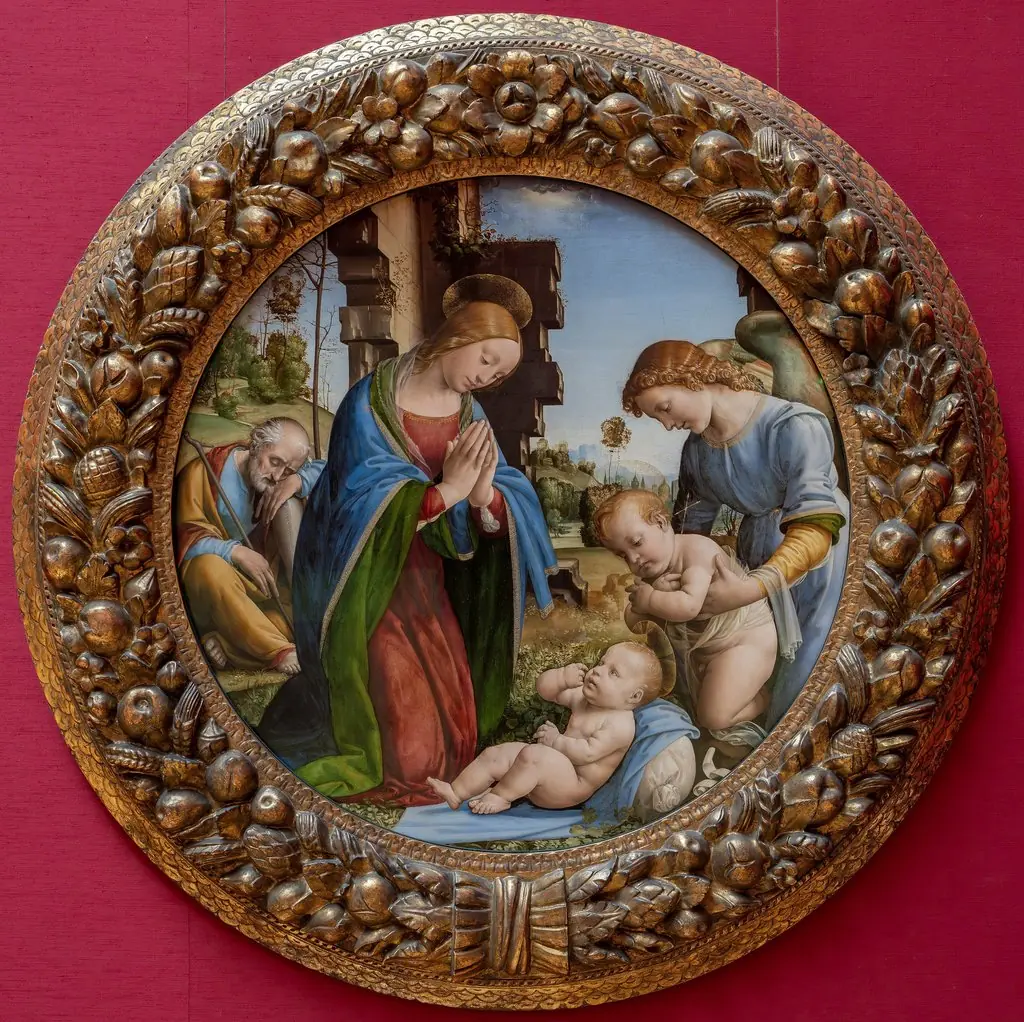 Adoration of the Child - Holy Family with child St. John
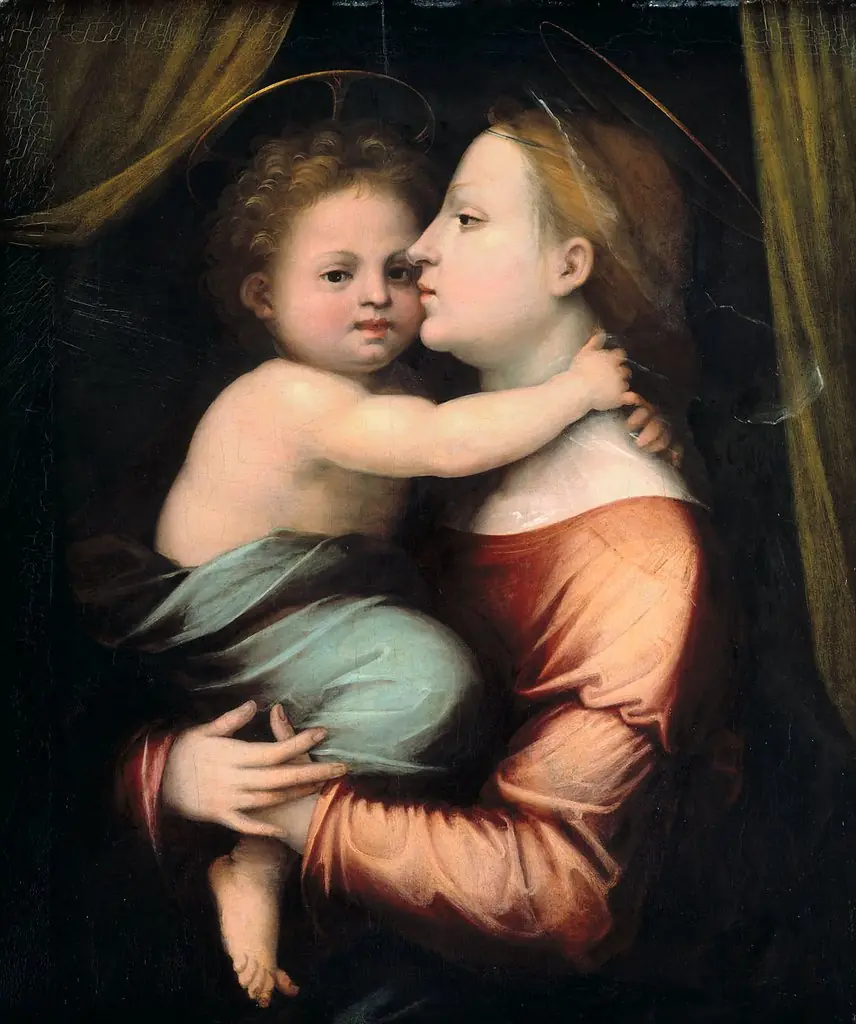 Madonna and Child
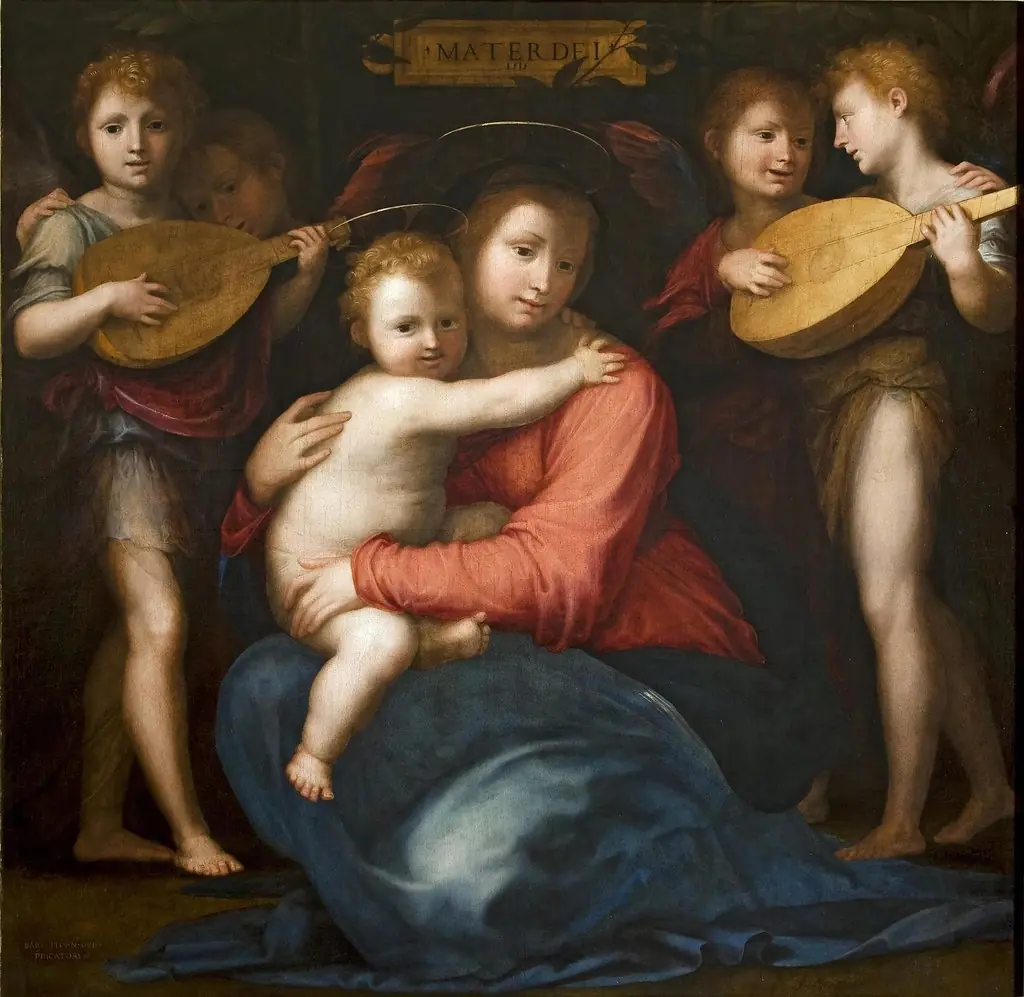 Madonna and Child with Four Angels
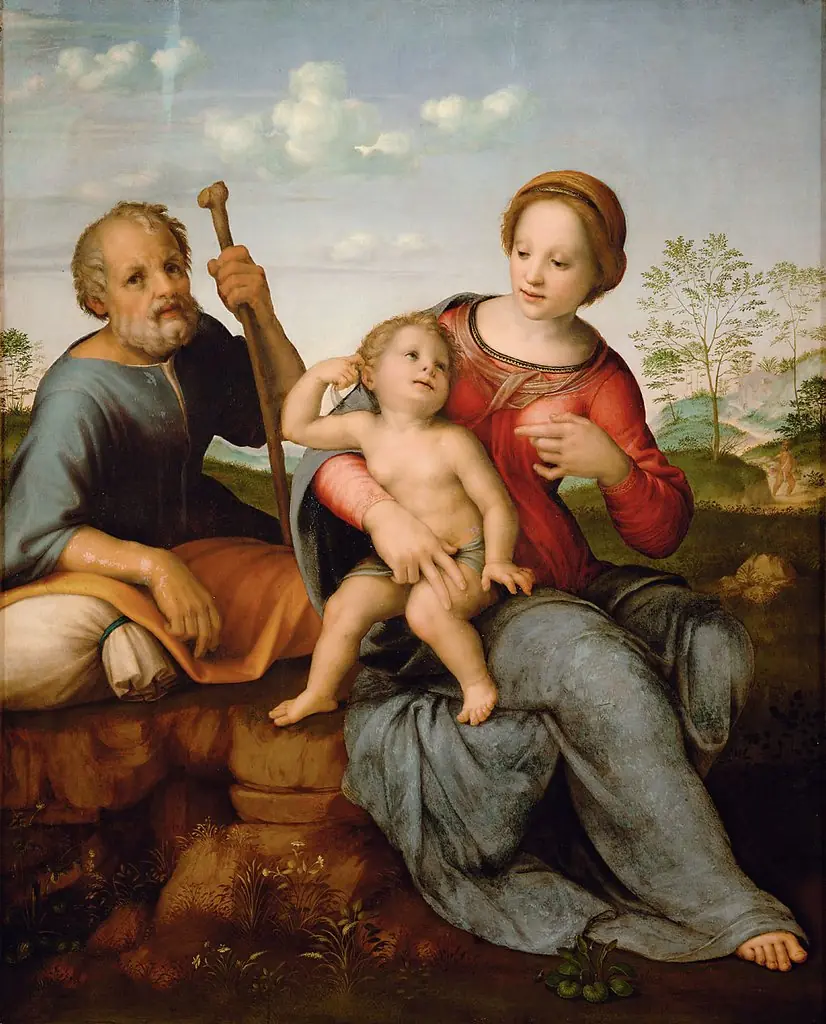 Holy Family in a Landscape
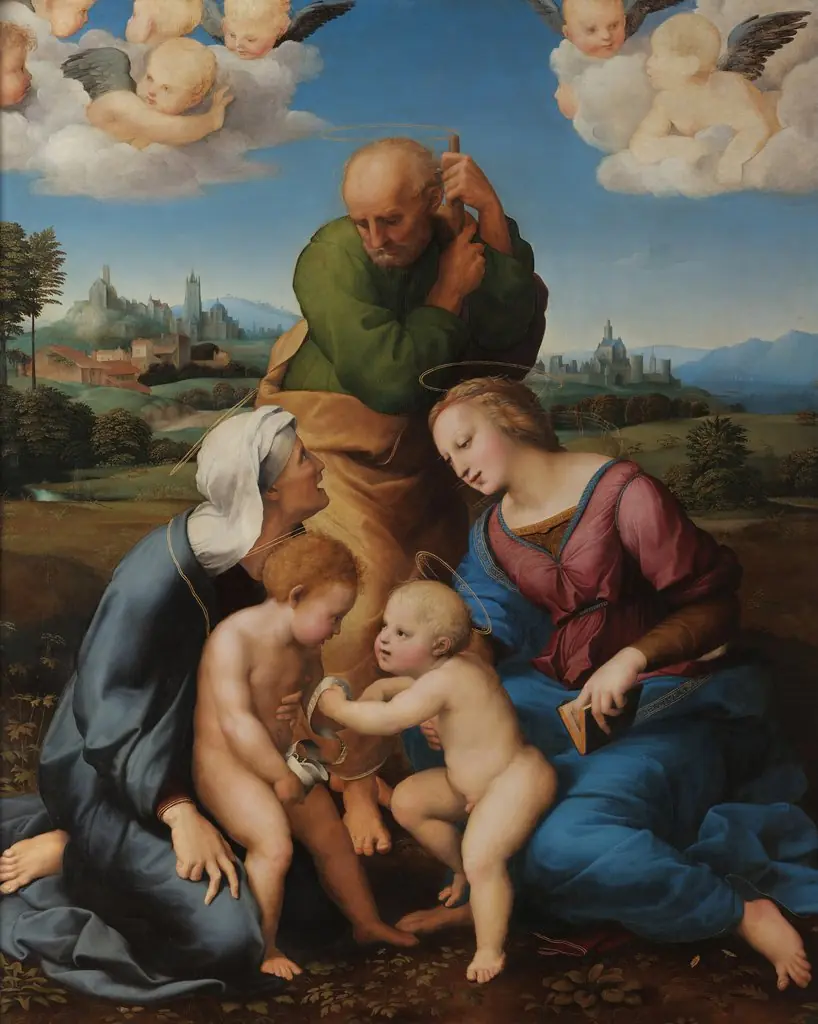 Canigiani Holy Family
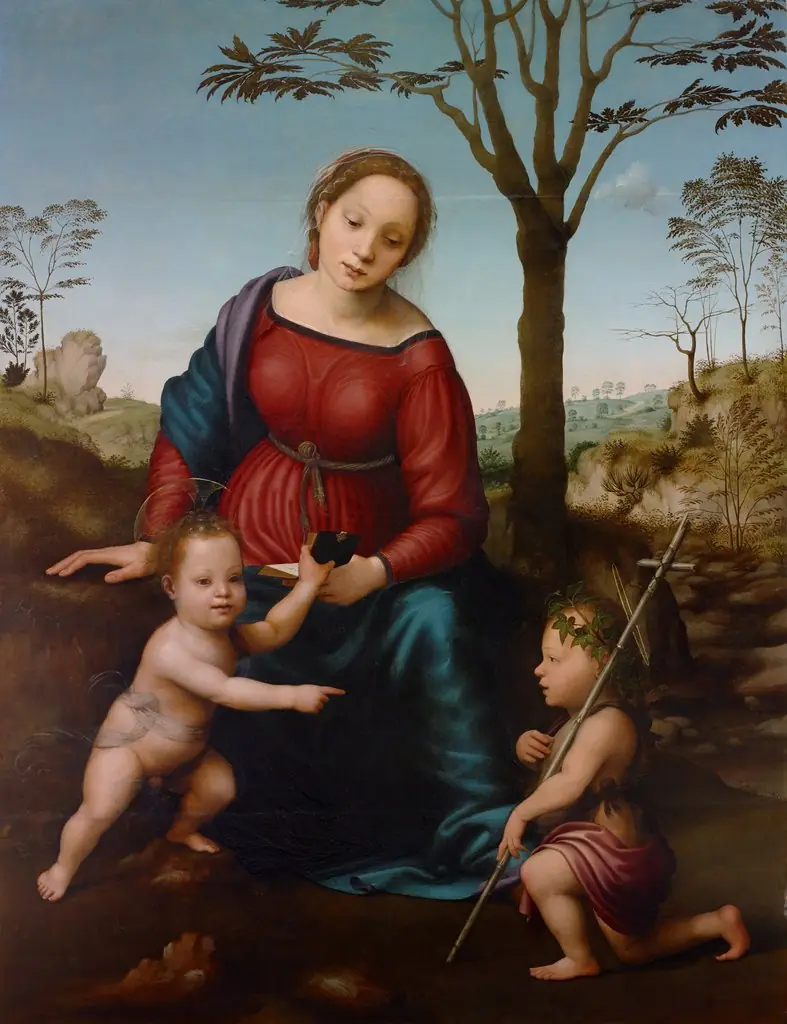 Madonna and Child Seated in a Landscape with Saint John the Baptist
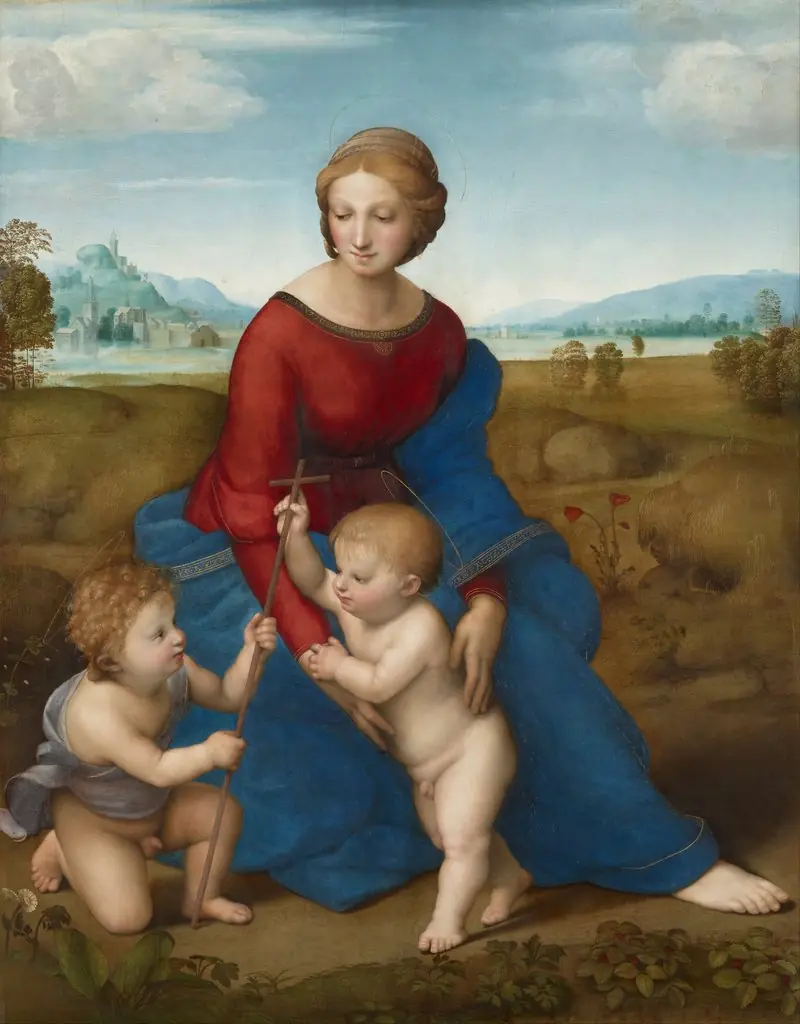 Madonna del Prato
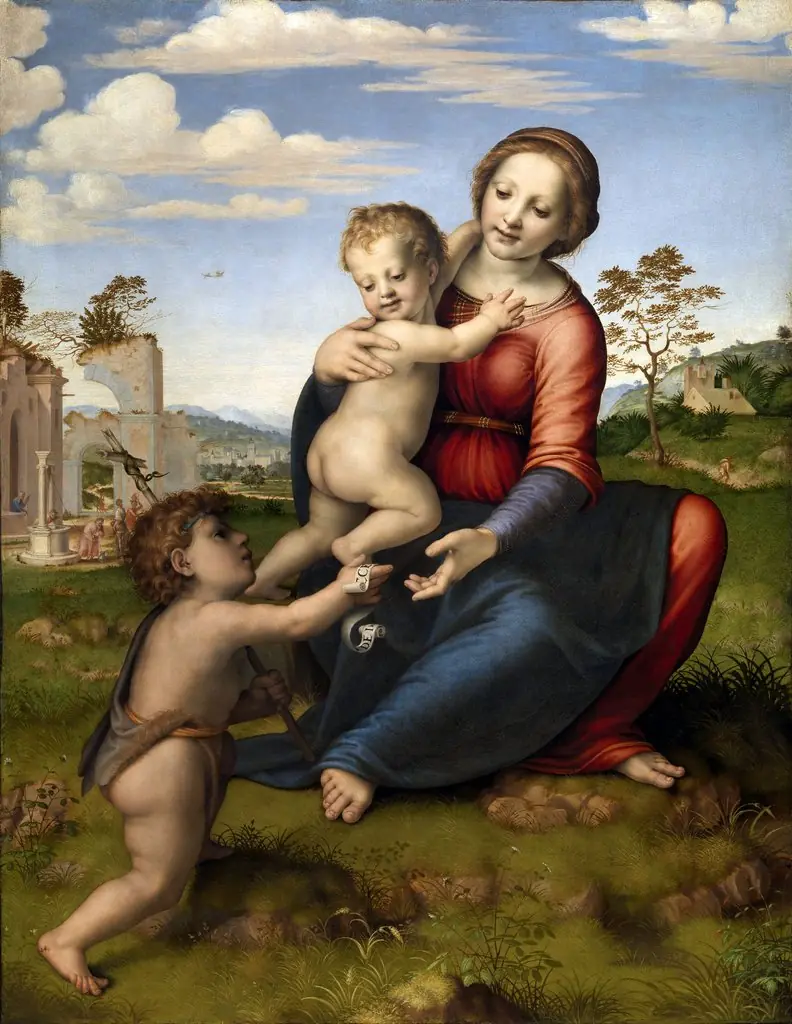 Madonna of the Well or Madonna and Child with the young St. John the Baptist
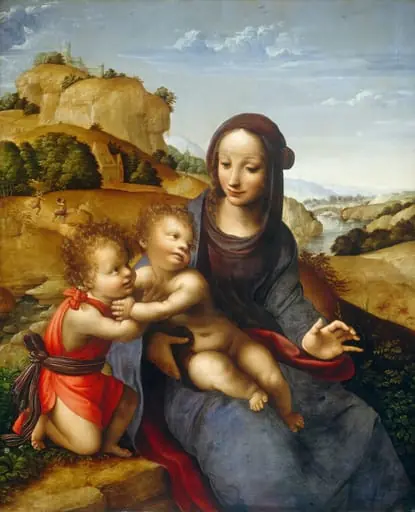 Madonna and Child with the Infant Saint John
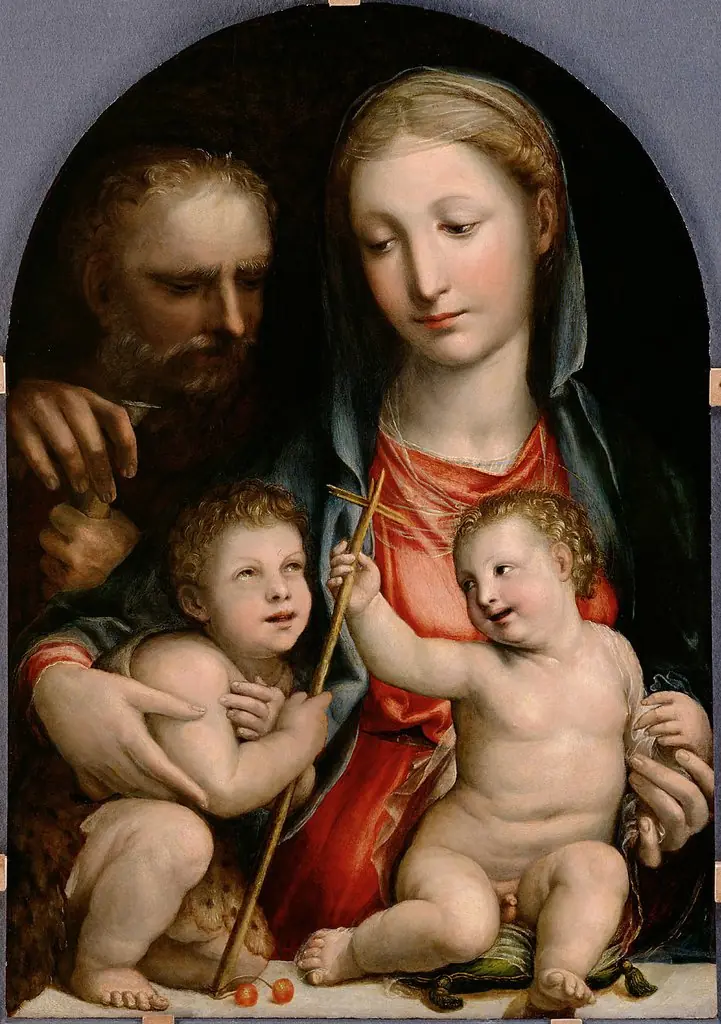 Holy Family with St. John the Baptist as child
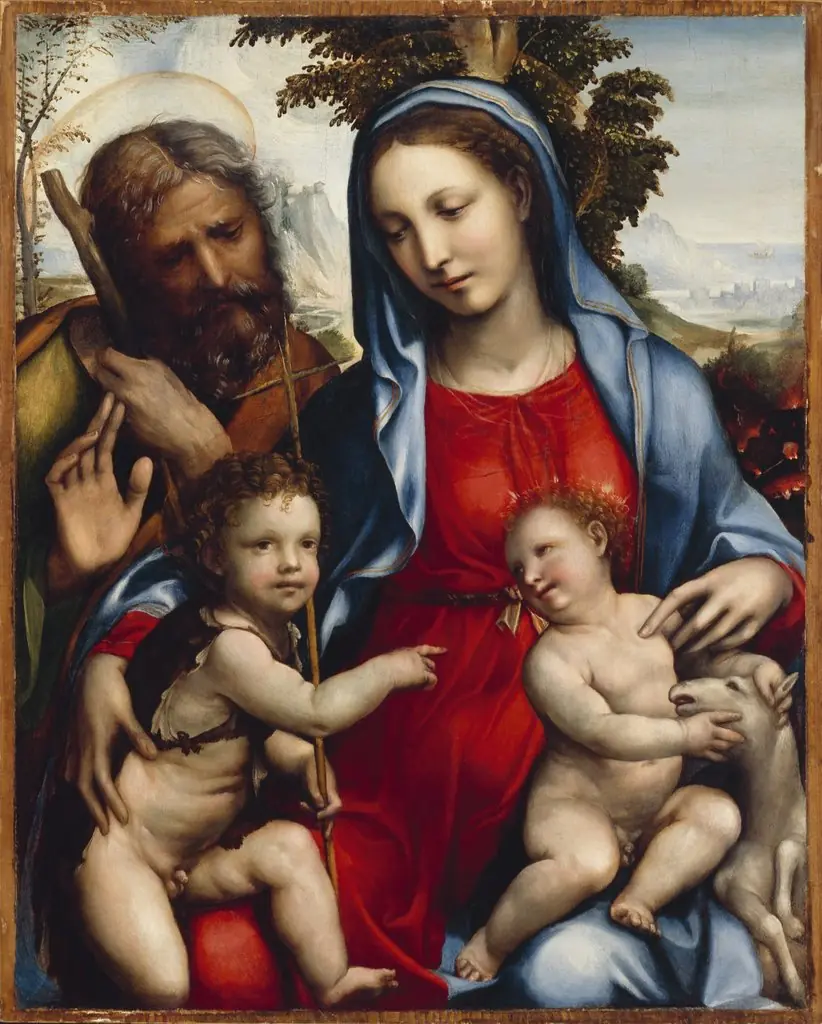 The Holy Family and St. John
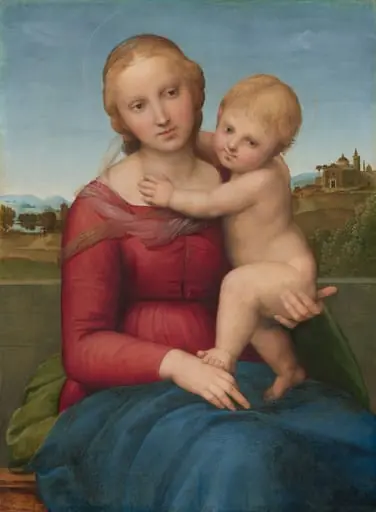 The Small Cowper Madonna
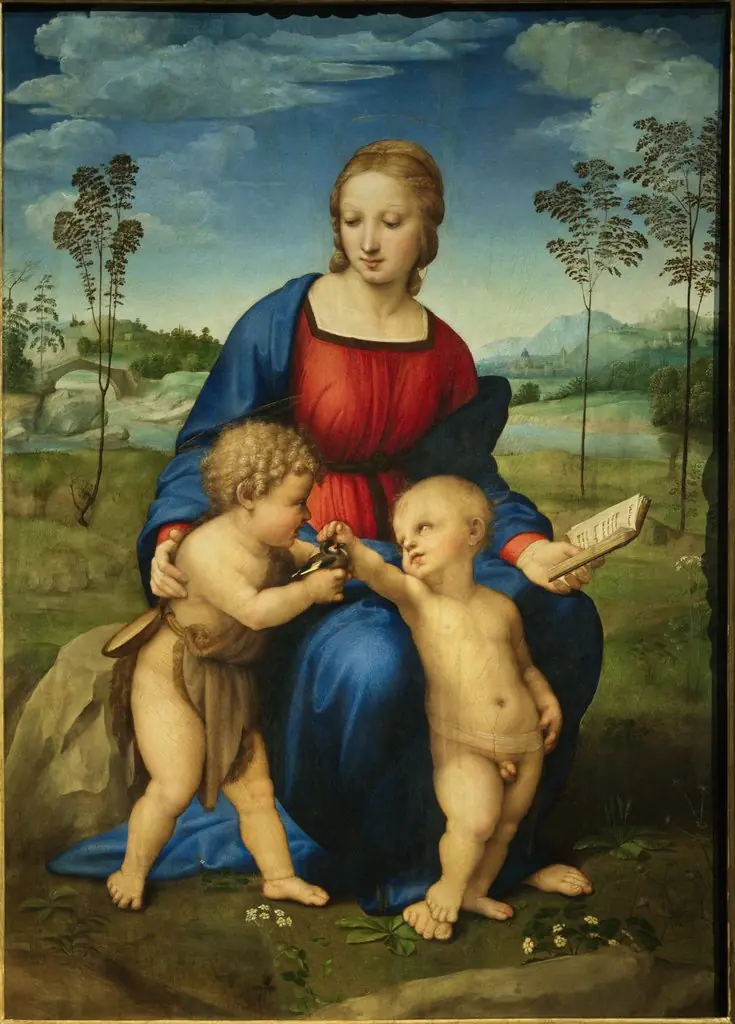 Madonna of the Goldfinch
 Maria mit Kind und Johannesknaben