Artwork
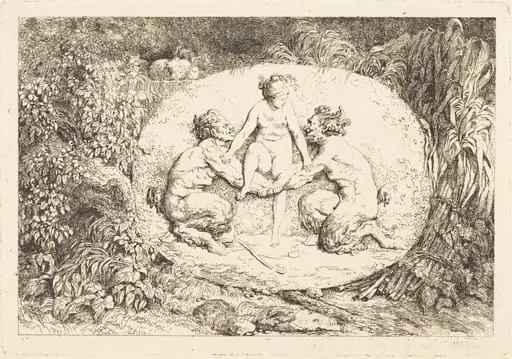
Nymph Supported by Two Satyrs (Nymphe s'asseyant sur les mains de deux satyres)
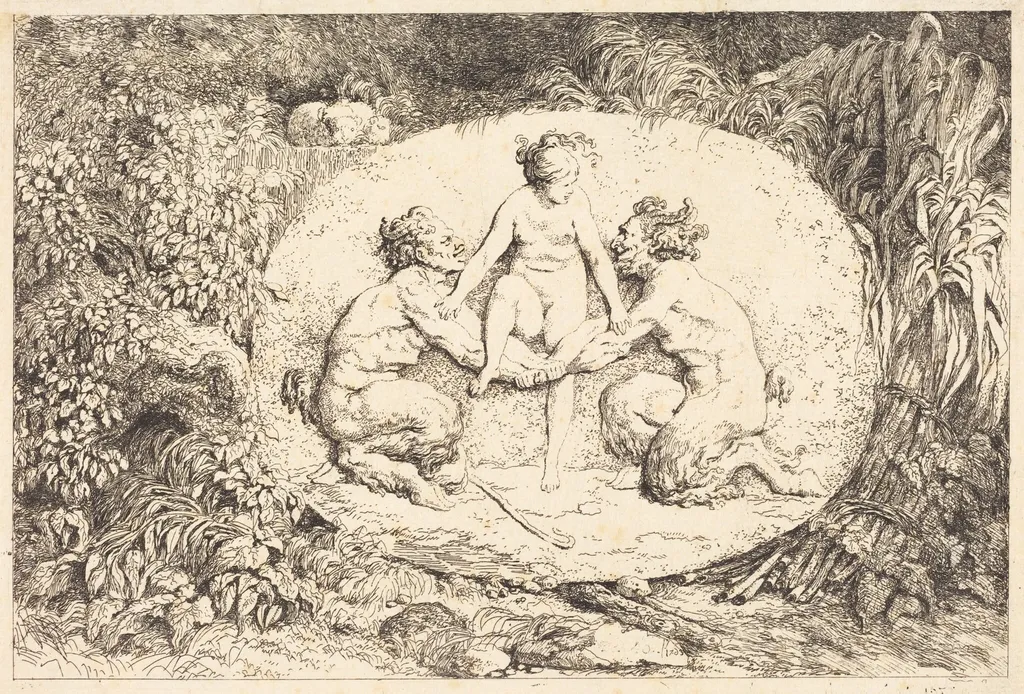
Nymph Supported by Two Satyrs (Nymphe s'asseyant sur les mains de deux satyres) is an ink print by the Romanticist artist Jean Honoré Fragonard. It dates from 1763 and is held in the collection of the National Gallery of Art.
About this work
Overview
Created in 1763, this etching by Jean-Honoré Fragonard depicts a reclining nymph supported by two satyrs in a naturalistic, overgrown setting. The work belongs to a series of intimate, mythological prints produced during the artist’s early career, showcasing his skill in capturing delicate textures and fluid compositions through fine-line etching techniques.
Subject & Meaning
The nymph, depicted in a posture of effortless repose, is cradled by the hands of two satyrs—mythical forest spirits with goat-like limbs. Their support suggests a harmonious, almost playful relationship between human and nature, evoking classical themes of pastoral ease. The scene avoids overt narrative, instead inviting contemplation of tranquility and mythic symbiosis.
Technique & Style
Fragonard employed fine, controlled etching lines to contrast the smoothness of the nymph’s skin with the rough textures of foliage, rocks, and fur. The delicate gradations and loose, organic contours reflect Rococo sensibilities, emphasizing movement and tactile variety. The composition’s asymmetry and intimate scale enhance its lyrical, dreamlike quality.
History & Provenance
The print was made during Fragonard’s formative years in Paris, shortly after his return from Rome. It was likely produced for private collectors rather than public display, consistent with the era’s demand for small-scale, decorative prints. No definitive early ownership records survive, but it was included in later catalogues of the artist’s graphic works.
Context
In mid-18th-century France, mythological subjects in print form were popular among aristocratic patrons seeking refined, escapist imagery. Fragonard’s etchings responded to this taste, blending classical allusion with intimate, almost theatrical scenes. His approach diverged from grand historical painting, favoring personal expression and tactile detail.
Legacy
This etching exemplifies Fragonard’s mastery of the medium and his ability to infuse myth with quiet intimacy. While less known than his paintings, his graphic works influenced later artists interested in expressive line and atmospheric detail. The print remains a key example of Rococo printmaking’s emotional subtlety and technical finesse.
Artist & collection

Artist
Jean-Honoré Fragonard was born on 5 April 1732 in Grasse, the son of a glover, and moved with his family to Paris in 1738.