Artwork
The Circumcision
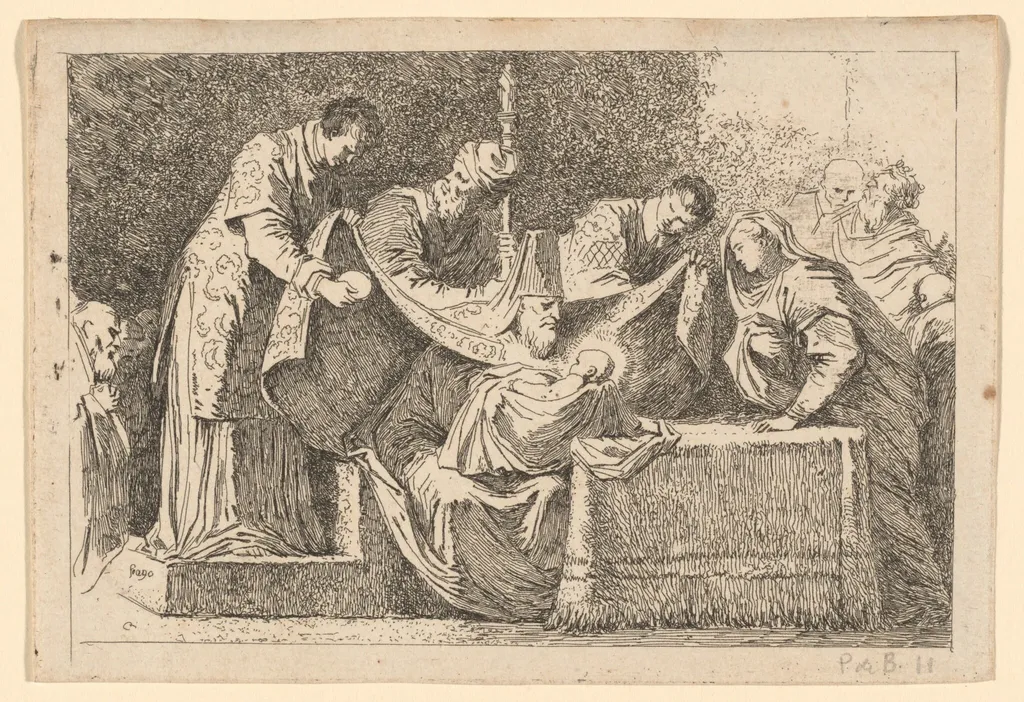
The Circumcision is an ink print by the Romanticist artist Jean Honoré Fragonard. It dates from 1764 and is held in the collection of the National Gallery of Art.
About this work
Overview
The Circumcision is a 1764 etching on laid paper by Jean Honoré Fragonard, depicting a solemn scene of a religious ritual.
Subject & Meaning
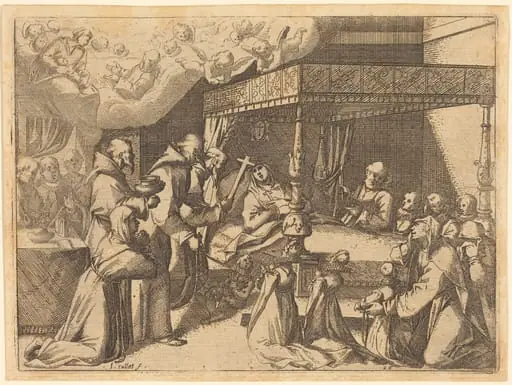
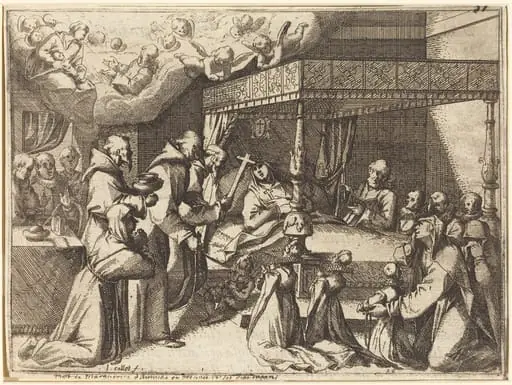
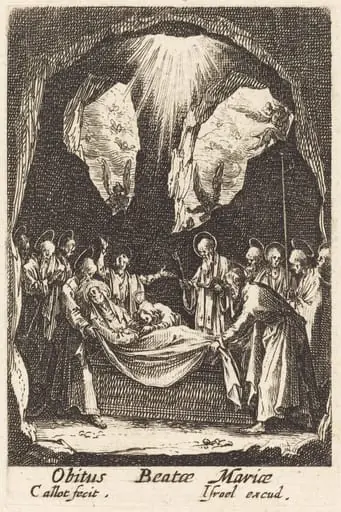
The etching illustrates a group of robed figures attending to a baby on a table, with key participants including a holder, a performer of the ritual (bent over), and a kneeling woman with clasped hands, while two smaller figures observe from above, suggesting divine or spiritual presence.
Technique & Style
Fragonard employed fine etching lines to achieve detailed textures, evident in the intricate folds of the robes and the baby's swaddling, balancing busy composition with meticulous draftsmanship.
History & Provenance
Created in 1764, the etching's provenance and exhibition history are not detailed here, focusing instead on its creation by Fragonard in the specified year.
Context
As an etching, the work leverages the printmaking technique's capabilities for detailed, potentially mass-producible art, though the religious subject contrasts with Fragonard's more commonly associated lighthearted, secular themes.
Legacy
The Circumcision, while less representative of Fragonard's popular oeuvre, demonstrates his technical proficiency with etching and engagement with religious subjects, contributing to the broader 18th-century European printmaking landscape.
Artist & collection

Artist
Jean-Honoré Fragonard was born on 5 April 1732 in Grasse, the son of a glover, and moved with his family to Paris in 1738.