Artwork
The Little Park (Le petit parc)
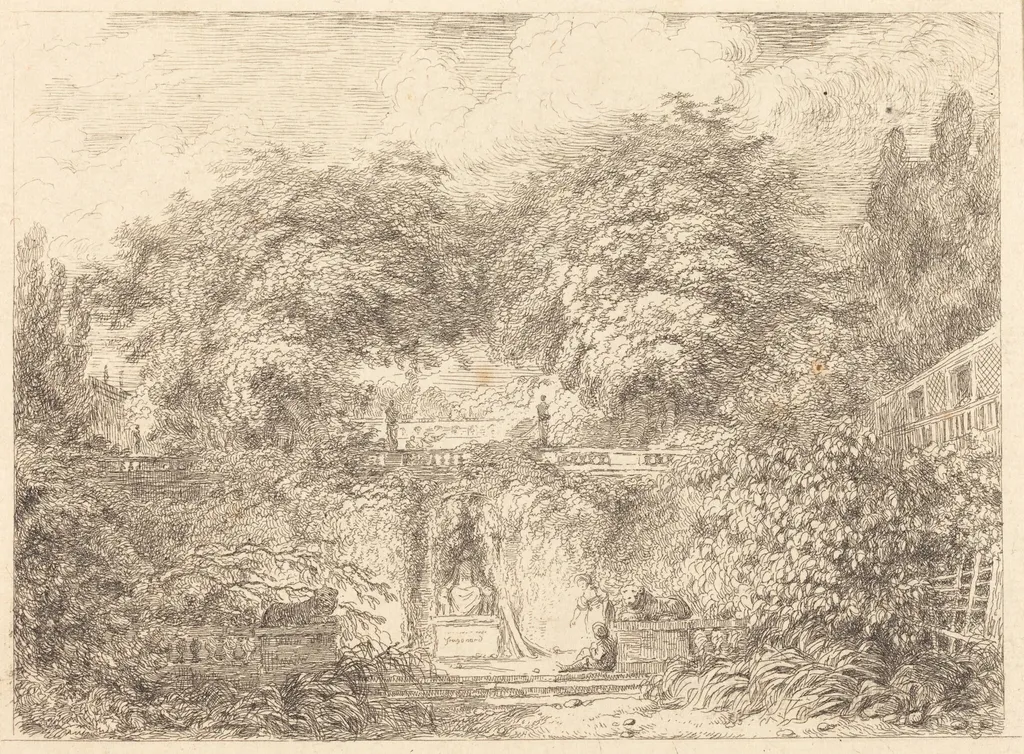
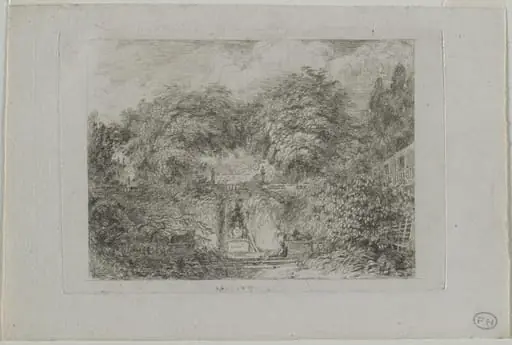
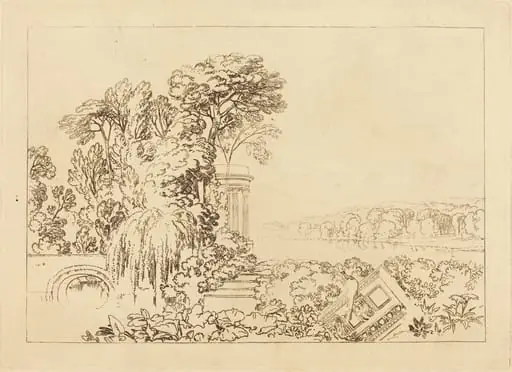
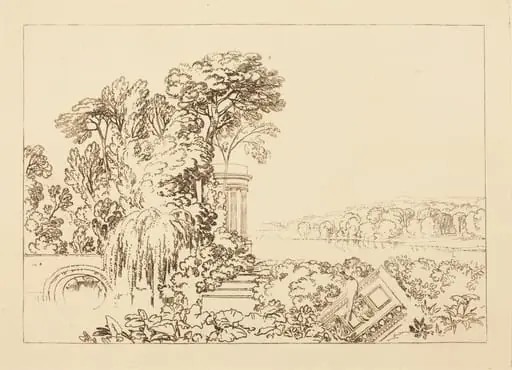
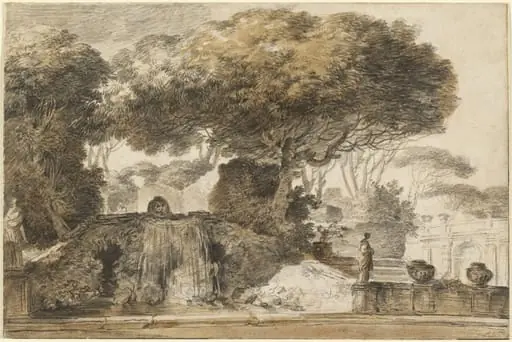
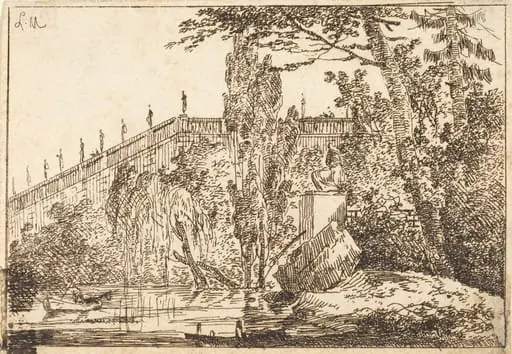
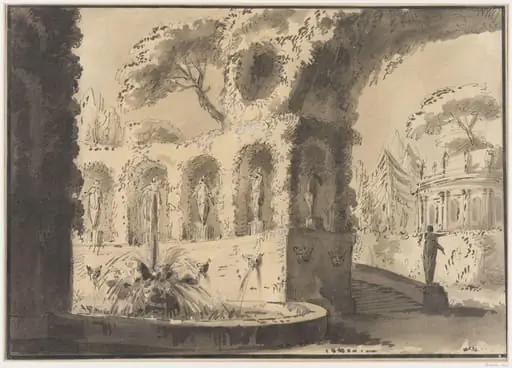
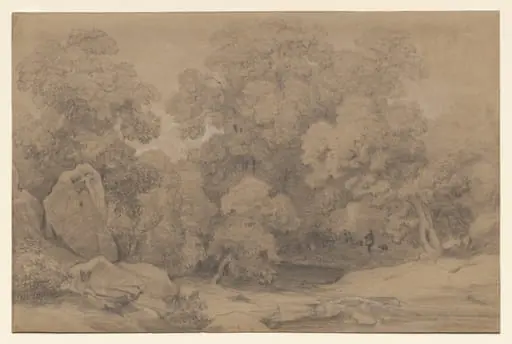
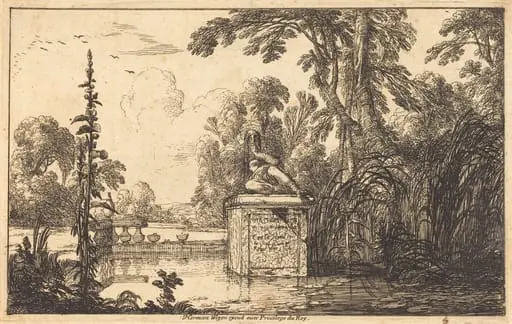
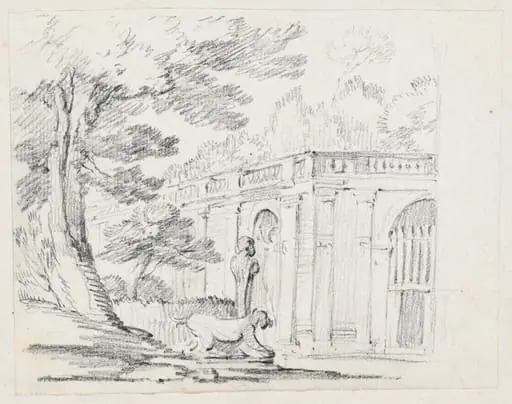
The Little Park (Le petit parc) is an ink print by the Romanticist artist Jean Honoré Fragonard. It dates from 1763 and is held in the collection of the National Gallery of Art.
About this work
Overview
Created around 1763, The Little Park (Le petit parc) is an early print by the French artist Jean‑Honoré Fragonard. Executed as an etching, the work depicts a modest, tree‑lined garden where a few figures stroll along winding paths and pause on benches, bathed in dappled daylight. The composition captures a tranquil, everyday moment rather than a grand narrative.
Subject & Meaning
The image presents a quiet urban green space, populated by pedestrians and seated observers. By focusing on ordinary leisure activities, Fragonard emphasizes the gentle pleasures of public parks in eighteenth‑century Paris, inviting viewers to contemplate the calm rhythm of daily life amid nature’s filtered light.
Technique & Style
Fragonard combined traditional etching with drypoint, incising lines directly into a copper plate before applying ink. The resulting marks are intentionally loose and spontaneous, conveying a sense of movement and breezy atmosphere. The interplay of etched and drypoint strokes creates soft shadows and a slightly sketch‑like quality that enhances the scene’s immediacy.
History & Provenance
The print dates to the early phase of Fragonard’s career, prior to his fame as a Rococo painter. It was likely produced for the burgeoning market of affordable artworks, allowing a wider audience to own a work by the young artist. Surviving copies are held in several European print collections, documenting its circulation among collectors of the period.
Own this work as a print
Artist & collection

Artist
Jean-Honoré Fragonard was born on 5 April 1732 in Grasse, the son of a glover, and moved with his family to Paris in 1738.