Artwork
Park of an Italian Villa
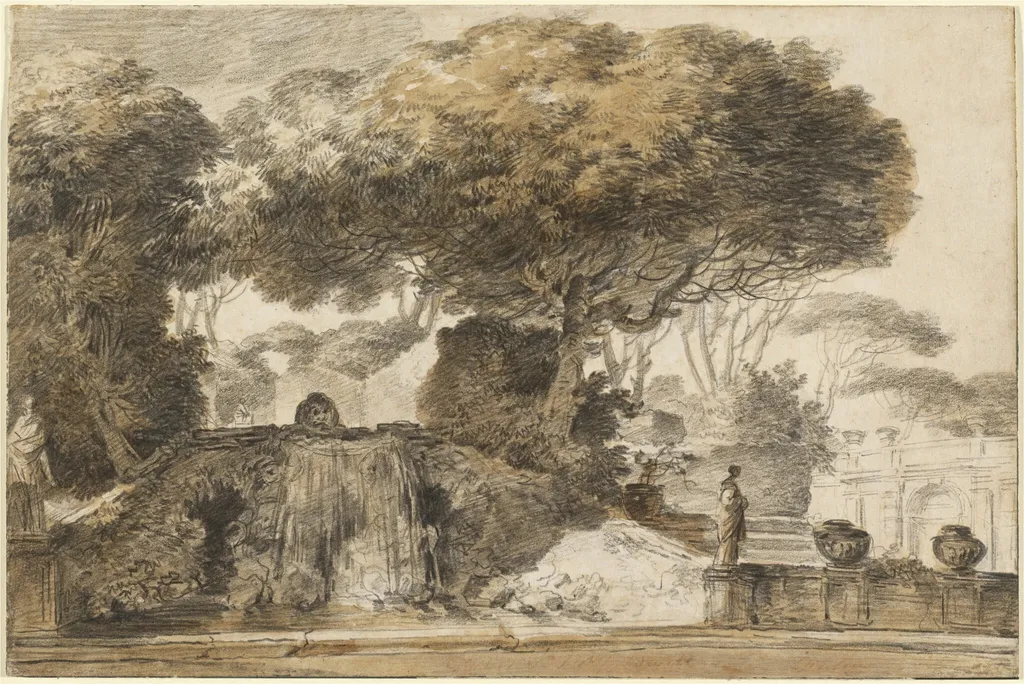
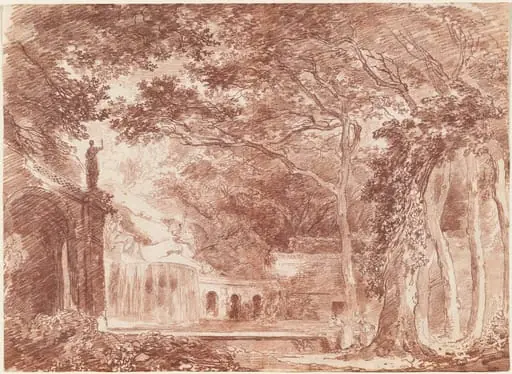
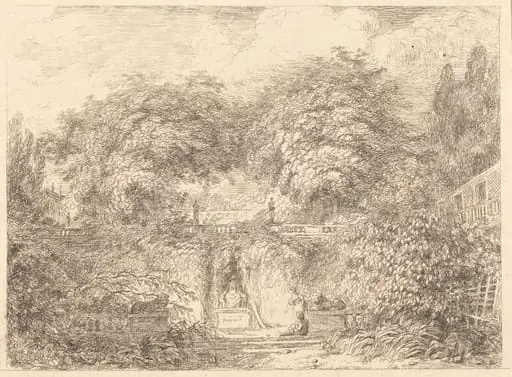
Park of an Italian Villa is a chalk drawing by the Romanticist artist François-André Vincent. It dates from 1774 and is held in the collection of the National Gallery of Art.
About this work
Overview
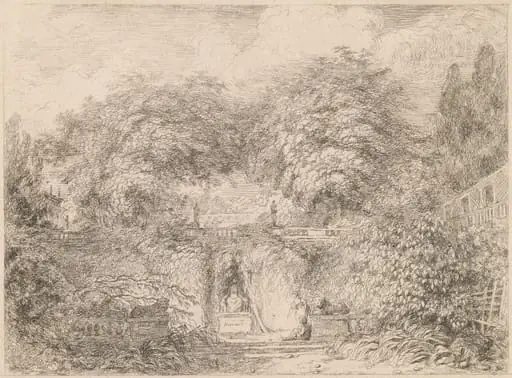
François‑André Vincent’s drawing titled *Park of an Italian Villa* dates from 1774. Executed on laid paper, the work combines black chalk, a brown wash, and white gouache highlights, with faint brown‑ink framing lines that remain visible. It records a tranquil garden setting, rendered in a sketch‑like manner that suggests an immediate observation rather than a finished composition.
Subject & Meaning
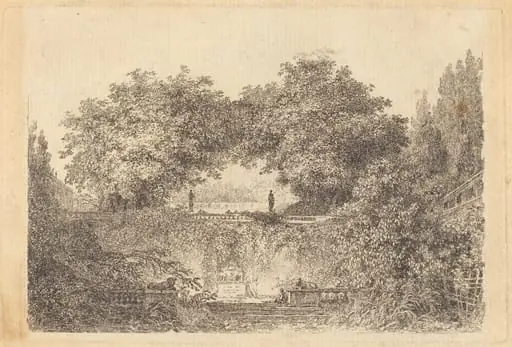
The composition presents a shaded stone fountain beneath a large tree, accompanied by a solitary statue and a few potted plants arranged on a ledge. Beyond the foreground, additional trees and a distant building recede into the background, creating a layered sense of space that evokes the leisurely atmosphere of an Italian villa’s park.
Technique & Style
Vincent employed a layered approach: initial outlines in black chalk were softened with a brown wash, then selective white gouache was applied to accentuate light on foliage, stone, and water. The drawing retains a loose, atmospheric quality, with smudged lines and unfinished edges that convey a fleeting, almost poetic impression of the scene.
History & Provenance
Created in the late eighteenth century, the piece reflects Vincent’s interest in landscape studies that accompanied his academic training. The presence of a framing line in brown ink suggests it may have been intended for insertion into a larger portfolio or as a preparatory study for a finished painting, though its subsequent ownership history is not documented.
Context
During the 1770s, French artists increasingly turned to Italianate subjects, inspired by Grand Tour experiences and the classical ideals of the Enlightenment. Vincent’s drawing aligns with this trend, offering a cultivated yet informal view of an Italian garden that would have appealed to patrons seeking cultured, picturesque imagery.
Legacy
Although not a finished painting, the work demonstrates Vincent’s skill in rendering light and atmosphere with minimal means. It serves as a reference point for scholars tracing the development of landscape drawing in the pre‑Romantic period, illustrating how academic artists integrated observational sketching into their broader oeuvre.
Own this work as a print
Artist & collection