Artwork
De tuinman
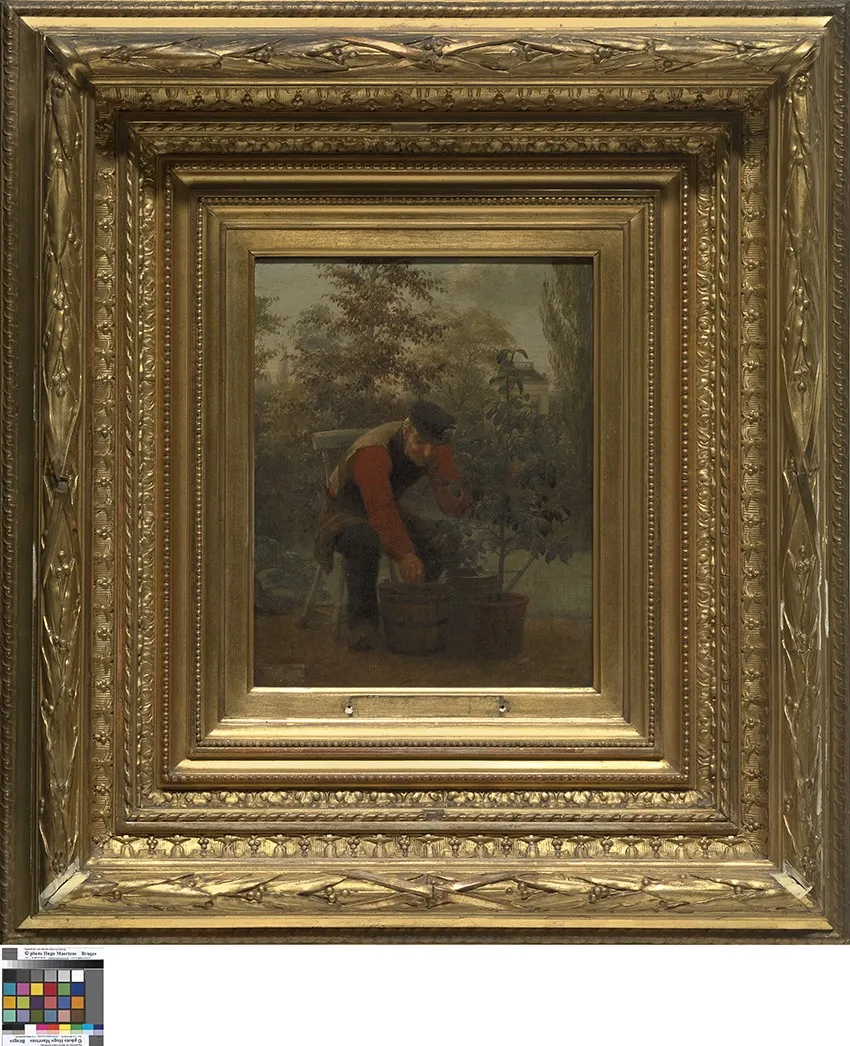
De tuinman is an oil painting by the Realist artist François Antoine De Bruycker. It dates from 1816 and is held in the collection of the Groeningemuseum.
About this work
The Groeningemuseum holds this painting, offering a glimpse into the artistic styles and techniques of the early 19th century.
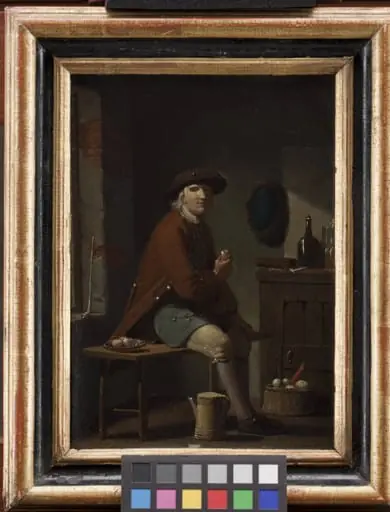
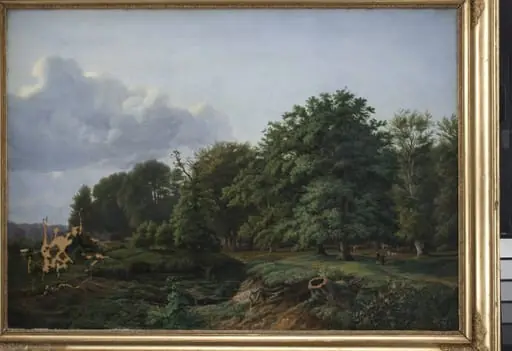
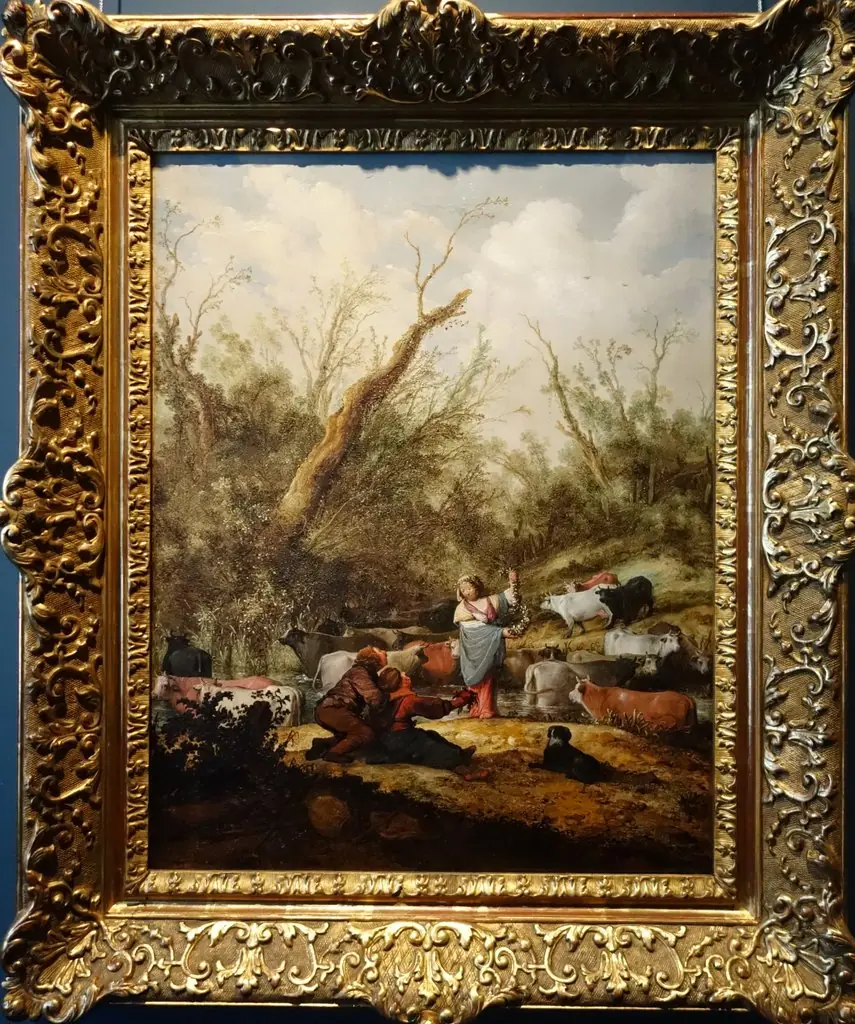
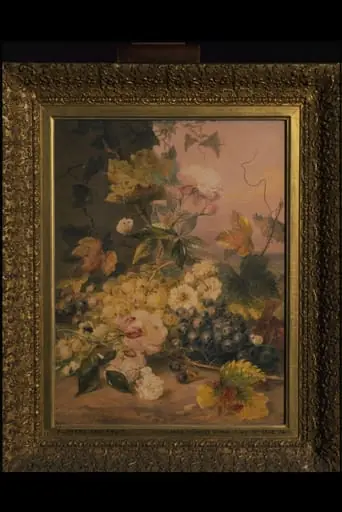
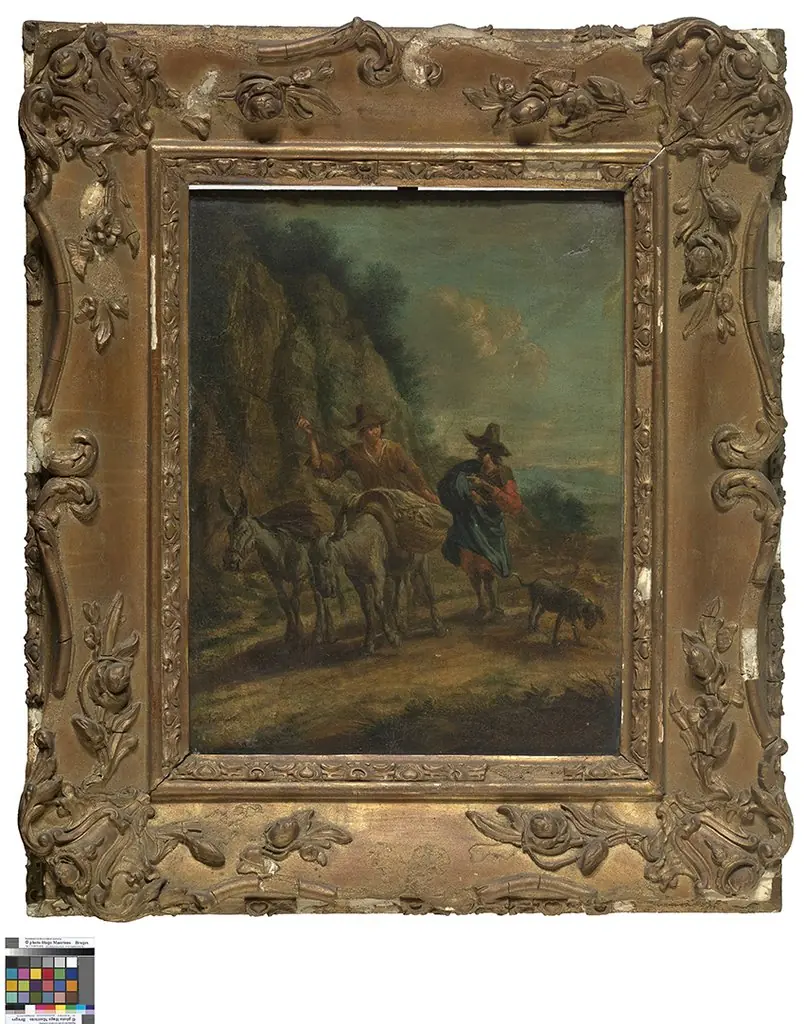
The painting depicts a gardener tending to a tree in a pot, seated on a chair. The scene is set against a backdrop of trees and a building, with the gardener dressed in a red shirt and dark pants. The painting is rendered in oil paint and features a gold frame.
A notable detail in the painting is the use of chiaroscuro, a technique that utilizes strong contrasts between light and dark to create a sense of volume and depth. This technique adds depth and dimensionality to the scene, drawing the viewer's eye to the gardener and the tree.
The Groeningemuseum holds this painting, offering a glimpse into the artistic styles and techniques of the early 19th century.
Overview
Painted in 1816 by François Antoine De Bruycker, this oil on canvas work portrays a quiet moment in a garden setting. It features a gardener seated on a chair, tending to a potted tree, with distant trees and a building forming the background. The piece is part of the Groeningemuseum’s collection, representing early 19th-century Flemish genre painting with attention to everyday labor and natural light.
Subject & Meaning
The painting captures a gardener in quiet concentration, engaged in the routine care of a potted tree. Dressed in a red shirt and dark trousers, the figure embodies diligence without theatricality. The scene avoids narrative drama, instead emphasizing stillness and the dignity of manual work. The potted tree, isolated yet tended, may suggest themes of cultivation and control over nature in a domestic setting.
Technique & Style
De Bruycker employs chiaroscuro to model form and direct attention toward the gardener and the tree. Strong contrasts between light and shadow define the contours of the figure and the pot, lending three-dimensionality to the composition. The brushwork is restrained, favoring subtle gradations over detail, aligning with the quiet realism of the period. The gold frame, though not part of the painted surface, complements the work’s formal tone.
History & Provenance
The painting has remained in the collection of the Groeningemuseum since its acquisition, with no documented changes in ownership. Its presence in the museum since the 19th century suggests early recognition of its quiet aesthetic value. No records indicate public exhibition prior to its inclusion in the museum’s permanent holdings, though its preservation reflects institutional interest in regional genre scenes of the era.
Context
Created during the early 1800s, the work emerges from a Flemish tradition that valued intimate, unidealized depictions of daily life. While larger historical or religious subjects dominated official art, artists like De Bruycker turned to domestic and rural scenes. This painting reflects a broader European shift toward realism, where ordinary moments gained artistic legitimacy through careful observation and composition.
Legacy
Though not widely reproduced or studied outside regional art circles, the painting contributes to the understanding of Flemish genre painting in the post-Napoleonic period. Its preservation in the Groeningemuseum ensures continued access for scholars examining the evolution of secular subject matter in 19th-century Northern European art. It stands as a modest but enduring example of quiet observation in oil.
Artist & collection
Artist
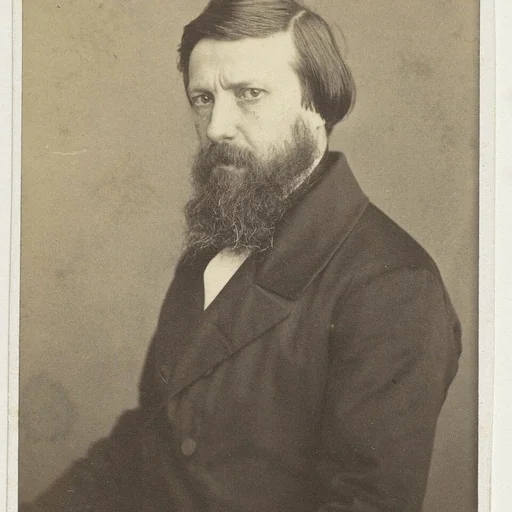
François Antoine De Bruycker (1816–1882) was an artist, born in Ghent.