Artwork
The Departure of Jacob
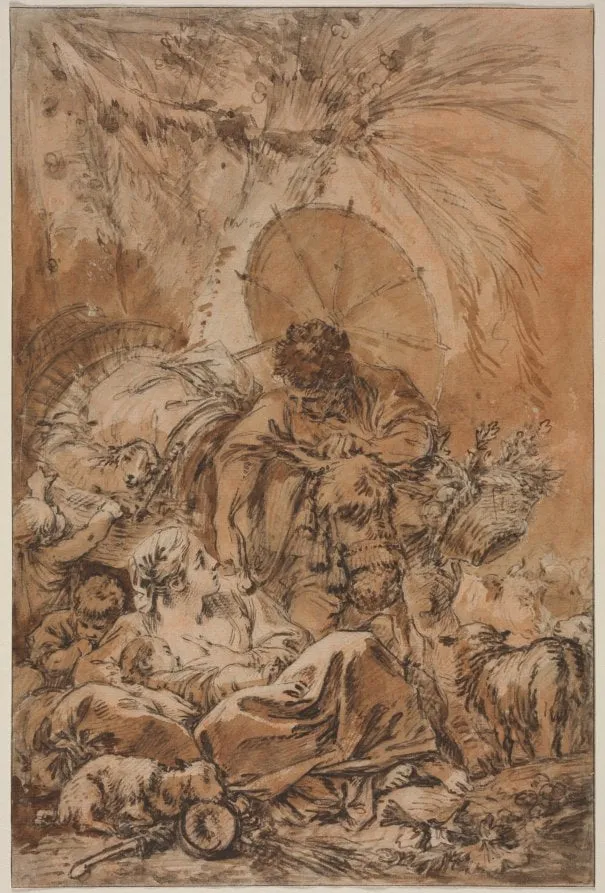
The Departure of Jacob is a drawing by the Romanticist artist François Boucher. It dates from 1755 and is held in the collection of the Cleveland Museum of Art.
About this work
Overview
Executed in a restrained palette of brown, red, and black, it functions as a preparatory study, likely for a now-lost painting.
This ink and chalk drawing by François Boucher depicts a quiet moment from the biblical story of Jacob’s journey to Canaan. Unlike his more familiar pastoral fantasies, this work engages with a solemn Old Testament narrative. Executed in a restrained palette of brown, red, and black, it functions as a preparatory study, likely for a now-lost painting. The composition emphasizes naturalism and subdued emotion, marking a departure from Boucher’s typical Rococo style.
Subject & Meaning
The scene illustrates Jacob’s family resting during their migration, with a mother and infant sheltered beneath a palm tree while others prepare a cart nearby. The focus on domestic stillness amid travel suggests themes of endurance and divine guidance. Boucher’s choice to portray this biblical moment—rare in his oeuvre—hints at a personal or commissioned interest in scriptural narrative, contrasting his usual mythological subjects.
Technique & Style
Boucher employed soft chalk and ink to model forms with subtle gradations of tone, avoiding sharp lines in favor of atmospheric shading. The dappled sunlight, rendered through delicate highlights, gives weight to the figures despite the medium’s simplicity. The limited color range enhances the drawing’s intimacy, while the solid, grounded presence of the figures contrasts with his usual ethereal figures, suggesting a deliberate shift toward naturalism.
History & Provenance
The drawing is thought to be a study for a lost painting, known only through a reproductive engraving by Elisabeth Cousinet-Lempereur. Its survival offers rare insight into Boucher’s process for religious works, which were uncommon in his career. The piece entered the Cleveland Museum of Art’s collection as part of a broader acquisition of European drawings, preserving a transitional moment in the artist’s practice.
Context
In mid-18th-century France, religious subjects were less dominant in decorative arts than mythological or pastoral themes. Boucher’s engagement with biblical narrative here reflects either a private devotional impulse or a specific patron’s request. The drawing’s restraint stands apart from the ornamental excess of his courtly commissions, situating it within a quieter, more introspective artistic current of the period.
Legacy
As one of the few religious drawings by Boucher, it provides valuable evidence of his versatility beyond Rococo idylls. Its preservation allows scholars to trace how preparatory studies informed lost compositions, illuminating the link between drawing and painting in his workshop. The work contributes to broader understandings of how even genre-defining artists occasionally engaged with sacred themes in understated ways.
Artist & collection
Artist
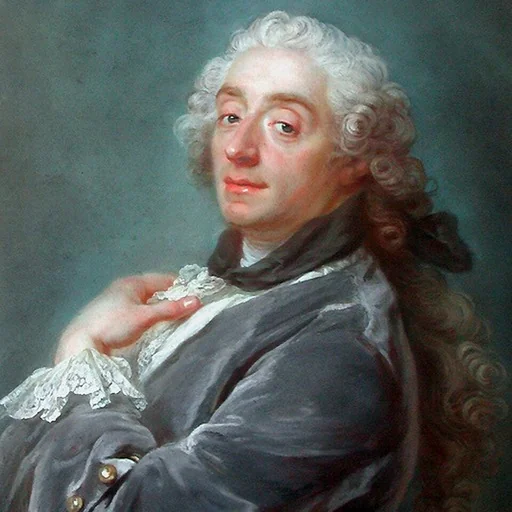
François Boucher was a French painter, draughtsman and etcher, who worked in the Rococo style.

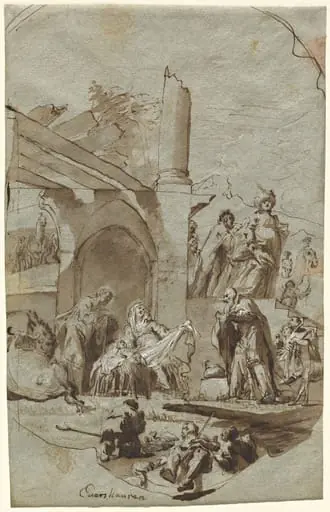 The Adoration of the Magi
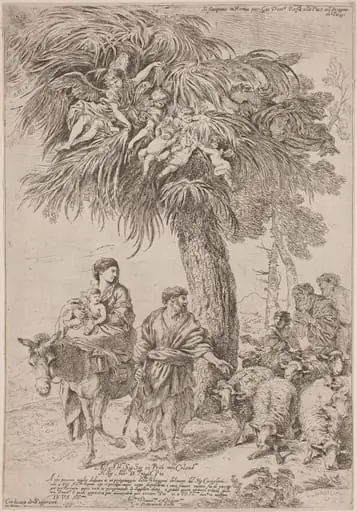 The Flight into Egypt
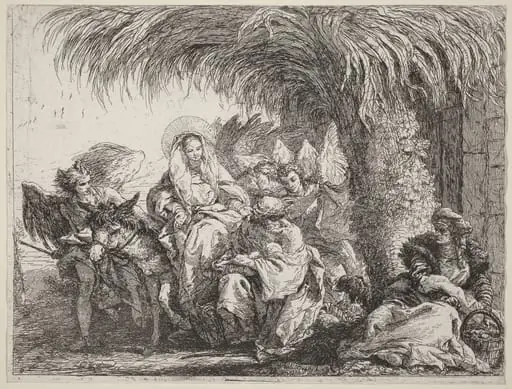 Joseph Kneels with the Child before Mary on the Donkey
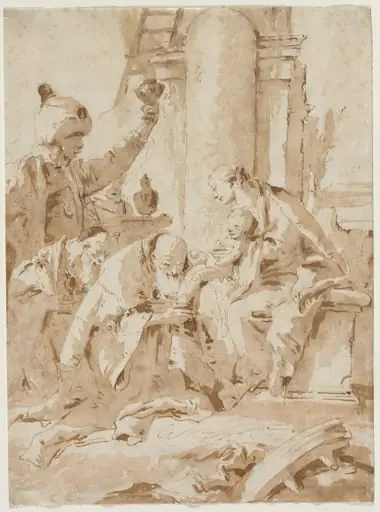 The Adoration of the Magi
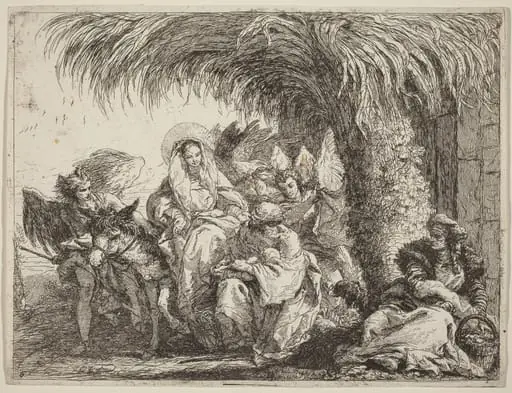 Joseph Kneels with the Child before Mary on the Donkey
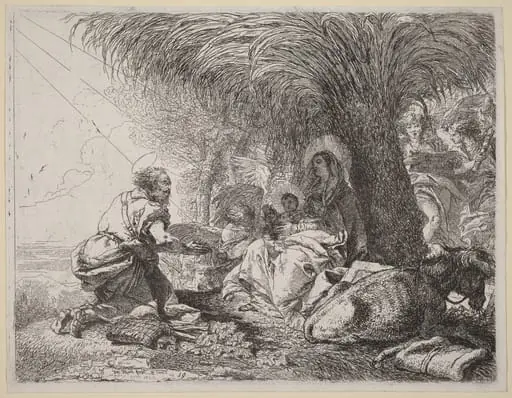 The Rest on the Flight with Joseph in Adoration
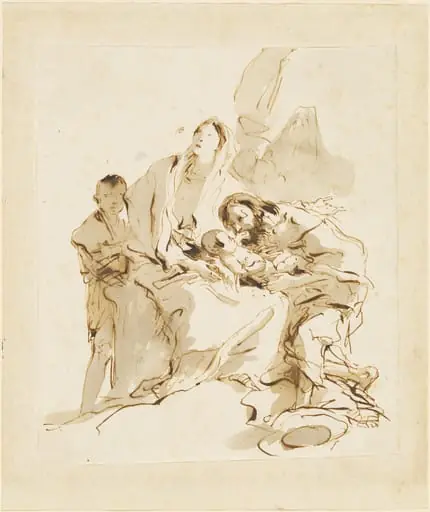 The Holy Family
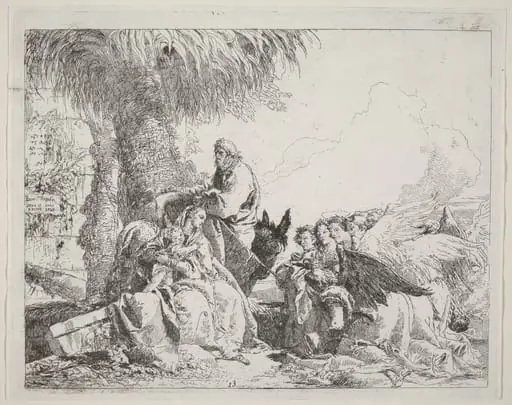 The Rest on the Flight, with Adoring Angels
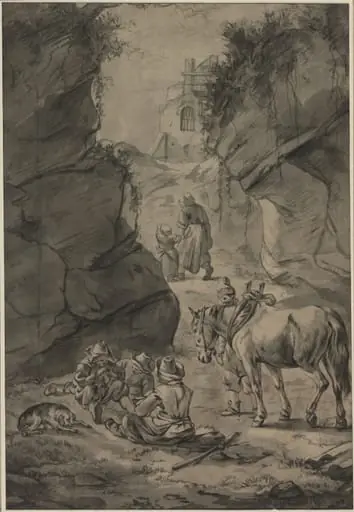 Peasants in a Rocky Landscape
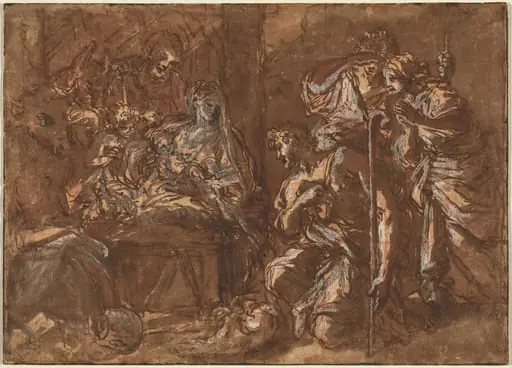 The Adoration of the Shepherds
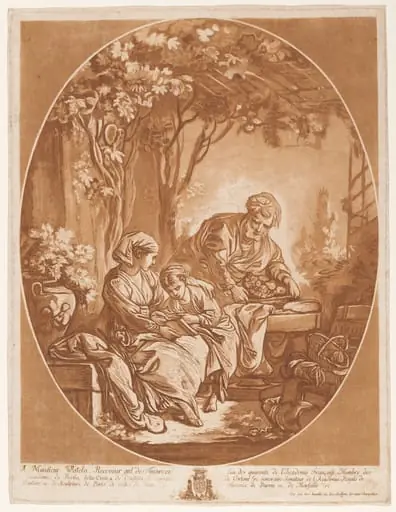 Education of the Virgin
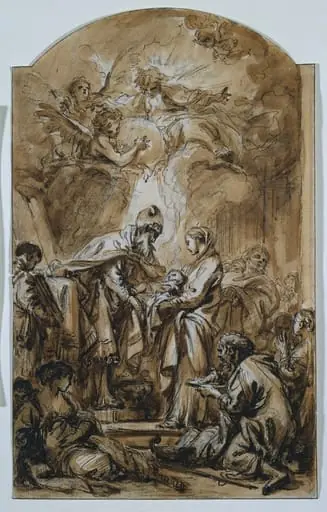 The Presentation in the Temple