Artwork
The Adoration of the Magi
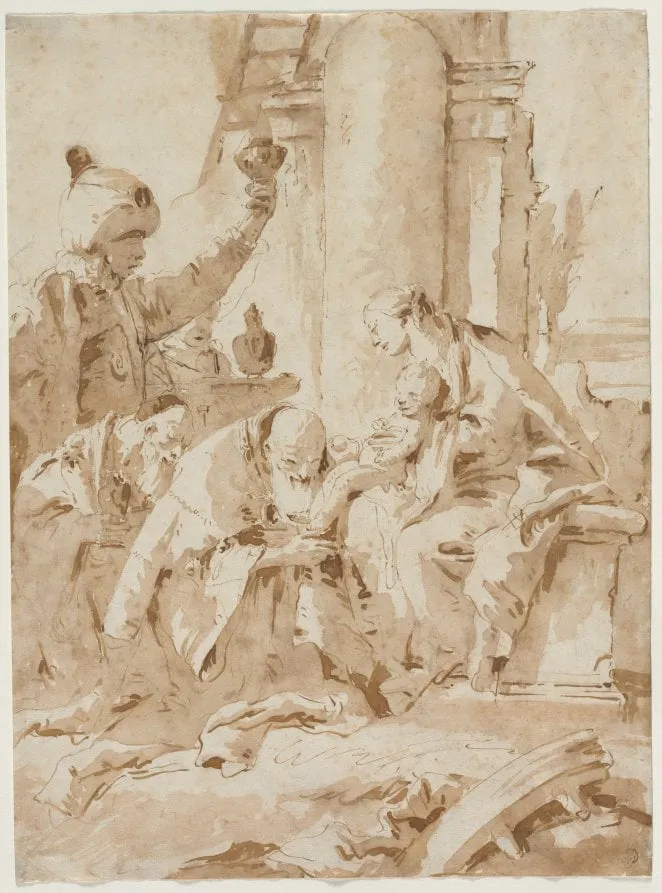
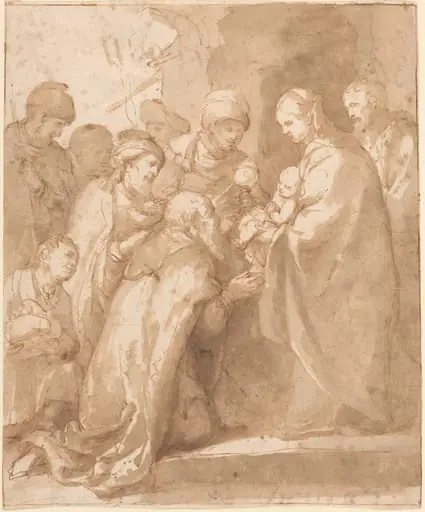
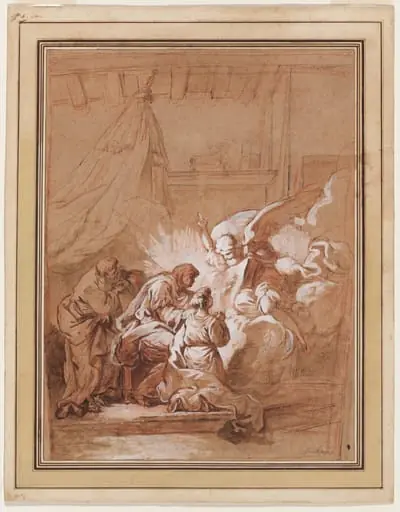
The Adoration of the Magi is a drawing by the Baroque artist Giovanni Battista Tiepolo. It dates from 1740 and is held in the collection of the Cleveland Museum of Art.
About this work
Overview
Giovanni Battista Tiepolo’s drawing depicts the biblical episode of the Magi’s adoration, with the Virgin Mary on a low platform extending the infant Christ toward three visitors. Two bearded, white‑skinned magi kneel, while a third, darker‑skinned figure in a turban stands behind them, creating a varied grouping within the composition.
Subject & Meaning
The scene follows Matthew’s account of the three wise men presenting gold, frankincense and myrrh to the newborn. Tiepolo emphasizes the act of offering by positioning the child as the focal point, while the differing postures of the magi suggest both reverence and a hierarchical arrangement among the visitors.
Technique & Style
The work began with a black chalk underdrawing, visible in the folds of the robes, then was developed with brown ink applied by quill and brush, and finished with a brown wash. Tiepolo’s handling of light and shadow produces strong contrasts, allowing the white of the paper to glow and suggesting a luminous atmosphere reminiscent of sfumato.
History & Provenance
The drawing is linked to Tiepolo’s 1965.18 etching of the same subject, which shares the motif of a broken wheel in the foreground—a symbol traditionally associated with Saint Catherine. This connection indicates the drawing may have served as a preparatory study for the later print.
Context
Tiepolo departs from conventional static compositions of the Adoration by employing an asymmetrical layout and a more spontaneous, sketch‑like rendering. The inclusion of a dark‑skinned magus illuminated equally with the others reflects a progressive approach to representing diverse figures in 18th‑century religious art.
Artist & collection

Artist
Giovanni Battista Tiepolo, also known as Giambattista Tiepolo, was an Italian painter and printmaker from the Republic of Venice who painted in the Rococo style, considered an important member of the 18th-century Venetian school.

 The Adoration of the Magi
 The Adoration of the Magi
 The Adoration of the Magi
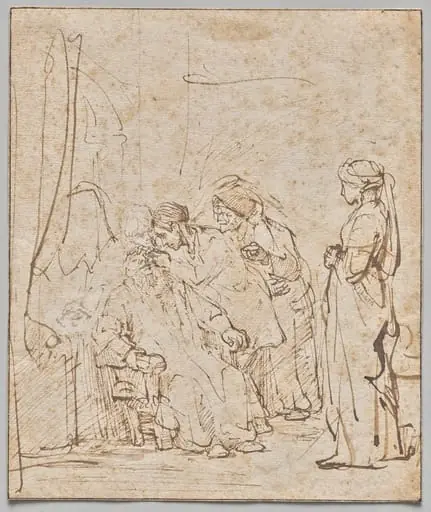 Tobias Healing His Father's Blindness
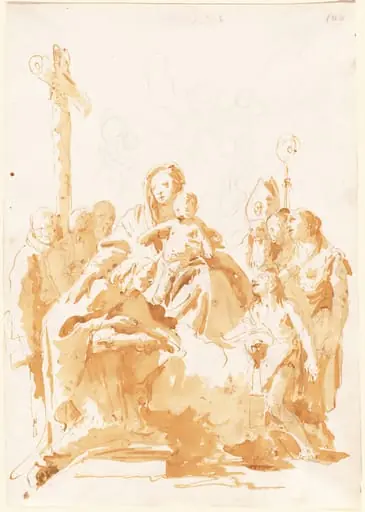 The Virgin and Child Adored by Bishops, Monks, and Women
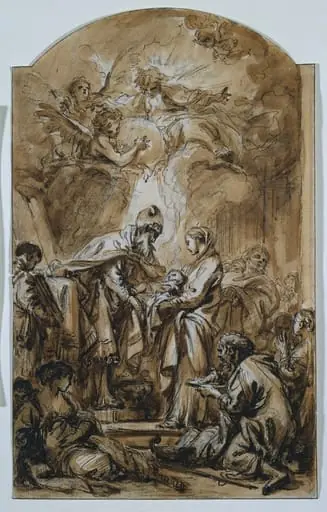 The Presentation in the Temple
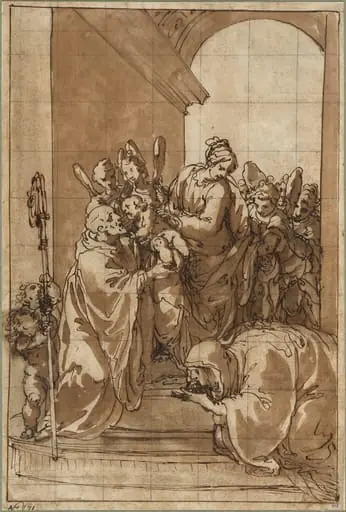 Madonna and Child with Angels, Saint Benedict, and Saint Scholastica
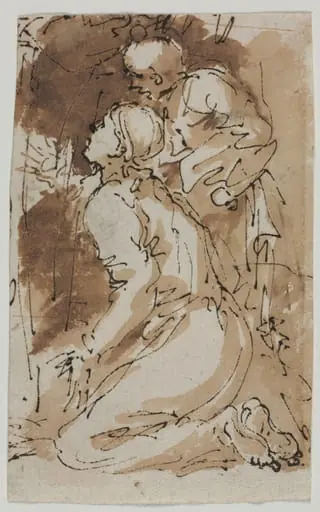 Figure Studies
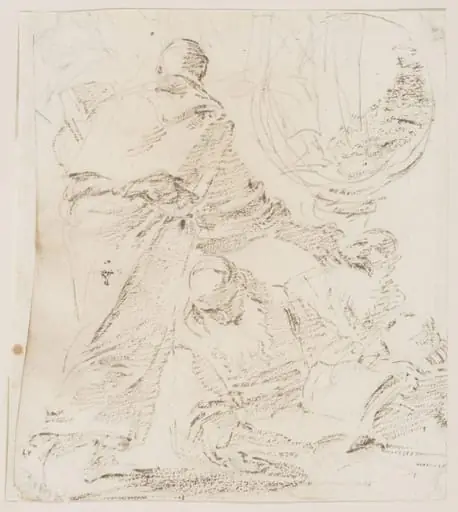 Recto: Three monks; verso: Slight sketch of a woman reclining, above: The lower portion of another figure
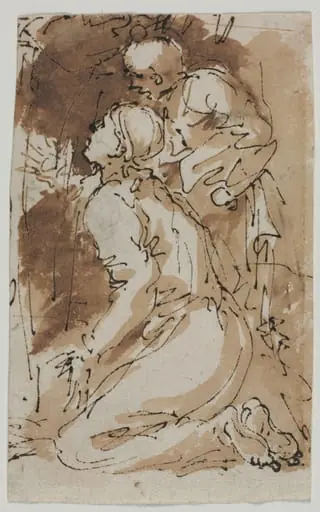 Figure Studies (recto)
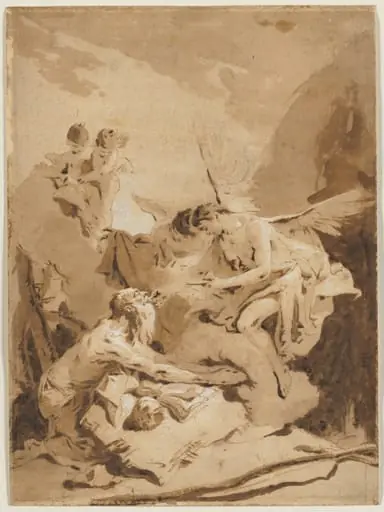 The Last Communion of St. Jerome
 The Education of the Virgin