Artwork
Portret van Joséphine Victoire Meslier-Duvey
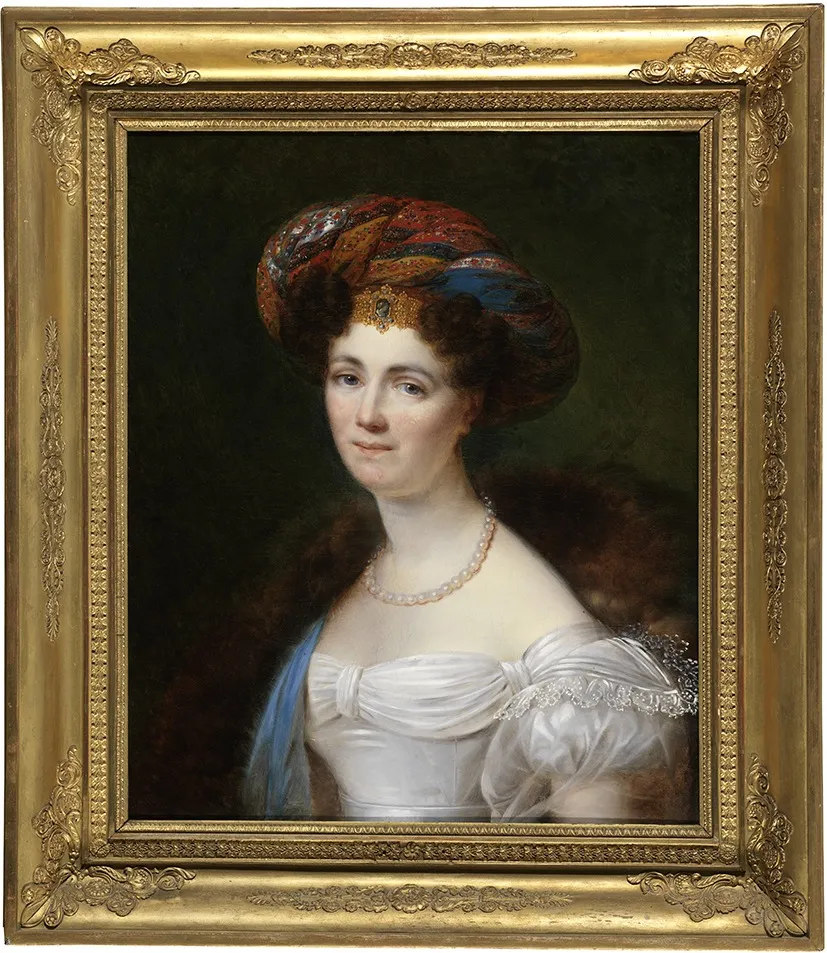
Portret van Joséphine Victoire Meslier-Duvey is an oil painting by François Kinson. It dates from 1830 and is held in the collection of the Groeningemuseum.
About this work
She wears a white dress with a blue sash and a pearl necklace, and her hair is styled in an updo with a colorful headpiece.
This painting is a portrait of a woman, possibly from the 19th century. She wears a white dress with a blue sash and a pearl necklace, and her hair is styled in an updo with a colorful headpiece. The background is dark, which makes the subject stand out.
The woman's expression is neutral, and she looks straight ahead. Her attire suggests she may be a member of the upper class or nobility. The painting's style is realistic, with attention to detail in the subject's clothing and accessories.
The artist's use of chiaroscuro creates a sense of depth and volume in the painting. To learn more about this technique, look up chiaroscuro.
Overview
Painted in 1830 by François-Joseph Kinson, this oil portrait captures Joséphine Victoire Meslier-Duvey, a woman of probable aristocratic standing. Kinson, a Belgian artist trained in Bruges and active in Brussels and Paris, specialized in refined depictions of elite women. The work is part of the Groeningemuseum’s collection, reflecting his established reputation in early 19th-century portraiture.
Subject & Meaning
The sitter, Joséphine Victoire Meslier-Duvey, is portrayed with composed stillness, gazing directly at the viewer. Her attire—a white dress, blue sash, and pearl jewelry—signals social status and adherence to contemporary fashion. The absence of narrative elements or symbolic objects focuses attention on her presence, emphasizing dignity and refinement rather than personal identity or achievement.
Technique & Style
Kinson employs a restrained realism with careful attention to fabric texture and metallic sheen in the jewelry. Chiaroscuro modeling defines the contours of the face and dress, lending three-dimensionality against a dark, indistinct background. The updo and ornamental headpiece are rendered with precision, reinforcing the sitter’s cultivated appearance without overt theatricality.
History & Provenance
Kinson, who served as court painter to Jérôme Bonaparte, built his career in Paris before returning to the Low Countries. The portrait’s creation in 1830 places it in the post-Napoleonic era, when elite portraiture remained a marker of social continuity. It entered the Groeningemuseum’s holdings through documented acquisition, preserving its link to regional artistic practice of the period.
Context
In the 1830s, Belgian and French portraiture continued to reflect aristocratic ideals even as political upheavals reshaped society. Kinson’s work aligns with a tradition of elegant, subdued depictions favored by the upper classes, contrasting with emerging Romantic or nationalist themes. His style bridges late Neoclassical formality and early Realism, capturing a moment of transition in visual culture.
Legacy
Though Kinson is not widely known today, this portrait exemplifies the quiet persistence of elite portraiture in post-revolutionary Europe. Its preservation in the Groeningemuseum underscores its value as a record of regional artistic practice and social aesthetics, offering insight into how status was visually negotiated in early 19th-century Belgium.
Artist & collection
Artist
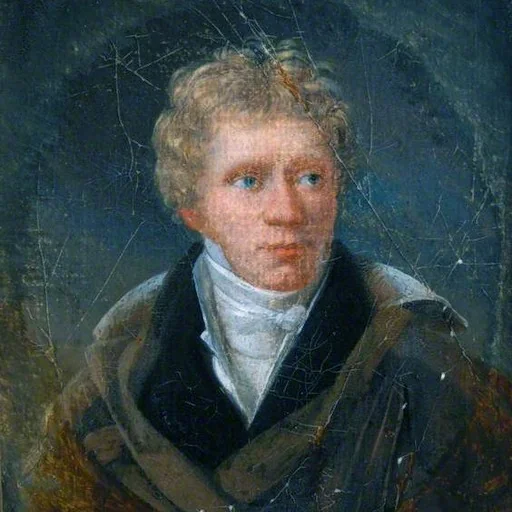
François-Joseph Kinson (Dutch: Franciscus Josephus Kinsoen) (29 January 1770 in Bruges - 18 October 1839 in Bruges), was a Belgian painter.

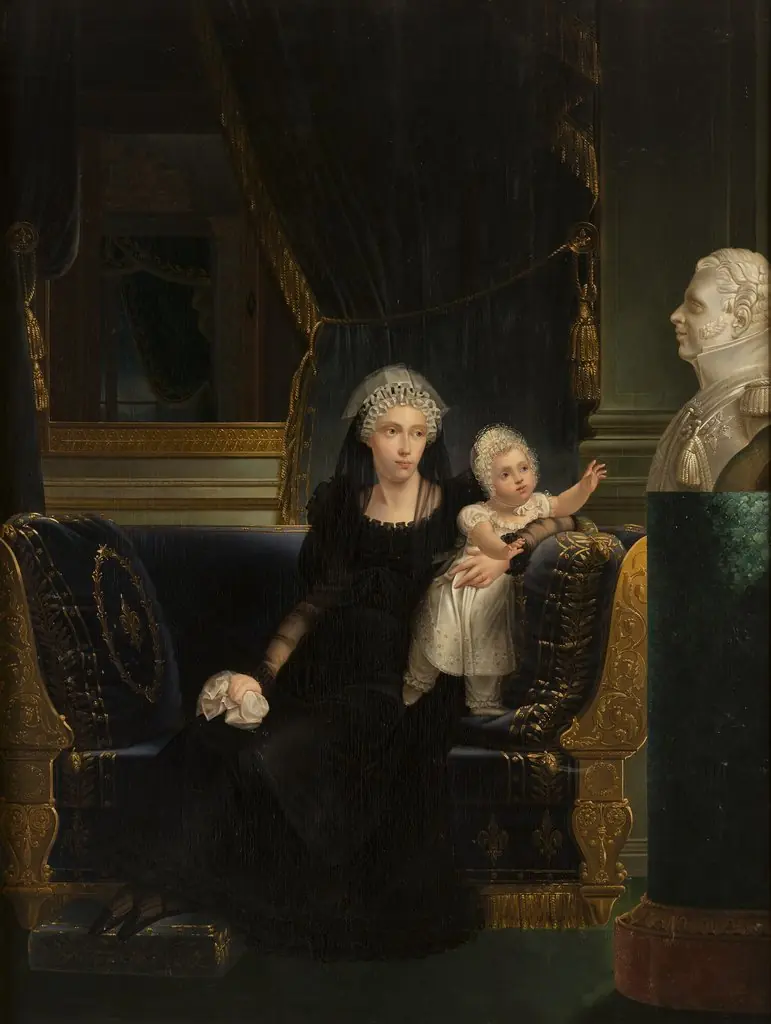 Marie-Caroline de Bourbon-Sicile, Duchess of Berry and her daughter Louise-Marie-Thérèse
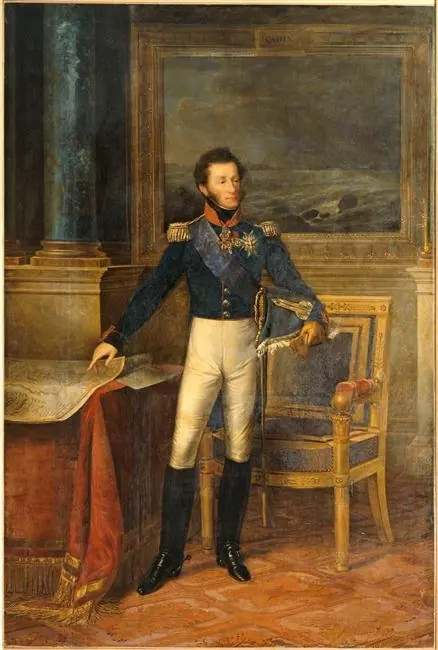 Louis-Antoine d'Artois, Duke of Angoulême (1775-1844)
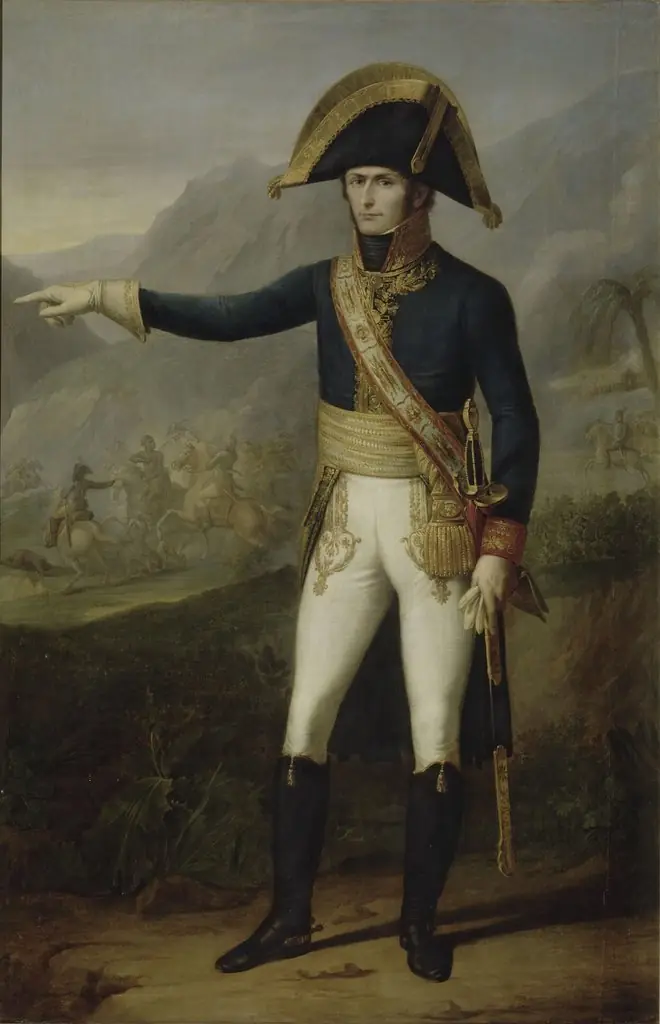 Charles-Emmanuel Leclerc, general-in-chief of the army of Saint-Domingue (1772-1802)
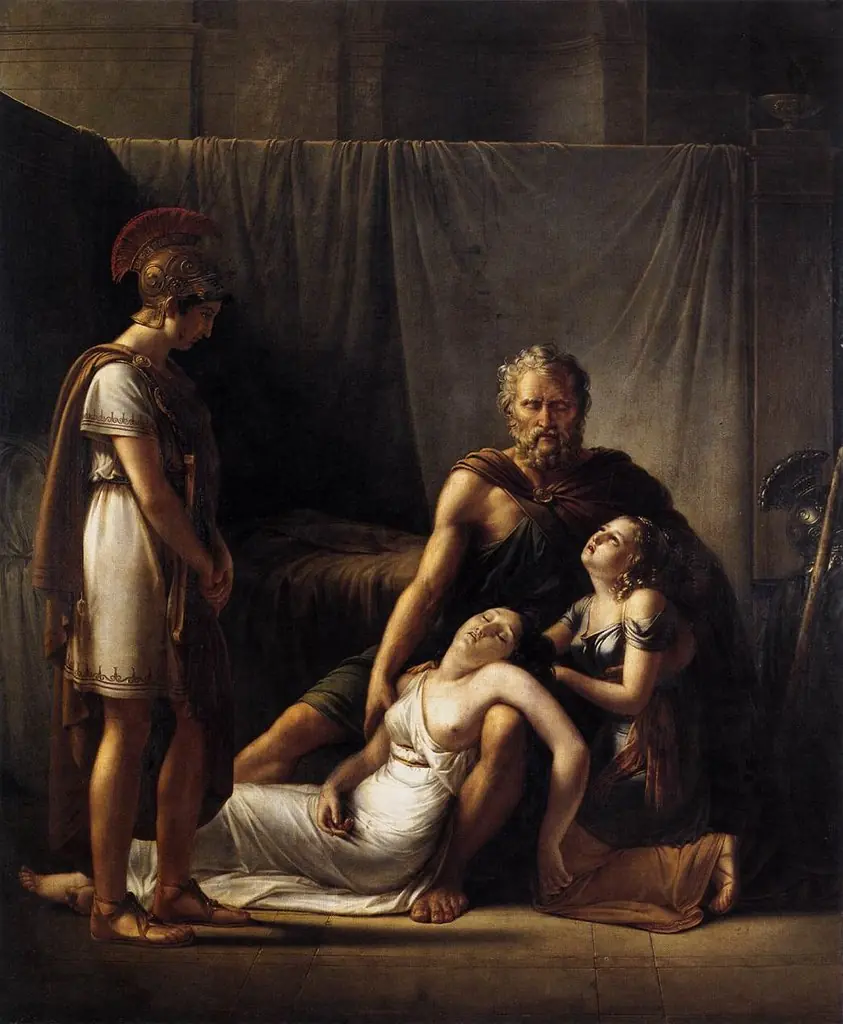 The Death of Belisarius' Wife
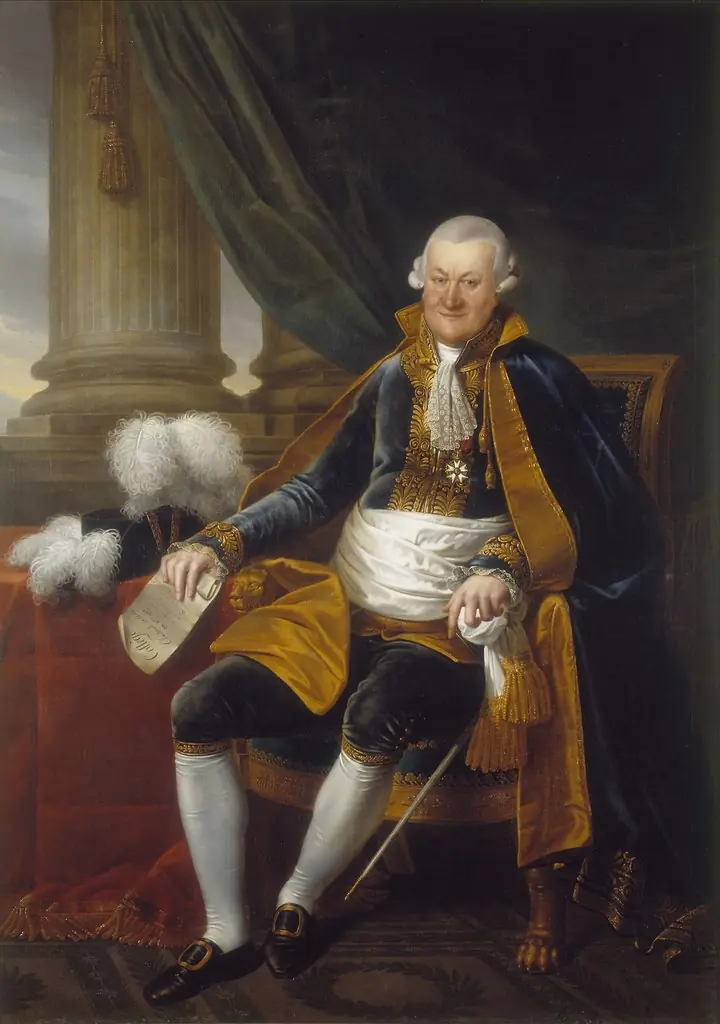 Portrait of François Joseph de Viry
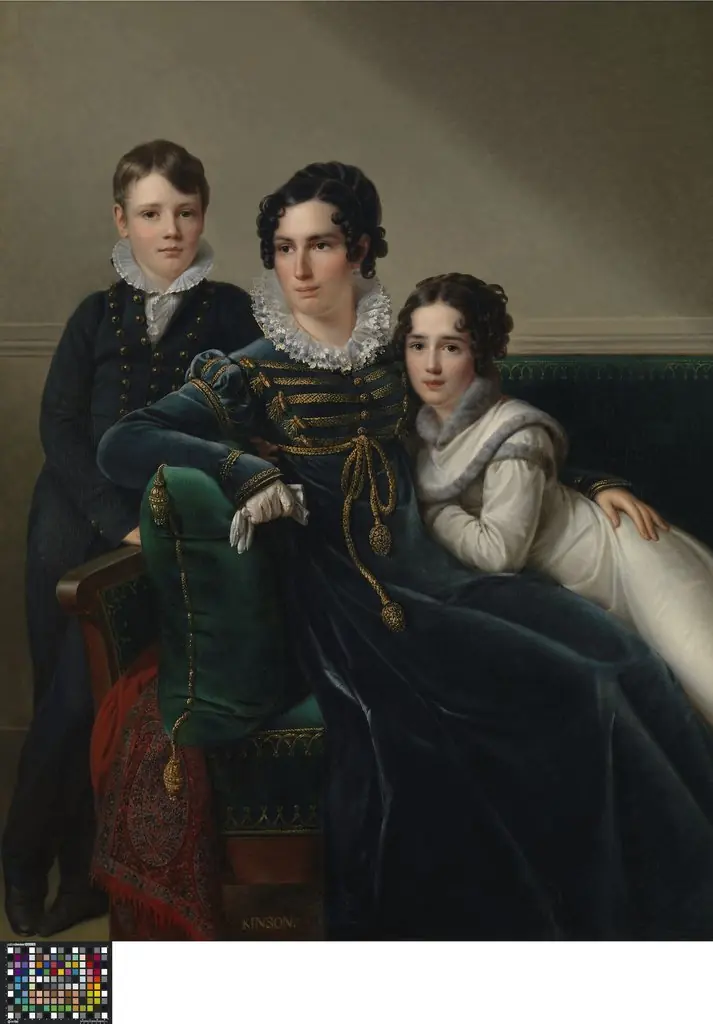 Portret van een vrouw met haar twee kinderen
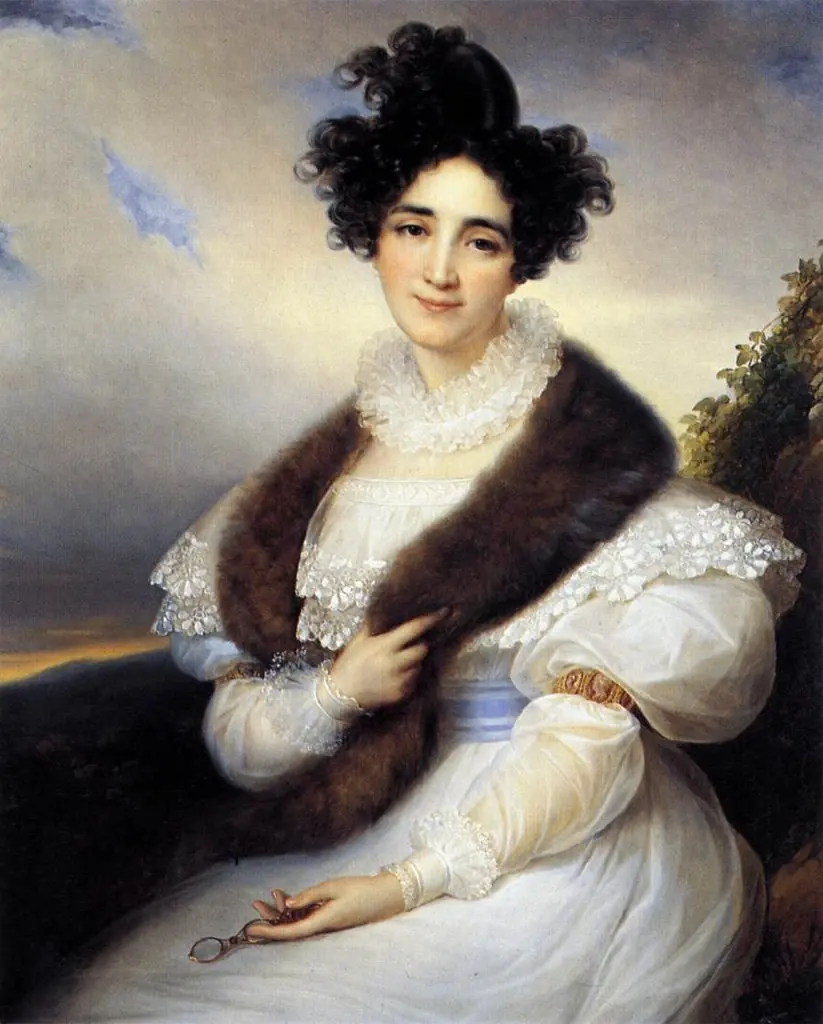 Marie-Joséphine Lafont-Porcher
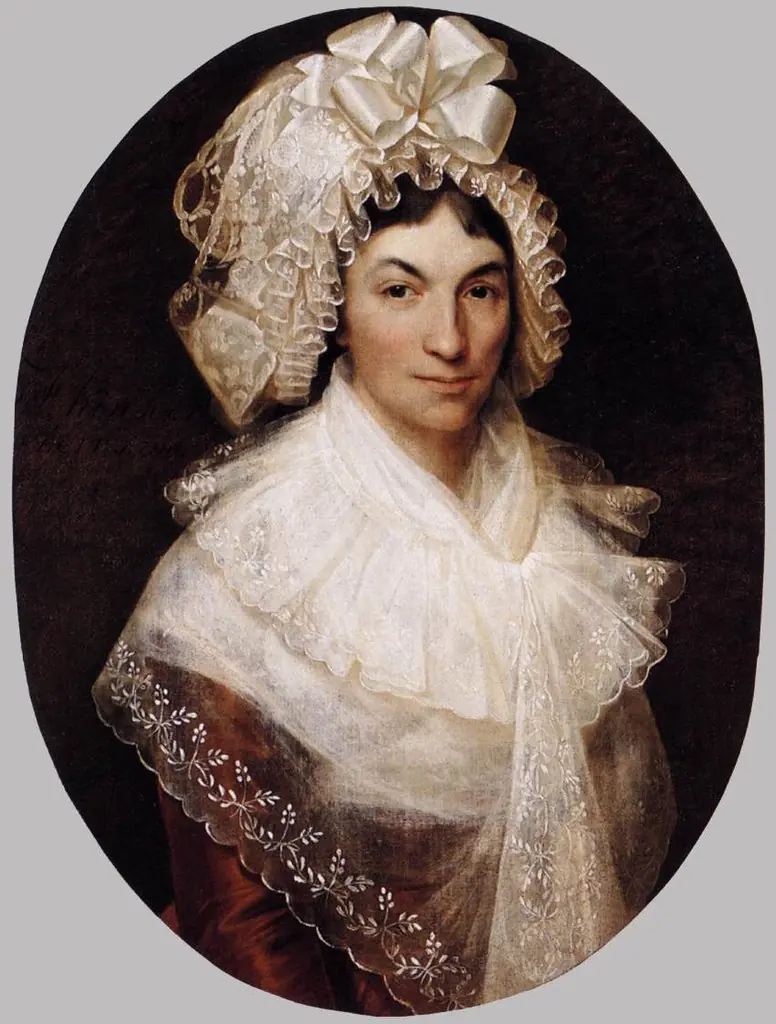 Portret van Jeanne Bauwens-van Peteghem
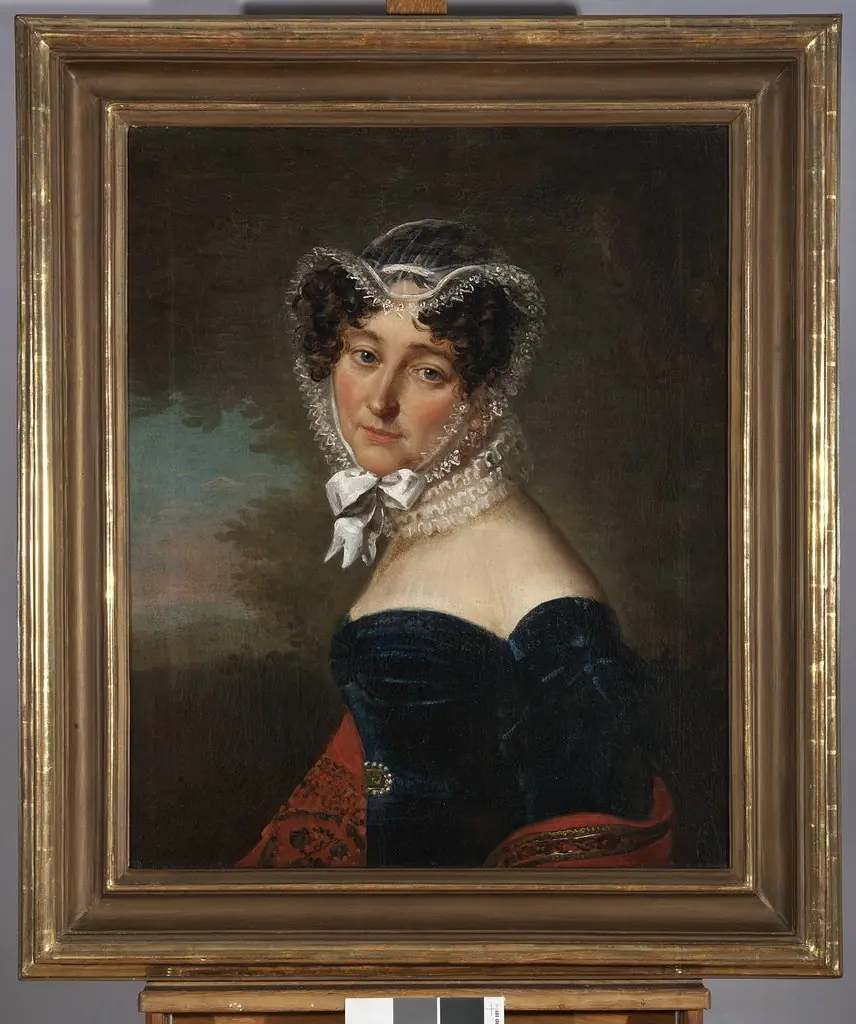 Portrait of Józefa Węgleńska née Tyrowska
 Mathilde Theresia von Irgens-Bergh, née Holsten, the Wife of Mathias Friis von Irgens-Bergh
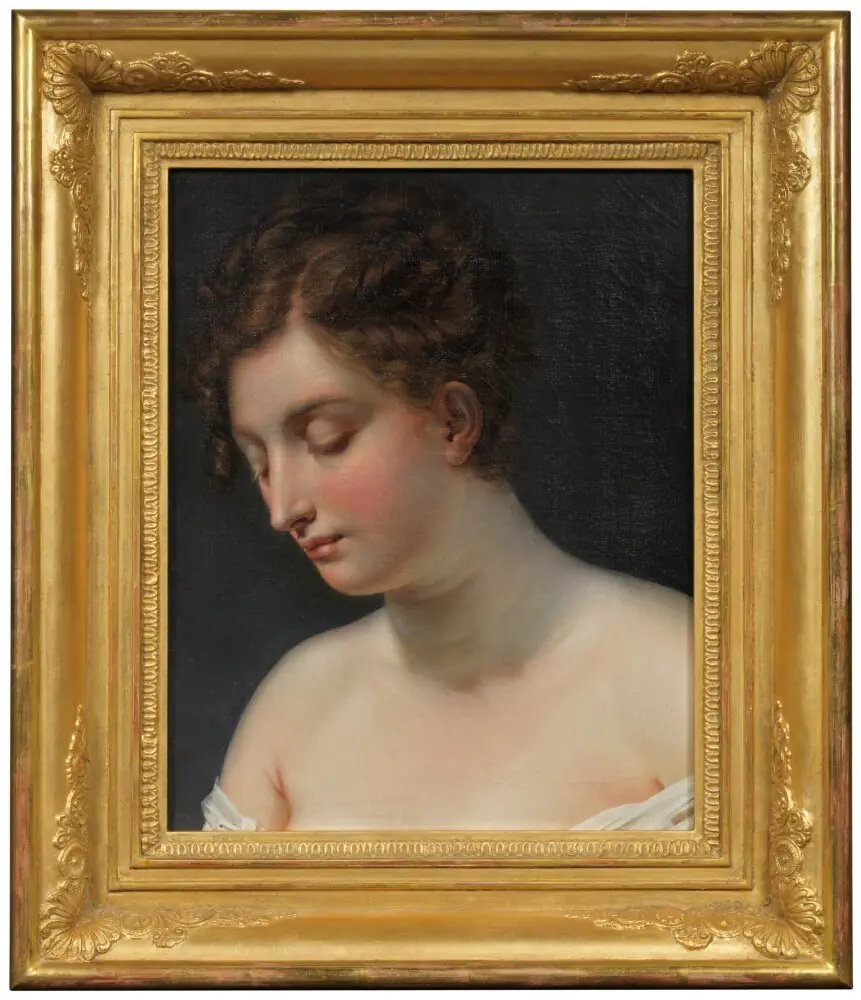 Galathea. Study
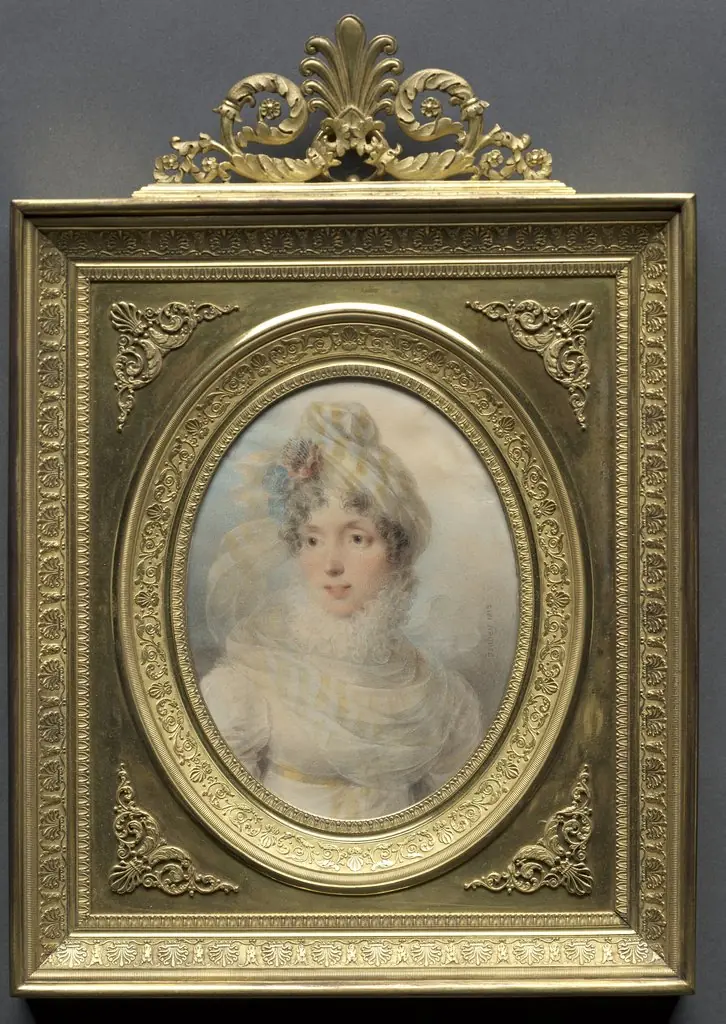 Portrait of a Woman in a White Dress
 Portrait of a Woman in a White Dress
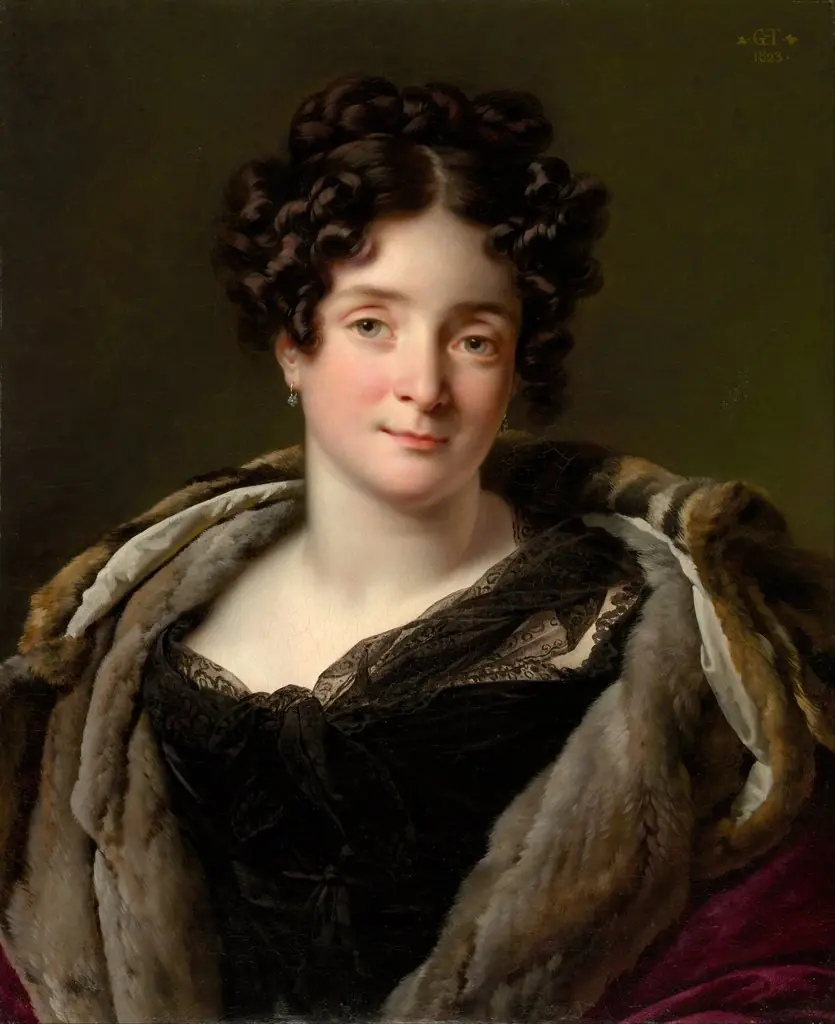 Madame Jacques-Louis-Étienne Reizet (Colette-Désirée-Thérèse Godefroy, 1782–1850)
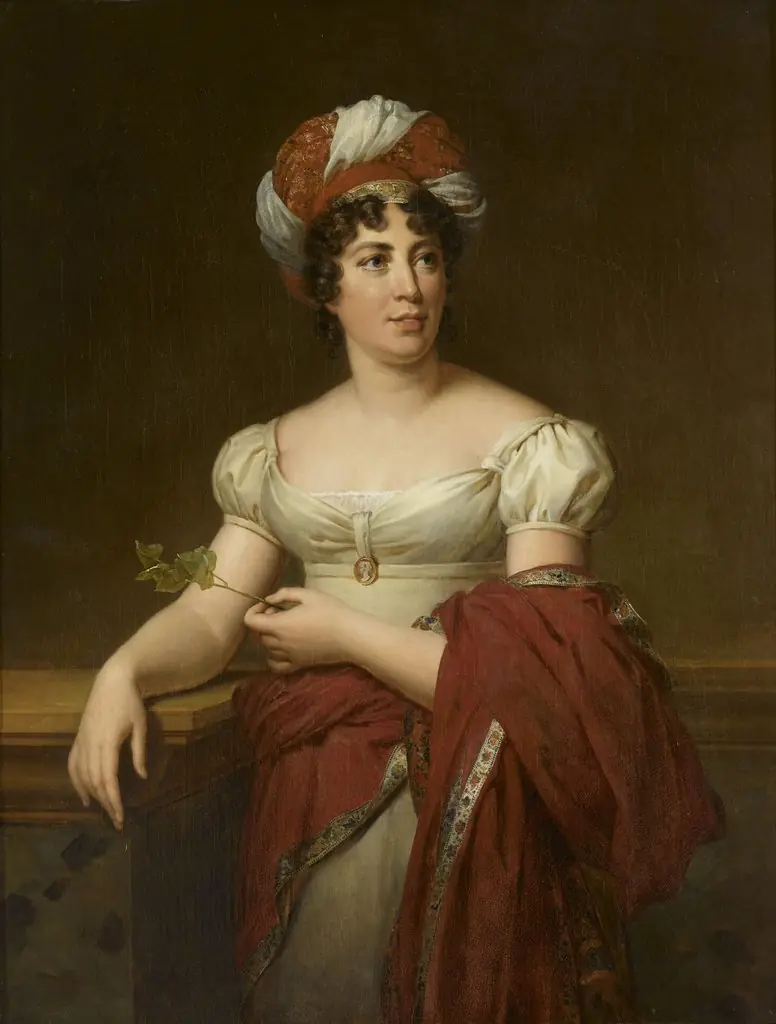 Portrait of Mme de Staël
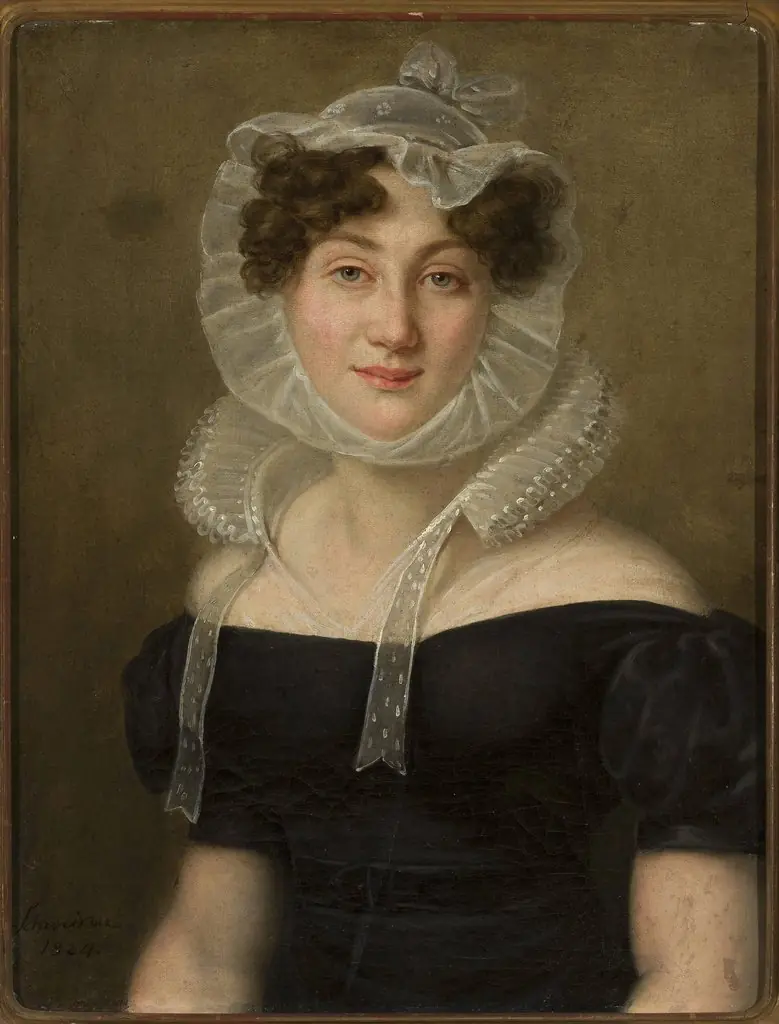 Portrait of a lady in a cap
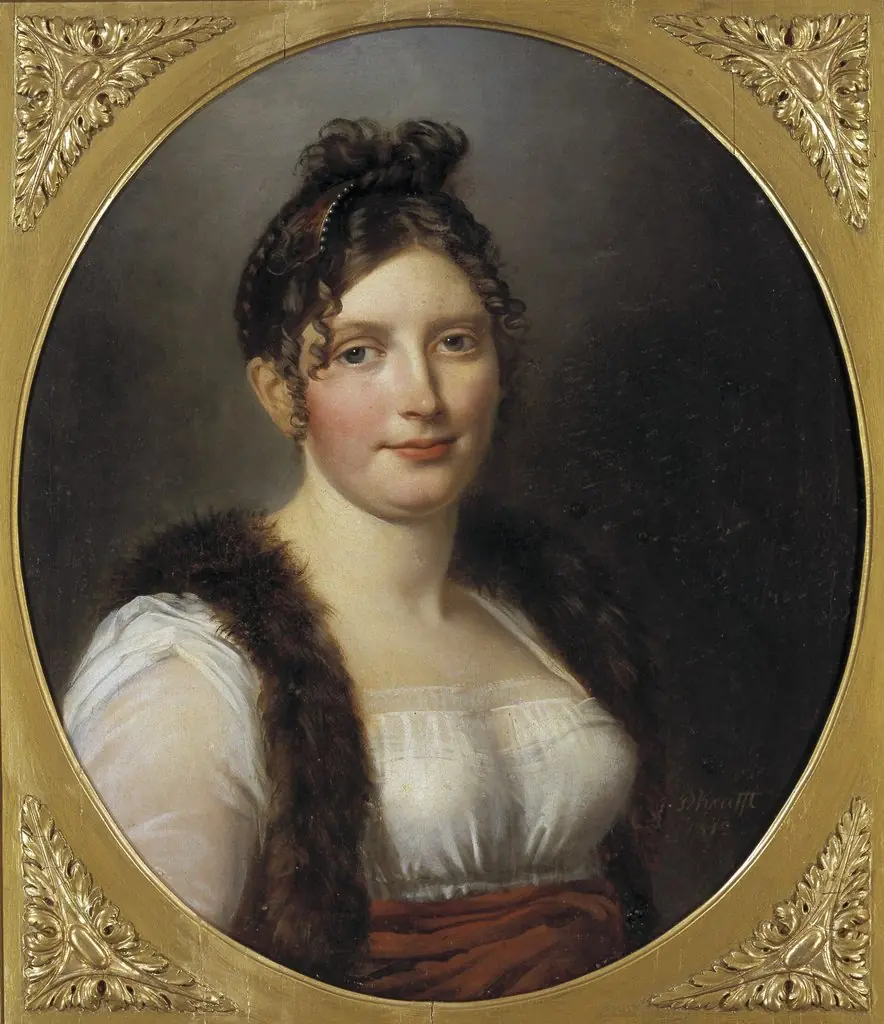 Catharina Charlotta Bågh (1777-1816), gift med friherre Pehr Erik Skjöldebrand
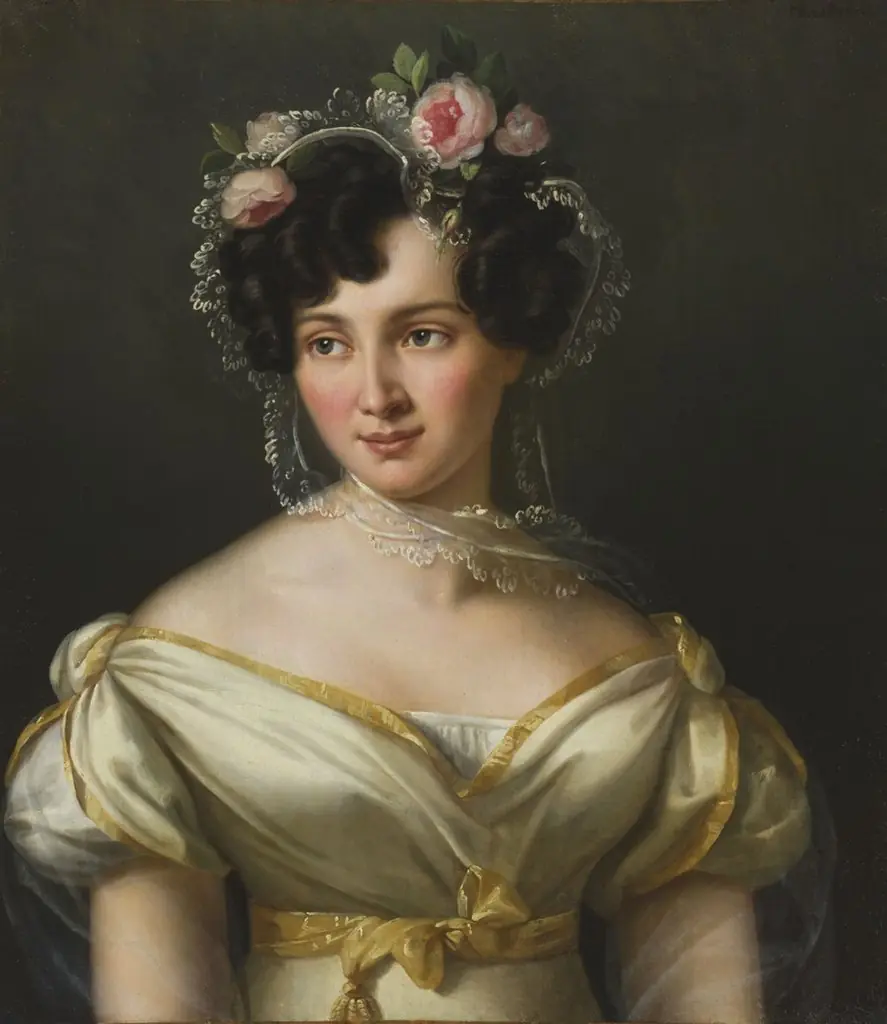 Portrait of Princess Anna Nikolayevna
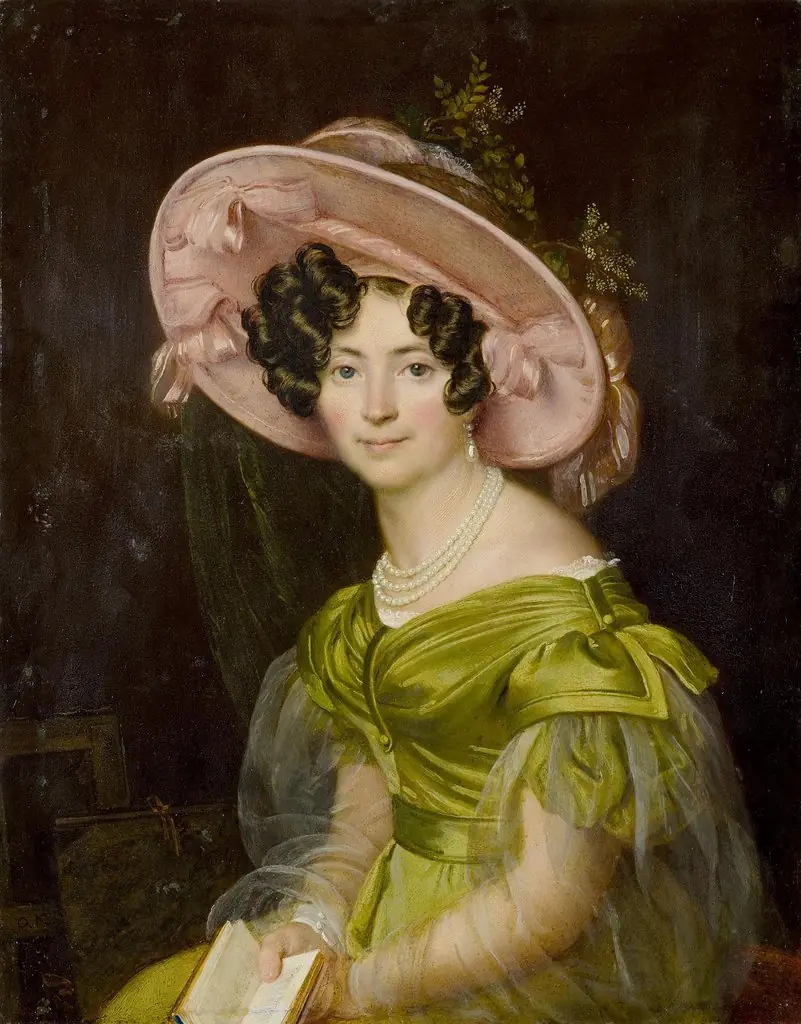 Portrait of Zinaida Volkonskaya
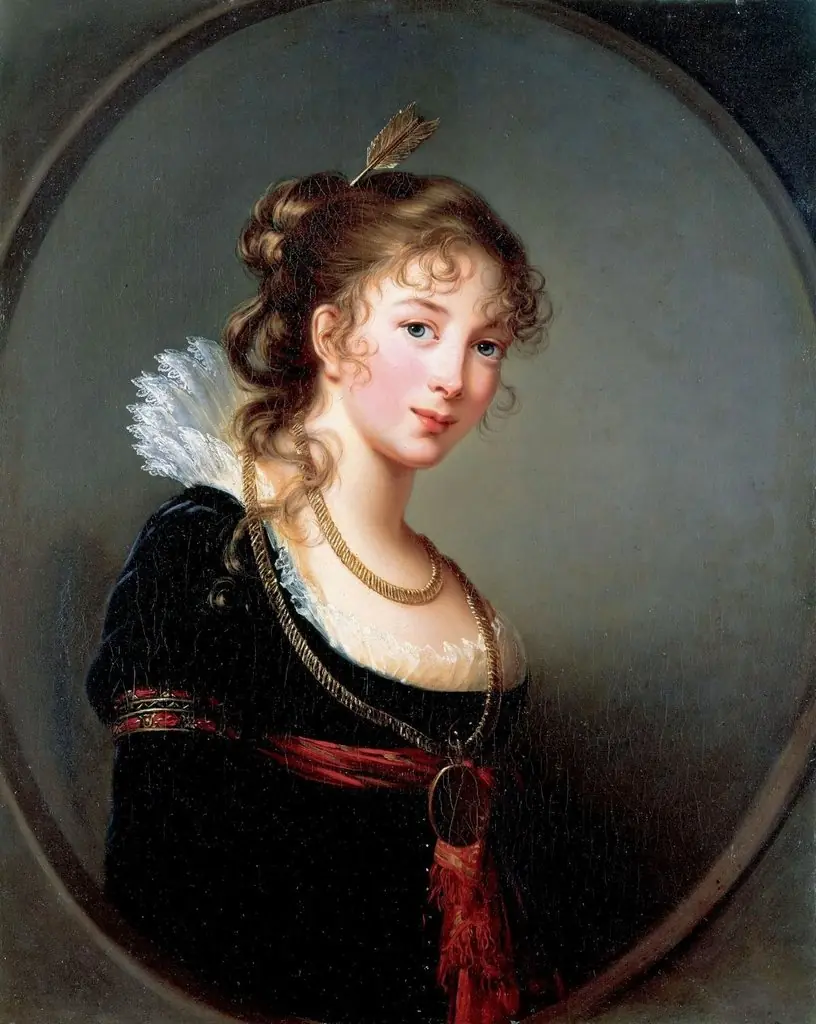 Porträt der Luise von Preußen (1770-1836), Ehefrau von Anton Radziwiłł (1775-1833)