Artwork
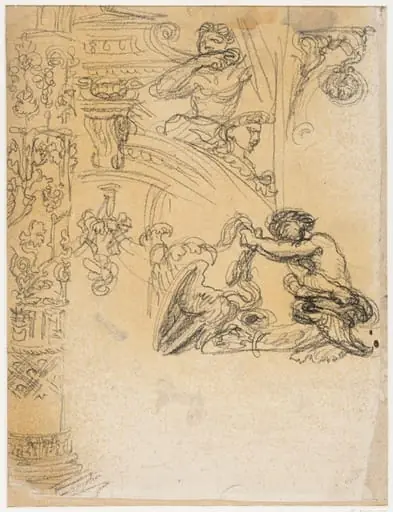
Studies of modelli for sculptural projects by Giambologna, on the front the Apennine and detail from the base of the fountain of Samson and on the back a fountain, possibly with the figure of Neptune
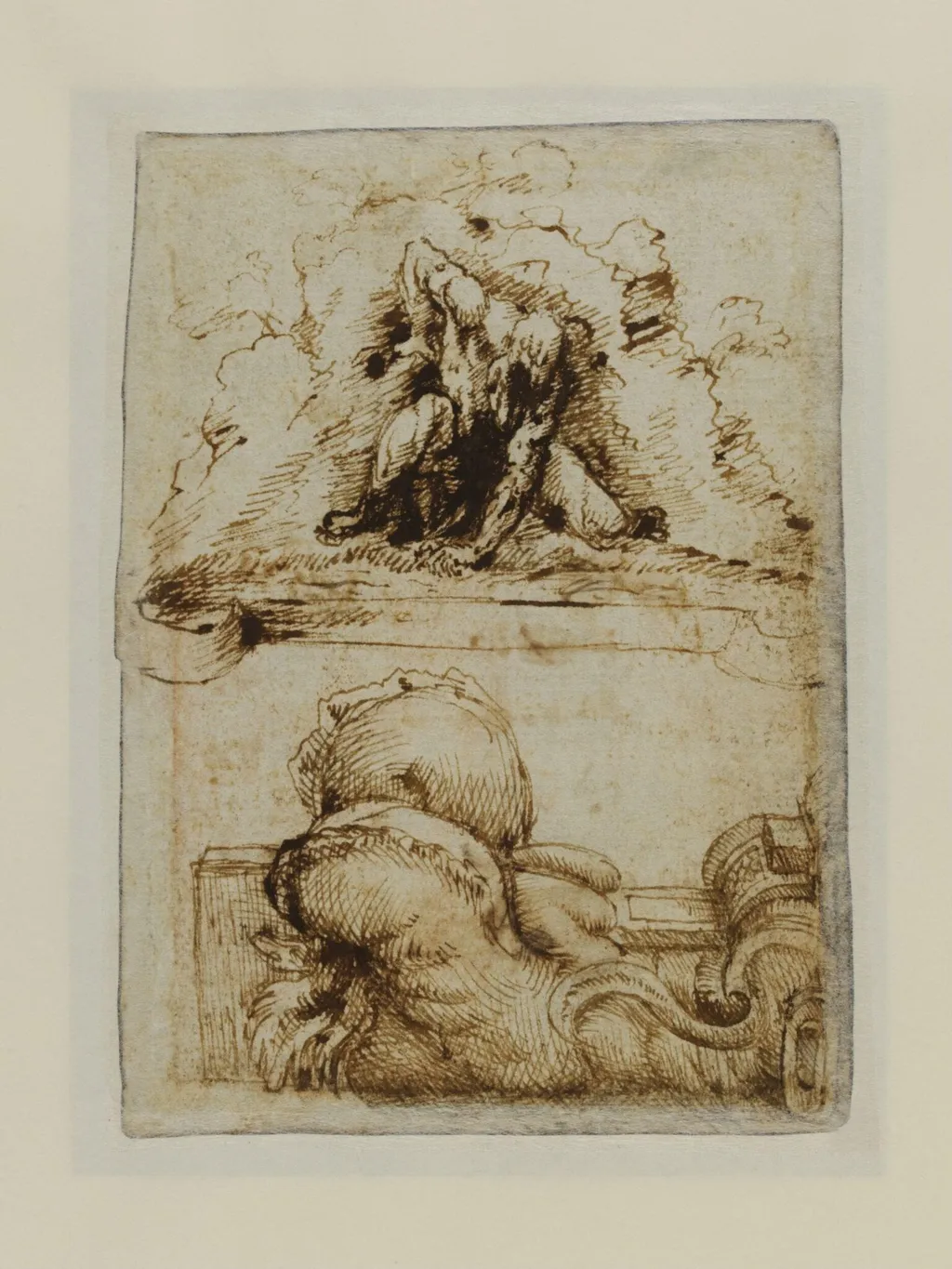
Studies of modelli for sculptural projects by Giambologna, on the front the Apennine and detail from the base of the fountain of Samson and on the back a fountain, possibly with the figure of Neptune is a drawing by the Renaissance artist Pietro Francavilla. It dates from 1591 and is held in the collection of the Victoria and Albert Museum.
About this work
Overview
The front side contains two studies: an upper sketch of the Apennine fountain and a lower rendering of a detail from the base of Giambologna’s Samson fountain.
The sheet comprises a double‑sided drawing created in the late 16th century as part of the workshop of the Flemish‑born sculptor Giambologna, with contributions from his assistant Pietro Francavilla. The front side contains two studies: an upper sketch of the Apennine fountain and a lower rendering of a detail from the base of Giambologna’s Samson fountain. The reverse presents a design for a fountain that may have featured Neptune holding a shell.
Subject & Meaning
The front studies record architectural and sculptural elements intended for large public fountains, reflecting the period’s interest in integrating mythological themes with urban waterworks. The Apennine fountain evokes a rustic landscape, while the Samson base detail emphasizes heroic narrative. The reverse composition, with a possible Neptune figure, underscores the classical association of the sea god with water supply and civic display.
Technique & Style
Executed in pen with cross‑hatching and stippling, the drawings convey volume through layered lines that model stone and foliage. The handling is characteristic of late Renaissance workshop practice, balancing precise architectural outlines with freer, gestural marks that suggest texture in rock, foliage, and drapery. The dual‑sided format allowed the artists to juxtapose multiple design ideas on a single sheet.
History & Provenance
The sheet likely functioned as an internal studio record of terracotta maquettes, some of which have not survived or were never realized in marble or bronze. Giambologna’s workshop used such drawings to communicate designs to patrons and collaborators. The drawing entered a private collection in the 19th century before being acquired by its present institution, where it serves as documentary evidence of the sculptor’s preparatory process.
Context
During the late Renaissance, Florentine and Tuscan patrons commissioned elaborate fountains to adorn public squares, merging engineering, sculpture, and urban planning. Giambologna’s projects, such as the Samson fountain in Bologna, exemplify this trend. The studies on this sheet illustrate the collaborative nature of large‑scale commissions, where master and assistant jointly refined compositional and structural details.
Artist & collection

 Untitled
 Venus Disarming Mars, Drapery Study (verso)
 Studies of a Male Torso
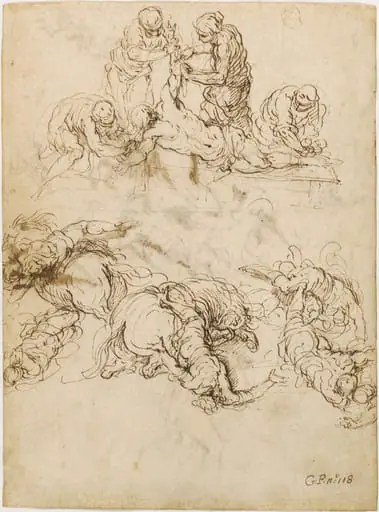 The Martyrdom of Saint Bartholomew; The Conversion of Saint Paul
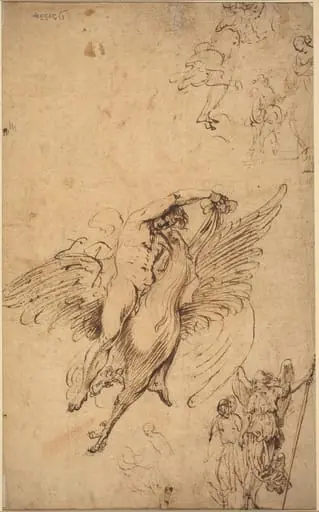 Ganymede
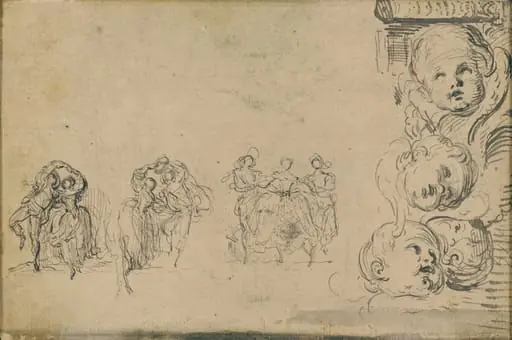 Sketches of Dancers and Heads of Putti
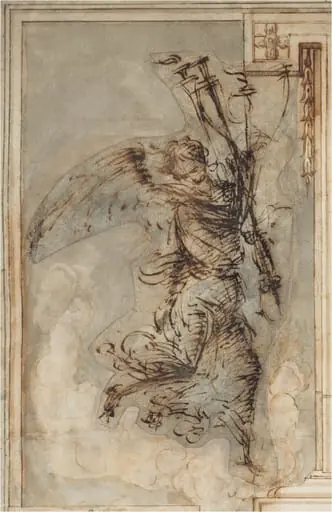 An Angel Carrying a Torch
 Studies by Alfred Stevens
![Saint Matthew and Saint Jerome [verso], by Correggio](https://artifactworldgallery.com/img/correggio--saint-matthew-and-saint-jerome-verso--233cd3c0f2701d8c-w320.webp) Saint Matthew and Saint Jerome [verso]
Saint Matthew and Saint Jerome [verso]![The Fall of the Rebel Angels [recto], by Parmigianino](https://artifactworldgallery.com/img/parmigianino--the-fall-of-the-rebel-angels-recto--e9b082b33c001c66-w320.webp) The Fall of the Rebel Angels [recto]
The Fall of the Rebel Angels [recto] Charity
 Studies of Hands (recto)