Artwork
Charity
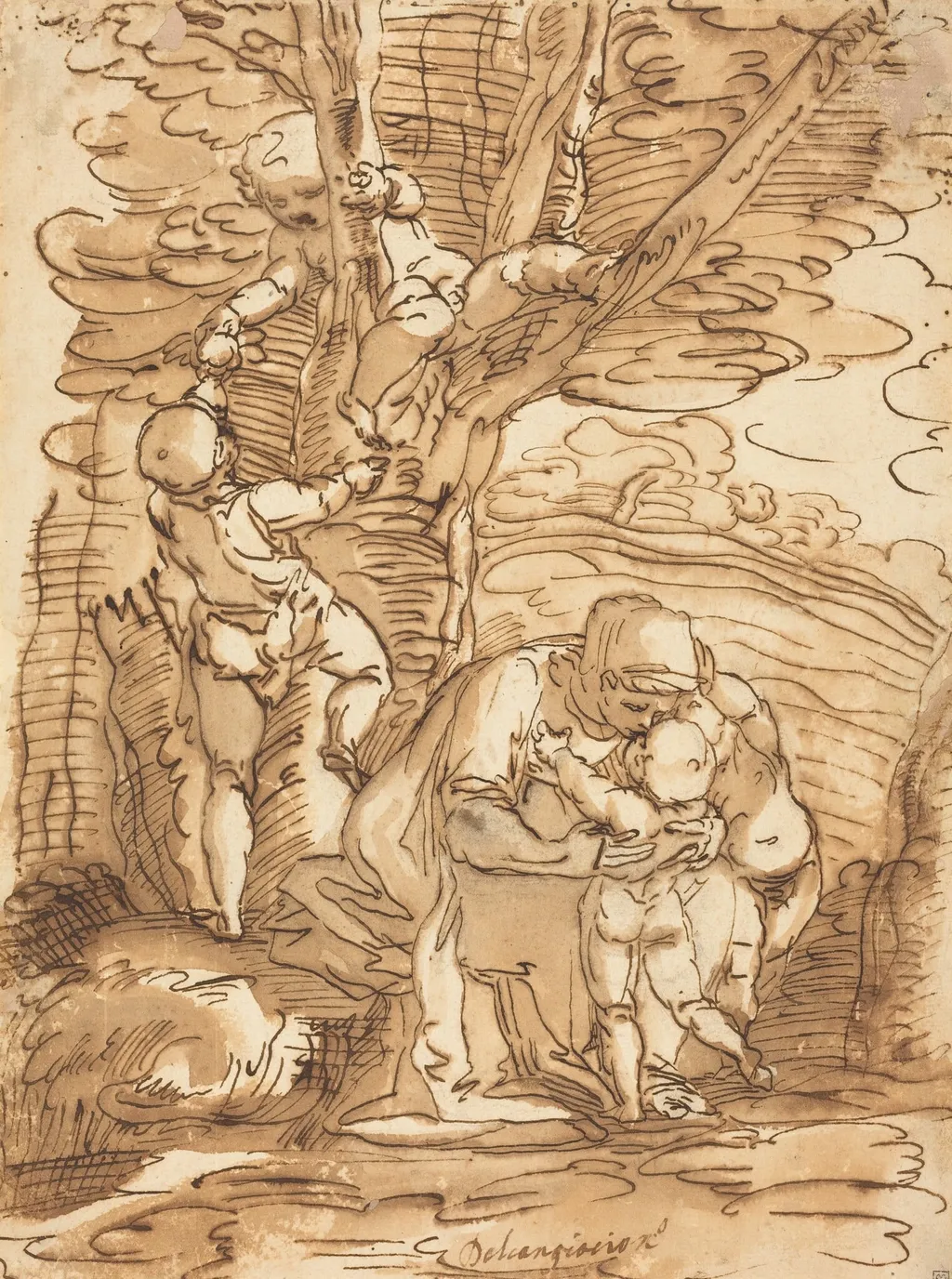
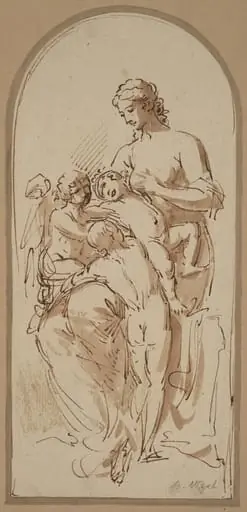
Charity is an ink drawing by the Renaissance artist Luca Cambiaso. It dates from 1556 and is held in the collection of the National Gallery of Art.
About this work
Overview
As a study in expressive form, it reflects Cambiaso’s interest in human anatomy and emotional presence through minimal yet precise means.
Created in 1556, this drawing by Luca Cambiaso depicts the virtue of Charity as a seated female figure, rendered in pen and brown ink with brown wash over black chalk. The composition is laid down on a support, preserving its delicate lines and tonal gradations. As a study in expressive form, it reflects Cambiaso’s interest in human anatomy and emotional presence through minimal yet precise means.
Subject & Meaning
The figure represents Charity, one of the theological virtues, shown in a contemplative pose with arms gently open or clasped, suggesting nurturing or giving. No attributes like children or vessels are present; the meaning is conveyed through posture and gesture alone. This abstraction aligns with Renaissance humanist ideals, emphasizing moral essence over narrative detail.
Technique & Style
Cambiaso employed black chalk for initial contours, refined with fluid pen lines and layered brown wash to model volume and shadow. The paper’s laid texture subtly enhances the tactile quality of the drawing. His approach is economical, avoiding ornamental excess, focusing instead on weight, balance, and the quiet dignity of the form.
History & Provenance
The drawing is documented as part of Cambiaso’s preparatory studies from the mid-1550s, likely made during his time in Genoa. It entered a private collection in the 18th century and was later acquired by a major European museum, where it remains in stable condition due to careful conservation practices.
Context
Produced during the height of Mannerism, the work responds to the era’s fascination with idealized human forms and moral allegory. Cambiaso, influenced by Michelangelo and Roman antiquity, sought to distill complex ideas into single, resonant figures. This drawing fits within a broader tradition of virtuous personifications in Northern Italian art.
Legacy
Though not widely exhibited, the drawing is recognized in scholarly literature as a refined example of Cambiaso’s graphic work. It illustrates his ability to convey spiritual themes with restraint, influencing later draftsmen interested in emotional clarity over theatricality.
Artist & collection


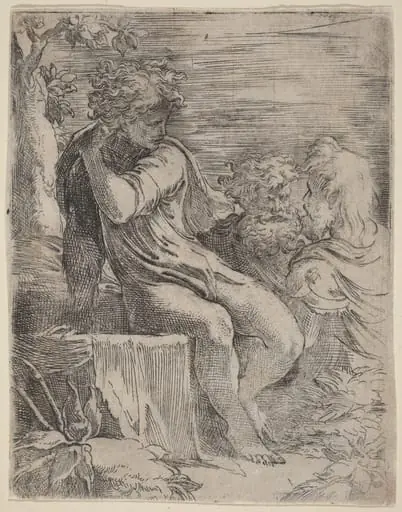 The Boy and Two Old Men
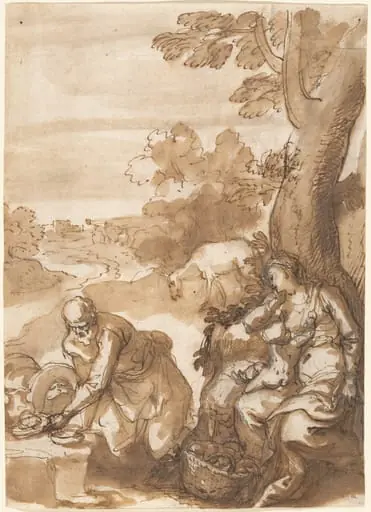 Rest on the Flight into Egypt
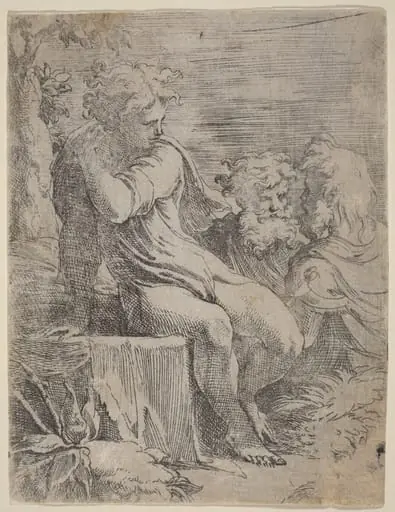 The Boy and Two Old Men
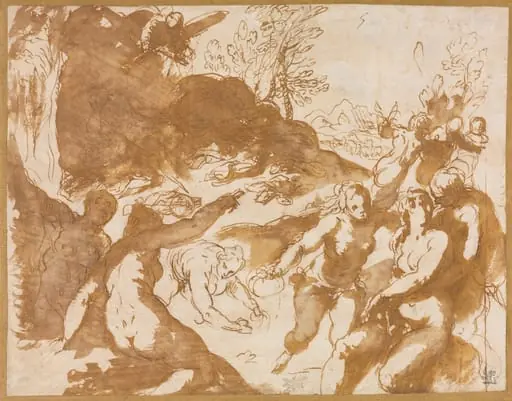 Apollo and the Muses Awakened by the Call of Fame
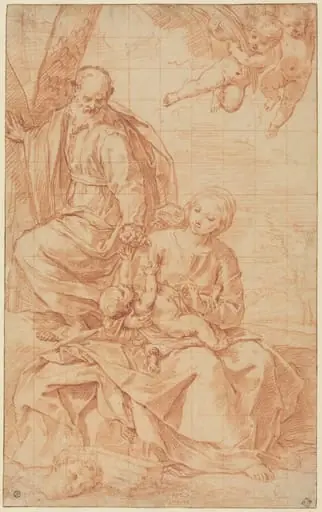 The Rest on the Flight into Egypt, or The Miracle of the Palm Tree
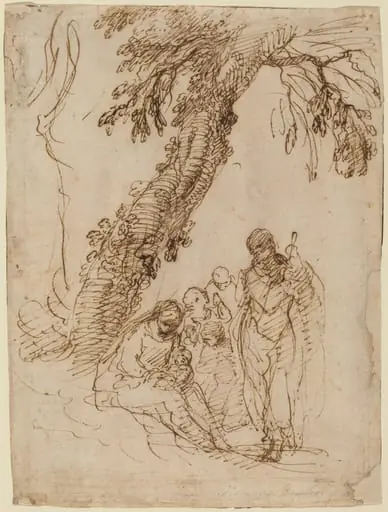 The Holy Family under a Tree
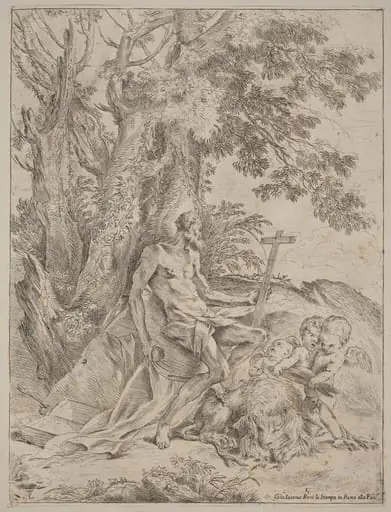 Saint Jerome
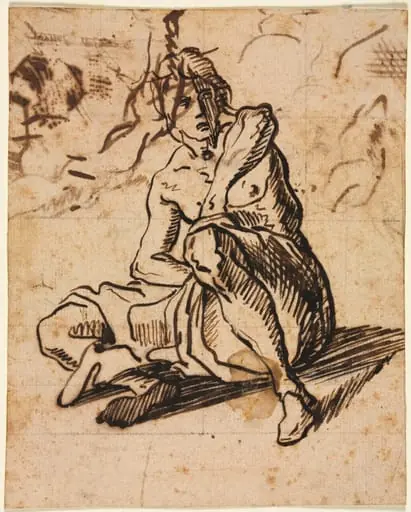 Seated Figure
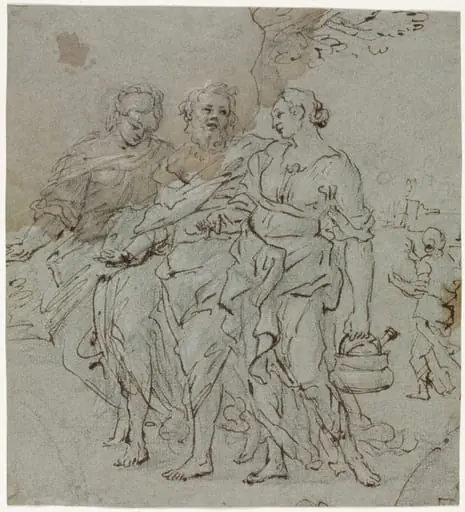 Lot and His Daughters (recto)
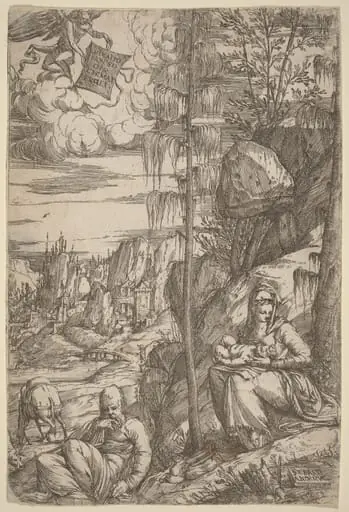 Landscape with the Rest on the Flight into Egypt
 Charity