Artwork
Diana and Actaeon with nine nymphs
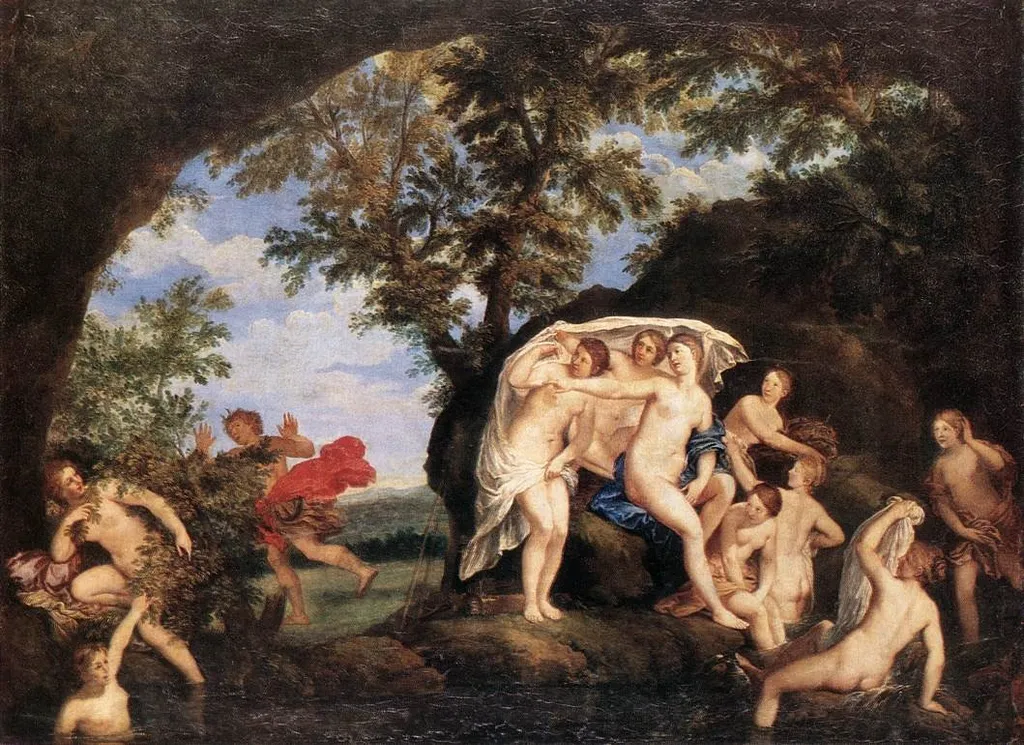
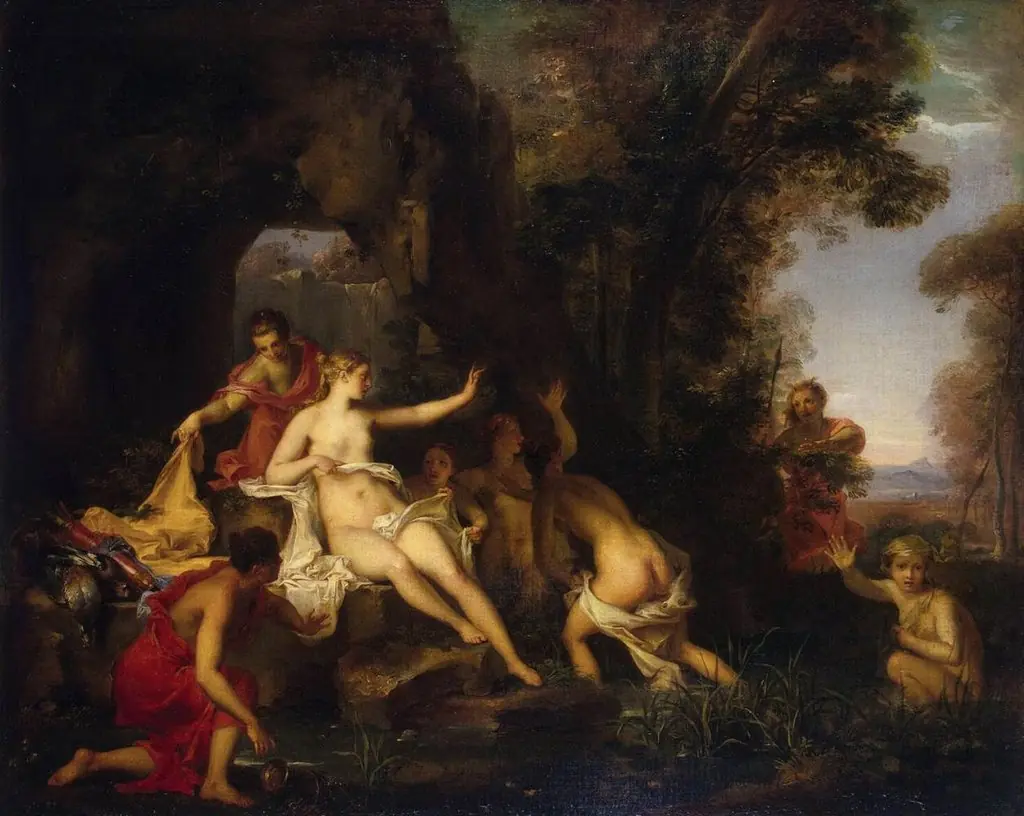
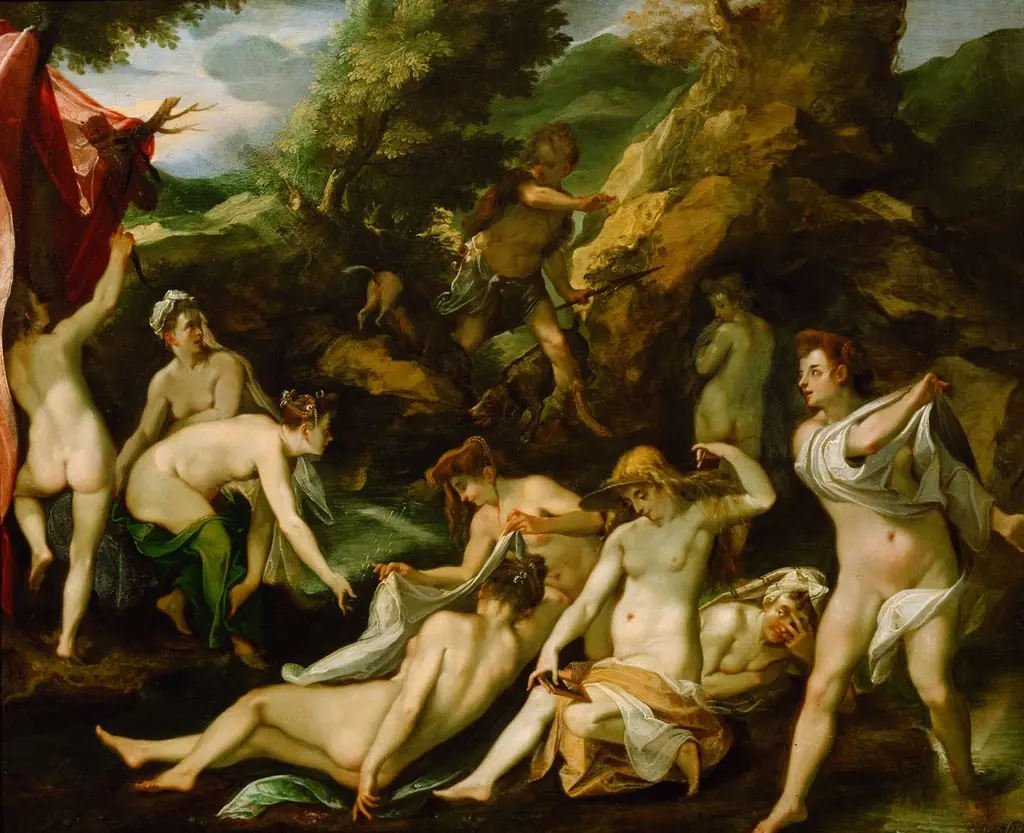
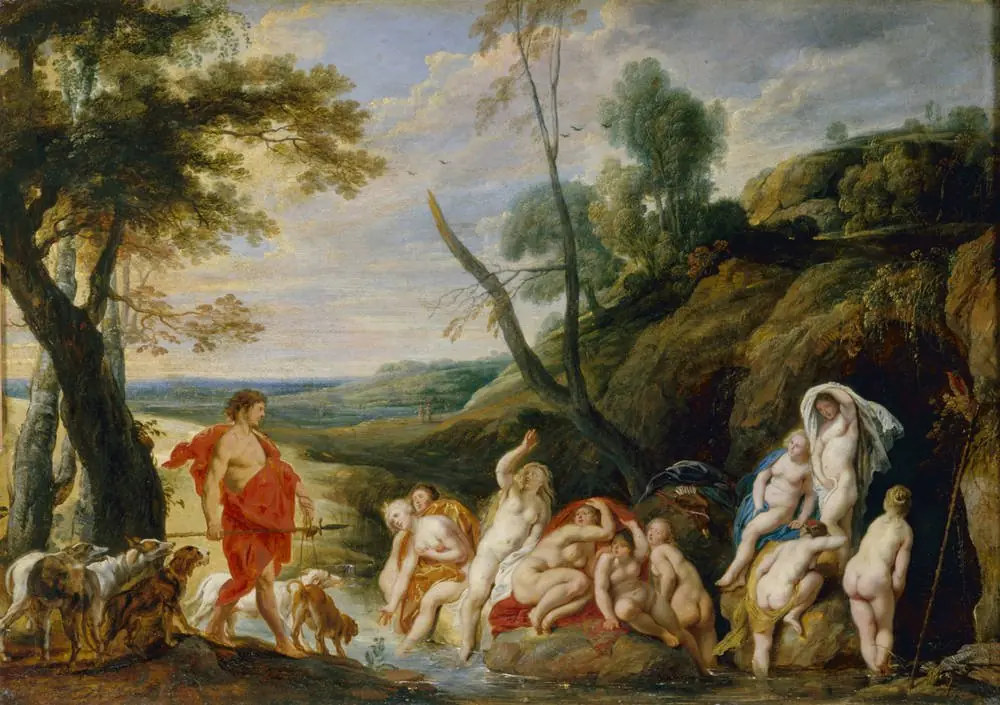
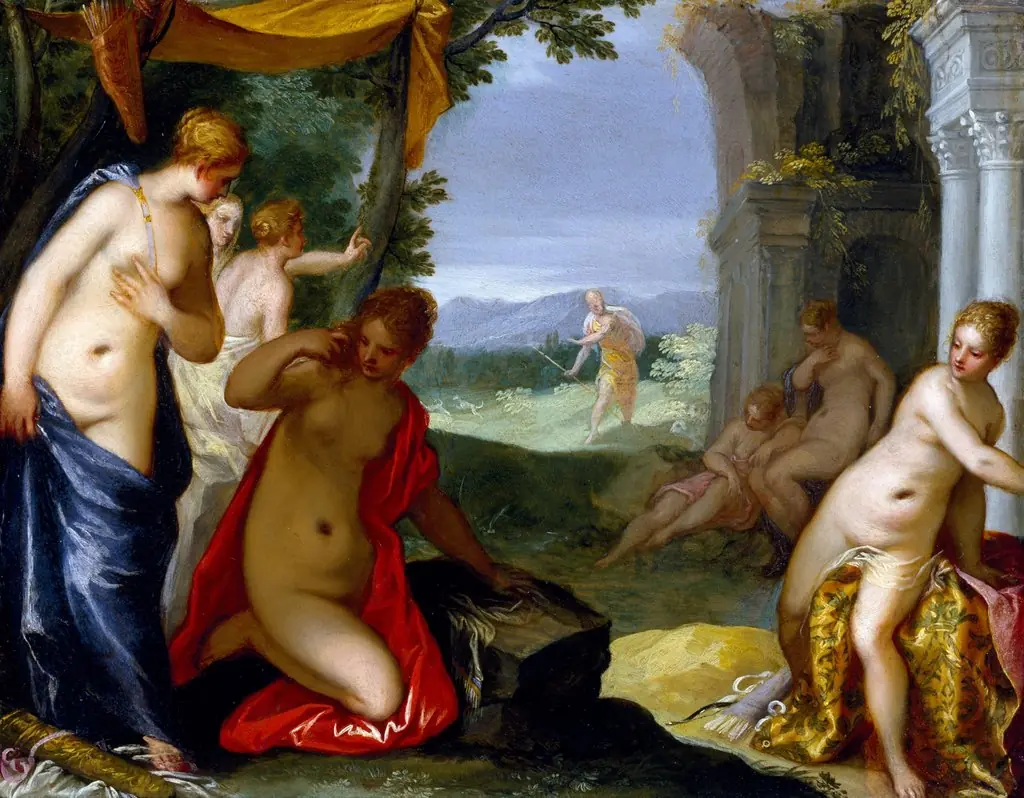
Diana and Actaeon with nine nymphs is an oil painting by the Early Baroque Italian artist Francesco Albani. It dates from 1639 and is held in the collection of the Staatliche Kunstsammlungen Dresden.
About this work
Overview
Francesco Albani’s 1639 oil on canvas, titled *Diana and Actaeon with Nine Nymphs*, presents a woodland scene drawn from classical mythology. The composition centers on the goddess Diana, partially veiled, surrounded by a group of nude nymphs, while the hunter Actaeon flees in alarm. The work is part of the collection of the Gemäldegalerie Alte Meister in Dresden.
Subject & Meaning
The narrative illustrates the moment after Actaeon inadvertently witnesses Diana’s private bath, a transgression that prompts his sudden flight.
The narrative illustrates the moment after Actaeon inadvertently witnesses Diana’s private bath, a transgression that prompts his sudden flight. Diana, the huntress and virgin goddess, is depicted with a cloth covering her head, emphasizing modesty, while the surrounding nymphs convey a mixture of surprise and concern. The painting reflects themes of divine chastity, mortal curiosity, and the consequences of seeing the sacred.
Technique & Style
Albani employs a luminous palette typical of the Bolognese school, using soft chiaroscuro to model the figures against a bright, open sky. The figures are rendered with graceful, idealized anatomy, and the foliage is treated with delicate brushwork that creates a sense of depth without obscuring the central drama. The overall effect balances naturalistic detail with an elegant, almost poetic idealism.
History & Provenance
Executed in 1639, the canvas entered the Gemäldegalerie Alte Meister’s holdings during the 18th‑century expansion of the Dresden collection, where it has remained on public display. Its attribution to Albani has been consistently affirmed by scholars, and the work has been cited in several catalogues of Baroque mythological painting.
Context
The painting belongs to a broader 17th‑century fascination with classical subjects, especially the myth of Diana and Actaeon, which was popular among Italian court patrons. Albani, a pupil of the Carracci, often combined mythological themes with a refined, lyrical style, catering to the tastes of aristocratic collectors who valued both erudition and decorative elegance.
Artist & collection

Artist
Francesco Albani or Albano was an Italian Baroque painter of Albanian descent who was active in Bologna, Rome, Viterbo (1609–1610), Mantua (1621–1622) and Florence (1633).