Artwork
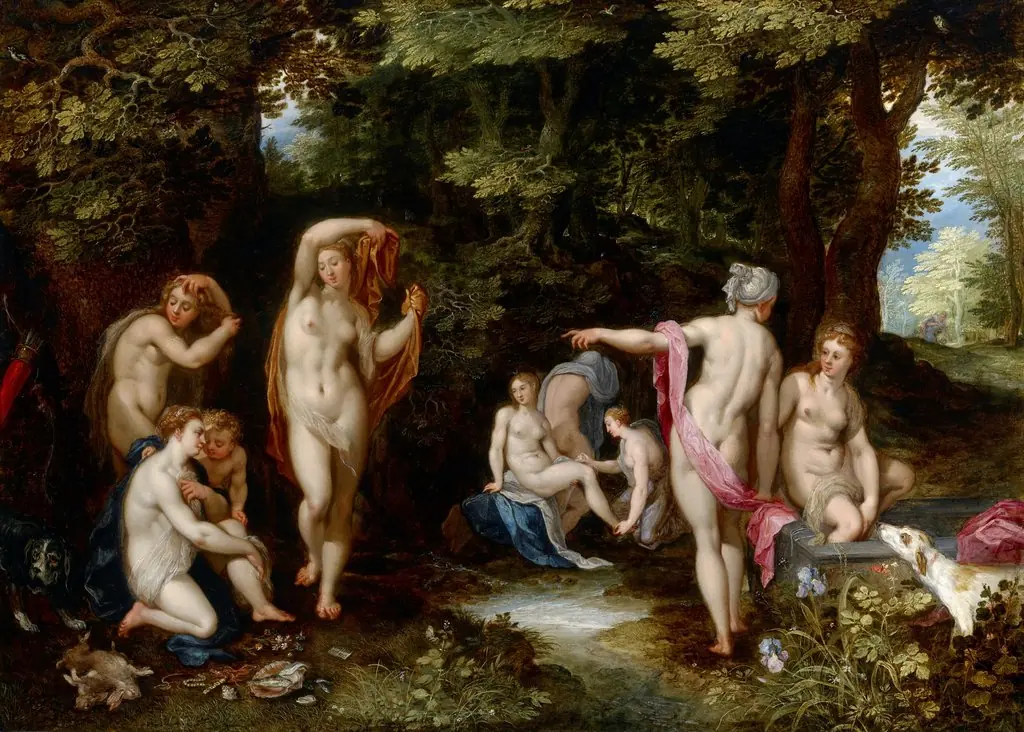
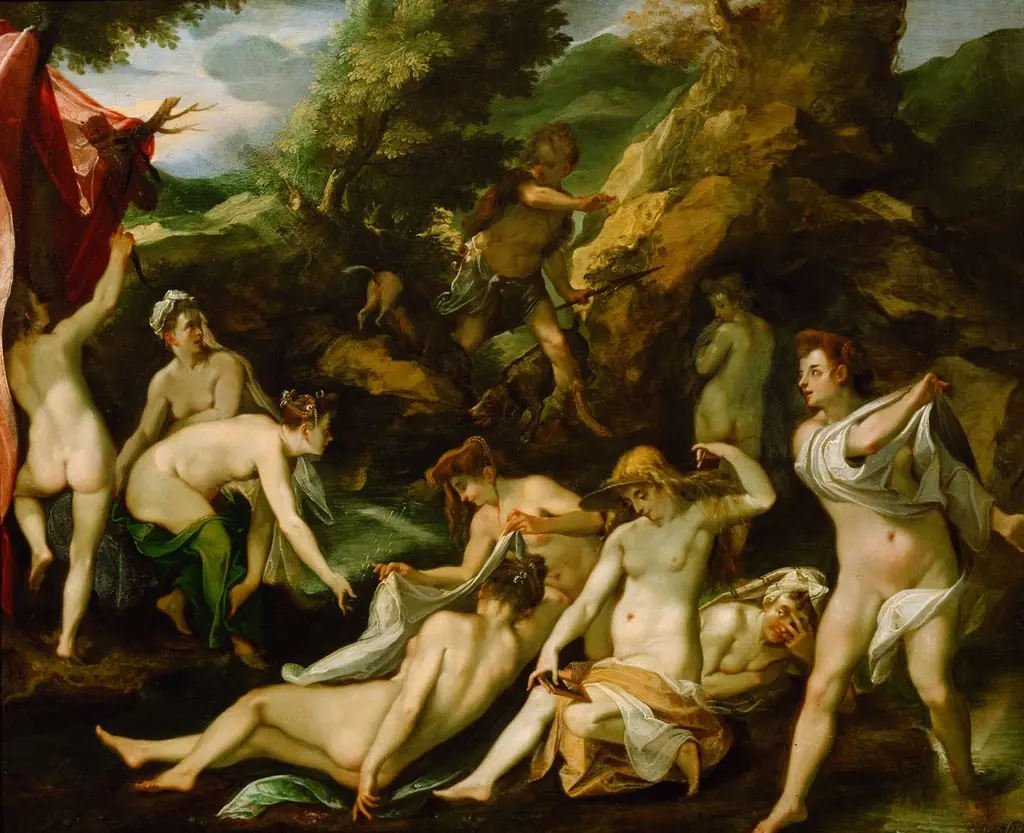
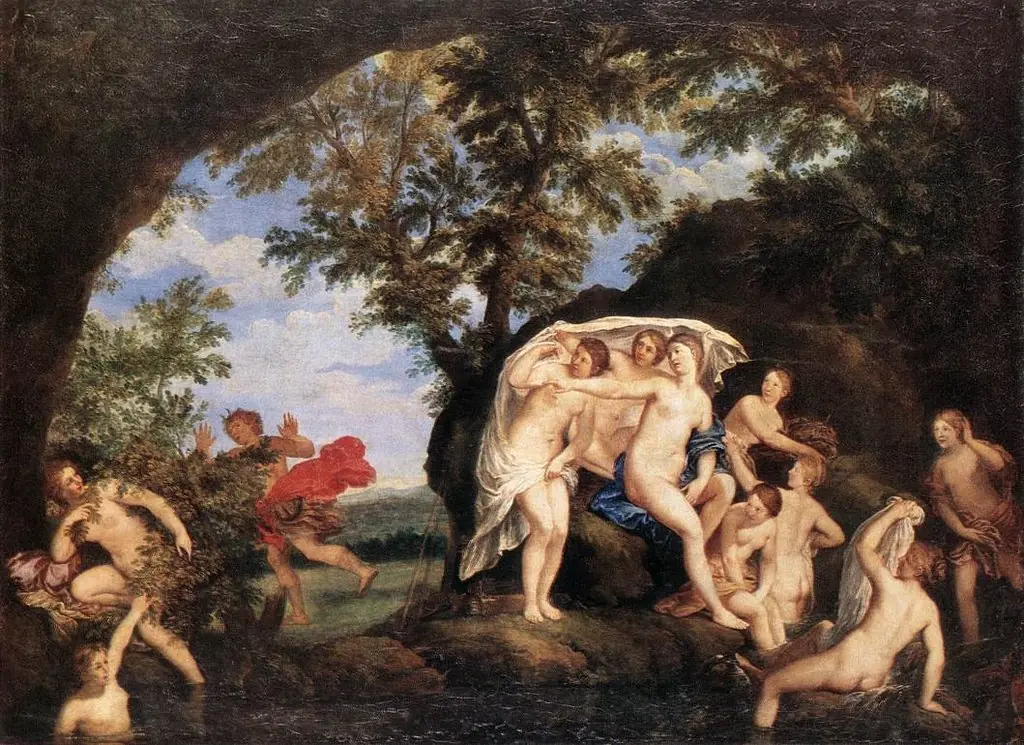
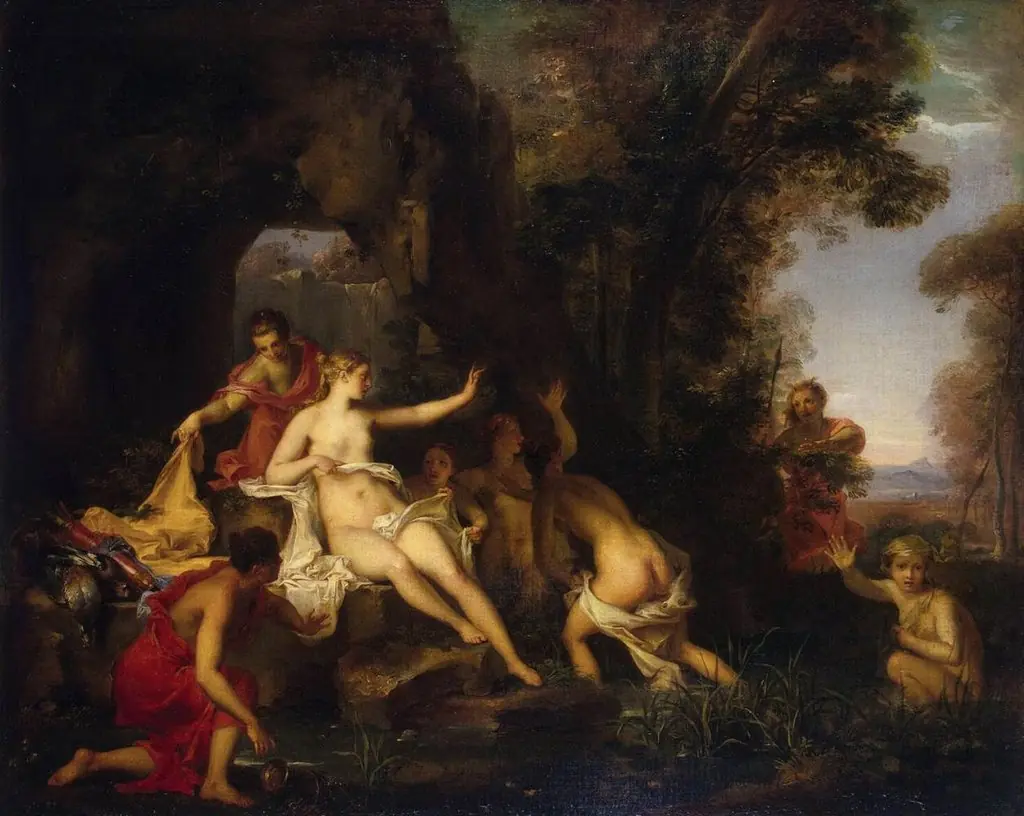
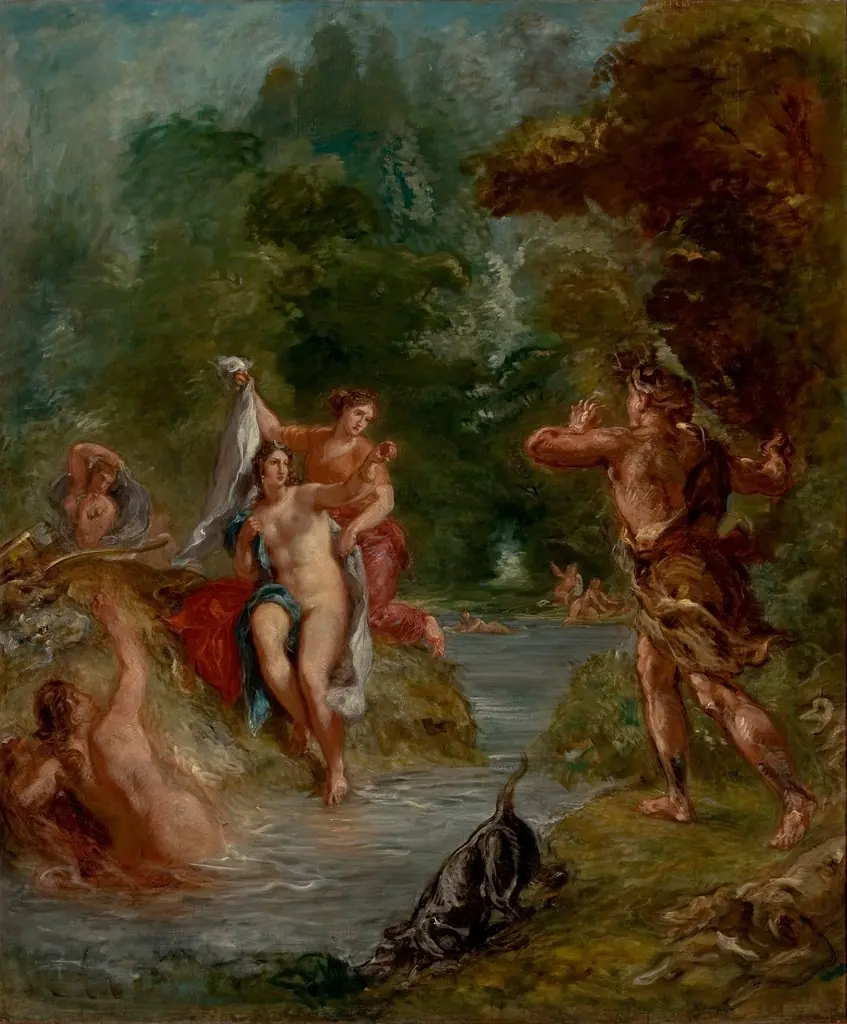
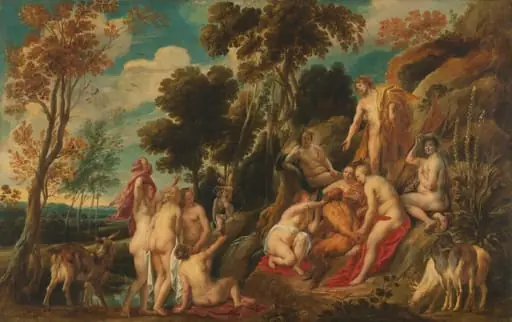
Diana and Actaeon
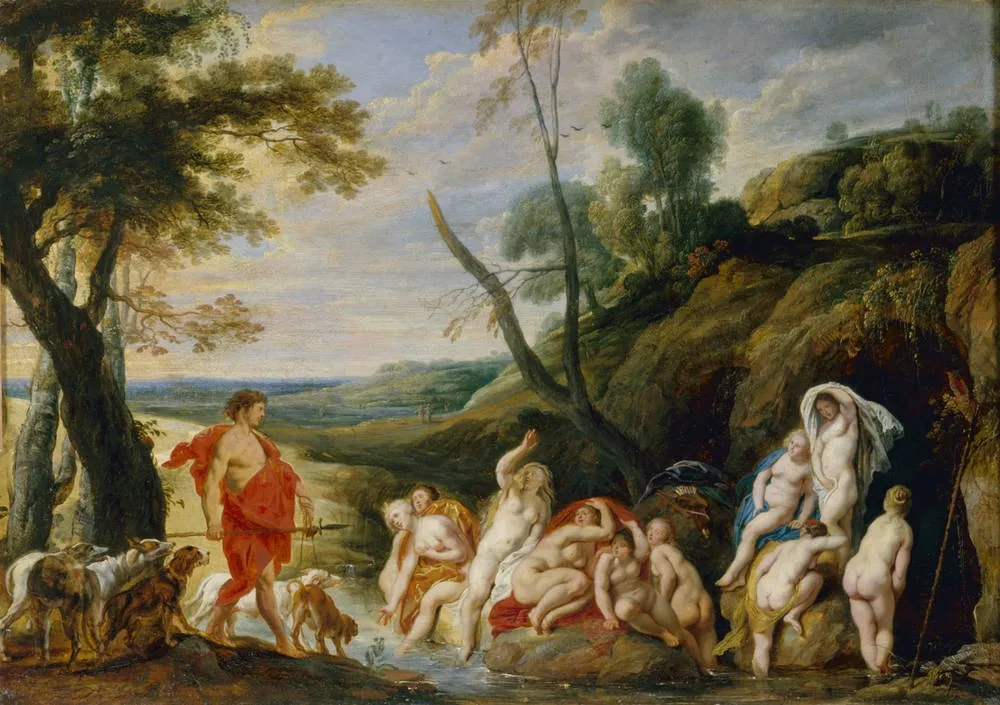
Diana and Actaeon is an oil painting by the Flemish Baroque painting artist Jacob Jordaens. It dates from 1650 and is held in the collection of the Gemäldegalerie Alte Meister.
About this work
Overview
Painted circa 1650, Diana and Actaeon is an oil on canvas work by the Flemish artist Jacob Jordaens.
Painted circa 1650, Diana and Actaeon is an oil on canvas work by the Flemish artist Jacob Jordaens. It illustrates a scene from Ovid’s Metamorphoses, capturing the moment the hunter Actaeon inadvertently encounters the goddess Diana and her attendants in a secluded natural setting. Jordaens, active in Antwerp after the decline of Rubens and van Dyck, maintained a distinctive approach to mythological subjects, blending classical narratives with regional visual sensibilities.
Subject & Meaning
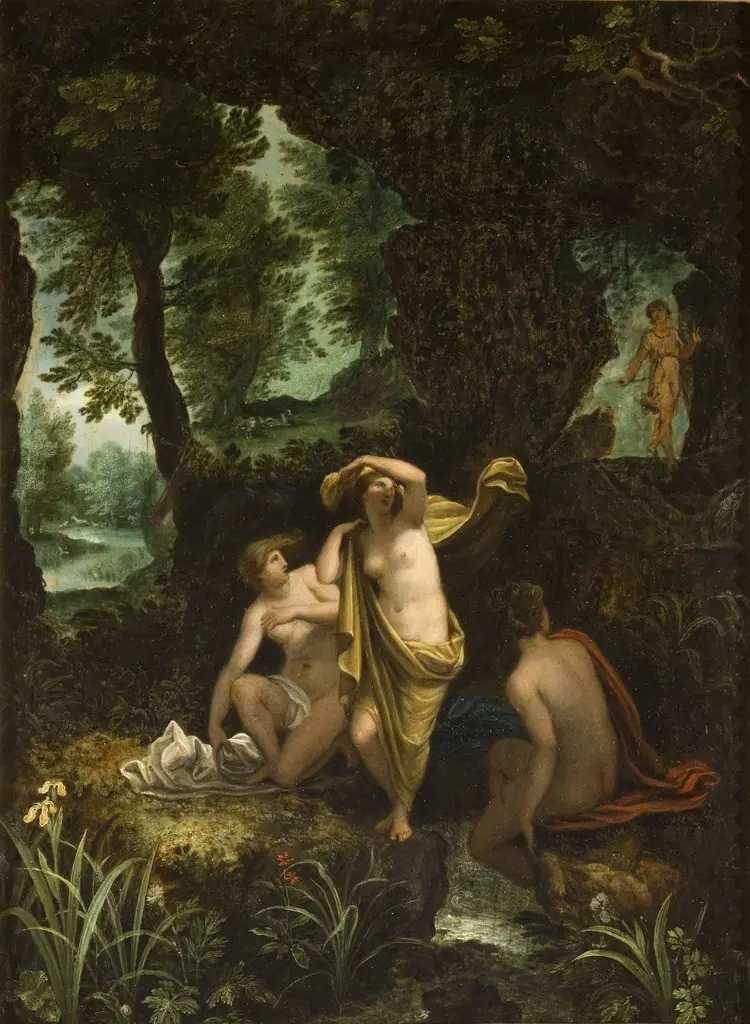
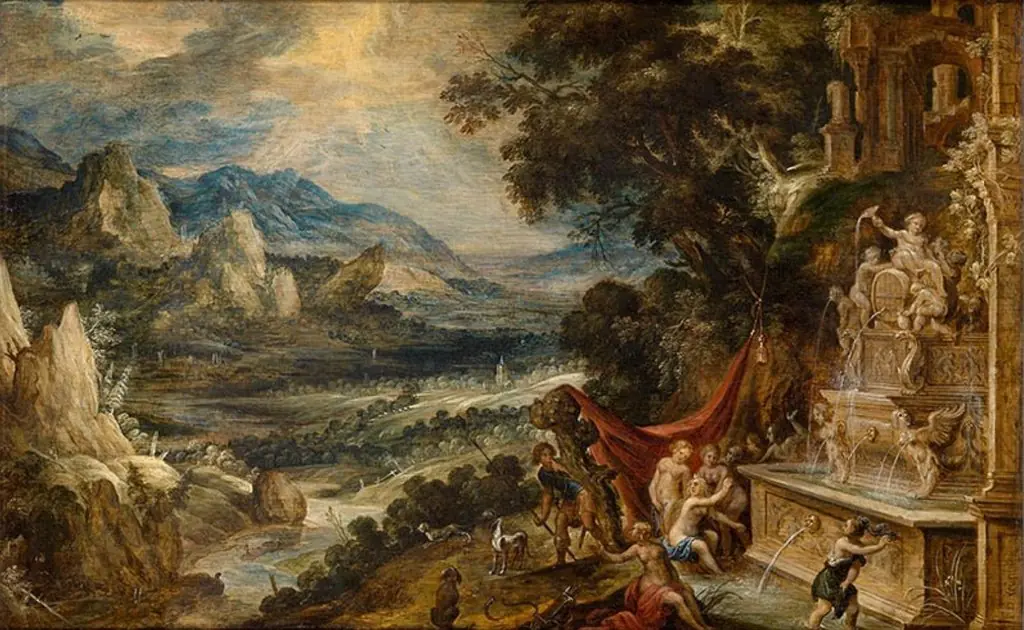
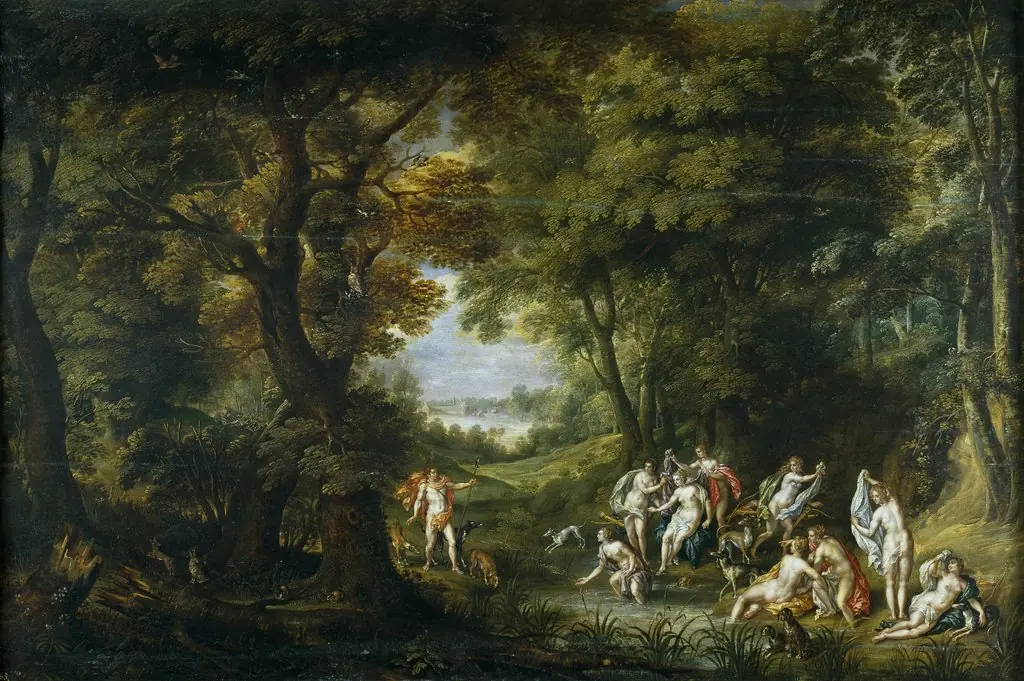
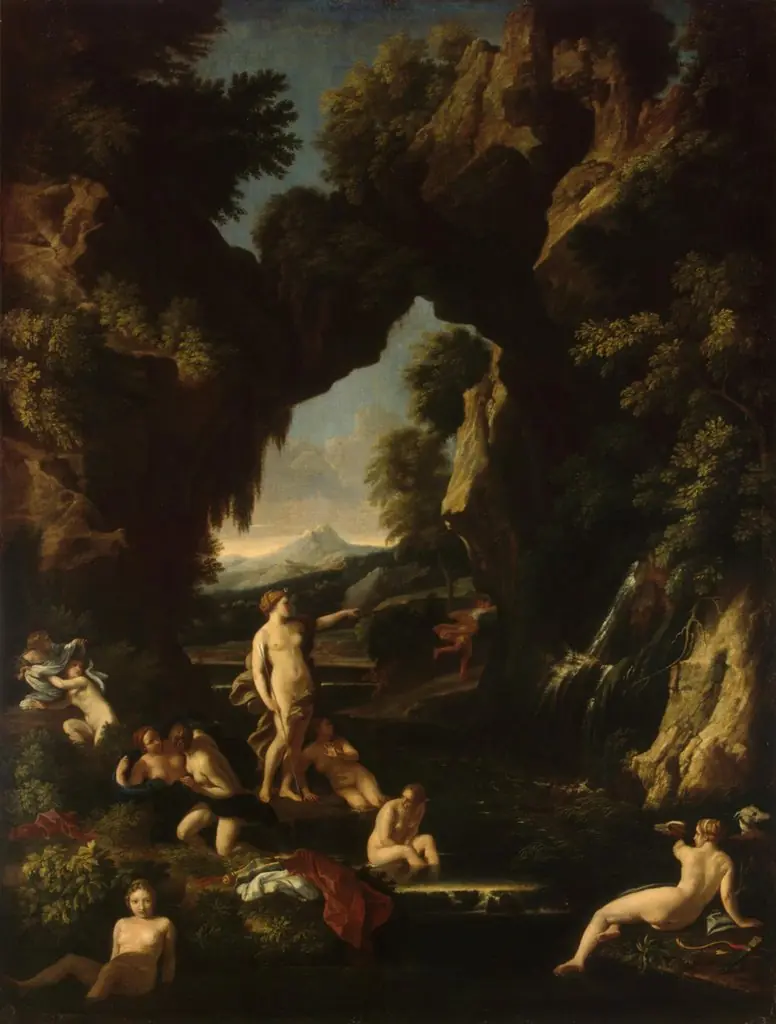
The painting portrays Actaeon, dressed in a red robe and accompanied by hunting dogs, approaching a rocky pool where Diana, the goddess of the hunt, and her nymphs are bathing. The moment carries the weight of divine retribution—Actaeon’s accidental violation of sacred privacy leads to his transformation into a stag. Jordaens emphasizes the tension between human intrusion and divine solitude, without overt violence, letting the narrative unfold through gesture and composition.
Technique & Style
Jordaens employs chiaroscuro to model forms and suggest spatial depth, with soft transitions between light and shadow across the figures’ skin and the rocky terrain. The figures are arranged in a loose, naturalistic grouping, avoiding rigid classical symmetry. Brushwork is fluid yet controlled, particularly in the rendering of drapery and water, while the landscape background recedes with muted tones, enhancing the intimacy of the foreground scene.
History & Provenance
The painting was likely created during Jordaens’s mature period in Antwerp, when he was commissioned by private collectors and civic institutions. It remained in European private collections through the 18th and 19th centuries before entering a public museum’s holdings. Its attribution has remained consistent, with no significant disputes over authorship or date since its early documentation.
Context
In mid-17th-century Flanders, mythological subjects remained popular among collectors, though Jordaens often infused them with everyday realism drawn from Netherlandish traditions. Unlike Italianate interpretations, his Diana lacks idealized perfection; the figures appear grounded in physical presence, reflecting a regional preference for tangible humanity over abstract grandeur. This approach aligned with broader Flemish tastes that valued narrative clarity and emotional resonance.
Legacy
Diana and Actaeon exemplifies Jordaens’s ability to reinterpret classical themes through a distinctly Northern lens. While less celebrated than his contemporaries, his work contributed to the persistence of mythological painting in the Low Countries beyond the Baroque peak. The painting’s quiet psychological tension and naturalistic treatment influenced later genre-oriented mythological scenes in 18th-century Flemish and Dutch art.
Artist & collection
Artist
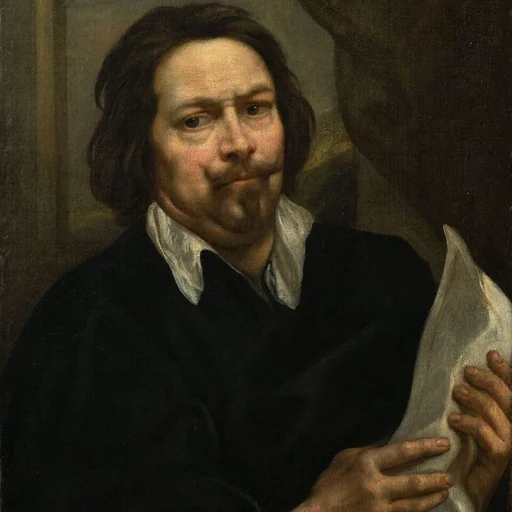
Jacques (Jacob) Jordaens (19 May 1593 – 18 October 1678) was a Flemish painter, draughtsman and a designer of tapestries and prints.

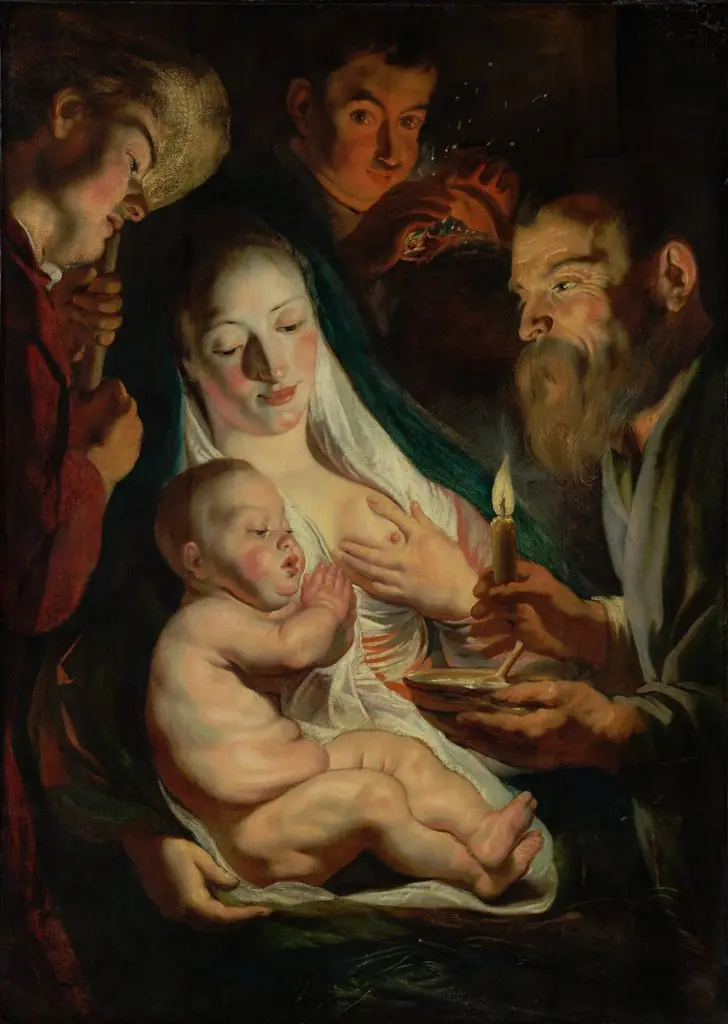 The Holy Family with Shepherds
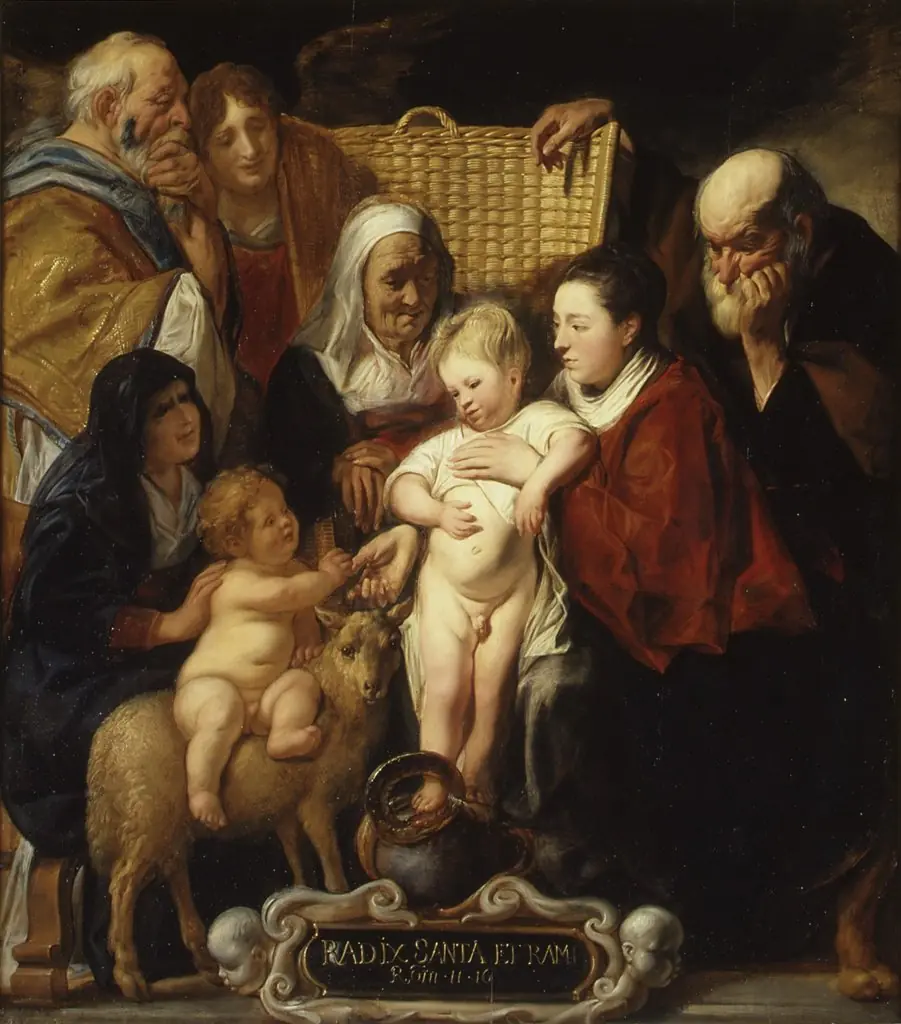 The Holy Family with Saint Anne and the Young Baptist and His Parents
 Untitled
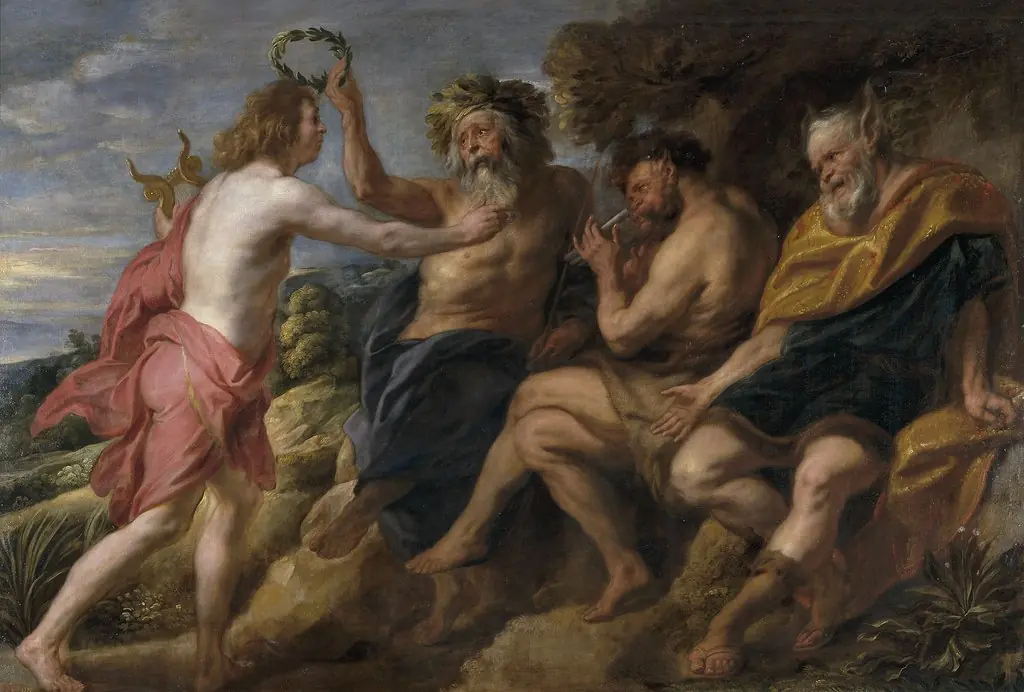 Apollo as Victor over Pan
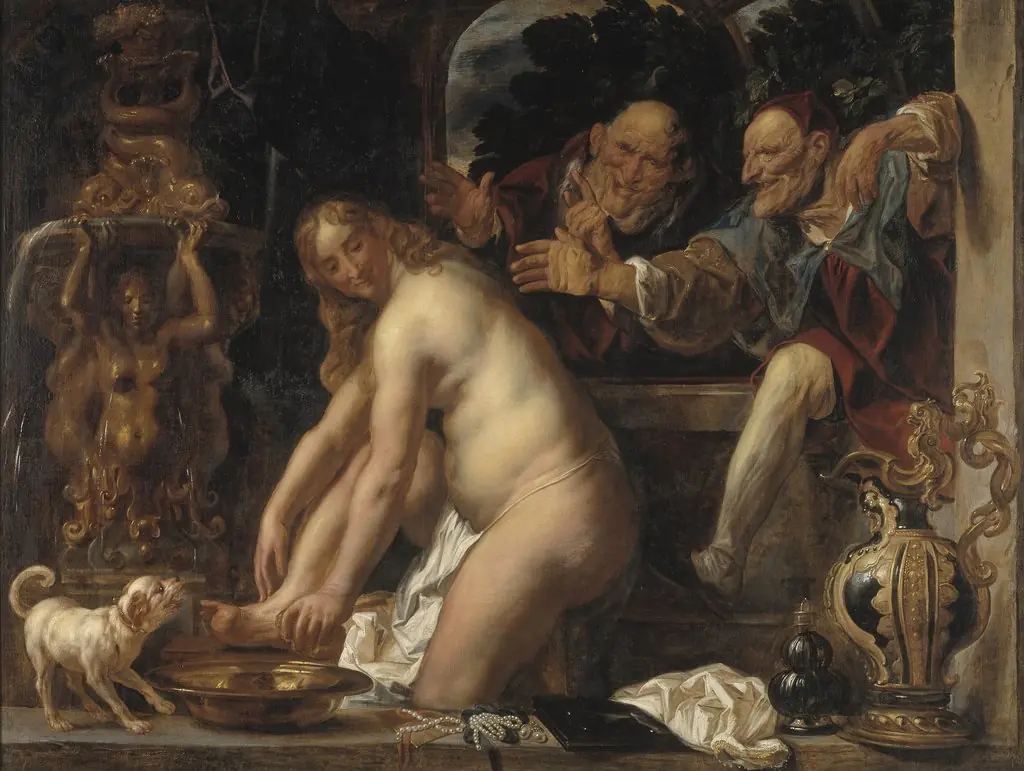 Susanna and the Elders
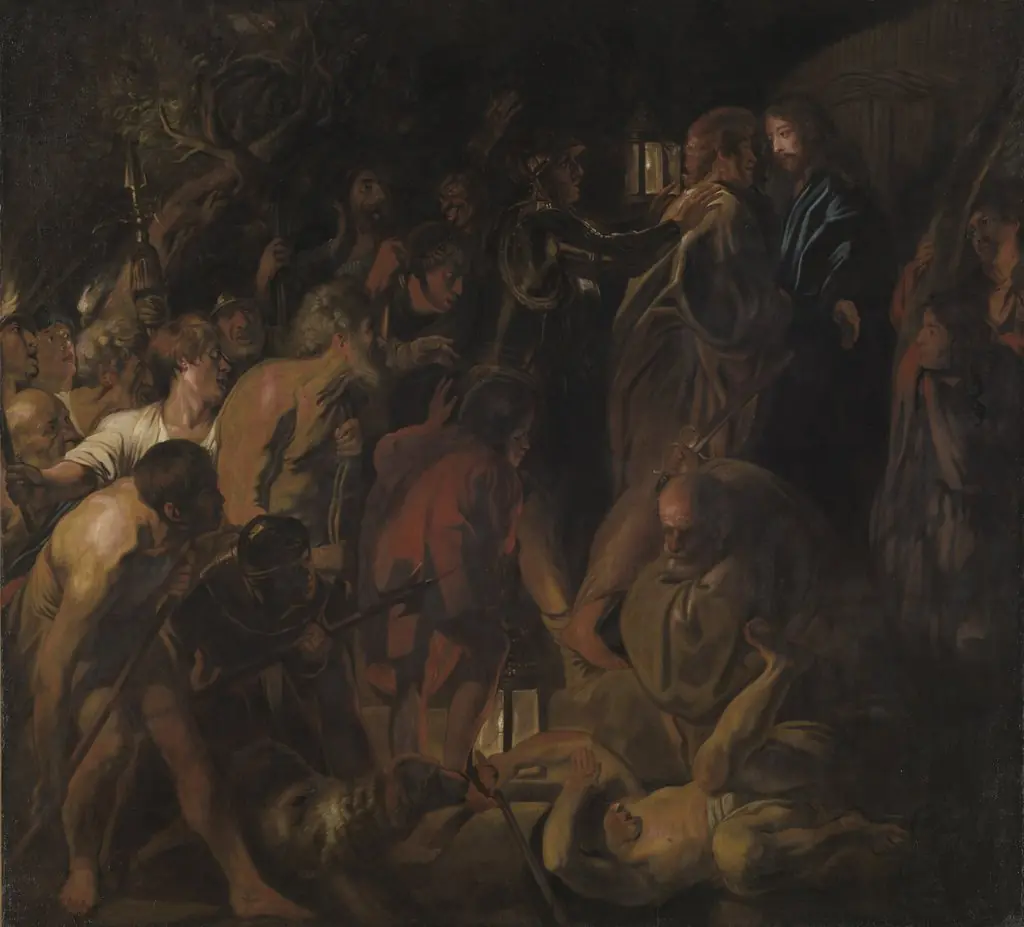 The Betrayal of Christ
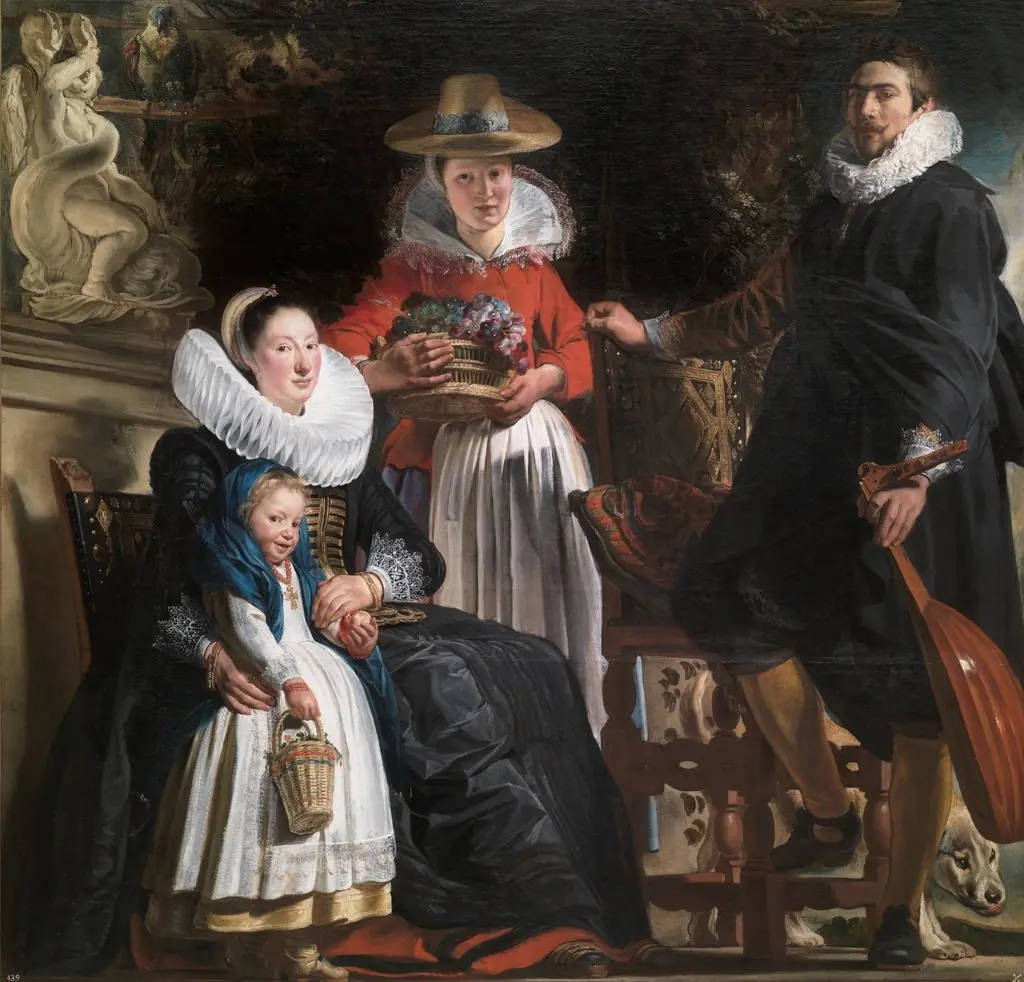 Portrait of the artist with his family
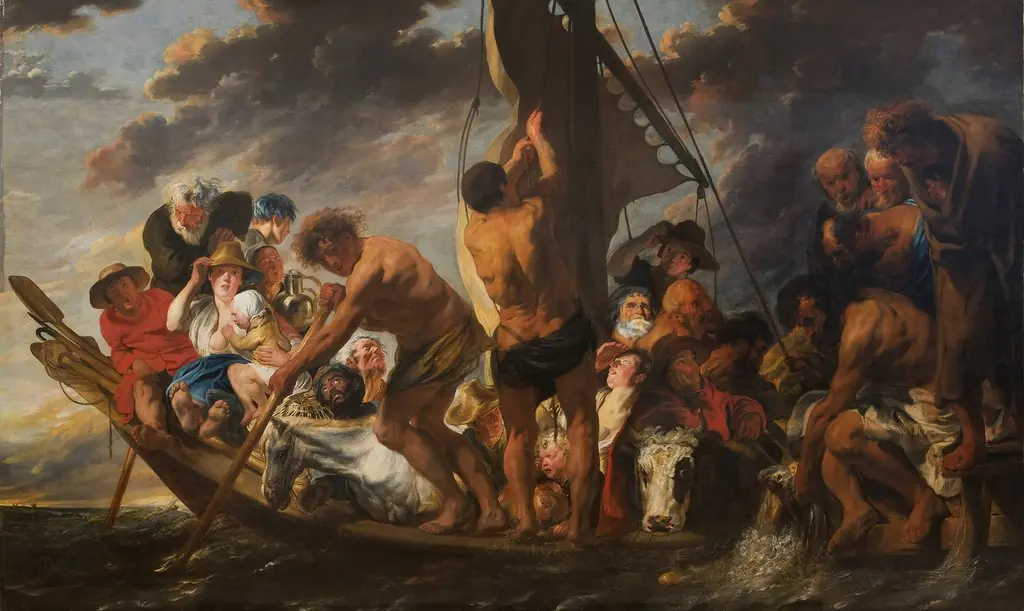 The Tribute Money. Peter Finding the Silver Coin in the Mouth of the Fish. Also called "The Ferry Boat to Antwerp"