Artwork
Adam and Eve with Cain and Abel
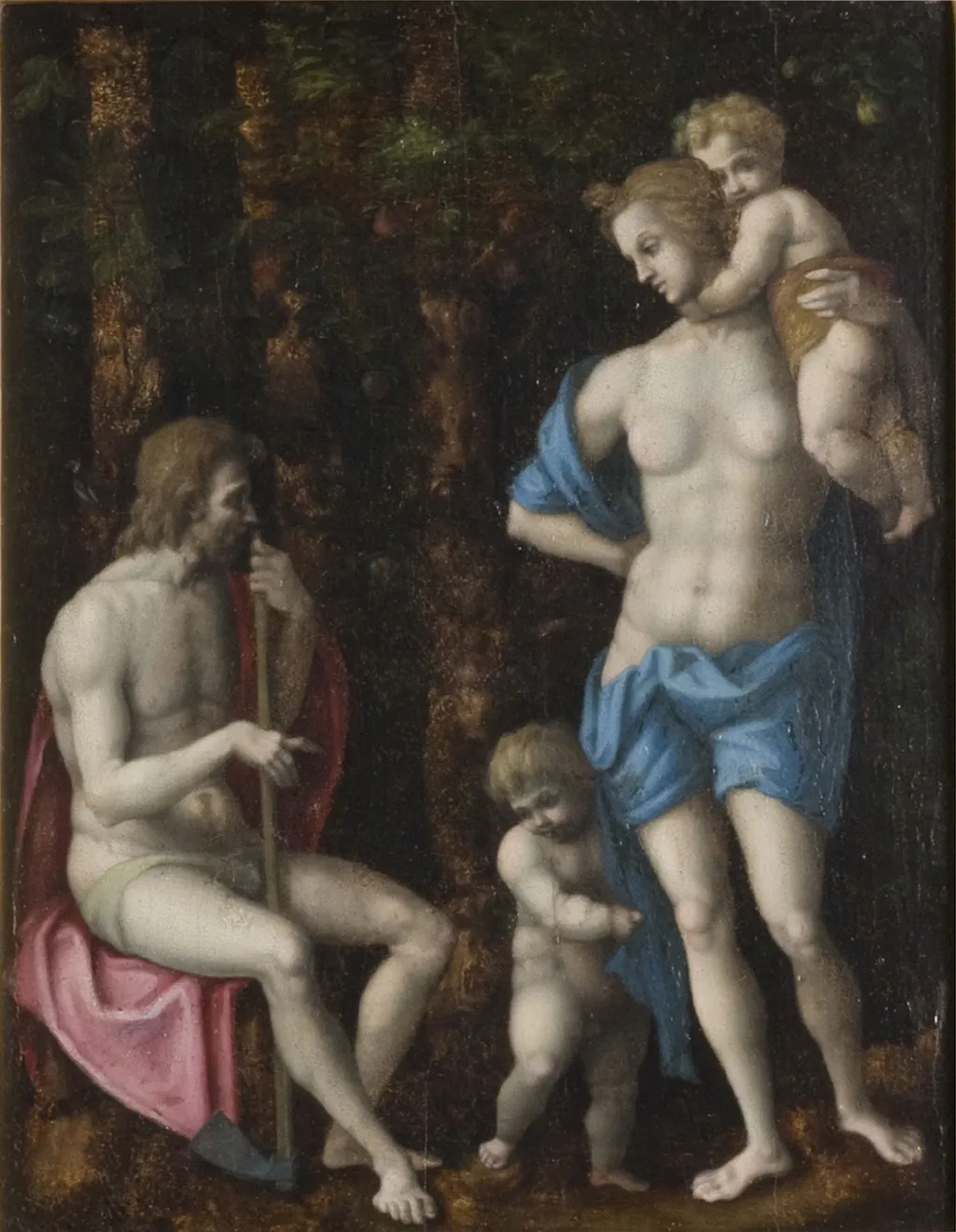
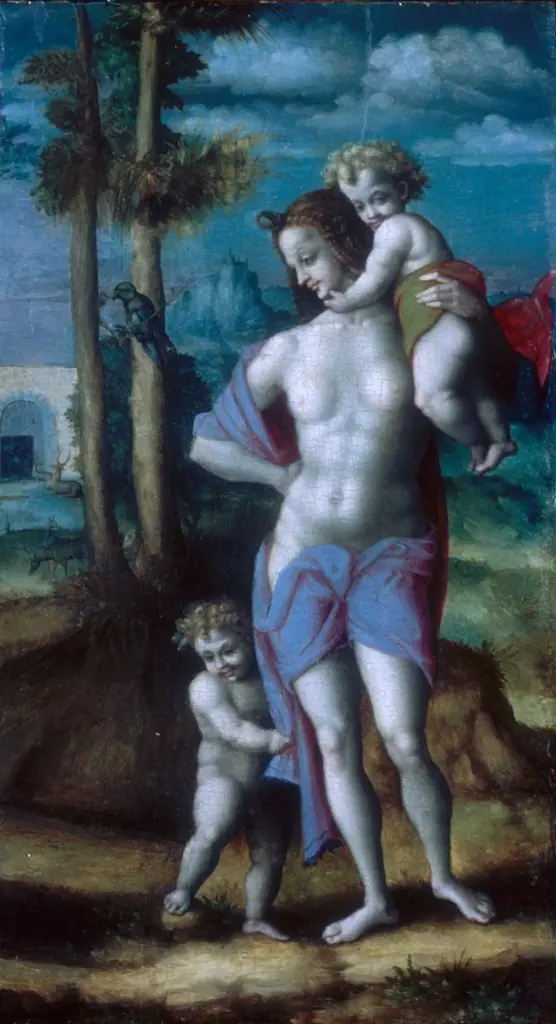
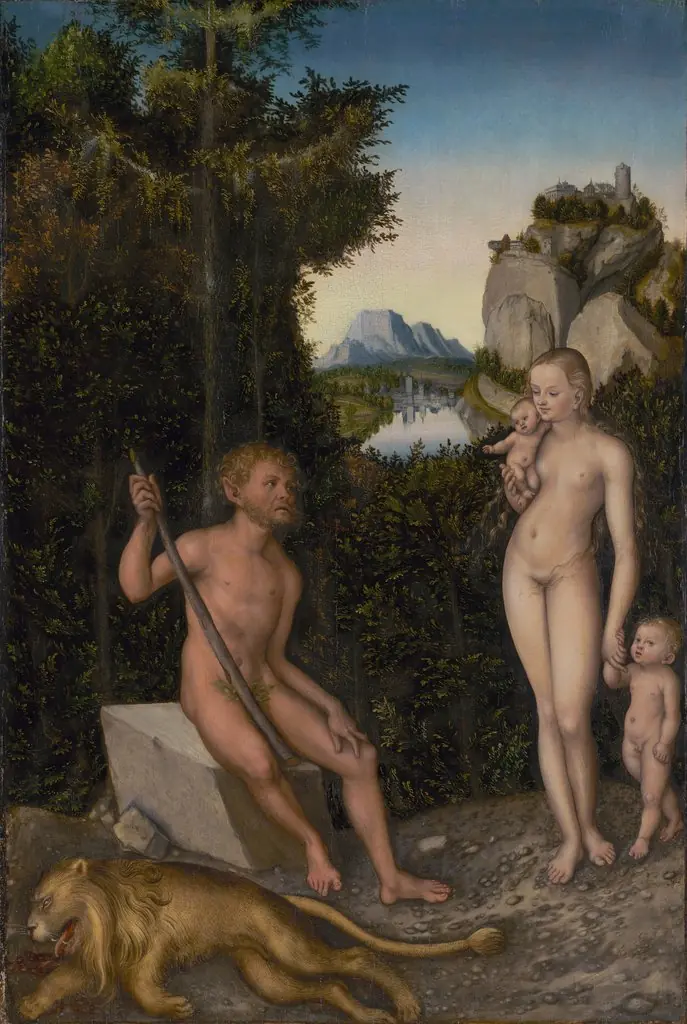
Adam and Eve with Cain and Abel is an oil painting by the Early Renaissance artist Francesco Bacchiacca. It dates from 1516 and is held in the collection of the Philadelphia Museum of Art. Created in 1516, this oil painting presents a domestic tableau of the biblical progenitors and their sons within a wooded landscape.
About this work
Overview
Created in 1516, this oil painting presents a domestic tableau of the biblical progenitors and their sons within a wooded landscape.
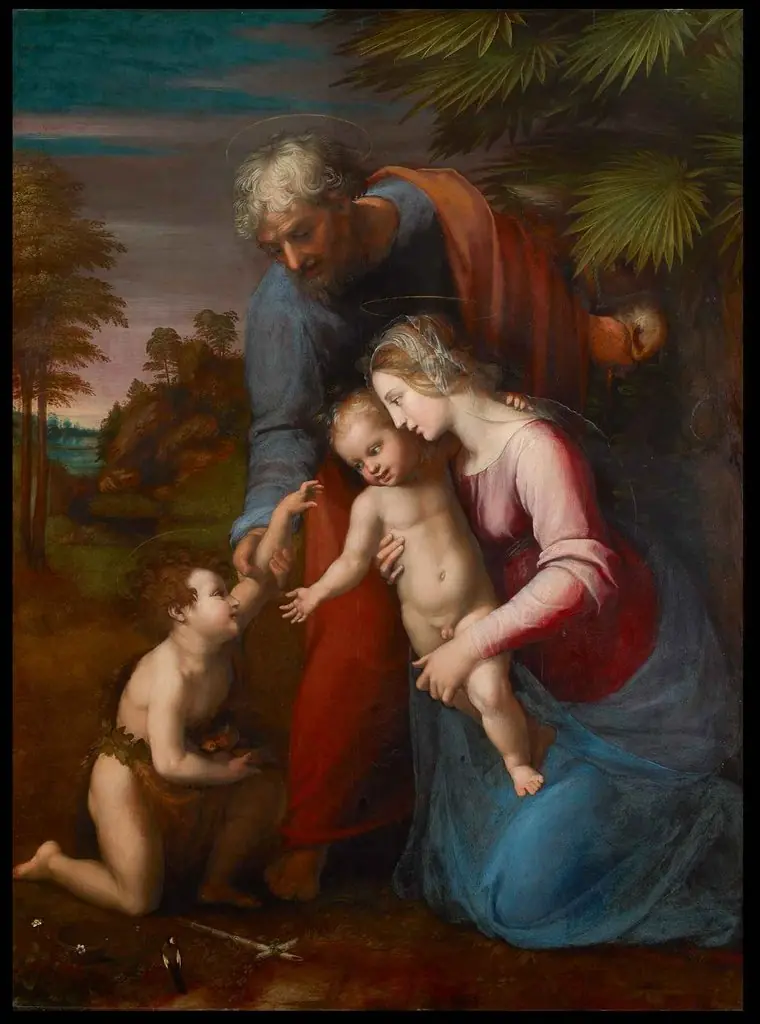
Created in 1516, this oil painting presents a domestic tableau of the biblical progenitors and their sons within a wooded landscape. A seated male figure, draped in red and yellow, holds a staff, while a standing female figure in blue supports an infant on her shoulder, accompanied by a small child reaching toward the man. The composition balances figures against a backdrop of trees and foliage, rendered with muted, earthy tones.
Subject & Meaning
The work portrays Adam and Eve alongside their children Cain and Abel, interpreting the Genesis narrative as a familial scene rather than a moment of conflict. By depicting the children in interaction, the artist emphasizes themes of lineage, continuity, and the human dimension of the first family, inviting contemplation of the origins of kinship and moral choice.
Technique & Style
Executed in oil on panel, the painting displays the characteristic Florentine Mannerist approach of elongated forms and refined arrangement. Subtle chiaroscuro models the figures, producing a sense of three‑dimensionality against the landscape. Visible brushwork and a restrained palette of browns, reds, and blues contribute to a naturalistic yet stylized atmosphere typical of early sixteenth‑century Florentine practice.
History & Provenance
The artist, Francesco d’Ubertino Verdi, known as Bacchiacca, produced the piece while active in Florence. After remaining in private collections for several centuries, the painting entered the holdings of the Philadelphia Museum of Art, where it is displayed as part of the museum’s European Renaissance holdings.
Context
Bacchiacca worked during the transition from the High Renaissance to Mannerism, a period marked by experimentation with proportion and composition. This work reflects contemporary interest in biblical subjects rendered with humanist sensitivity, aligning with Florentine artistic trends that favored complex narratives and elegant figure treatment within natural settings.
Artist & collection
Artist
Francesco d'Ubertino Verdi, called Bachiacca (say "bah ki ah cka"). He is also known as Francesco Ubertini, il Bacchiacca (1494–1557). He was an Italian painter of the Renaissance whose work is characteristic of the…