Artwork
St. Bernard of Clairvaux and scenes of his life
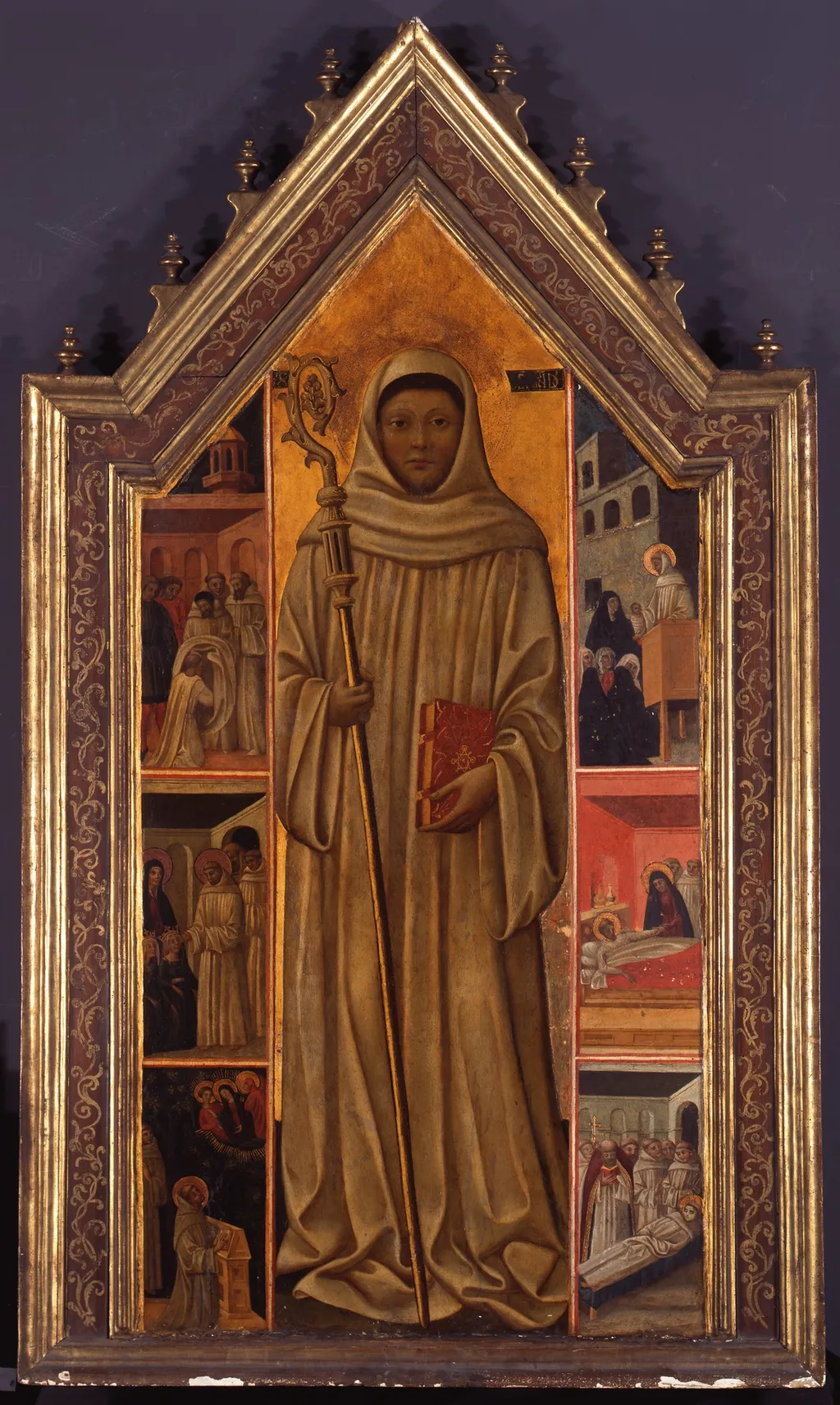
St. Bernard of Clairvaux and scenes of his life is an unspecified painting by Francesco di Antonio di Bartolomeo. It dates from 1423 and is held in the collection of the Gemäldegalerie Berlin.
About this work
Overview
Francesco di Antonio di Bartolomeo, an early 15th‑century Florentine painter, executed the panel *St. Bernard of Clairvaux and scenes of his life* around 1423. The work is presently conserved in the Gemäldegalerie, Berlin, and presents the saint centrally surrounded by a series of narrative episodes from his biography.
Subject & Meaning
At the composition’s heart stands a monk in a long habit, clutching a staff and a book, symbols of Bernard’s ecclesiastical authority and scholarly activity. Encircling him are smaller vignettes that illustrate key moments of his spiritual career, inviting contemplation of his theological contributions and monastic reforms.
Technique & Style
The panel employs a restrained palette of browns and golds, typical of early Renaissance Florentine painting. Figures are rendered with modest modeling and a subtle use of light and shade, creating a calm, contemplative atmosphere without the dramatic chiaroscuro later associated with the period.
History & Provenance
Francesco di Antonio di Bartolomeo is documented through a signed triptych in the Fitzwilliam Museum and a work in London’s National Gallery. Vasari later identified him as “Francesco Fiorentino,” a follower of Lorenzo Monaco, linking the artist to the transitional style between Gothic and early Renaissance in Florence.
Artist & collection
Artist
Francesco di Antonio di Bartolomeo
Francesco d'Antonio or d'Antonio di Bartolomeo (born 1393, active until 1452) was an Italian Renaissance painter of the Renaissance, mainly active in Florence.

 Saint Dominic
 Saint Augustine Meditates on the Trinity when the Child Jesus Appears before him
 Saint Bernardino of Siena
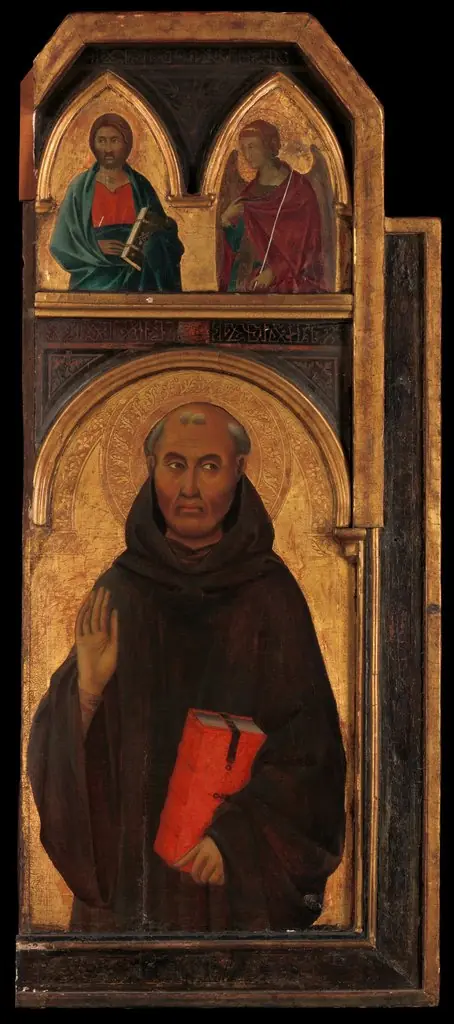 Saint Benedict
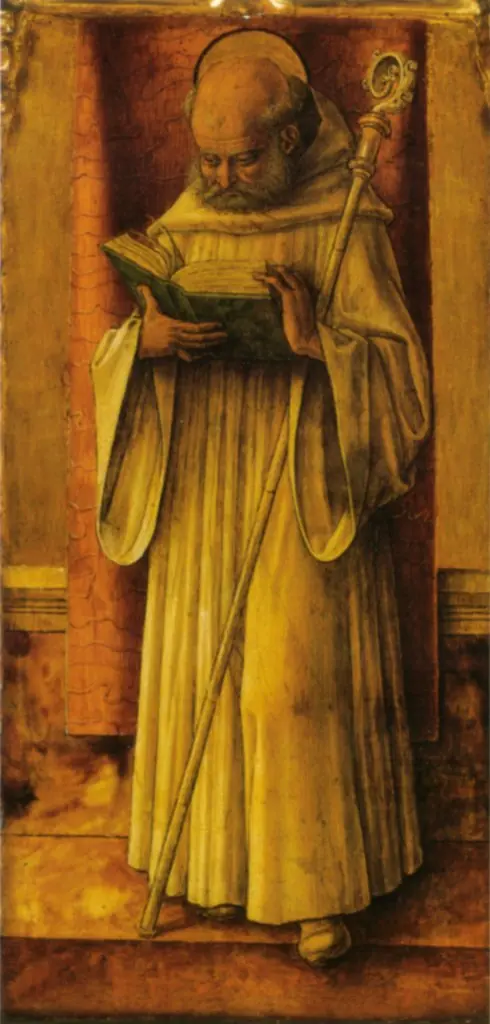 Saint Benedict
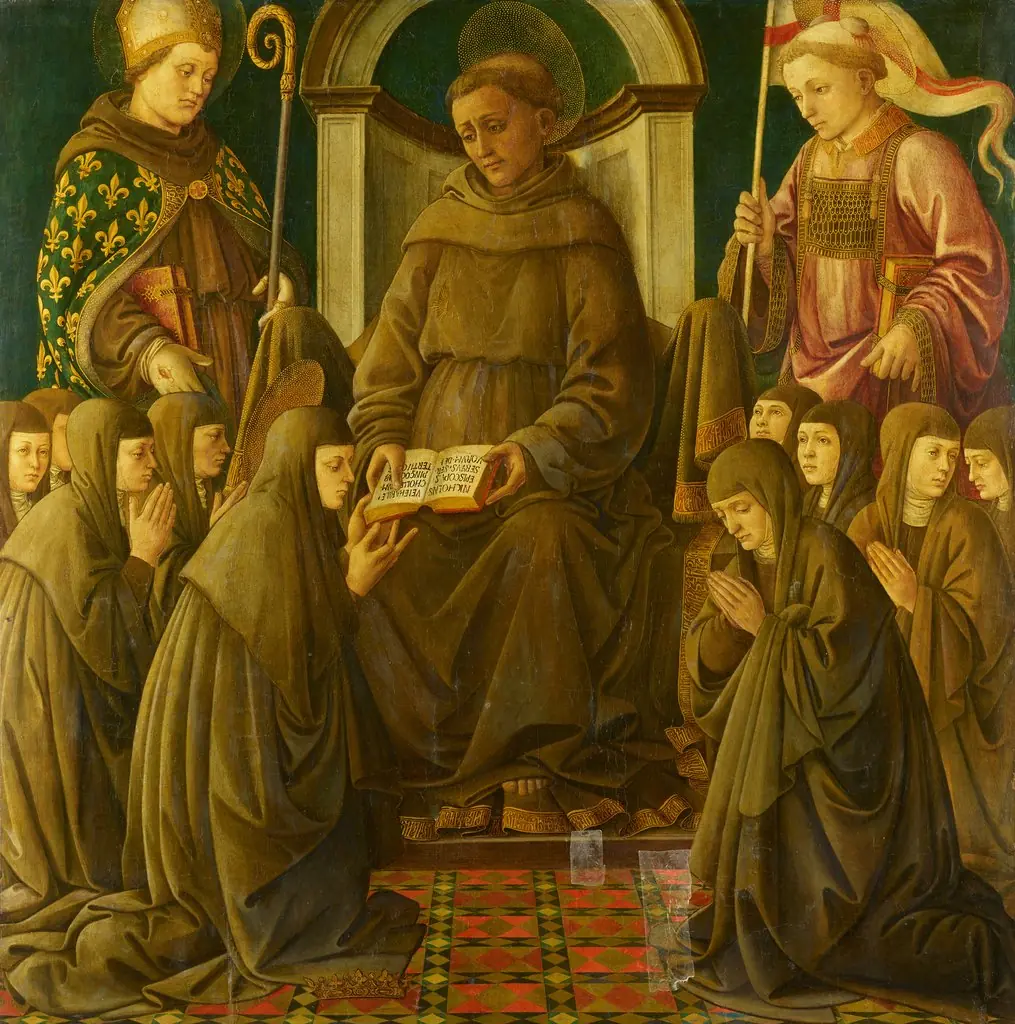 The enthroned St. Francis presents the rule of the order to St. Clare
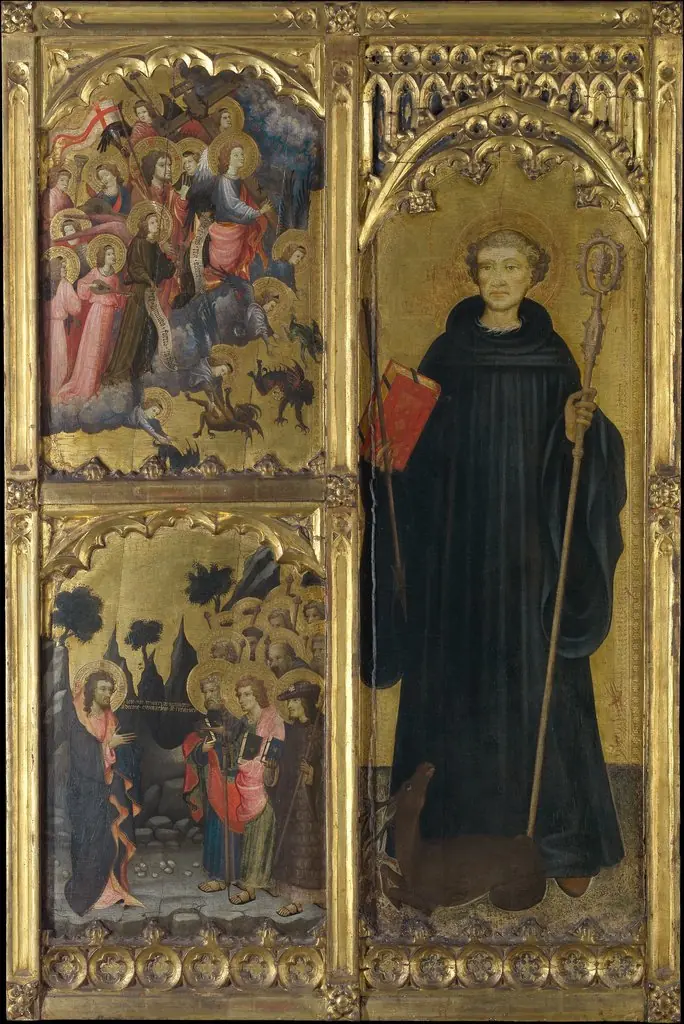 Saint Giles with Christ Triumphant over Satan and the Mission of the Apostles
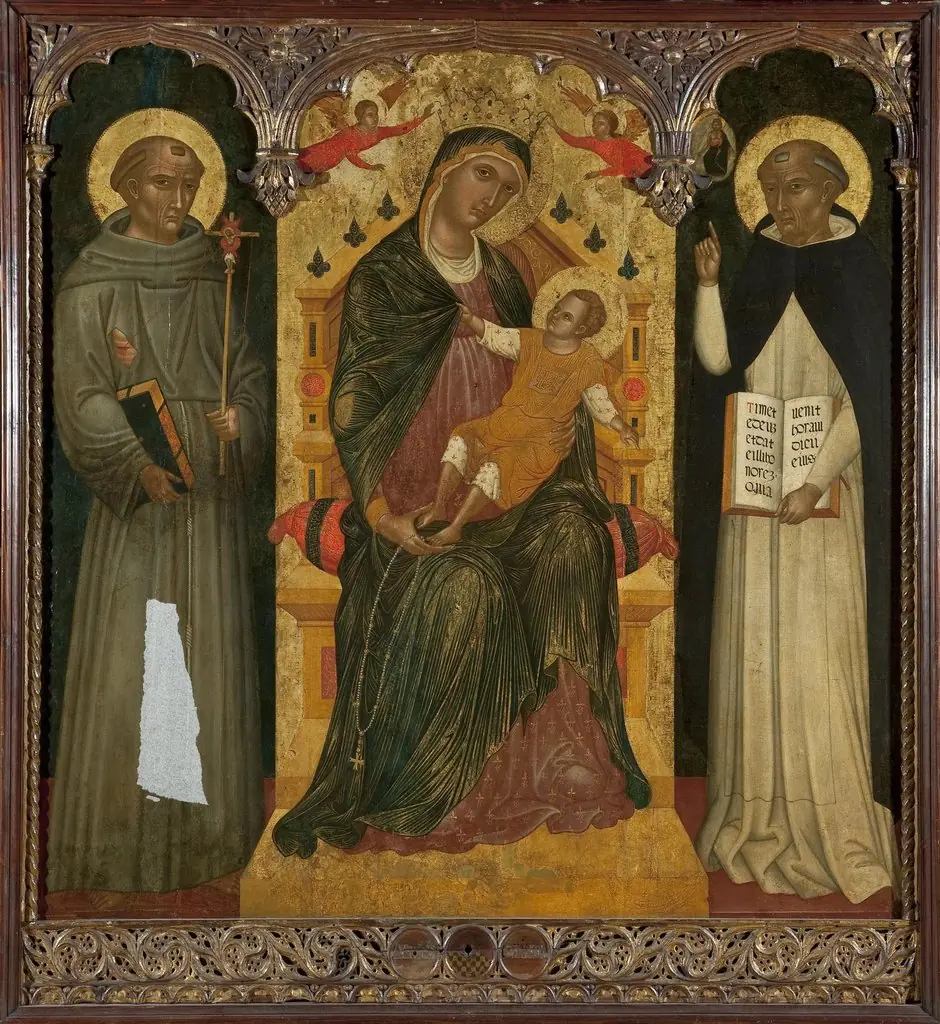 Madonna and Child with Saints
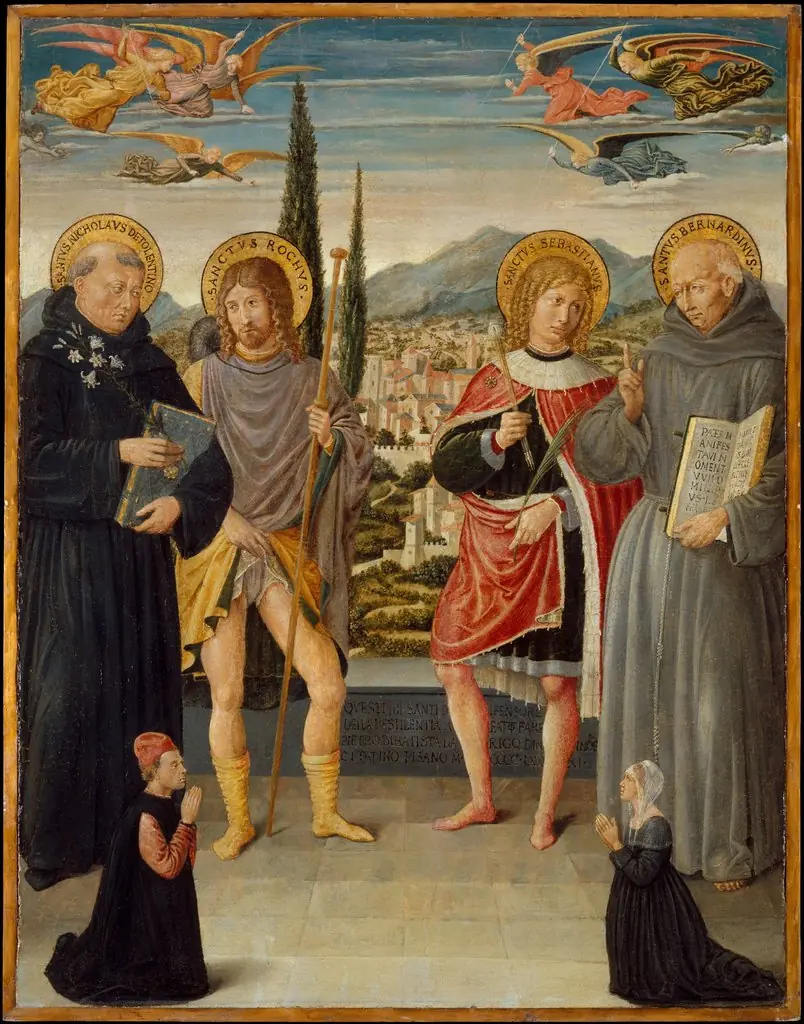 Saints Nicholas of Tolentino, Roch, Sebastian, and Bernardino of Siena, with Kneeling Donors
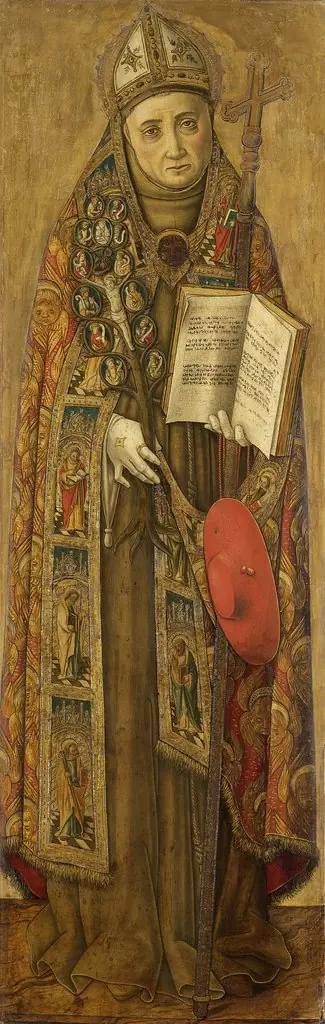 St. Bonaventure, pendant to St. Louis
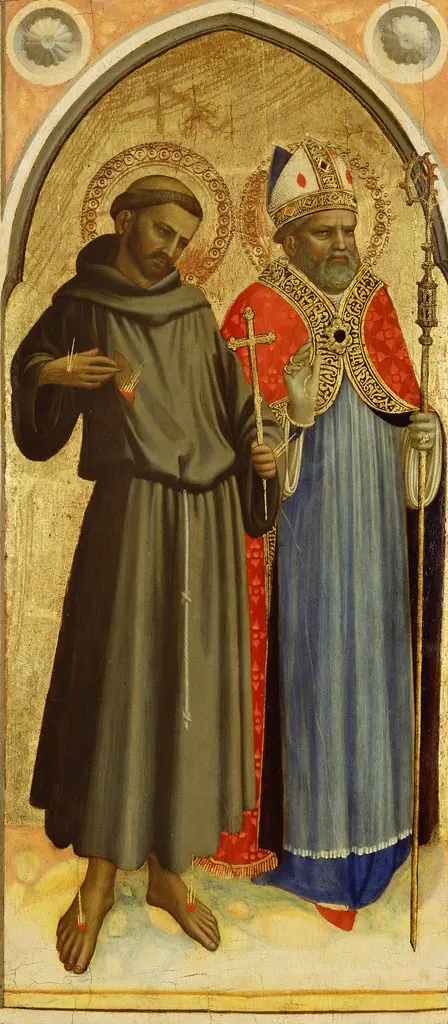 Saint Francis and a Bishop Saint
 Saint Anthony of Padua