Artwork
Virgin and Child with Saint Jerome, Saint Anthony of Padua and Two Angels
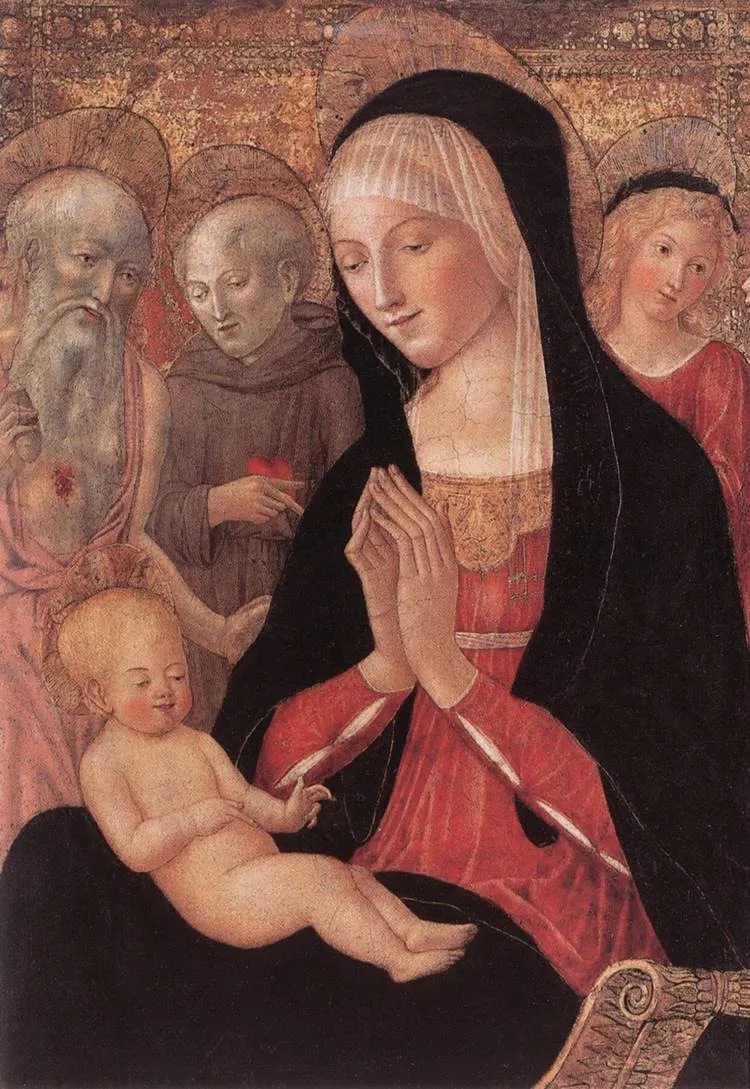
Virgin and Child with Saint Jerome, Saint Anthony of Padua and Two Angels is an unspecified painting by the Early Renaissance artist Francesco di Giorgio. It dates from 1469 and is held in the collection of the Museum of Fine Arts Boston.
About this work
Overview
Created in 1469, this panel painting by Francesco di Giorgio presents a devotional grouping centered on the Virgin Mary and the infant Christ. The work is currently displayed in the Museum of Fine Arts, Boston, and combines figures of Saint Jerome, Saint Anthony of Padua, and two attendant angels within a compact, intimate composition.
Subject & Meaning
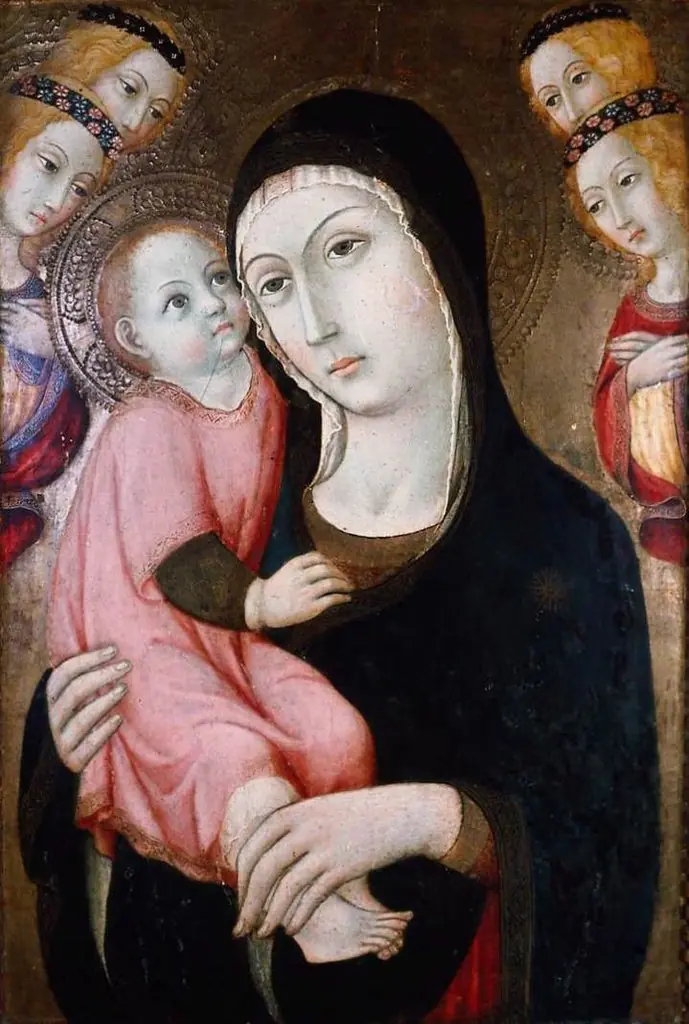
The central figure, a mother in a red robe, cradles the Child, whose gesture reaches toward her, emphasizing maternal tenderness. To her left, a bearded Saint Jerome holds a red heart, a symbolic reference to his devotion, while Saint Anthony of Padua, younger and holding a book, stands beside him. Flanking the group, two diminutive winged angels reinforce the sacred atmosphere.
Technique & Style
Executed on a wooden panel, the painting employs a muted, earth‑toned background that resembles cracked soil, creating a stark contrast with the vivid reds of the Virgin’s garment and the luminous flesh tones. Di Giorgio’s handling of drapery shows careful attention to folds, and the figures are rendered with a restrained linearity characteristic of mid‑15th‑century Italian art.
History & Provenance
Francesco di Giorgio completed the work in 1469, likely for a private devotional setting. It entered the collection of the Museum of Fine Arts, Boston, through acquisition in the early 20th century, where it has remained a representative example of the artist’s religious output.
Context
The inclusion of both Jerome and Anthony reflects a common practice of pairing saints associated with scholarship and preaching, appealing to patrons interested in theological learning. The painting’s composition aligns with contemporary trends in Florentine and Umbrian workshops, where intimate saintly groupings were favored for personal contemplation.
Artist & collection

Artist
Francesco di Giorgio Martini (1439–1501) was an Italian architect, engineer, painter, sculptor, and writer.

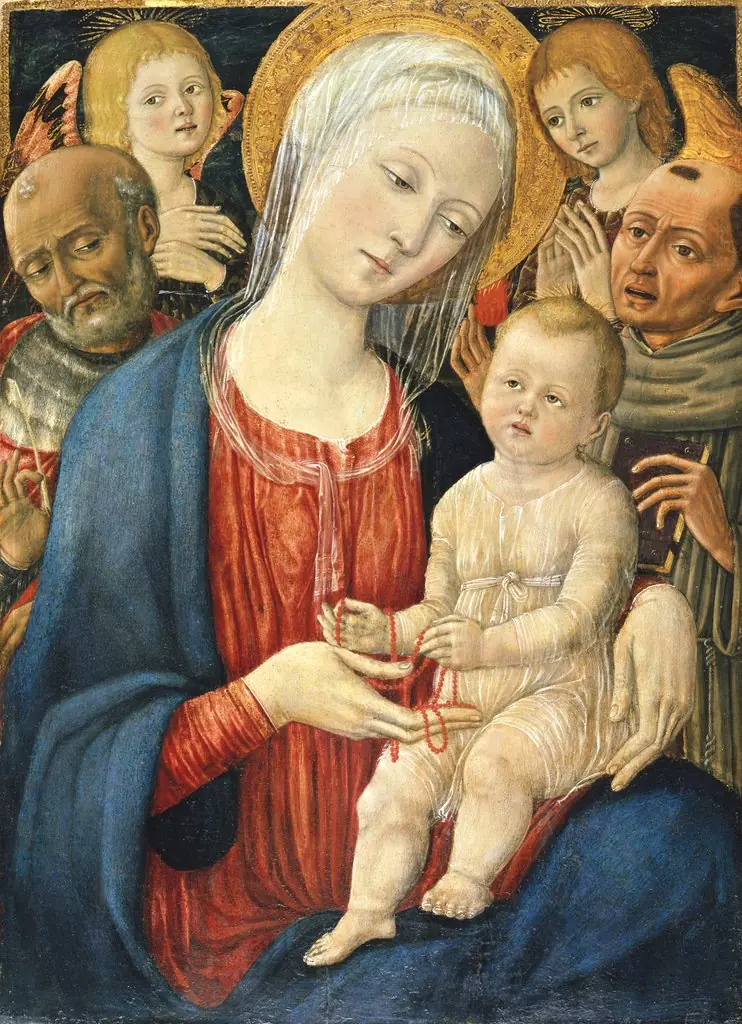 Mary with the child, Saint Jerome, Anthony of Padua and two angels
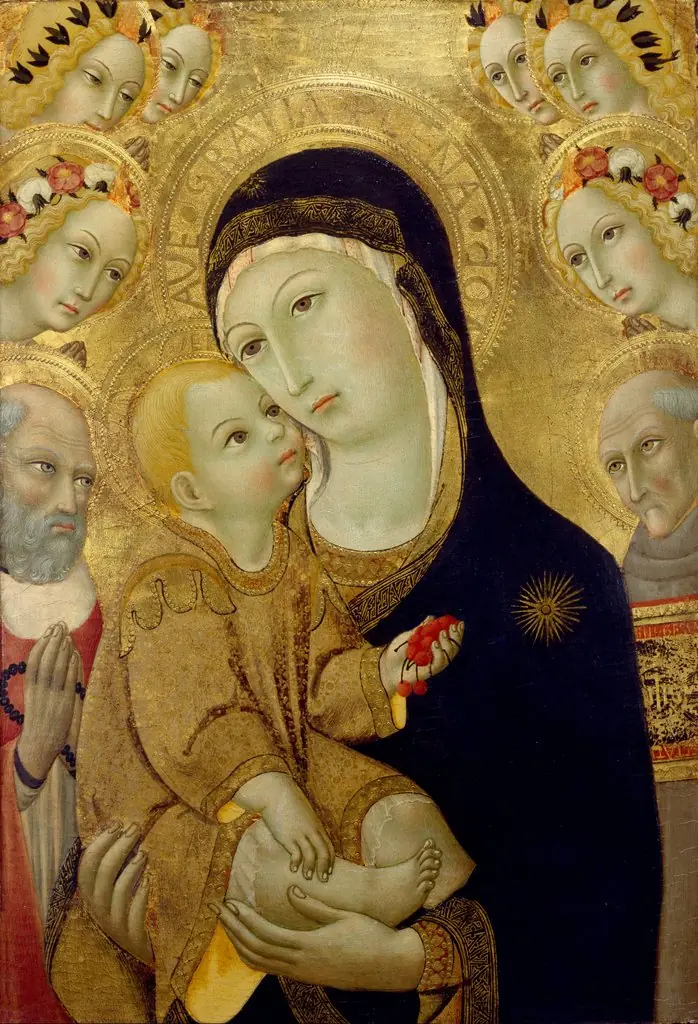 Virgin and Child with Saints Jerome and Bernardino of Siena and Six Angels
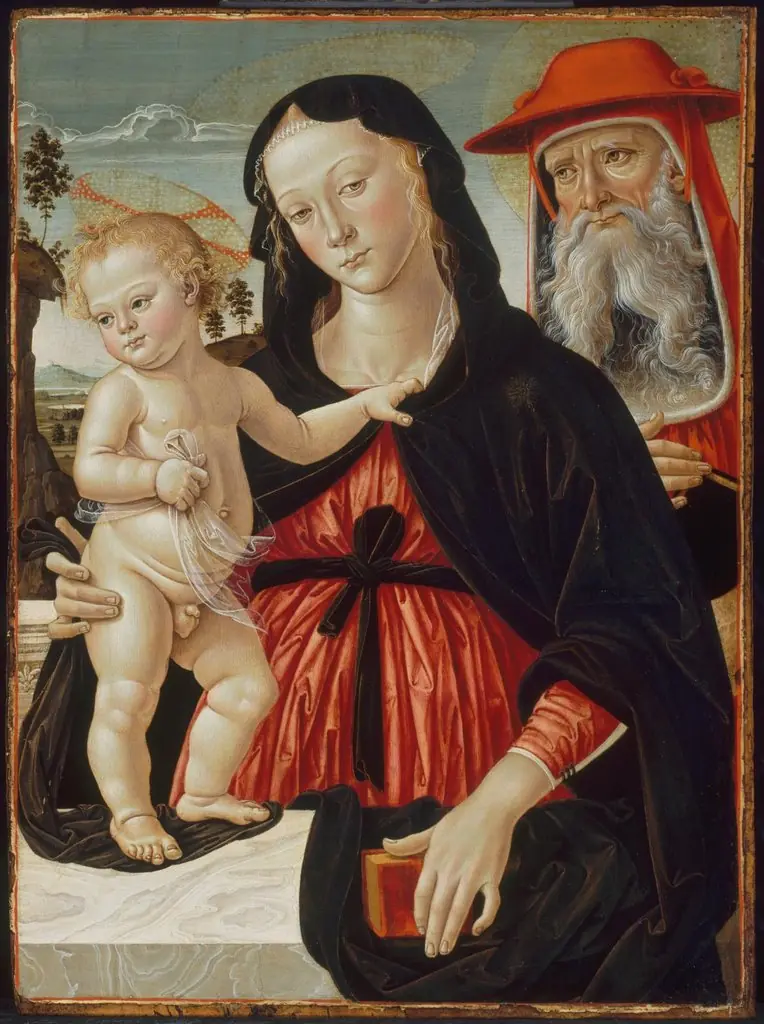 Virgin and Child with Saint Jerome
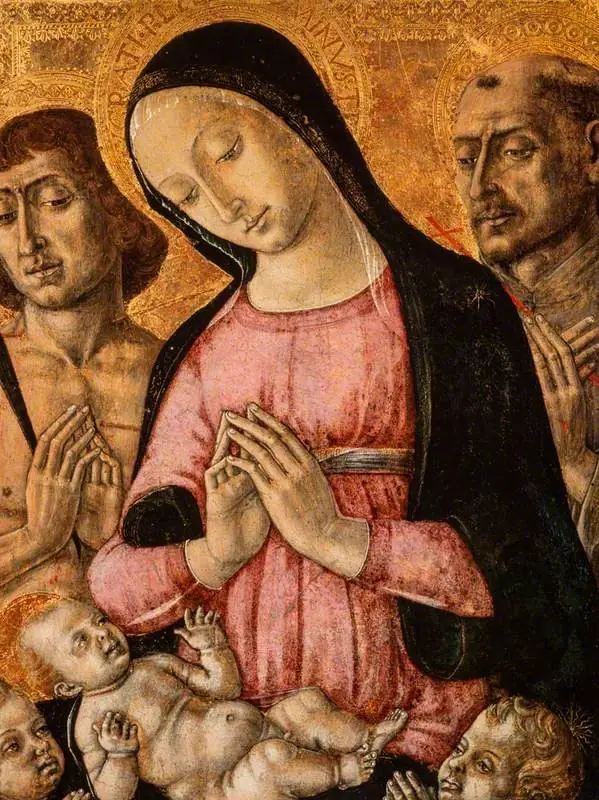 The Virgin and Child with Saint Sebastian, Saint Francis and Angels
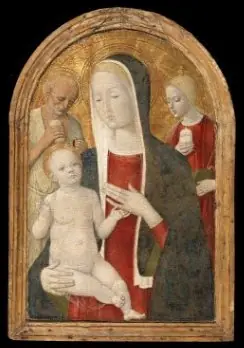 The Virgin and Child with Saints Jerome and Mary Magdalene
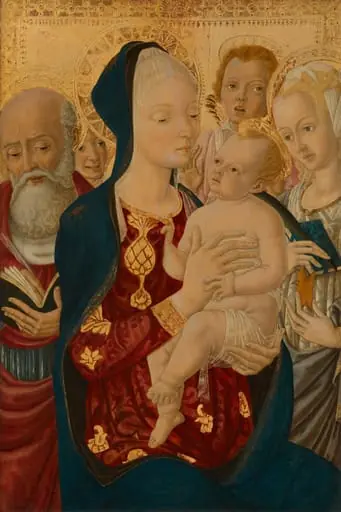 Madonna and Child with Saint Jerome, Saint Catherine of Alexandria, and Angels
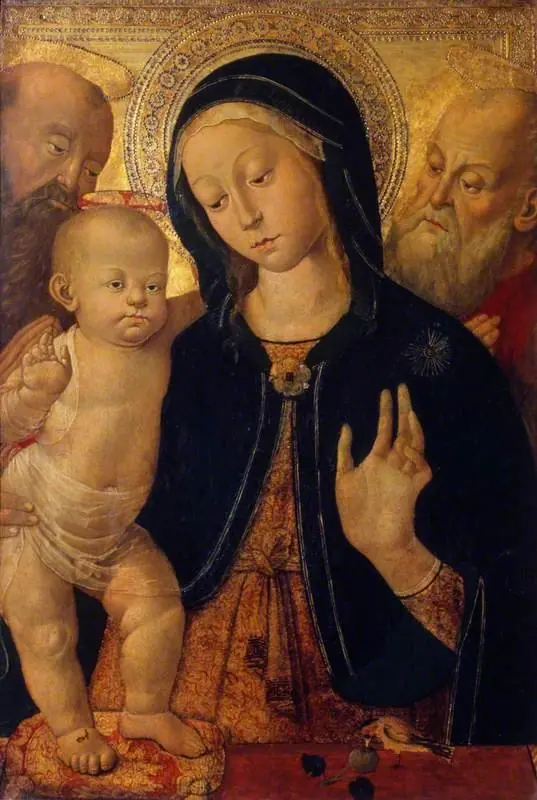 The Virgin and Child with Two Saints
 Virgin and Child with Four Angels