Artwork
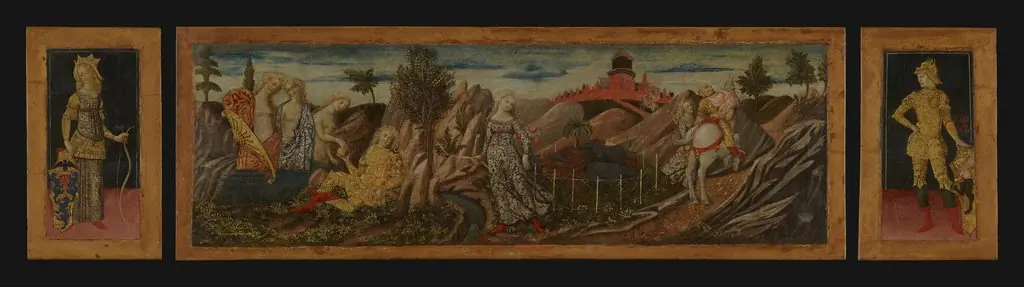
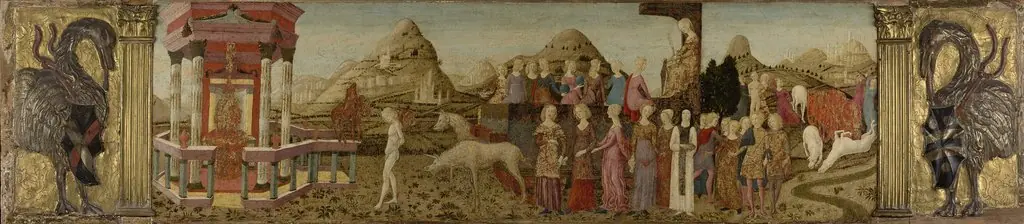
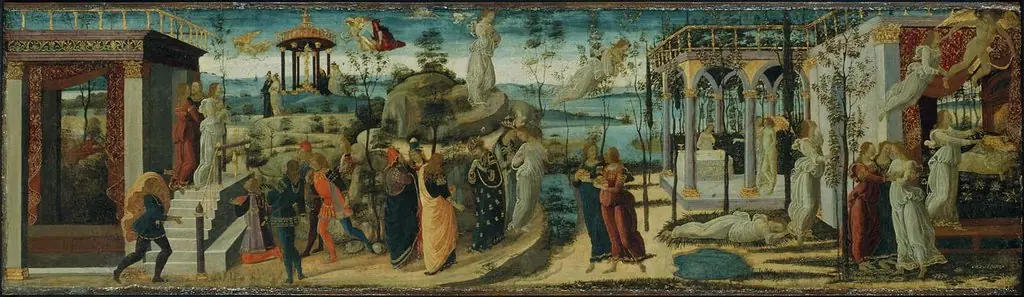
The Story of Oenone and Paris (center panel)
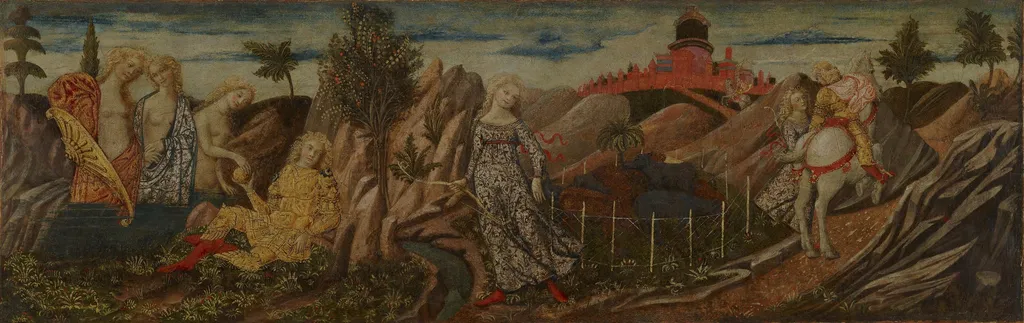
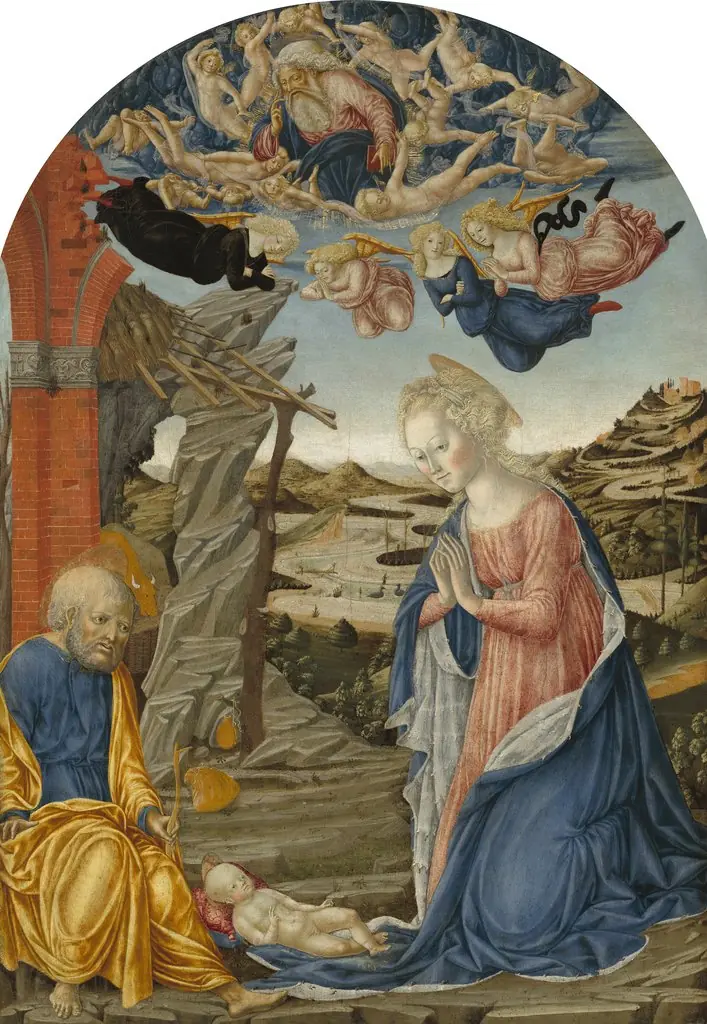
The Story of Oenone and Paris (center panel) is an unspecified painting by the Early Renaissance artist Francesco di Giorgio. It dates from 1460 and is held in the collection of the J. Paul Getty Museum.
About this work
Overview
Painted around 1460 by Francesco di Giorgio, this panel forms the central section of a larger narrative cycle illustrating the myth of Oenone and Paris.
Painted around 1460 by Francesco di Giorgio, this panel forms the central section of a larger narrative cycle illustrating the myth of Oenone and Paris. Executed in tempera and gold on wood, it belongs to a series of scenes from classical legend commissioned for a domestic setting. The work is now part of the J. Paul Getty Museum’s collection, where it is displayed as a key example of early Renaissance storytelling in panel painting.
Subject & Meaning
The scene captures a moment from the myth of Paris, the Trojan prince, and Oenone, his first wife, a nymph skilled in healing. The composition suggests a separation or confrontation: figures on the left may represent Oenone and attendants, while Paris, on the right, prepares to depart with another woman, foreshadowing his fateful journey to Sparta. The narrative emphasizes personal betrayal and the consequences of choice, common themes in humanist-inspired mythological cycles of the period.
Technique & Style
Francesco di Giorgio employs tempera with delicate gold detailing to define textures in fabric and landscape. Figures are rendered with precise anatomical grace, their poses suggesting movement through the space. The background features layered hills, distant architecture, and dense foliage, creating depth through atmospheric perspective. Color is used expressively—not naturalistically—to guide the viewer’s eye and distinguish emotional zones within the scene.
History & Provenance
The panel was likely part of a decorative ensemble for a wealthy Sienese household, possibly a marriage chest or room paneling. Its survival is rare, as many such works were lost or dismantled over time. It entered the Getty Museum’s collection in the 20th century after passing through private European holdings. Documentation traces its attribution to Francesco di Giorgio based on stylistic parallels with his documented works from the 1450s–60s.
Context
In mid-15th-century Tuscany, mythological subjects were increasingly favored in private art, reflecting renewed interest in classical literature. Artists like Francesco di Giorgio blended narrative clarity with architectural and natural detail to appeal to educated patrons. This panel reflects the transition from medieval symbolism to Renaissance humanism, where emotional and psychological nuance in myth became as important as the story itself.
Legacy
Though not widely known outside scholarly circles, this panel exemplifies the sophistication of Sienese painting before the full dominance of Florentine naturalism. Its careful composition and narrative economy influenced later regional artists who sought to merge classical themes with intimate, domestic settings. Today, it remains a vital reference for understanding how myth was adapted for private devotion and civic identity in Renaissance Italy.
Artist & collection

Artist
Francesco di Giorgio Martini (1439–1501) was an Italian architect, engineer, painter, sculptor, and writer.